Module 1 · The metal and the rock
Grade, cut-off and what a reserve commits you to
Level 2 · Working knowledge 10 min read 4 questions
Grade is not a property of a deposit. Cut-off grade is a decision that depends on price, cost and recovery, and it redraws the orebody every time one of the three moves.
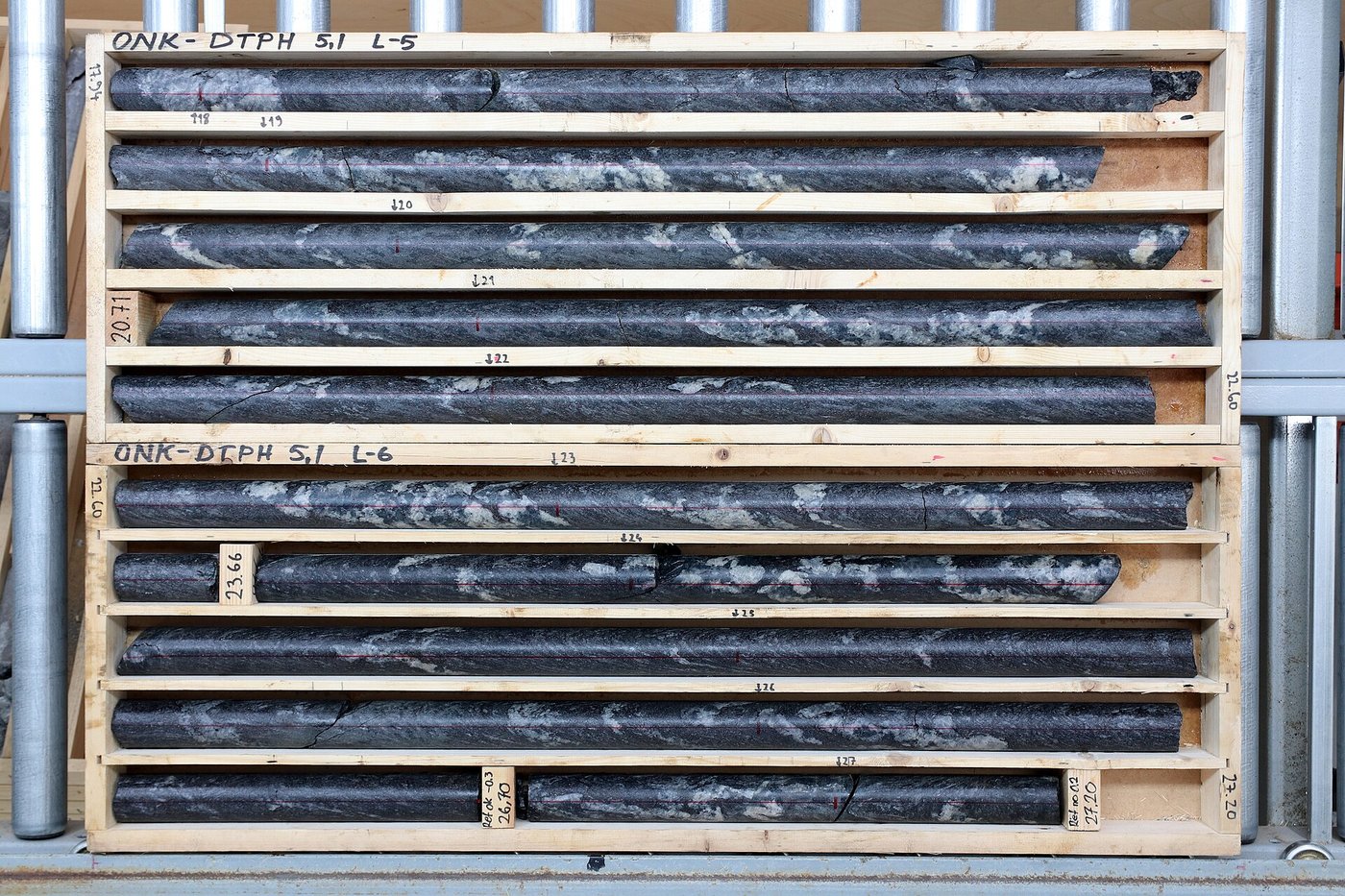
A deposit contains copper at every concentration from nothing to a few per cent. Which of that is ore is not a geological question. It is the answer to a commercial one: at what concentration does a tonne of rock pay for its own mining, hauling, crushing, grinding, floating, smelting and refining, plus a return on the capital that built the plant?
That threshold is the cut-off grade, and it moves. Raise the copper price and material previously classed as waste becomes ore. Raise the diesel price or the power tariff and the reverse happens. Improve recovery in the concentrator by a point and the cut-off falls slightly for the whole deposit. The general treatment on this site is at grade and cut-off; what follows is what it means specifically for copper.
The numbers that actually describe a copper mine
- Head grade
- The copper content of the ore fed to the plant. For porphyries, typically in the range of a few tenths of a per cent to about one per cent.
- Recovery
- The share of the copper in the feed that ends up in concentrate. The rest goes to tailings and is gone.
- Strip ratio
- Tonnes of waste rock moved per tonne of ore. It usually rises as a pit deepens, which raises cost per tonne of copper over the mine's life.
- Throughput
- Tonnes of ore processed per day. When grade falls, throughput has to rise to hold metal output flat - which is why concentrators keep getting bigger.
- By-product credits
- Revenue from gold, silver, molybdenum and others, subtracted from cost to give a 'net of by-products' cash cost. It makes cost comparisons between mines treacherous.
Falling grades are the industry's structural problem
The richest and most accessible parts of known deposits are mined first, so the average grade of what remains declines over time. Holding copper output constant against a falling grade requires moving and grinding more rock for the same metal, which means more energy, more water, more equipment and larger tailings facilities. This is the quiet reason copper's cost curve steepens even when no individual mine has done anything wrong.
Where the world's copper is, on paper
| Country | Reserves, thousand t | Share |
|---|---|---|
| Chile | 180,000 | 18.4% |
| Australia | 100,000 | 10.2% |
| Peru | 85,000 | 8.7% |
| Russia | 80,000 | 8.2% |
| Congo (Kinshasa) | 80,000 | 8.2% |
| Mexico | 53,000 | 5.4% |
| United States | 47,000 | 4.8% |
| China | 41,000 | 4.2% |
| Poland | 33,000 | 3.4% |
| Indonesia | 21,000 | 2.1% |
| Zambia | 21,000 | 2.1% |
| Kazakhstan | 20,000 | 2.0% |
| Canada | 7,000 | 0.7% |
| Other countries | 210,000 | 21.4% |
| World total | 980,000 | 100% |
2025 · USGS Mineral Commodity Summaries 2026, as published on commodityeducation.com/material/copper
Reserves are economically recoverable under stated conditions, not a measurement of copper in the ground. Country rows do not always sum exactly to the world total because the source rounds each figure independently.
Reserves are not the same as resources, and neither is the same as how much copper exists. This site's reserves versus resources lesson is the short version; the practical consequence is that a reserve figure rising is at least as likely to be an economic event as a geological one.
- Cut-off grade is a commercial decision that redraws the orebody whenever price, cost or recovery moves.
- Cash costs net of by-product credits are not comparable across mines with different by-products.
- Declining average grades force more rock, energy and water per tonne of metal over time.
- Cut-off grade
- The concentration at which a tonne of rock is worth processing.
- Head grade
- The copper content of the ore actually fed to the plant.
- Strip ratio
- Waste tonnes moved per tonne of ore.
- By-product credit
- Revenue from other metals, netted off the reported cost of the main metal.
- Grade and cut-offon this site
- Reserves versus resourceson this site
- Cost curveson this site
- By-productson this site
- USGS copper statisticsprimary source
Check yourself
1. The copper price rises substantially and stays there. What happens to the reported ore reserve at an existing mine, all else equal?
Cut-off grade depends on price. A higher price lowers the cut-off and reclassifies waste as ore without any new geology.
2. Mine A reports a lower copper cash cost than Mine B, net of by-product credits. This tells you:
By-product credits are subtracted from cost. A mine with large gold credits can report a low copper cost without being a better copper operation.
3. Why does holding copper output flat become harder as average grades decline?
Lower grade means more tonnes of rock per tonne of copper, and therefore more energy, water, equipment and tailings.
4. Strip ratio measures:
It is the waste-to-ore ratio, and it typically rises as an open pit deepens.