Module 1 · The metal and the rock
How copper deposits form
Level 1 · Foundation 10 min read 4 questions
Copper is common in the crust and almost never concentrated enough to mine. Three geological processes do the concentrating, and which one applies decides everything downstream.
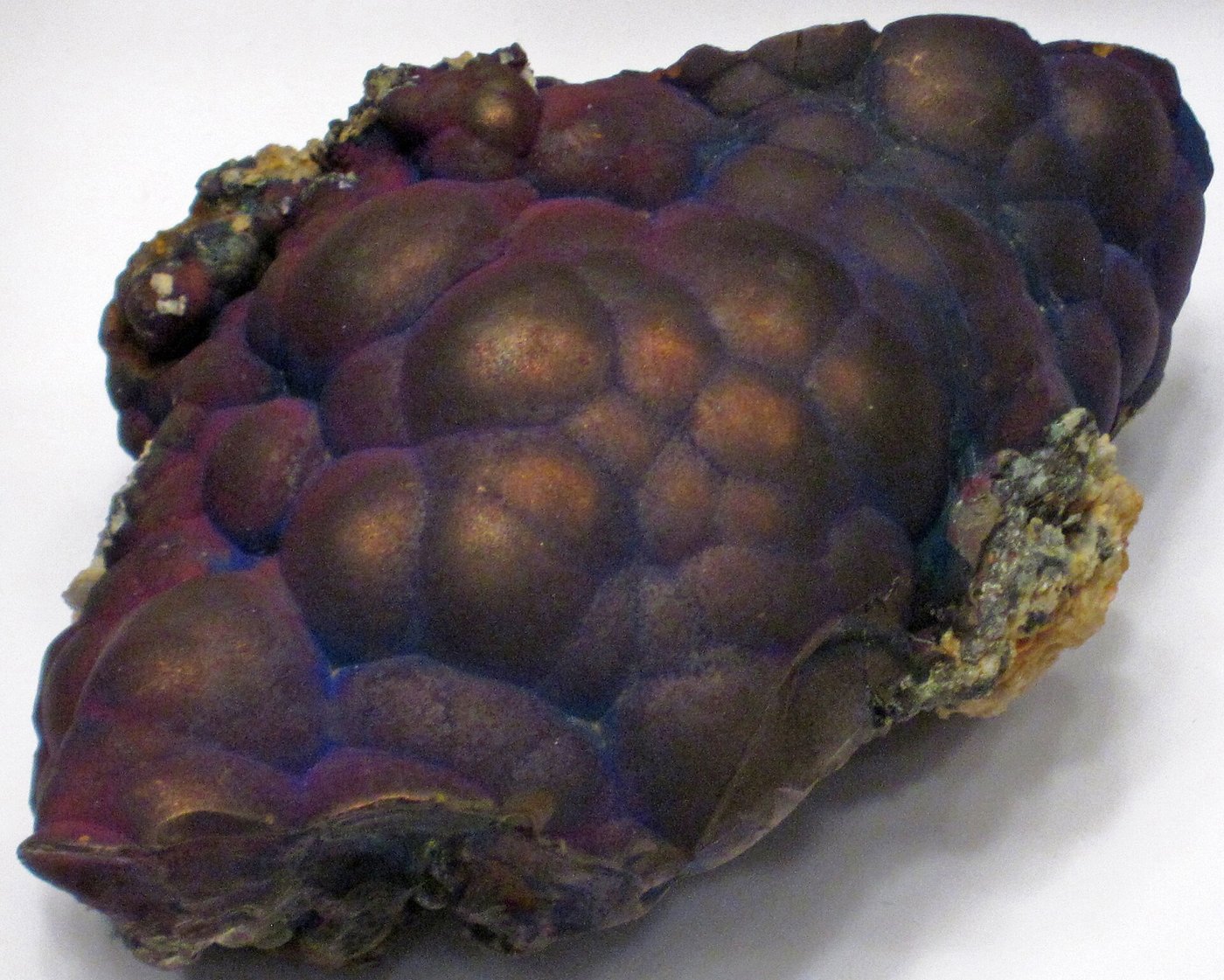
Copper is one of the more abundant metals in the Earth's crust, and that abundance is useless. What makes a deposit is a process that gathered the metal from a large volume of rock into a much smaller one over millions of years. Three processes matter commercially, and a fourth - weathering - modifies the result of the first.
Porphyry: the one that matters most
A body of magma rises towards the surface and begins to cool. Water and other hot fluids are expelled, scavenge copper from the surrounding rock, travel along fractures in the cracked rock above the intrusion, and precipitate sulfide minerals - principally chalcopyrite, a compound of copper, iron and sulfur - as conditions change. The result is a very large, very low-grade body of mineralised rock, typically one to five kilometres across.
Porphyry deposits account for the great majority of the world's mined copper, and they explain the map. Chile, Peru and the American Southwest all sit on or near the ancient collision zone where the Pacific plate has driven under the Americas - exactly the setting that produces the right kind of magma in the right kind of crust.
Sediment-hosted, and magmatic sulfide
- Sediment-hosted stratiform
- Copper minerals laid down in ancient sedimentary basins, probably by metal-bearing brines circulating through porous rock. The Congolese and Zambian Copperbelts formed this way, and they tend to carry higher grades than porphyries, with bornite and chalcocite alongside chalcopyrite. This is why the DRC punches so far above its weight in the production tables.
Supergene enrichment: nature's free upgrade
Near the surface, copper sulfide deposits are chemically altered by weathering. Rainwater carrying oxygen and weak acids reacts with sulfides, dissolves the copper, and redeposits it lower down as much higher-grade secondary minerals - chalcocite and bornite below the water table, and carbonates such as malachite in the oxide zone above it. Geologists call this supergene enrichment, and it is why many deposits have a rich cap sitting on a leaner primary sulfide body.
The minerals that actually carry the metal
| Mineral | Formula | Copper when pure | Where it sits |
|---|---|---|---|
| Chalcopyrite | CuFeS2 | About 34% | The primary sulfide; the most important copper ore mineral on Earth |
| Bornite | Cu5FeS4 | About 63% | Common in the upper enriched zones |
| Chalcocite | Cu2S | Near 80% | The richest common sulfide, formed by supergene enrichment |
| Malachite | Cu2CO3(OH)2 | - | Oxidised; acid-leachable without smelting, which is why oxide caps are mined first |
Mineral chemistry; not time-varying · USGS Mineral Commodity Summaries 2026, as published on commodityeducation.com/material/copper and the site's minerals database
Percentages are for the pure mineral. Typical mined ore grades are under 1% copper, because the mineral is a small fraction of the rock.
Hold on to the gap between those two facts. Chalcopyrite is 34% copper; the ore is under 1% copper. The difference is how much of the rock is not chalcopyrite - and closing that gap is what the concentrator in lesson 5 exists to do.
- Porphyry deposits are huge and low grade by definition, and supply most of the world's copper.
- Sediment-hosted deposits in central Africa are richer, which is why the DRC is a top-three producer.
- Supergene enrichment creates an oxide cap that needs a different plant from the sulfide beneath it.
- Porphyry deposit
- A large, low-grade copper body formed above a cooling intrusion.
- Supergene enrichment
- Weathering that dissolves copper near surface and redeposits it at higher grade below.
- Gangue
- Everything in the ore that is not the valuable mineral.
- Chalcopyriteon this site
- Chalcociteon this site
- How porphyry deposits formon this site
- Weathering and lateriteson this site
Check yourself
1. Why are porphyry copper deposits low grade?
Chalcopyrite itself is about 34% copper. The ore is under 1% because the mineral is thinly dispersed through an enormous volume.
2. Supergene enrichment produces:
Weathering dissolves copper near surface and redeposits it lower down, leaving oxide minerals above and enriched sulfides below.
3. The Congolese and Zambian Copperbelts differ from Andean porphyries mainly in that they:
They are sediment-hosted stratiform deposits, typically richer than porphyries, with a different mix of ore minerals.
4. Why do oxide ores get mined before the sulfides beneath them?
They are physically on top, and they are acid-leachable, which means cathode can be made on site without sending concentrate to a smelter.