Module 4 · From cathode to the thing you can buy
Semis: rod, wire, tube and the alloys
Level 2 · Working knowledge 9 min read 3 questions
Cathode is a raw material, not a product. The semi-fabrication industry turns it into the forms that engineers actually specify.
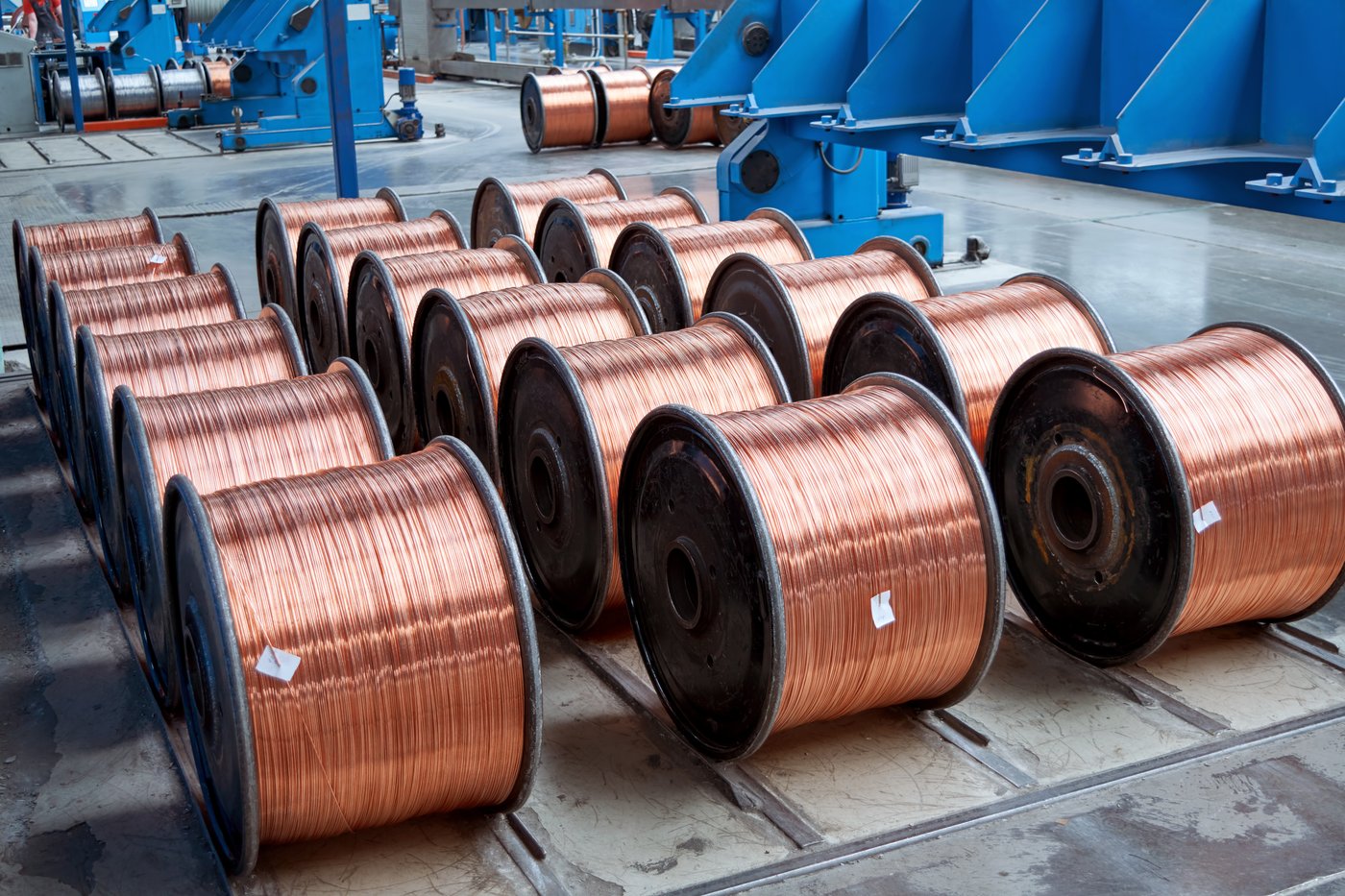
A copper cathode is a plate roughly a metre square. Nothing uses it in that form. The semi-fabrication industry - 'semis' - melts, casts, rolls, draws and extrudes it into the shapes that go into products, and it is a much more fragmented and more locally sited industry than mining or smelting.
The alloys, and why they exist
Pure copper is an excellent conductor and a mediocre structural material: soft, and prone to galling. Alloying trades conductivity for other properties.
- Brass (copper-zinc)
- Machinable, corrosion-resistant, cheap. Fittings, valves, fasteners, instruments, ammunition cases.
- Bronze (copper-tin, and others)
- Hard and wear-resistant. Bearings, bushings, marine hardware, sculpture.
- Copper-nickel
- Outstanding seawater corrosion resistance. Ship hulls, condenser tubing, desalination plant.
- Beryllium copper
- High strength with usable conductivity, and non-sparking. Springs, connectors, tooling for hazardous atmospheres.
- High-conductivity grades
- Oxygen-free and electrolytic tough pitch coppers, where the point is to give up as little conductivity as possible.
Alloying matters to the chain for a practical reason: it decides what happens to the metal at end of life. A clean copper wire can be remelted straight back into rod. A brass fitting cannot - it is a zinc-bearing alloy, and it goes back into brass. That constraint sets up the scrap grading system in lesson 12.
Where the semis industry sits
Semis plants locate near their customers, because rod, wire and tube are bulkier per tonne of copper than cathode and because lead times matter to fabricators. That makes semi-fabrication capacity a reasonable proxy for where copper is actually consumed - a more useful indicator than refined production, which as lesson 9 showed says more about where smelters were built than about where metal is used.
- Cathode is melted and cast into rod, then drawn to wire; nothing uses cathode directly.
- Alloys trade conductivity for strength, machinability or corrosion resistance - and determine the recycling route.
- Semis capacity sits near consumption, so it indicates demand better than refinery output does.
- Semis
- Semi-fabricated products: rod, wire, tube, sheet, strip and busbar.
- Work hardening
- The strengthening and embrittlement caused by deformation, reversed by annealing.
- Tough pitch / oxygen-free
- Standard and oxygen-controlled high-conductivity copper grades.
- HVDC transmission cableon this site
- EV traction motoron this site
- Zincon this site
- Tinon this site
Check yourself
1. Why can a clean copper wire be recycled back into wire while a brass fitting cannot?
The zinc cannot be economically removed, so alloy scrap re-enters the chain as the same alloy. This is why scrap is graded so carefully.
2. Copper-nickel alloys are specified mainly for:
Condenser tubing, desalination plant and marine hardware are the classic uses.
3. Semi-fabrication capacity is a better indicator of where copper is consumed than refinery production because:
The divergence between mining and refining maps in lesson 9 is about where processing was built; semis track actual use.