Module 4 · Downstream: taking the barrel apart
The non-fuel barrel: petrochemicals and materials
Level 2 · Working knowledge 10 min read 4 questions
A minority of the barrel by volume, a different demand story entirely, and the part of oil demand least exposed to electrification.
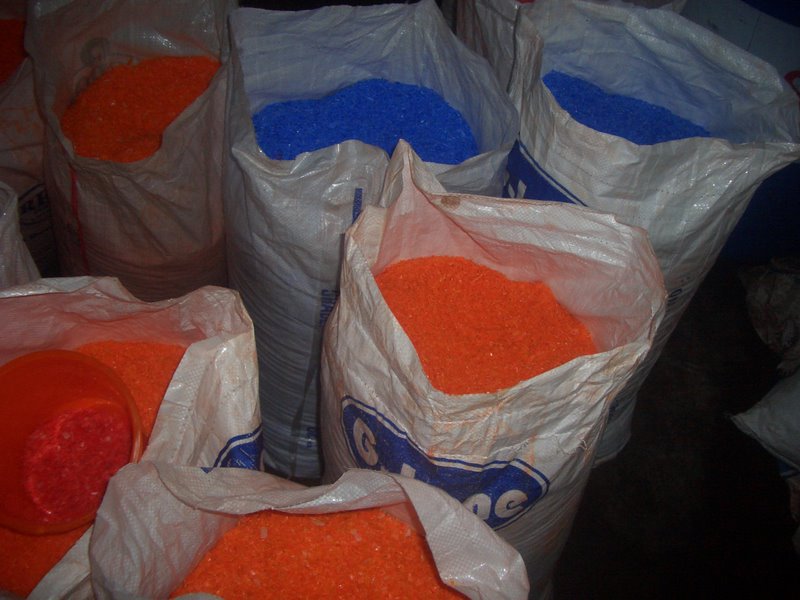
Everything so far has treated the barrel as energy. A structurally different share of it is bought to be turned into matter: the carbon ends up in an object rather than in an exhaust. This part of the chain has its own plants, its own customers and its own logic, and it is where the crude oil chain hands over to the materials chains this site covers elsewhere.
The steam cracker
The gateway plant is the steam cracker. It takes light feedstock - naphtha from a refinery, or ethane from natural gas liquids - heats it with steam to a very high temperature for a fraction of a second, and breaks the molecules into reactive short ones, principally ethylene and propylene. These two are the foundation of most of the plastics industry.
What the barrel becomes
- Polyethylene and polypropylene
- The two largest-volume plastics: film, packaging, pipe, containers, automotive parts.
- Aromatics - benzene, toluene, xylenes
- Feed into polyester fibre and bottle resin, into polystyrene, and into solvents. Paraxylene to polyester is one of the largest single chemical chains in the world.
- Butadiene
- Synthetic rubber, and therefore tyres.
- Ammonia and methanol
- Usually made from natural gas rather than oil, but part of the same hydrocarbon feedstock complex. See ammonia.
- Carbon black, lubricants, waxes, asphalt
- Direct materials uses rather than chemical building blocks.
Why this demand behaves differently
Three reasons, and they compound.
- Electrification does not touch it. A battery-powered car still contains plastic, synthetic rubber and lubricants. Displacing petrol does not displace the feedstock barrel.
- It tracks income, not fleet turnover. Per-capita consumption of plastics and chemicals rises with income across the development range, and the regions with the most room to rise are the most populous.
- Substitution is hard and partial. Bio-based routes exist for some products and recycling returns some material to the chain, but mechanical recycling degrades polymer properties and cannot indefinitely replace new production. This site's why recycling is not enough makes the general version of that argument.
Where this chain meets the rest of the site
The petrochemical branch is where oil stops being an energy commodity and becomes a materials input, which puts it on the same footing as everything else in the materials database. Petroleum coke to aluminium anodes and to synthetic graphite; sulfur to sulfuric acid to copper leaching and phosphate fertiliser; asphalt to construction. Oil is not one chain feeding one market. It is a hub that feeds several of the others.
- The steam cracker is the gateway from barrel to material, and its feedstock sets its product mix.
- Feedstock demand is driven by income and population, not by vehicle fleets, so it is the least exposed to electrification.
- Oil feeds several other chains on this site through coke, sulfur and asphalt as well as through plastics.
- Steam cracker
- The plant that thermally cracks naphtha or ethane into ethylene, propylene and other building blocks.
- Monomer / polymer
- The small repeating unit / the long chain built from it.
- Feedstock barrel
- Oil bought to become a material rather than to be burned.
- Ammoniaon this site
- Why recycling is not enoughon this site
- Substitutionon this site
- The materials databaseon this site
Check yourself
1. An ethane-fed steam cracker differs from a naphtha-fed one mainly because:
Feedstock sets the product spread. A region built on ethane cracking is structurally short of the co-products a naphtha cracker makes.
2. Why is petrochemical demand for oil less exposed to road transport electrification than fuel demand?
Replacing the fuel does not replace the materials. The feedstock barrel survives the transition the combustion barrel is exposed to.
3. Paraxylene matters because it is the route to:
Paraxylene to purified terephthalic acid to polyester is one of the largest single chemical chains in the world.
4. Treating 'oil demand' as a single forecastable series is misleading mainly because:
The two halves of demand behave differently enough that a combined number obscures more than it reveals.