Module 3 · Midstream: moving the barrel
Pipelines, blending and storage
Level 2 · Working knowledge 10 min read 4 questions
The moment a barrel enters a pipeline it usually stops being that barrel. Understanding common-stream blending, hubs and storage economics explains most of what looks strange about regional oil prices.
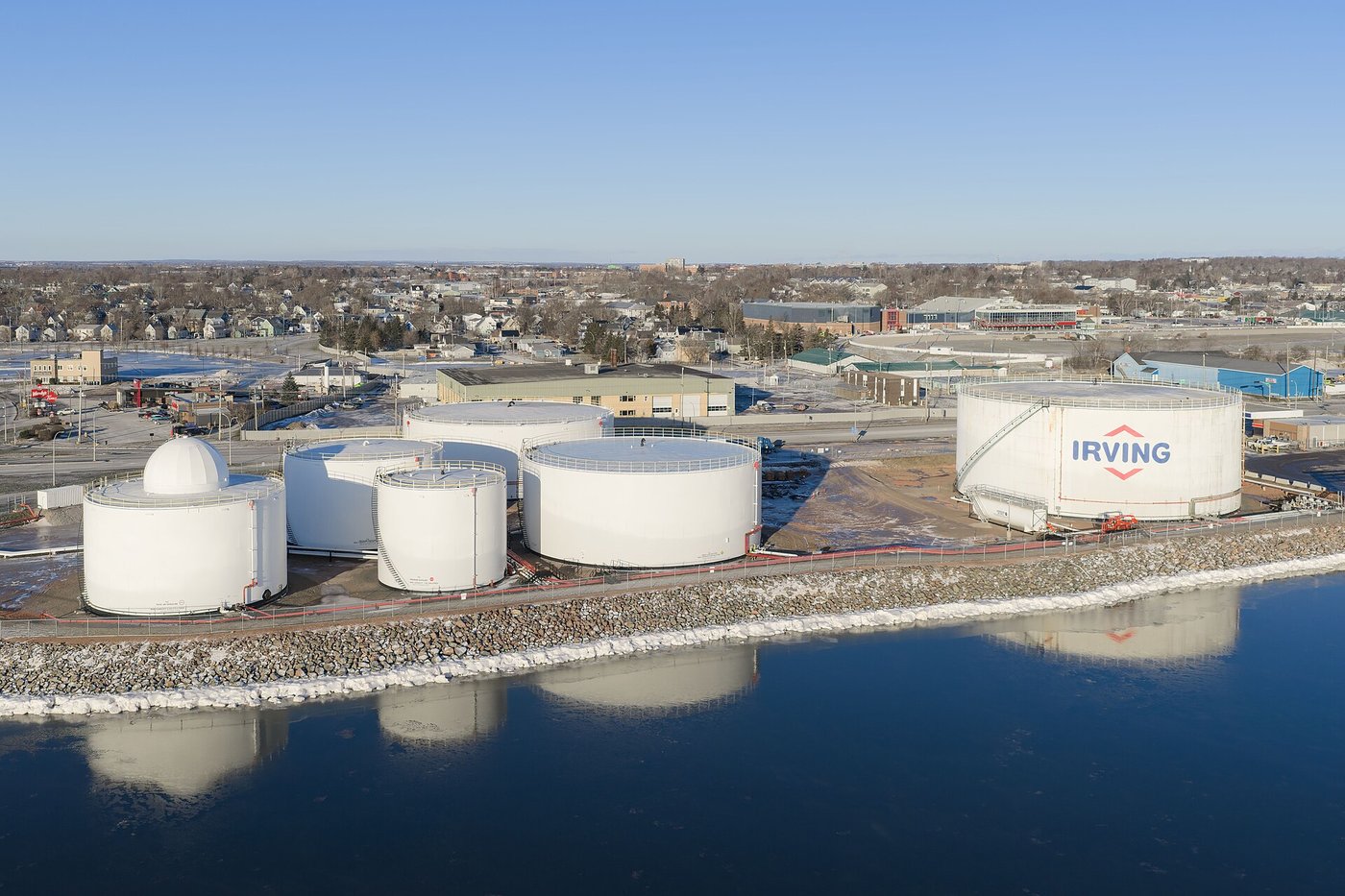
Between the wellhead and the refinery gate sits the midstream: gathering lines, trunk pipelines, tank farms, rail, barges and terminals. It is unglamorous, it captures a small share of the value of the chain, and it is where a startling amount of the risk lives.
Gathering, trunk lines and specifications
Small gathering lines collect from individual wells and batteries into a trunk line. To enter that trunk line the oil must meet a pipeline specification: limits on water and sediment, on vapour pressure, on viscosity, sometimes on sulfur and on total acid number. A producer whose barrel fails specification has no route to market at that point, regardless of what the barrel is worth in the abstract.
Common stream: your barrel is not your barrel
Most trunk pipelines run a common stream. Oil from many producers is commingled, and what arrives at the far end is a blend with the pipeline's own published quality, not any individual producer's crude. Quality banks settle the difference in cash: a producer who put in oil better than the stream average is credited, and one who put in worse is debited. The physical barrel ceases to be traceable; the commercial entitlement does not.
Some lines instead run batches, pushing discrete parcels of different grades one after another down the same pipe with a degree of mixing at the interfaces, which is cut out and downgraded. Batching preserves grade identity at the cost of throughput and complexity.
Hubs, and why storage has a price
Pipelines converge at hubs: places with many connections, large tankage and independent terminal operators. A hub is what makes a price assessment meaningful, because it is a place where many buyers and sellers can physically take or make delivery. That is why oil benchmarks are named after places and infrastructure rather than after countries - a point lesson 13 develops.
- Tank farm
- Fixed or floating-roof tanks, typically leased by the month. Floating roofs sit on the liquid surface to suppress vapour loss.
- Working capacity
- Usable volume, which is less than nameplate: tanks cannot be filled to the roof or emptied below the floating roof's landing point. Storage 'full' in the headlines usually means working capacity, not physical volume.
- Line fill
- The oil permanently inside a pipeline to keep it operating. It is inventory that can never be sold while the line runs, and it is a real capital cost.
- Strategic reserves
- Government-held crude, held for supply emergencies rather than for trading. See stockpiles and strategic reserves.
Contango, backwardation and the economics of a tank
Storage has a use whenever oil for future delivery is worth more than oil today. When the forward curve is in contango - future prices above spot - a trader can buy physical oil, sell a forward contract, pay for storage and financing, and lock in the difference. When the spread exceeds the full cost of storing and financing, tanks fill. When the curve is in backwardation - future below spot - holding inventory costs money, and the industry runs stocks down.
This is why inventory levels and the shape of the forward curve move together, and why a report that stocks are rising is not automatically bearish: it may simply be the curve paying someone to hold them. The direction of causation runs both ways and reading it as one-way is a common error.
- Pipeline specifications, not geology, decide whether a barrel has a route to market.
- Common-stream pipelines destroy the identity of individual barrels and settle quality differences in cash.
- Inventory builds and the shape of the forward curve are two views of the same thing.
- Common stream
- A pipeline that commingles many producers' oil into one published quality.
- Quality bank
- The mechanism that settles, in cash, the difference between a producer's crude and the common stream.
- Contango / backwardation
- Forward prices above / below spot. The first pays for storage; the second penalises it.
- Line fill
- Oil permanently inside an operating pipeline; unsellable inventory and a real capital cost.
- Stockpiles and strategic reserveson this site
- Port of Rotterdam bulk terminalson this site
- Alberta oil sands, tracedon this site
- EIA weekly petroleum status reportprimary source
Check yourself
1. A producer's crude is commingled into a common-stream pipeline. What happens to the quality difference between their crude and the stream average?
The physical barrel loses its identity, but the commercial entitlement does not: quality banks credit and debit the difference against the stream average.
2. The forward curve moves into steep contango. The most directly expected consequence is:
Contango pays for carrying inventory. When the spread exceeds the cost of storage and financing, tanks fill - which is why stock builds and curve shape have to be read together.
3. Why is 'storage is full' usually a statement about working capacity rather than physical volume?
Usable volume is less than nameplate for straightforward engineering reasons at both the top and bottom of the tank.
4. Two crudes are blended and asphaltenes precipitate, fouling the tank. This is best described as:
Compatibility is a distinct property from any single specification limit: two individually on-spec crudes can be incompatible with each other.