Module 5 · Ownership, price and failure
Who owns the oil
Level 2 · Working knowledge 11 min read 4 questions
Most of the world's oil is owned by states and produced under contracts that decide how much of each barrel the producer keeps. Knowing which contract applies tells you more about a project than its geology does.
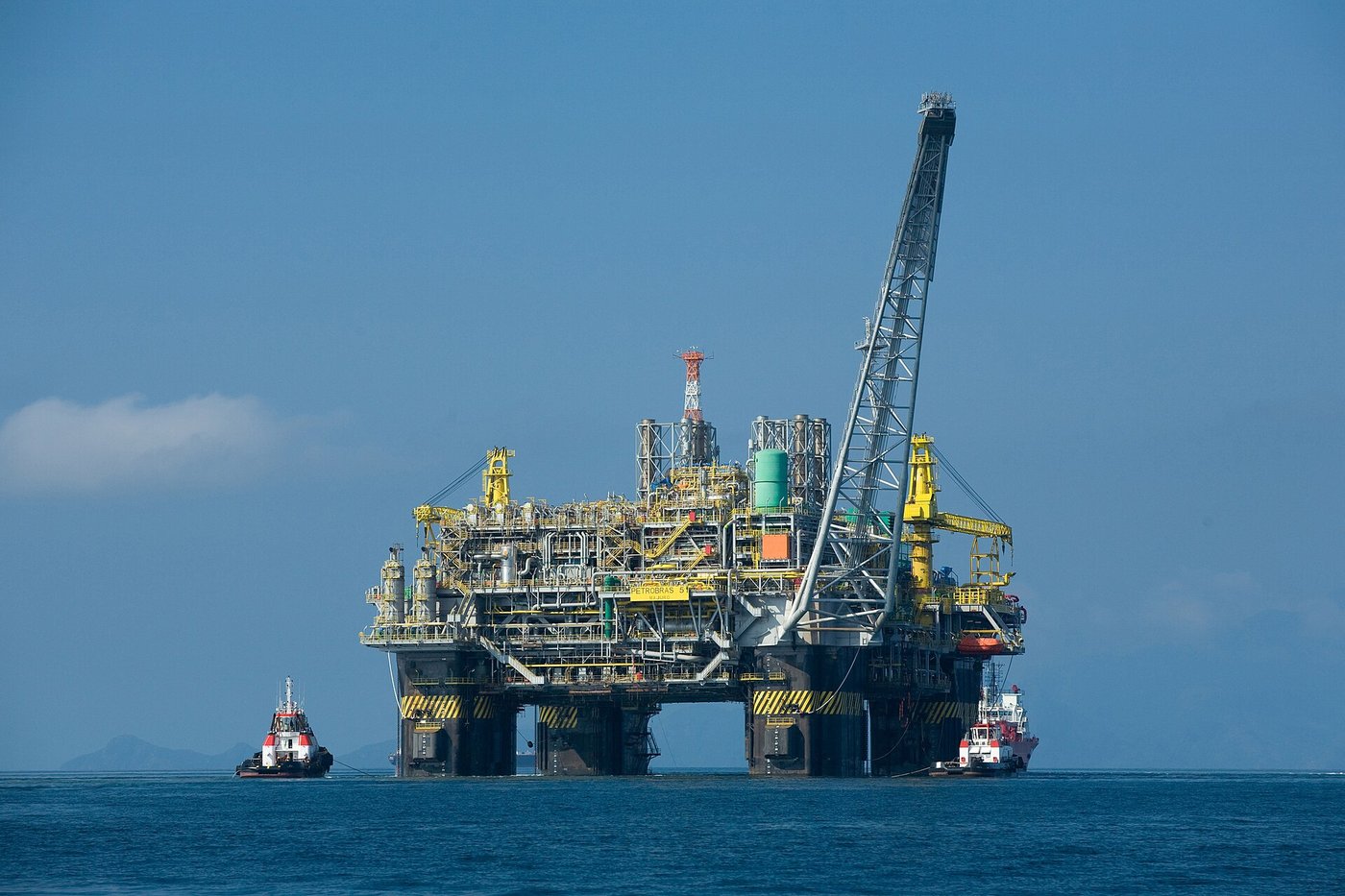
Ownership in oil is layered. In most of the world the resource in the ground belongs to the state, and a company obtains a right to produce it under a contract. The United States is the significant exception, where private mineral rights are common and a landowner can lease to a producer directly - which is a large part of why the shale industry developed there first and fastest.
The four kinds of company
- National oil companies
- State-owned, operating their country's resources. Between them they hold most of the world's reserves. Their objectives include revenue, employment and policy, not return on capital alone, which is why their investment behaviour does not track price the way a listed company's does.
- International oil companies
- Listed, integrated across exploration, production, refining and marketing, and accountable to shareholders. They are minority holders of world reserves but hold a large share of the technical capability.
- Independents
- Listed or private companies focused on one part of the chain - often production only. Most US shale producers are independents, and their collective behaviour is what makes shale supply respond quickly to price.
- Service companies
- They own the drilling rigs, the fracturing fleets, the seismic vessels and much of the technical expertise, and they own no oil at all. When commentary says 'the industry cannot respond quickly', it is often a service capacity constraint - crews, rigs, pressure pumping - rather than a resource one.
The contract decides the economics
How a state and a company divide a barrel is set by the fiscal regime, and the three main forms behave differently when prices move.
| Form | Who owns the produced oil | How the state is paid | Behaviour when prices rise |
|---|---|---|---|
| Concession / tax and royalty | The company, at the wellhead | Royalty on production plus profits tax | Company keeps more of the upside unless the tax is progressive |
| Production sharing contract | The state; the company receives a share | Cost oil recovers spend, then profit oil is split by formula | Company's share of volume often falls as profitability rises |
| Service contract | The state throughout | A fee per barrel produced | Company sees little upside; it is closer to contracting than to owning |
Generic structures; every real contract is negotiated and differs · Standard fiscal-regime taxonomy as used in petroleum economics; see SPE PRMS for the associated reserves treatment
Under a production sharing contract a company's reported entitlement barrels can fall when prices rise, because cost oil is recovered at a higher price per barrel and therefore takes fewer barrels. A reported production decline can be an accounting consequence of a good year.
OPEC, OPEC+ and spare capacity
The Organization of the Petroleum Exporting Countries is a group of producing states that coordinates production targets among its members. Since 2016 it has acted alongside a wider group of non-member producers, the arrangement usually written as OPEC+. The mechanism is a set of agreed production levels, monitored against self-reported and independently assessed output.
The concept that gives the arrangement its force is spare capacity: production that can be brought on within a short period and sustained. It is held almost entirely by a small number of members, and it functions as the world's only meaningful short-term supply buffer. When spare capacity is large, a disruption somewhere else is absorbed; when it is thin, the same disruption moves the price a great deal more. Watching the level of spare capacity explains more about price sensitivity to news than watching production itself.
- Quota compliance is imperfect and is assessed, not measured, which is why OPEC's own figures and secondary sources differ.
- A quota is a ceiling on production, not a floor. Some members produce below quota because they cannot reach it.
- The group's decisions bind members' production, not the price. Price is what results when that production meets demand and inventories.
Strategic reserves
Consuming countries hold their own buffer: government crude and product stocks intended for supply emergencies. Members of the International Energy Agency hold stocks under a collective obligation and can release them in a coordinated action. These are a different instrument from commercial inventory - they are policy, not trading - and this site treats the general case at stockpiles and strategic reserves.
- The resource usually belongs to a state; the contract decides what a producer keeps.
- Production sharing contracts can make reported volumes fall when profitability rises.
- Spare capacity, not production, is what determines how much a disruption moves the price.
- NOC / IOC
- National oil company, state-owned / international oil company, listed and integrated.
- Cost oil / profit oil
- Production allocated to recover the contractor's spend / the remainder, split between state and contractor.
- Spare capacity
- Production that can be started quickly and sustained; the world's short-term supply buffer.
- Companies databaseon this site
- Suncor Energyon this site
- Stockpiles and strategic reserveson this site
- OPEC Monthly Oil Market Reportprimary source
Check yourself
1. Under a production sharing contract, a company's entitlement volumes fall in a year when oil prices rose sharply. The most likely reason is:
This is an accounting consequence of the contract, not an operational one - a well-known trap when comparing reported production year on year.
2. Spare capacity matters because it is:
It is the only meaningful short-term buffer on the supply side, and its level governs how sharply prices respond to disruption.
3. Which type of company typically owns no oil at all but often constrains how fast the industry can respond to higher prices?
Rigs, crews and pressure pumping capacity are owned by service companies, and they are frequently the binding constraint on short-cycle supply growth.
4. An OPEC quota is best understood as:
Quotas cap production. Several members produce below theirs for capacity reasons, which is one source of the gap between target and actual output.