Module 2 · The species
The hardwoods: what gets made out of them
Level 2 · Working knowledge 13 min read 5 questions
A dozen species carry the North American hardwood trade. The high-value uses are famous and small; the volume buyer of hardwood is something most people never look at.
Hardwood is a different business from softwood in almost every respect. The trees are older, the stands are mixed, the lumber is sold rough in random widths, the grading is about appearance rather than strength, and the buyers are furniture, cabinet, flooring and millwork plants - plus one enormous industrial buyer that gets forgotten.
The commercial hardwoods
| Species | Character | Principal uses | Volume buyer |
|---|---|---|---|
| Red oak | Hard, strong, open-pored, takes stain well; the most abundant commercial hardwood in the eastern US | Flooring, furniture, cabinets, mouldings, pallets from the low grades | Flooring and cabinet manufacturers; pallet makers take the low grades |
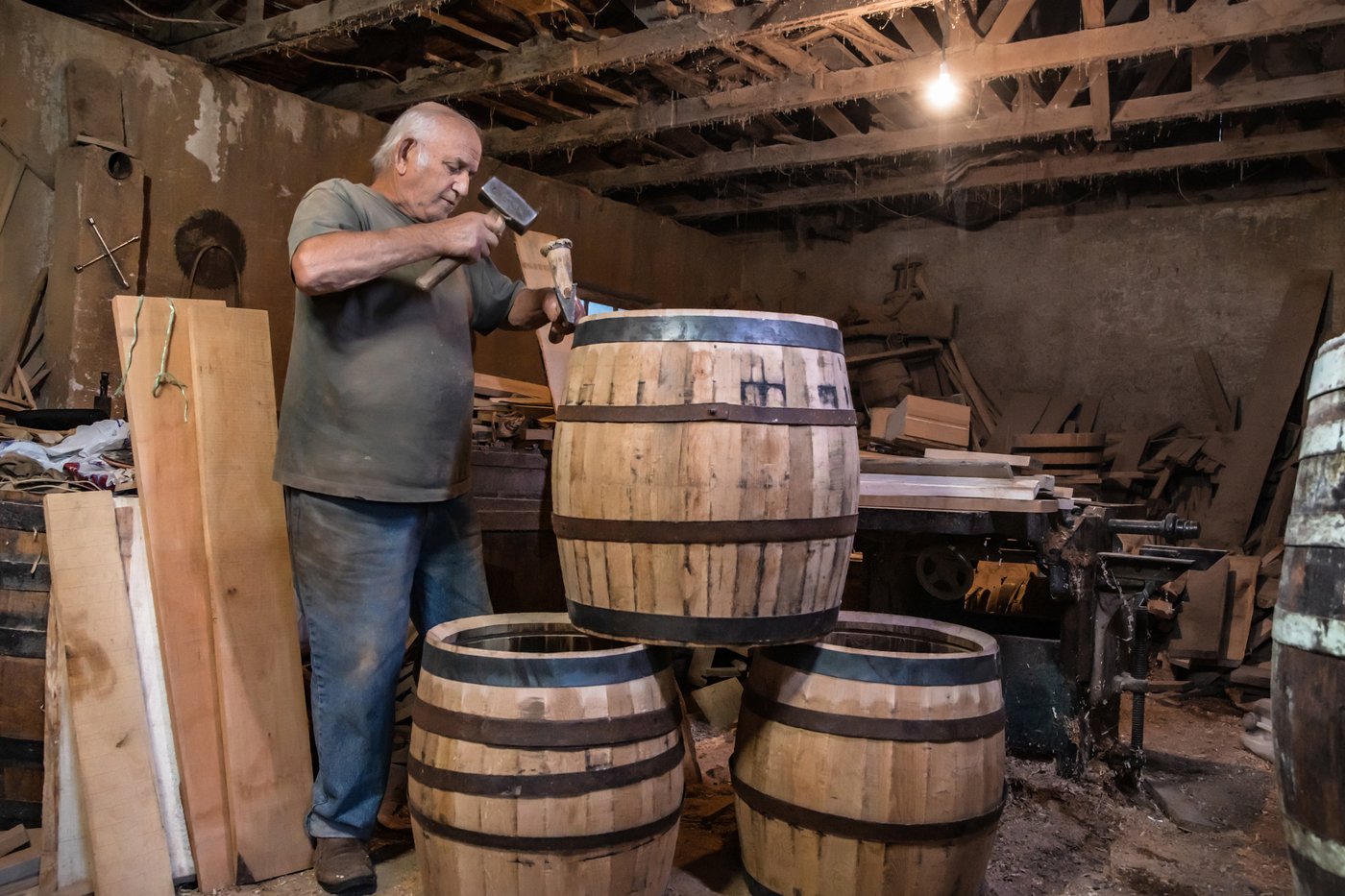
| White oak | Harder and more durable than red oak; pores blocked by tyloses, so it holds liquid | Barrels, flooring, boatbuilding, exterior joinery, furniture, railway ties | Cooperage - bourbon and wine barrels - competes directly with flooring for the best logs |
| Hard (sugar) maple | Dense, pale, fine and even textured, very wear resistant | Flooring including sports floors, butcher block, cabinets, bowling pins, instrument parts | Flooring and cabinet manufacturers; export to Asia |
| Soft (red and silver) maple | Lighter and softer than hard maple, similar appearance | Furniture frames, cabinets, mouldings, pallets, industrial | Furniture and cabinet plants; industrial users |
| Yellow-poplar (tulipwood) | Light, soft for a hardwood, stable, cheap, paints well | Paint-grade millwork, furniture frames and interiors, pallets, plywood core | Millwork and furniture plants; pallet and crating manufacturers |
| Black cherry | Moderately hard, fine grained, darkens with light exposure | Fine furniture, cabinets, panelling, veneer | Furniture makers; veneer buyers pay far above lumber value for clean logs |
| Black walnut | Rich dark heartwood, stable, machines and carves well; the most valuable common North American hardwood | Fine furniture, gunstocks, veneer, turnery | Veneer buyers and export - a single clear butt log can outprice a truckload of common lumber |
| White ash | Hard, strong, extremely tough and shock resistant, bends well | Tool handles, baseball bats, furniture, flooring, cabinets | Sporting goods and handle makers; flooring - supply constrained by emerald ash borer mortality |
| Hickory and pecan | The hardest and toughest common North American hardwood | Tool handles, flooring, furniture, smoking wood, charcoal | Handle manufacturers; flooring; food-industry smoking wood |
| Yellow birch | Hard, fine grained, close to maple in use | Plywood and veneer, furniture, flooring, doors, turnery | Plywood and door manufacturers |
| American beech | Hard, heavy, tough, hard to dry without distortion | Flooring, furniture frames, turnery, pallets, railway ties | Industrial and pallet users; some flooring |
| Basswood | Very light and soft, fine even texture, odourless | Carving, pattern making, blinds and shutters, food containers, hidden furniture parts | Blind and shutter manufacturers; carvers |
| Quaking aspen and cottonwood | Light, soft, pale, low strength | Pallets, crating, panel core, matches, chopsticks, animal bedding, pulp | Pulp and panel mills; pallet and industrial users |
| Sweetgum | Moderately hard, interlocked grain, prone to warp | Furniture frames, plywood, pallets, boxes, veneer core | Panel and pallet manufacturers |
| Black locust and osage orange | Extremely durable in ground contact, very hard | Fence posts, decking, outdoor structures, marine piling | Agricultural and landscape users - largely a local trade |
Current commercial practice · End uses and buyer categories are editorial, compiled from species properties in USDA Forest Service, Wood Handbook (FPL-GTR-190) and from standard trade practice
Volume buyer is the industry consuming the most board footage of that species, which is frequently not the industry paying the most per board foot. Every species listed has low grades that end up in pallets and ties regardless of what its high grades are famous for.
The buyer nobody mentions
Ask what hardwood is used for and most people say furniture and floors. The volume answer, for decades, was pallets. Low-grade hardwood - the boards that come off the outside of the log, the short lengths, the knotty and stained material that cannot be sold for appearance - goes into pallets, crating, dunnage and railway ties, and that industrial demand is what makes the whole hardwood log economic.
That industrial market has been changing. The pallet industry has shifted substantially towards softwood:
| Period | Hardwood | Softwood |
|---|---|---|
| 2008 | 60% | 40% |
| 2016 | 45% | 55% |
| 2024 | About 2 billion board feet | Over 80% of pallet lumber, about 9 billion board feet |
2008, 2016 and 2024 as stated · Fastmarkets, annual US pallet estimates
The 2008 and 2016 rows are shares; the 2024 row is stated in volumes with softwood above 80% of the total. The direction is the point: the hardwood industry's biggest volume outlet has been shrinking as a share for well over a decade.
NHLA grading: paying for clear area
Hardwood lumber is graded under National Hardwood Lumber Association rules, and the logic is different from softwood grading. The grade is determined by how much clear, defect-free material can be cut out of the poorer face of a board, in pieces of a minimum size. It is a statement about yield to a furniture or cabinet cutting operation, not about strength.
- FAS (Firsts and Seconds)
- The top grade. Long, wide boards yielding a high proportion of large clear cuttings. What a fine furniture maker buys.
- F1F (FAS one face)
- FAS on the better face, No. 1 Common on the reverse. Used where only one face shows.
- Selects
- Similar to F1F but permitting narrower and shorter boards.
- No. 1 Common
- The cabinet grade. Smaller clear cuttings, which suits cabinet and flooring operations that cut to short lengths anyway.
- No. 2A and 3A Common
- Lower yields of clear material. This is the industrial material: pallets, crating, frames, flooring blanks.
Two consequences follow. First, hardwood price spreads between grades are very wide - several times, not several per cent - so how a log grades matters more than how much it scales. Second, the buyer's own cutting pattern determines which grade is actually cheapest for them: a cabinet shop cutting short parts often does better buying No. 1 Common than FAS, and paying for clear length it will cut up anyway is a common beginner's error.
Veneer: the grade above the grades
The very best hardwood logs never reach a sawmill. Veneer logs - large, straight, clear, with the right colour and figure - are sliced or peeled into sheets a fraction of a millimetre thick, so that one log covers an enormous area of furniture or panelling. Because the log's value is spread over that area, veneer buyers can pay multiples of sawlog prices for the right walnut, cherry, white oak or maple, and a single exceptional log can be worth more than the rest of the harvest.
This is why a landowner should never sell timber without knowing whether there are veneer-quality trees in the stand. It is the clearest case in this course of value being determined by grade rather than by volume.
- Pallets, crating and ties are the volume outlet for low-grade hardwood, and without them the log does not pay.
- NHLA grades measure clear cutting yield, so grade spreads are multiples and the right grade depends on the buyer's cutting pattern.
- Veneer logs can be worth several times sawlog value, which is why grade beats volume in hardwood.
- FAS
- Firsts and Seconds: the top NHLA hardwood grade.
- Clear cutting
- A defect-free rectangle obtainable from a board, which is what NHLA grades measure.
- Cooperage
- Barrel making; the main non-flooring buyer of high-grade white oak.
- Tyloses
- Growths that block the pores of white oak, making it liquid-tight.
- NHLA grading rulesprimary source
- Fastmarkets pallet estimatesprimary source
Check yourself
1. Why does an outlet for low-grade hardwood matter to a hardwood sawmill's economics?
The high grades are a minority of the log. The industrial market for the rest is what makes sawing the log worth doing at all.
2. NHLA hardwood grades are based on:
It is a yield measure for a cutting operation, which is why the right grade depends on what the buyer is cutting.
3. White oak competes for its best logs between flooring and:
White oak's pores are blocked by tyloses so it holds liquid, which makes it the barrel wood and puts cooperage in direct competition with flooring for the same logs.
4. A cabinet shop cutting short components may be better off buying No. 1 Common than FAS because:
FAS carries a premium for long clear cuttings. If the cutting list is short, that premium buys nothing.
5. Veneer logs command multiples of sawlog prices because:
A thin slice covers a large area, so a log with the right size, straightness, colour and figure is worth far more sliced than sawn.