Picture quiz
Identify the Commodity
Most commodity pictures you meet are of the finished thing — a copper wire, a gold bar, a sack of coffee. These are the specimens as they actually come out of the ground or off the plant, which is what anyone buying, grading or surveying them sees first. 75 photographs, three levels of 25. Your score is kept in your own browser and nowhere else.
Choose a level
Which commodity is this?
Every specimen
The full set, with what each one is and how it is traded. This is the answer key — if you want to play first, choose a level above. Photograph credits →
Starter 25
Things most people have heard of, shown as they come out of the ground.
-
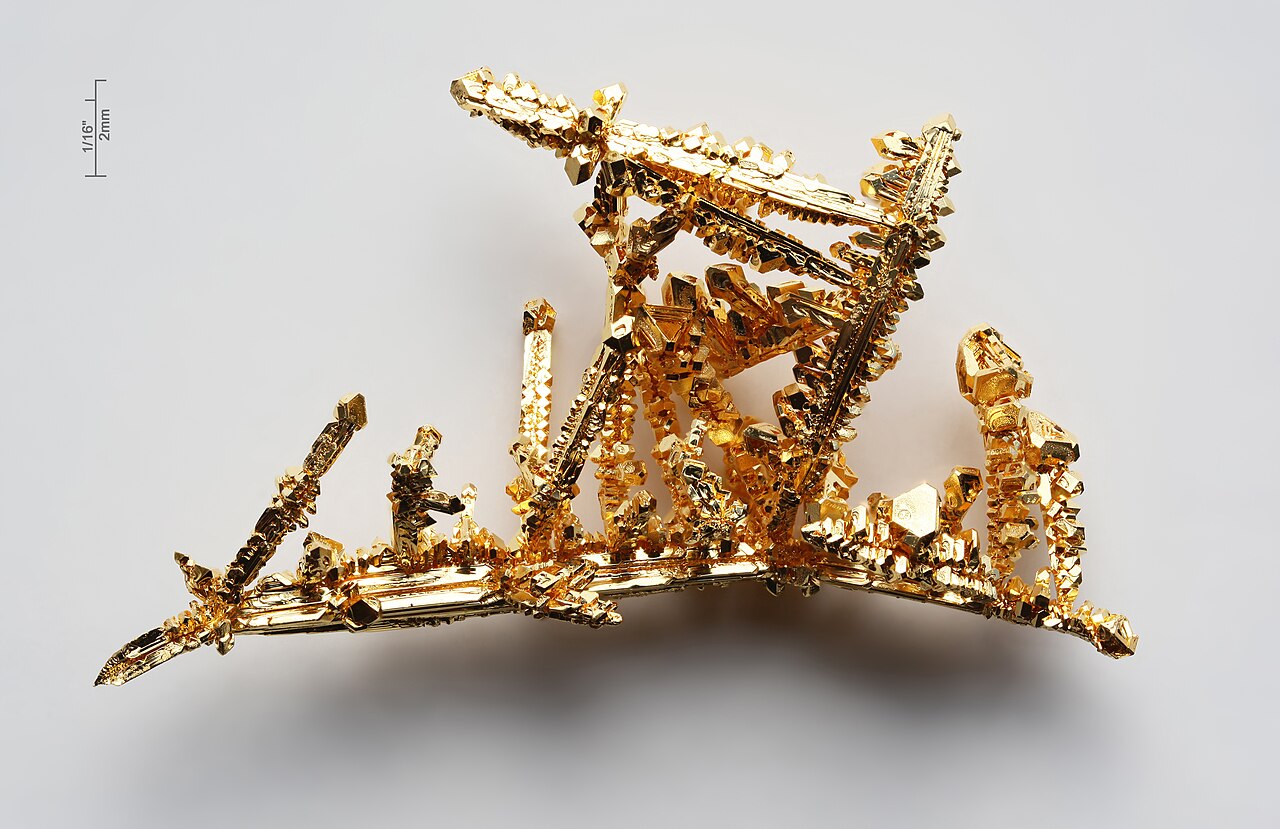
Gold
Precious metal
Buttery yellow and soft enough to dent with a pin. It never tarnishes, never rusts and never dulls — a specimen pulled from a riverbed looks the same after a thousand years. Roughly half of annual demand goes to jewellery, the rest to bars, coins and central-bank vaults.
Traded in troy ounces and quoted per ounce in US dollars, with London setting the twice-daily benchmark and COMEX the futures. Top producers: China, Russia, Australia, Canada. Unusually for a commodity, almost all of it ever mined still exists, so above-ground stock rather than consumption drives the price.
Alchemist-hp ( talk ) www.pse-mendelejew.de · CC BY-SA 3.0 de · Wikimedia Commons
-
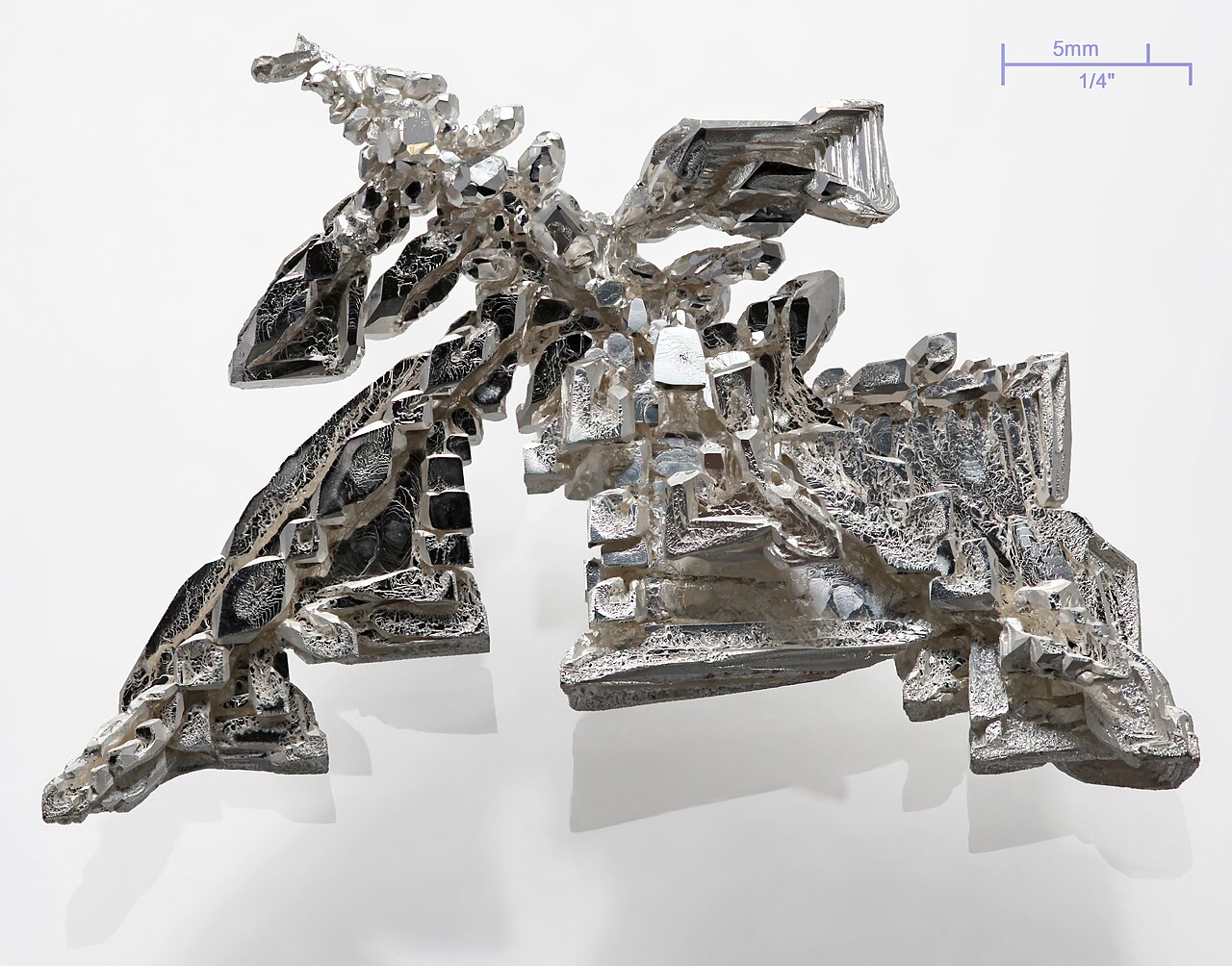
Silver
Precious metal
The whitest and most reflective of all metals when fresh, though it films over to a dull grey-black in air. Often grows in wiry, twisted threads. Half of all demand is now industrial — it is the best electrical conductor there is, which is why it ends up printed onto solar cells.
Quoted per troy ounce and far more volatile than gold because industrial demand swings with the economy. Mexico, Peru and China lead production, but most output is a by-product of lead, zinc and copper mines rather than dedicated silver mines, so supply barely responds to its own price.
Alchemist-hp ( talk ) ( www.pse-mendelejew.de ) · CC BY-SA 3.0 de · Wikimedia Commons
-
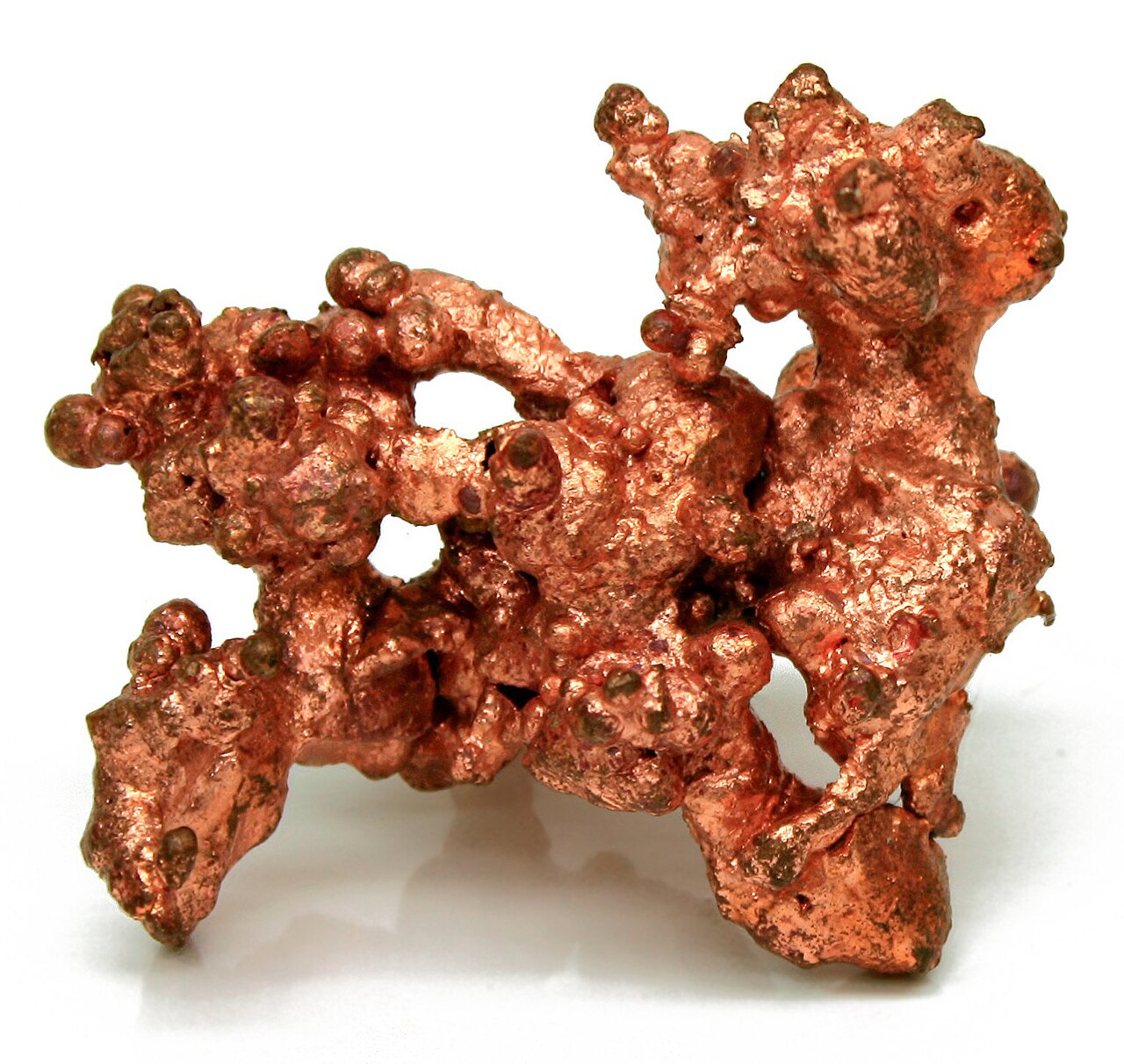
Copper
Base metal
Salmon-pink to orange when broken fresh, weathering to brown and then to the familiar green of old roofs and statues. Soft, bendable, and second only to silver as a conductor. Economists watch its price as a thermometer for global construction and manufacturing.
Traded in tonnes on the LME and in pounds on COMEX, and nicknamed "Dr Copper" for its read on the world economy. Chile and Peru supply about a third of mine output. Demand is structurally rising because an electric car uses roughly three to four times the copper of a petrol one, and grids need far more still.
Native_Copper_Macro_Digon3.jpg : “Jonathan Zander ( Digon3 )" derivative work: Materialscientist ( talk ) · CC BY-SA 3.0 · Wikimedia Commons
-
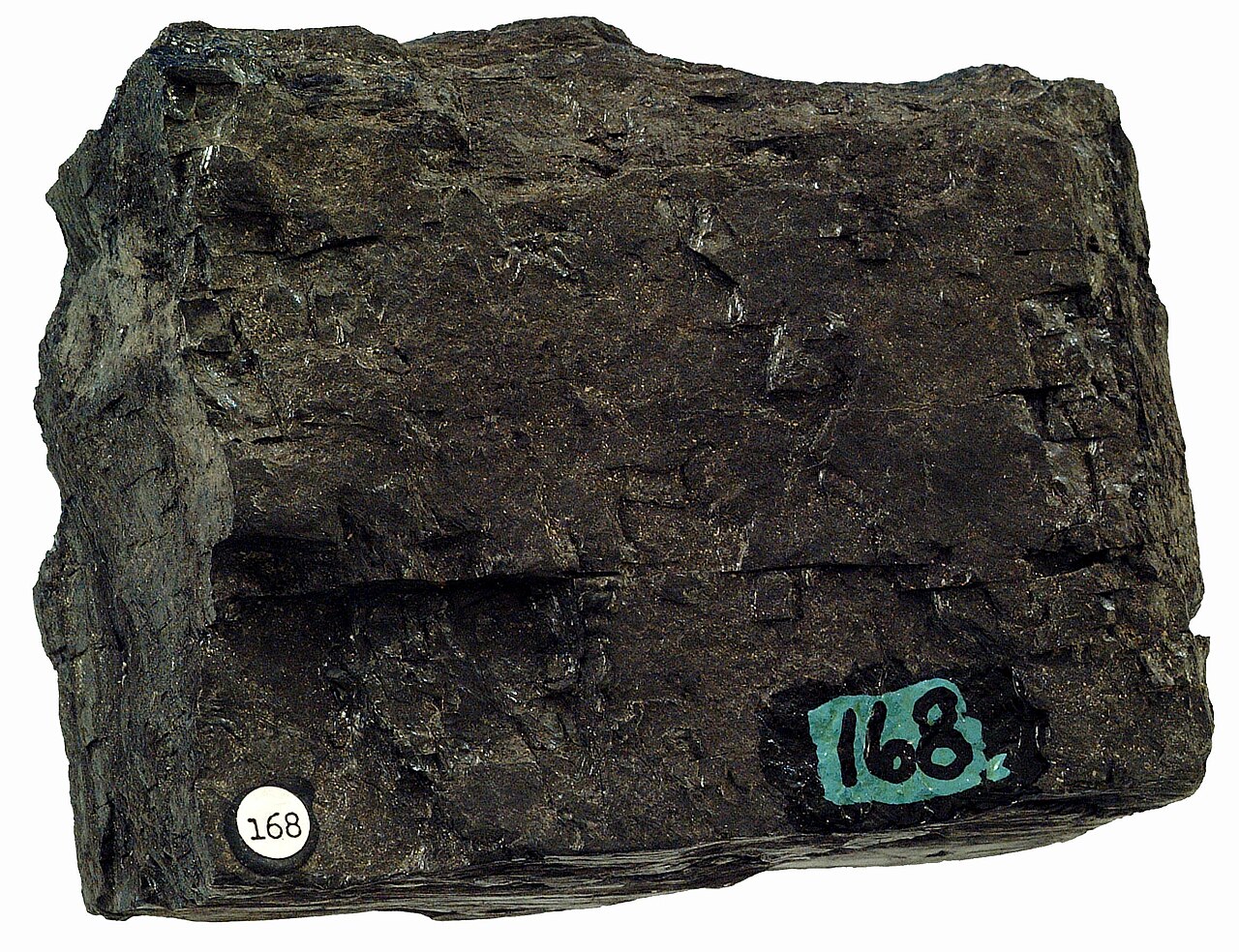
Coal
Energy
Black, brittle and light in the hand for a rock, sometimes with a dull banded sheen and a smear of soot on your fingers. It is compressed swamp vegetation, hundreds of millions of years old. Still generates more of the world's electricity than any other single fuel.
Two very different markets: thermal coal for power stations, priced per tonne at Newcastle and Richards Bay, and metallurgical (coking) coal for steelmaking, which trades at a large premium. China and India dominate consumption; Australia and Indonesia dominate seaborne export. Quality is graded by energy content, ash, sulfur and moisture.
Nessa Eull · CC0 · Wikimedia Commons
-
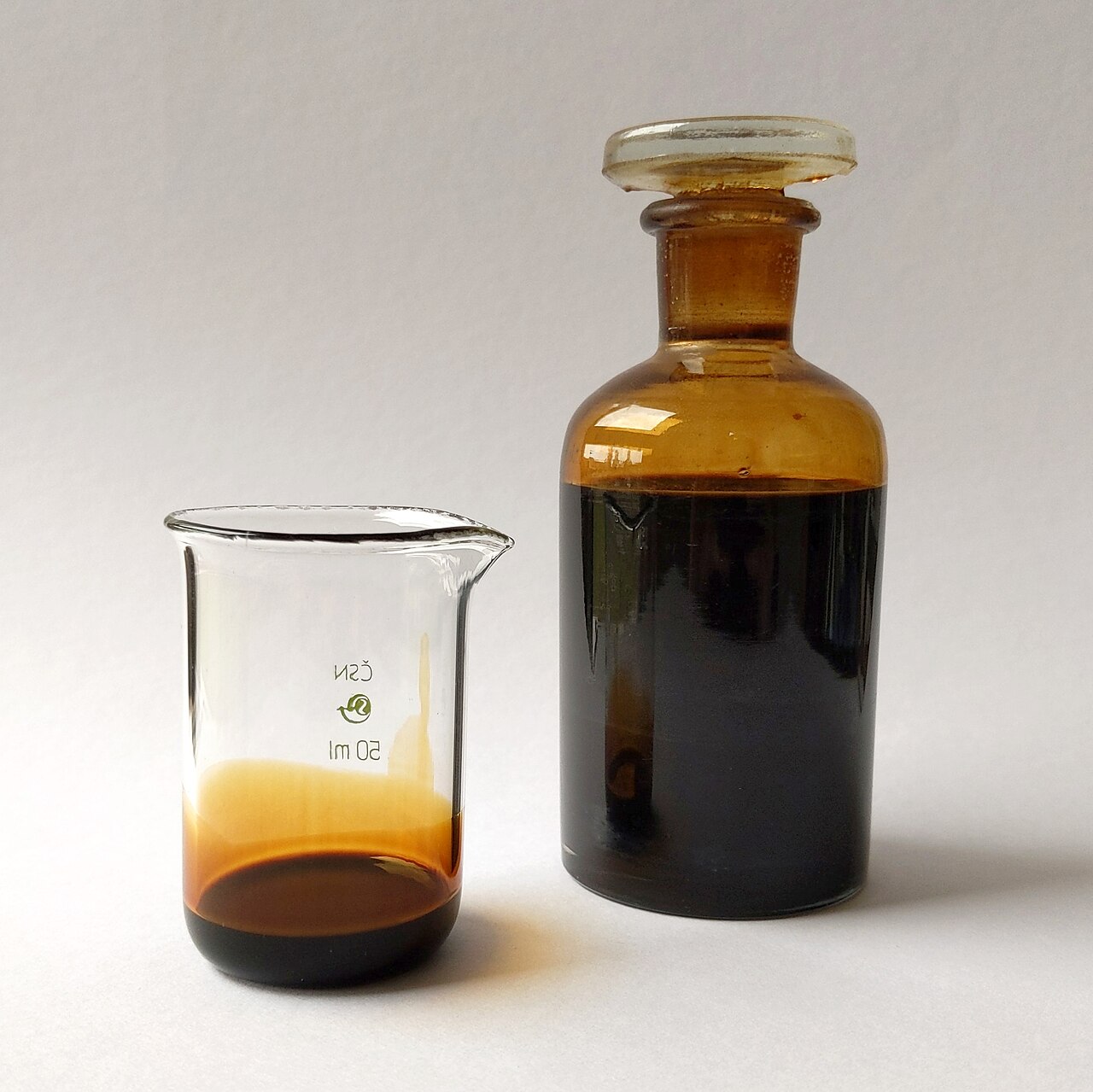
Crude oil
Energy
A viscous liquid ranging from straw-brown to near-black, sometimes thin enough to pour like syrup and sometimes stiff as tar. Refined into petrol, diesel, jet fuel, plastics, fertiliser and asphalt. The single most valuable traded commodity on earth.
Priced per 42-gallon barrel against two main benchmarks: Brent, waterborne and global, and WTI, landlocked at Cushing, Oklahoma. Grades are described by density (light versus heavy) and sulfur content (sweet versus sour); light sweet crude commands the premium because it is cheapest to refine.
Nefronus · CC0 · Wikimedia Commons
-
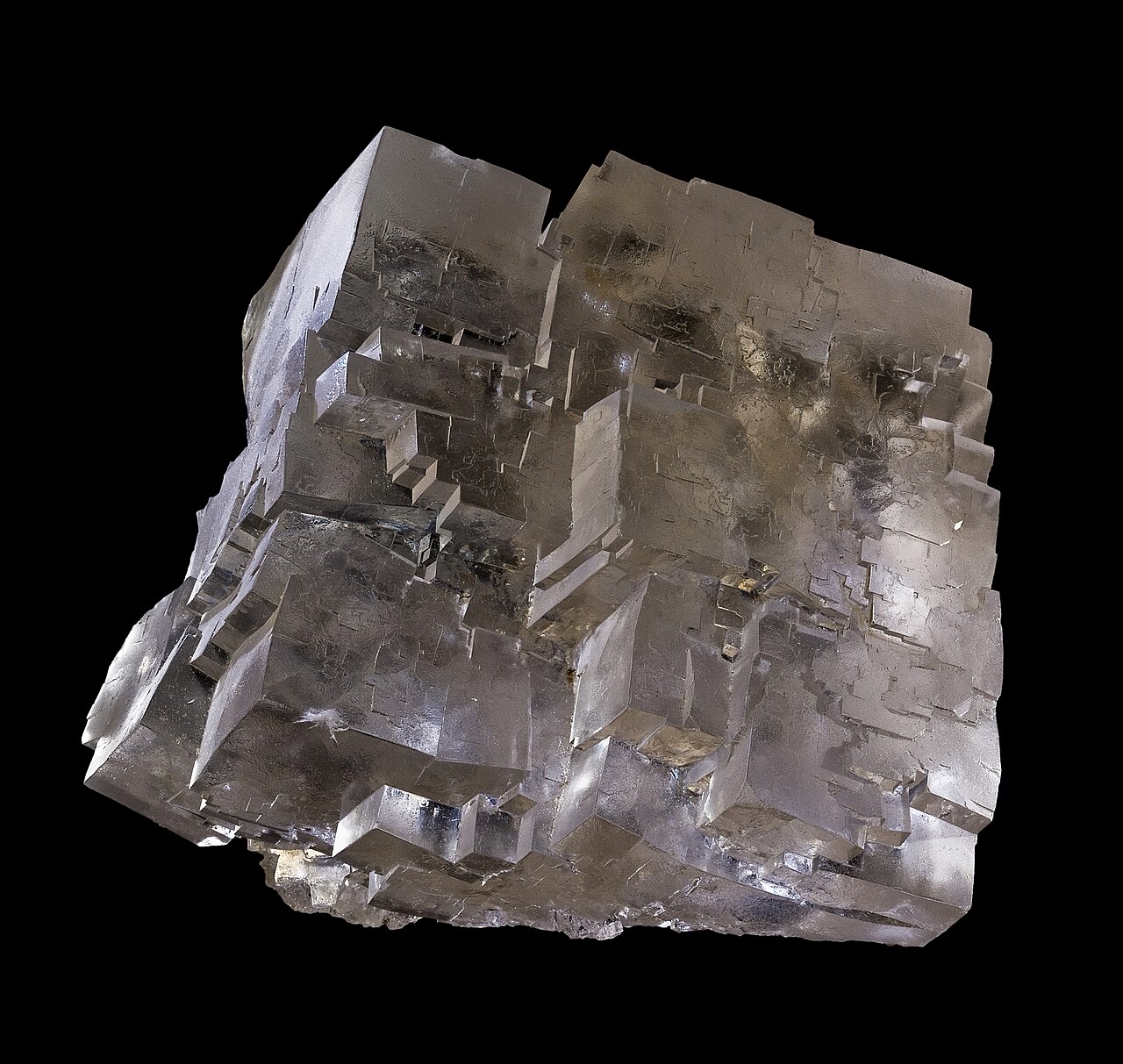
Rock salt (halite)
Industrial mineral
Glassy cubes that break cleanly into smaller cubes, colourless when pure but often stained pink, orange or grey by clay and iron. Dissolves in water and tastes unmistakable. Mined by the hundreds of millions of tonnes — far more goes on winter roads and into chemical plants than onto food.
The cheapest bulk mineral there is by value per tonne, so freight dominates the delivered price and it sells regionally rather than globally. About 60 percent feeds the chlor-alkali industry making chlorine and caustic soda; de-icing is the next biggest use. Sourced from rock mines, solar evaporation ponds and solution brine wells.
Didier Descouens · CC BY-SA 4.0 · Wikimedia Commons
-
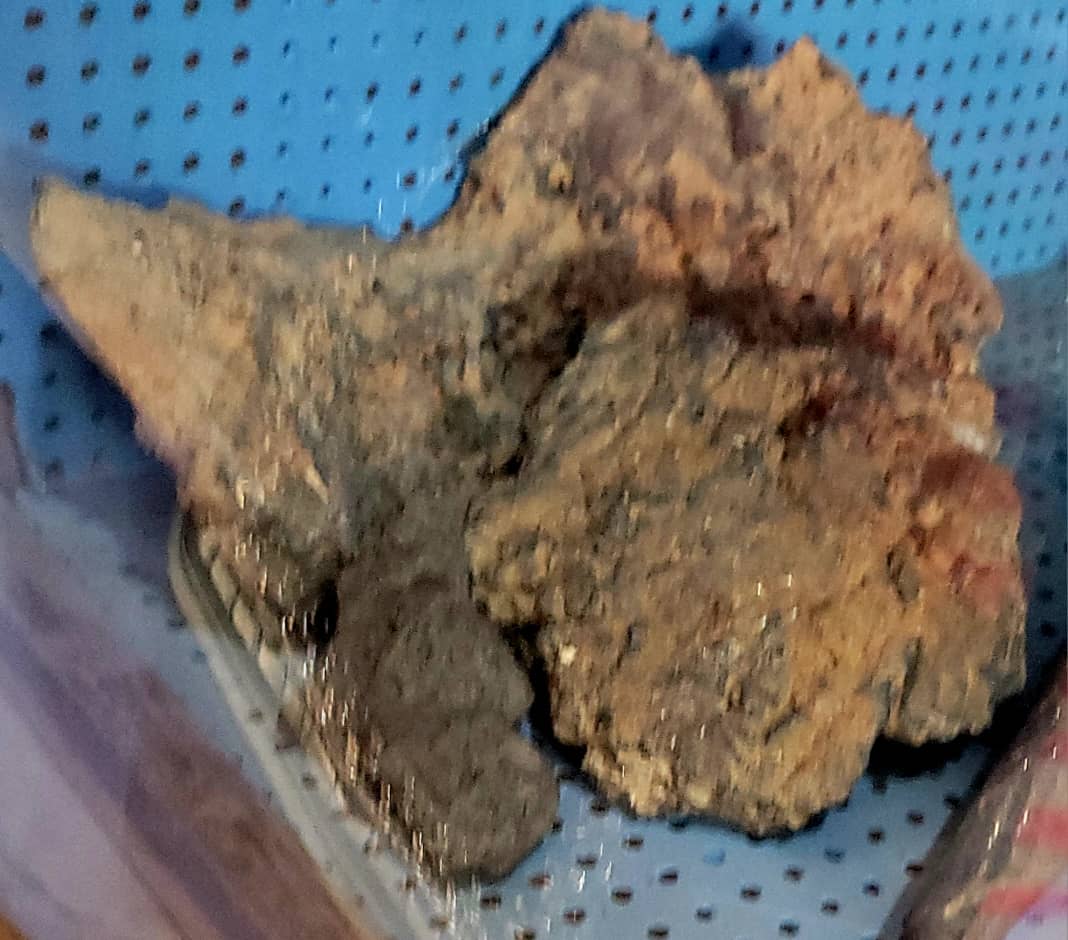
Iron ore
Bulk / steel input
Dense, dull red-brown to steel-grey lumps that leave a rusty streak on anything they scrape. Heavy out of proportion to its size. By tonnage this is the most-shipped dry commodity on the planet, and almost all of it has one destination: a blast furnace.
Priced per dry metric tonne on a 62 percent iron content basis, delivered to China, which buys roughly three-quarters of the seaborne trade. Australia and Brazil supply most of it. Sold as fines, lump, pellets and sinter feed, with penalties for silica, alumina and phosphorus.
Menslaw · CC0 · Wikimedia Commons
-
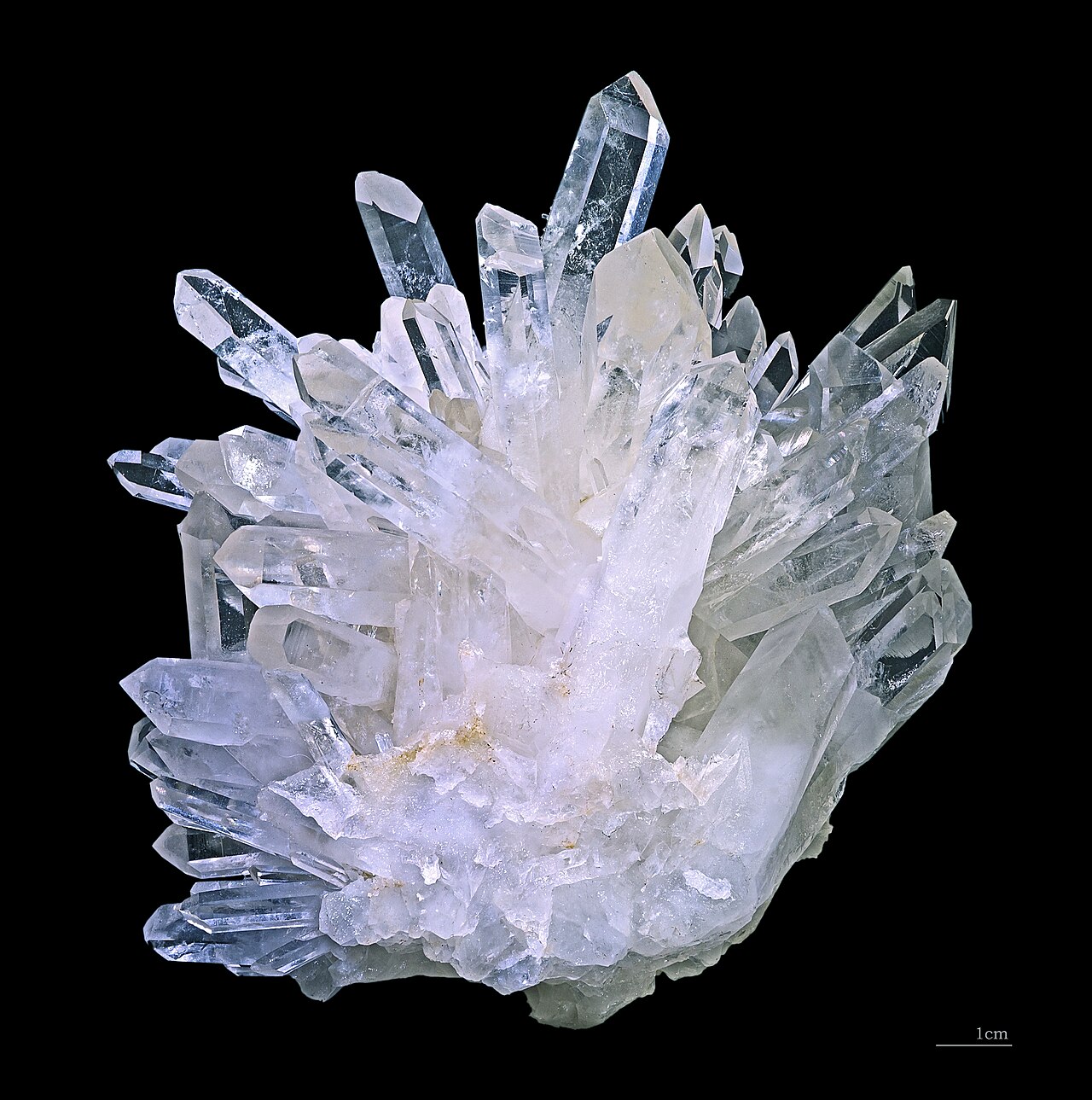
Quartz
Industrial mineral
Six-sided prisms ending in a sharp point, glassy and often water-clear. Hard enough to scratch a steel knife, and one of the commonest minerals in the earth's crust. The high-purity form is melted into crucibles and fibre optics; the ordinary form is simply sand.
Not exchange-traded — it sells on contract by purity grade. High-purity quartz for semiconductor crucibles is a genuine chokepoint commodity: a handful of deposits, notably Spruce Pine in North Carolina, supply much of the world's solar and chip industry. Metallurgical grade is smelted into silicon metal and polysilicon.
Didier Descouens · CC BY-SA 4.0 · Wikimedia Commons
-
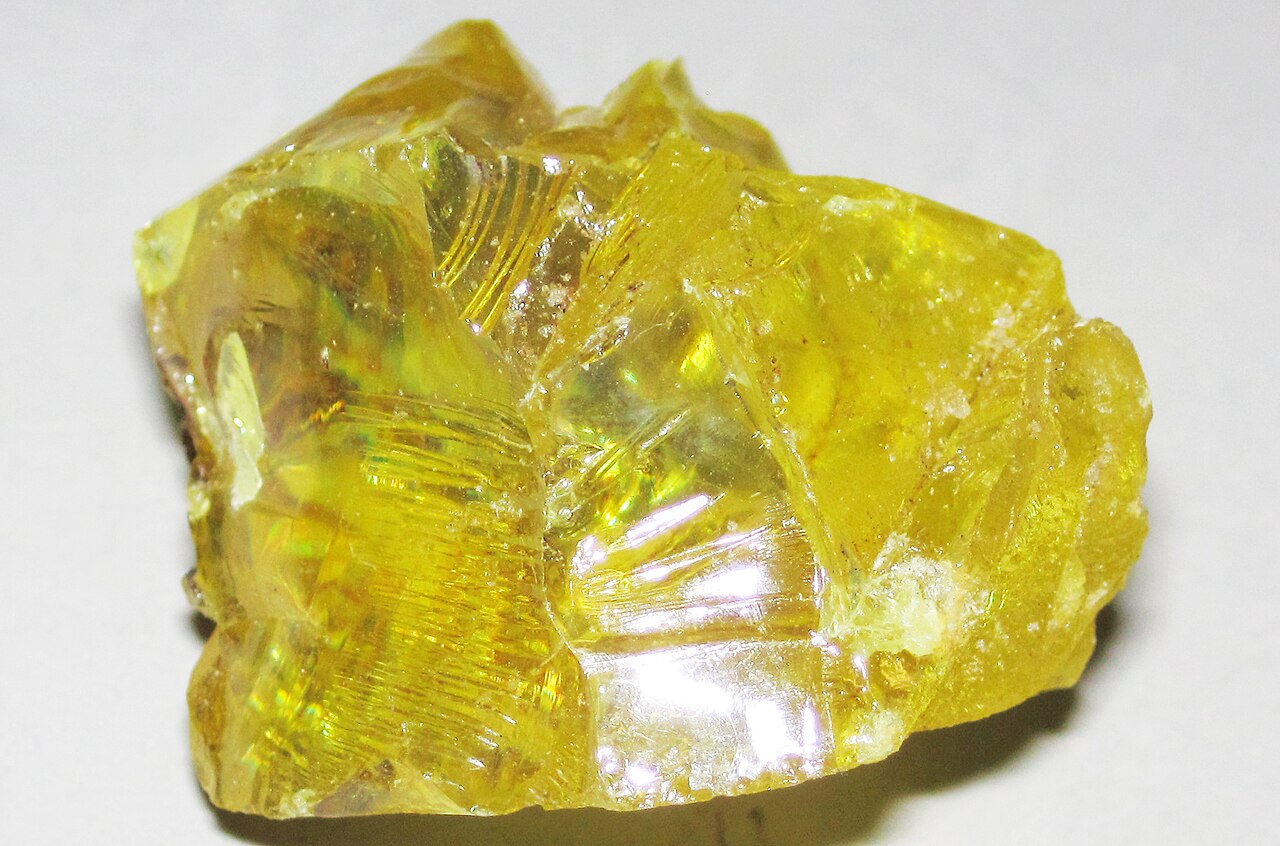
Sulfur
Industrial mineral
Startling canary-yellow, crumbly, and light enough to feel wrong for a mineral. Burns with a blue flame and a choking smell. Almost none is mined deliberately any more — it arrives as an unavoidable by-product of cleaning up oil and gas.
The starting point for sulfuric acid, the highest-tonnage industrial chemical in the world, which in turn makes phosphate fertiliser and leaches nickel and copper ores. Because supply is a refinery by-product rather than a response to demand, the price is famously violent, swinging from near-zero to several hundred dollars a tonne within a year.
James St. John · CC BY 2.0 · Wikimedia Commons
-
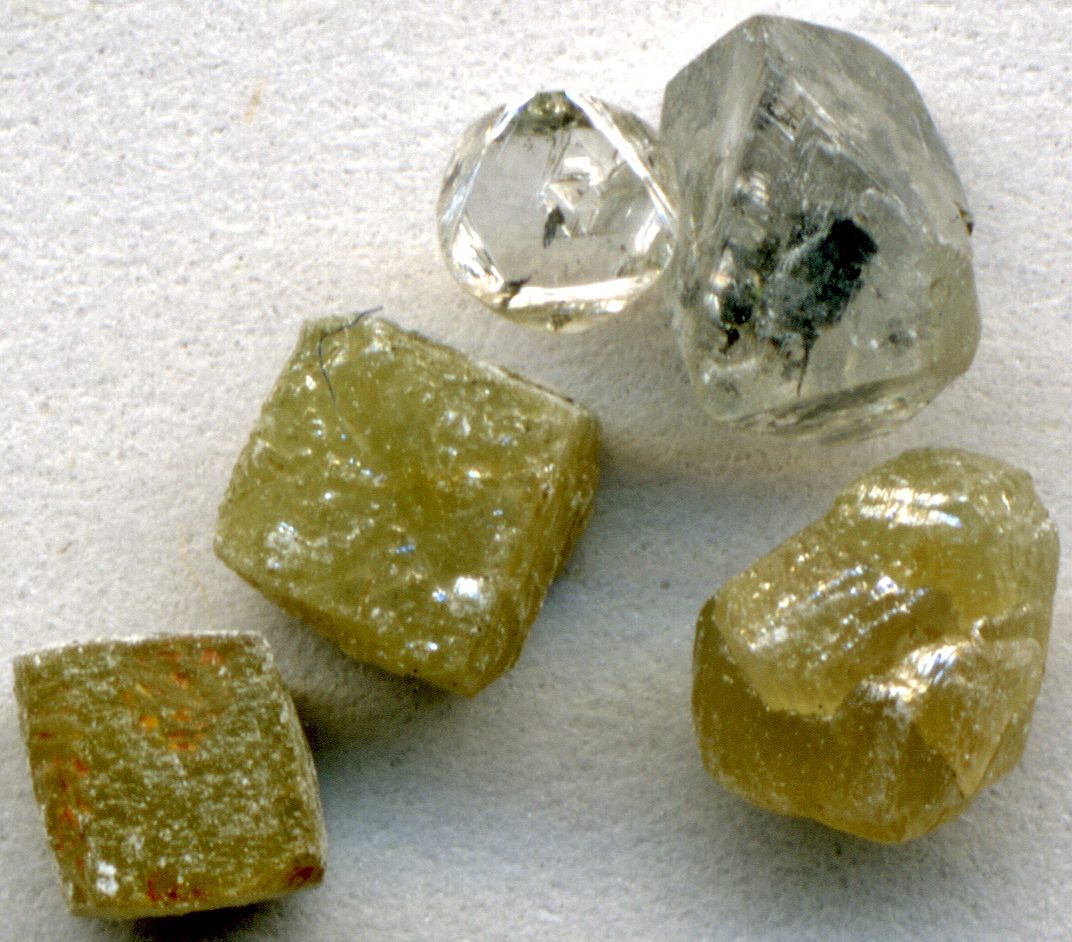
Rough diamond
Gemstone
Rounded octahedral crystals with a greasy, slightly frosted surface — far less sparkling than the cut stones in a shop window. The hardest natural substance known, which is why most production never becomes jewellery at all but goes into saw blades and drill bits.
Gem stones are priced individually by carat, colour, clarity and cut, so there is no single quoted price or futures contract. Russia, Botswana, Canada and the DRC lead output. Industrial demand is met almost entirely by cheaper synthetic stones, and lab-grown gems have collapsed the low end of the jewellery market since the late 2010s.
James St. John · CC BY 2.0 · Wikimedia Commons
-
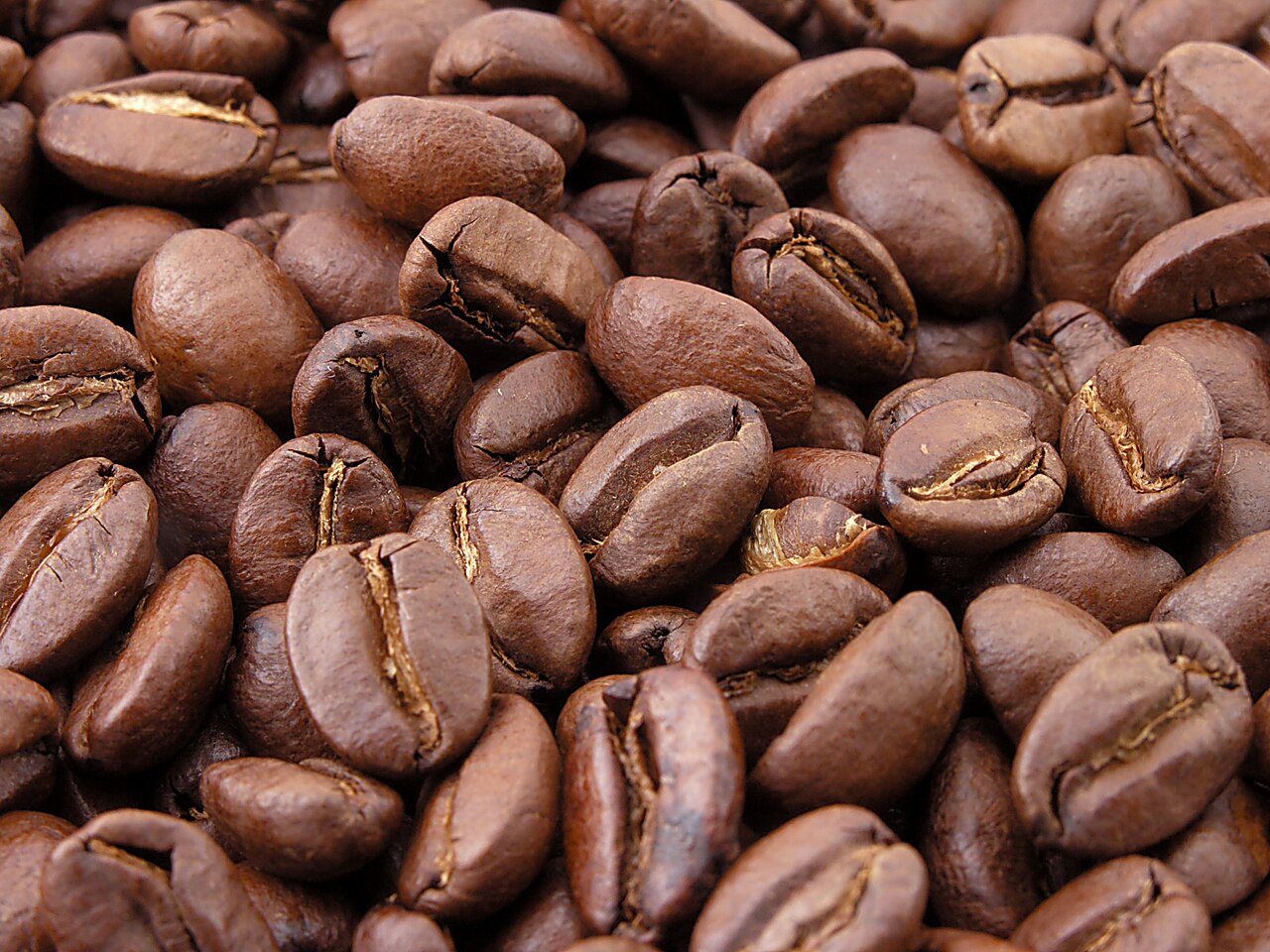
Coffee beans
Soft commodity
Oval seeds with a distinctive crease down one flat side. Pale sage-green and odourless until roasting turns them brown and aromatic. Grown on a shrub in the tropical highlands, hand-picked as red cherries, and second only to oil in the value of goods exported by many developing countries.
Two species trade separately: Arabica, priced in US cents per pound on ICE New York, and the hardier, more bitter Robusta, priced per tonne in London. Brazil and Vietnam dominate supply. The price is driven by Brazilian frost and drought, and by the plant's biennial habit of alternating heavy and light crops.
MarkSweep · Public domain · Wikimedia Commons
-
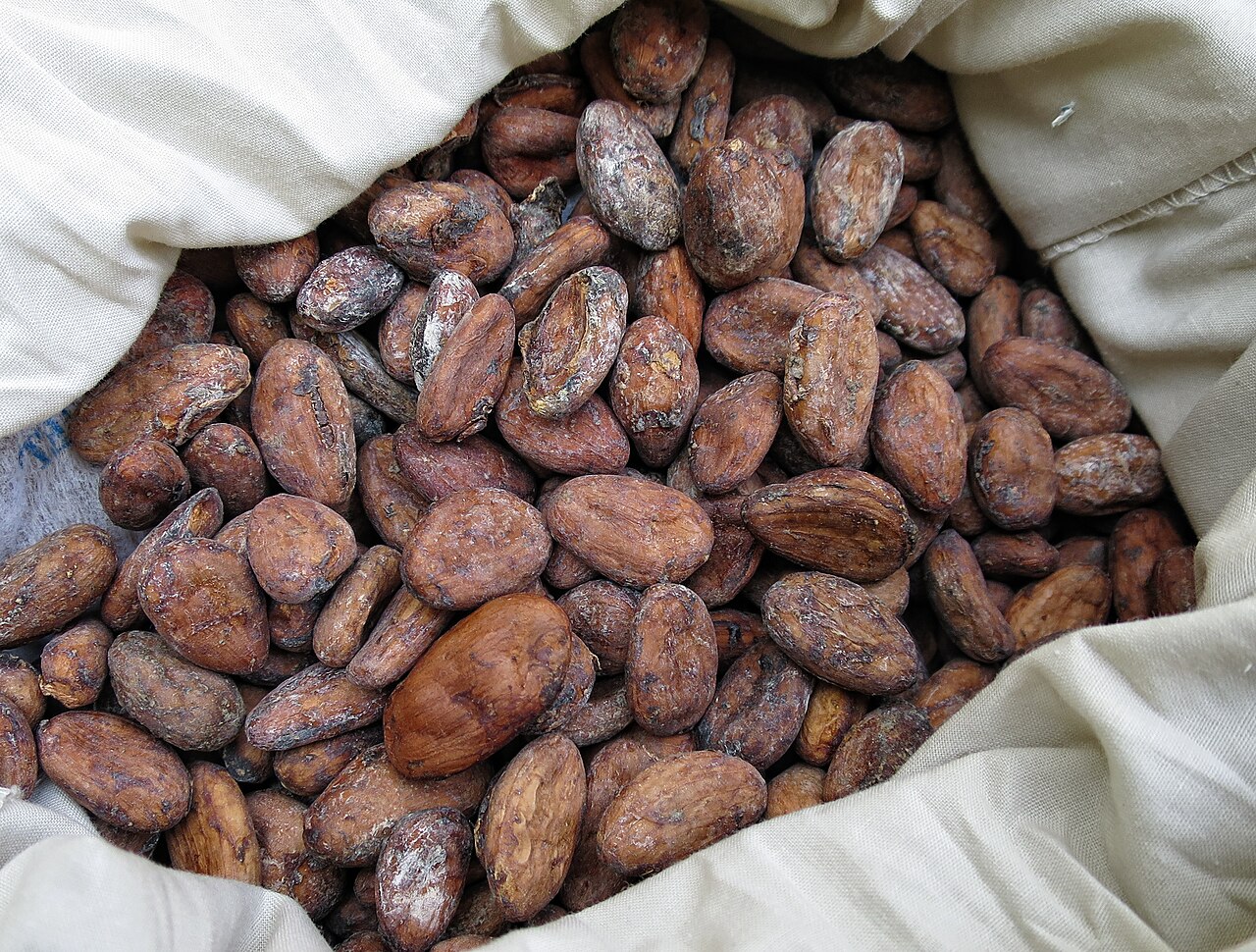
Cocoa beans
Soft commodity
Flattish purple-brown seeds, larger than a thumbnail, prised from a melon-sized pod that grows straight out of the trunk of the tree. Fermented in heaps under banana leaves and sun-dried before shipping. Roughly 70 percent of the world's supply comes from four West African countries.
Traded per tonne in London and on ICE New York. Côte d'Ivoire and Ghana together grow more than half the crop and set farmgate prices administratively. Extremely weather- and disease-sensitive: swollen shoot virus, black pod and the West African harmattan wind all move the market, which more than tripled during the 2023-24 deficit.
Mikkel Houmøller · CC BY-SA 4.0 · Wikimedia Commons
-
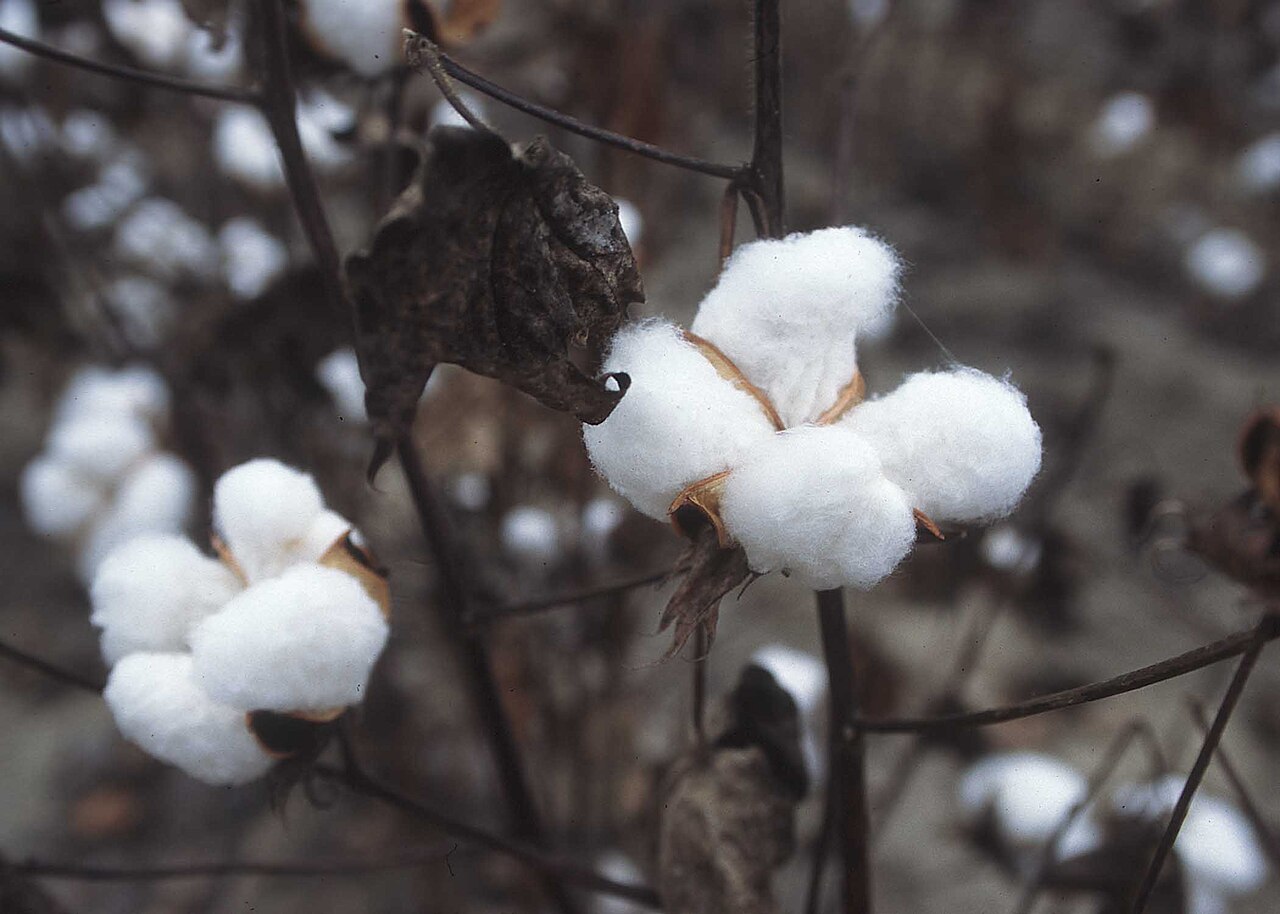
Cotton
Soft commodity
A white fluff of fibre burst out of a dried, woody husk on a knee-high plant. The fibres are pure cellulose and hollow, which is what makes the woven cloth breathable. Its seed is crushed separately for oil and cattle feed.
Priced in US cents per pound on ICE, and graded on staple length, micronaire, strength and colour — extra-long-staple Pima and Egyptian cotton trade at a wide premium. China, India, the US and Brazil dominate. It competes directly with polyester, so the crude oil price is a genuine input to cotton demand.
Unknown photographer · Public domain · Wikimedia Commons
-
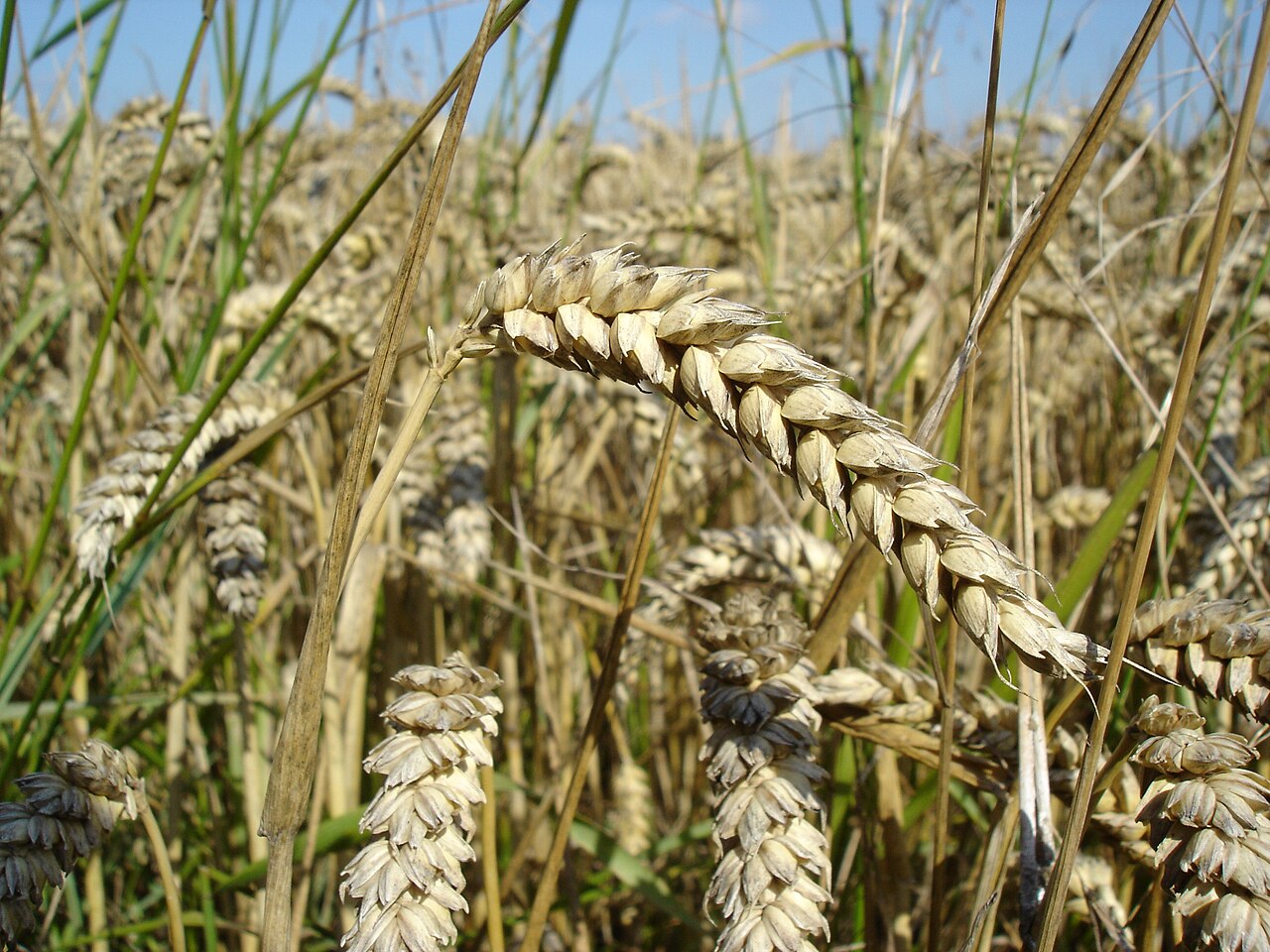
Wheat
Grain
A bearded head of hard, oval golden grains on a hollow straw stem. Ground into the flour behind bread, pasta and noodles, and the single largest source of vegetable protein in the human diet. More land is planted with it than with any other food crop.
Priced in US cents per bushel in Chicago, with separate contracts for soft red winter, hard red winter and hard red spring — protein content is what separates them. Russia is now the largest exporter by far, which is why the 2022 Black Sea disruption spiked global bread prices. Watch northern-hemisphere winterkill and monsoon timing.
User:Bluemoose · CC BY-SA 3.0 · Wikimedia Commons
-
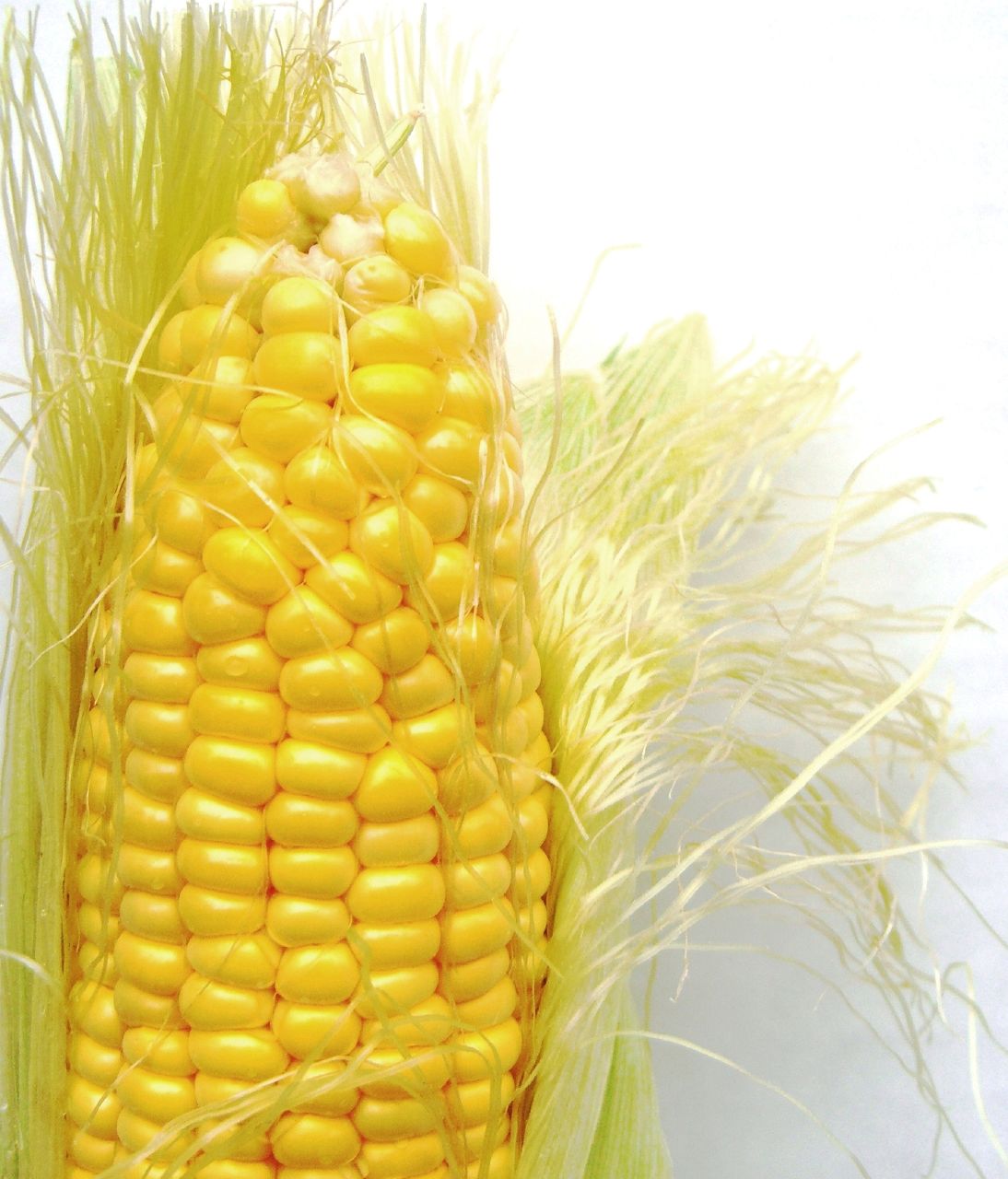
Corn (maize)
Grain
Fat, glossy, wedge-shaped kernels packed in rows on a woody core, inside a green sheath. The highest-tonnage crop on earth, yet only a small fraction is eaten directly by people — most is fed to livestock or fermented into fuel alcohol.
Priced in US cents per bushel in Chicago and the benchmark for the whole feed complex. The US grows about a third of it and diverts roughly 35 percent of its crop to ethanol, which welds the corn price to fuel policy. Key drivers: US Midwest July rainfall, Chinese import demand, and the soybean acreage trade-off each spring.
darwin Bell · CC BY 2.0 · Wikimedia Commons
-
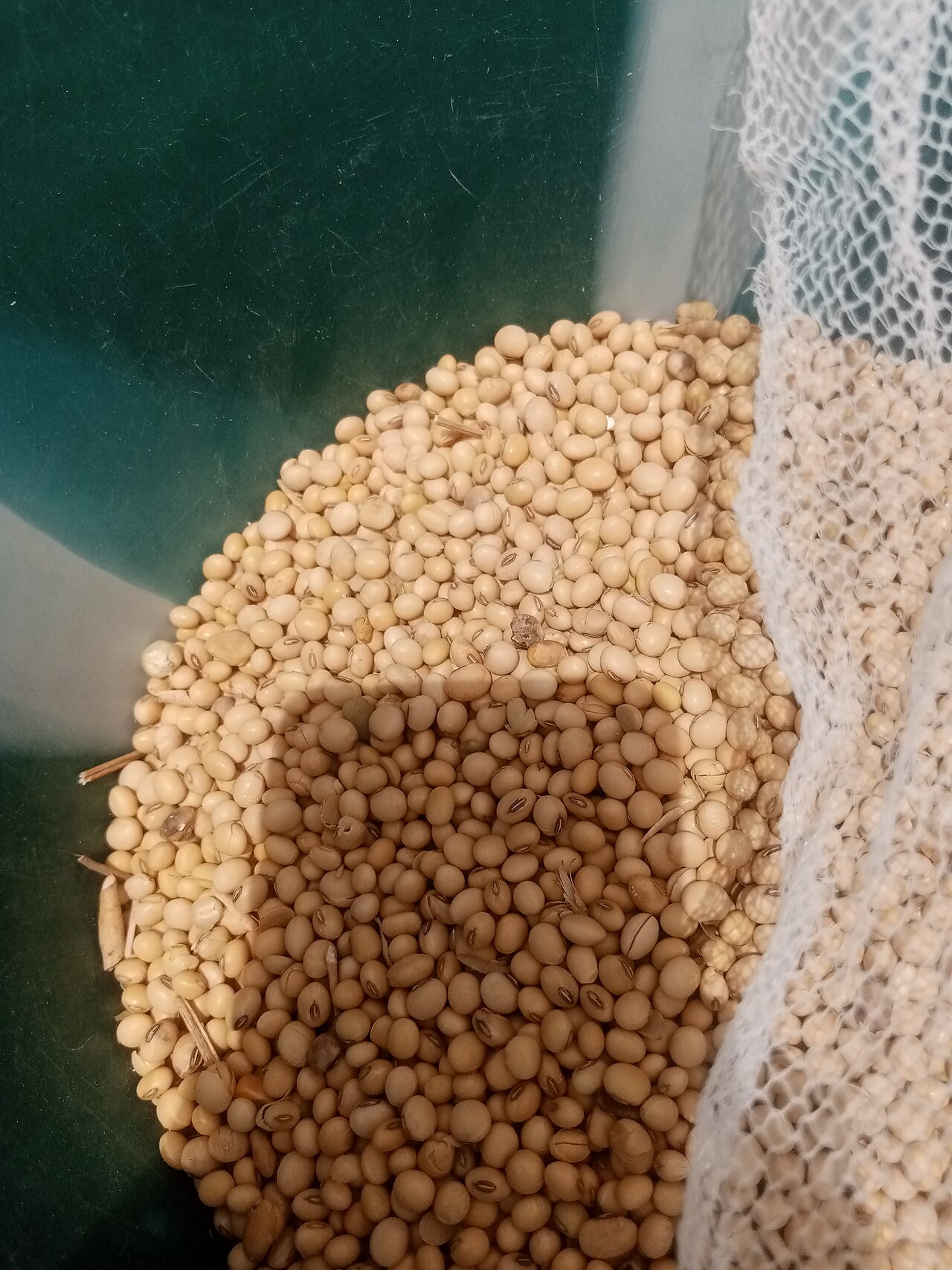
Soybeans
Oilseed
Small, hard, near-spherical straw-coloured beans with a faint dark scar on one edge. Grown on a bushy annual legume that fixes its own nitrogen. Crushed rather than eaten: the process splits it into a high-protein animal feed and a cooking oil.
Priced in US cents per bushel in Chicago, alongside separate futures for the two products — soybean meal per short ton and soybean oil per pound. The gap between the bean and its products is the "crush spread" that drives processor margins. Brazil overtook the US as top exporter; China buys about 60 percent of world trade.
Rare Grace · CC BY-SA 4.0 · Wikimedia Commons
-
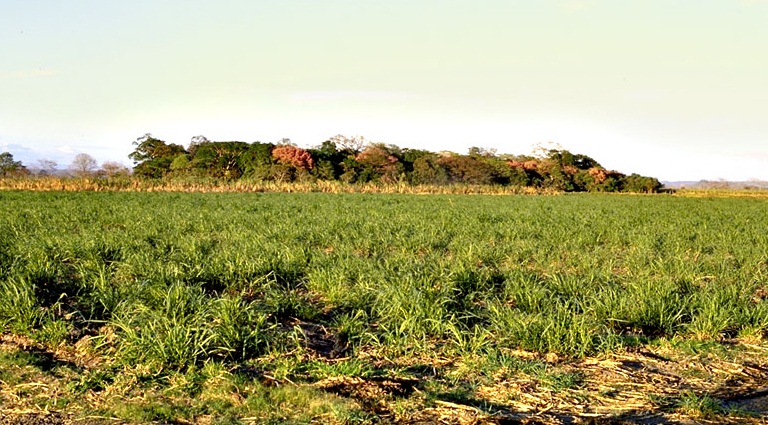
Sugar cane
Soft commodity
Thick, jointed, bamboo-like stalks two to four metres tall, cut close to the ground and crushed within a day or two before the juice sours. Yields both crystallised sweetener and, increasingly, fuel alcohol — mills switch between the two depending on which pays better that month.
Raw sugar trades in US cents per pound as the ICE No. 11 contract; refined white sugar trades per tonne in London. Brazil is the swing producer, and because its mills pivot between sugar and ethanol, the sugar price is tied to fuel prices and to the Brazilian real. India's export policy is the other main shock.
Chepetoño · CC BY-SA 3.0 · Wikimedia Commons
-
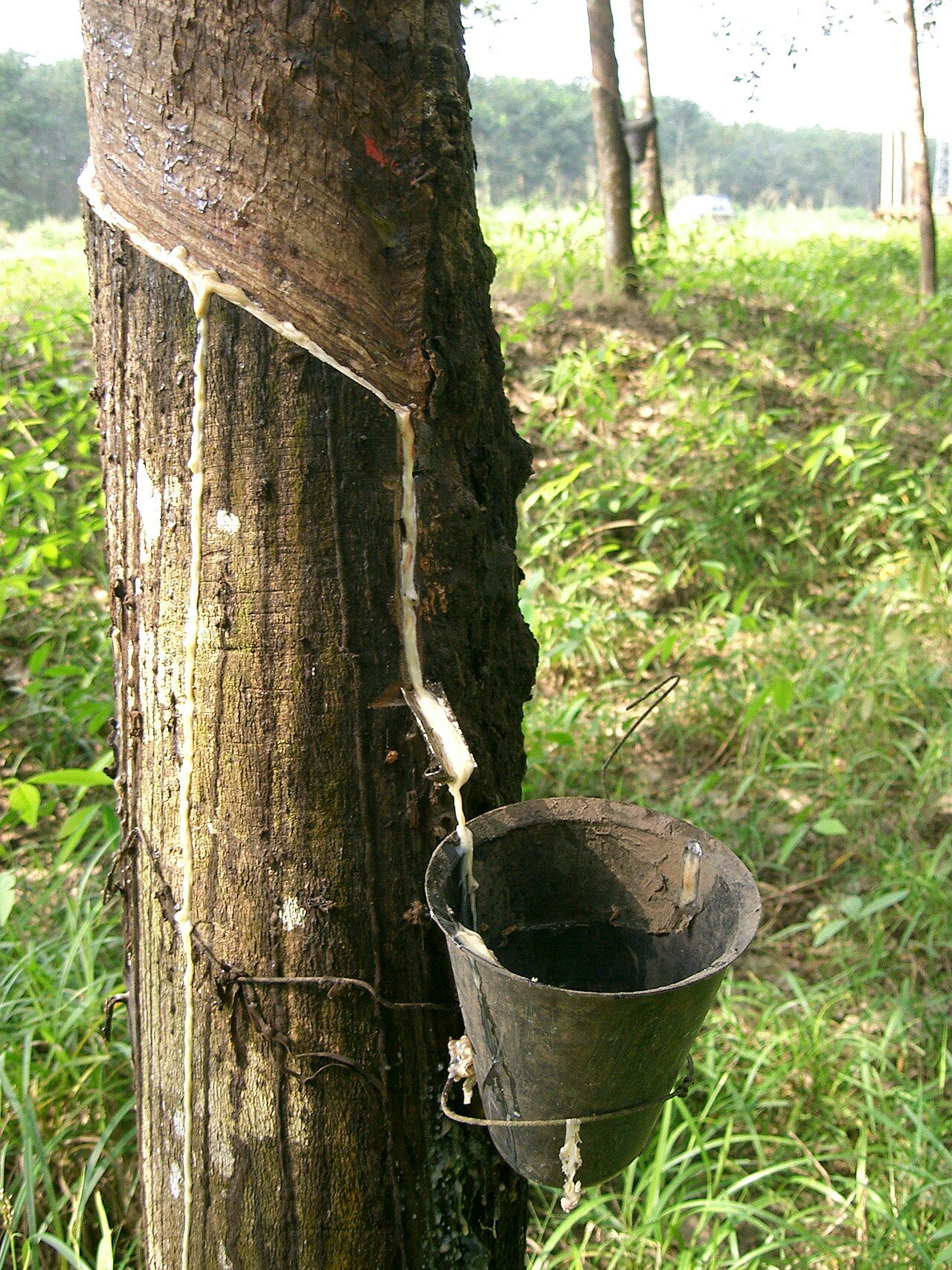
Natural rubber
Soft commodity
A milky white sap running down a spiral groove cut in the bark of a tree into a collecting cup. Coagulated and dried into sheets or bales. Still irreplaceable in truck and aircraft tyres, because the synthetic version cannot match its resistance to heat build-up.
Priced per kilo in Tokyo, Shanghai and Singapore, with grades such as RSS3 sheet and TSR20 block. Thailand, Indonesia and Vietnam grow about 70 percent of it. Tyres take roughly three-quarters of demand, so the market follows vehicle production; supply is constrained by the seven-year wait for a new tree to be tappable, plus leaf-blight disease.
PRA · CC BY-SA 3.0 · Wikimedia Commons
-
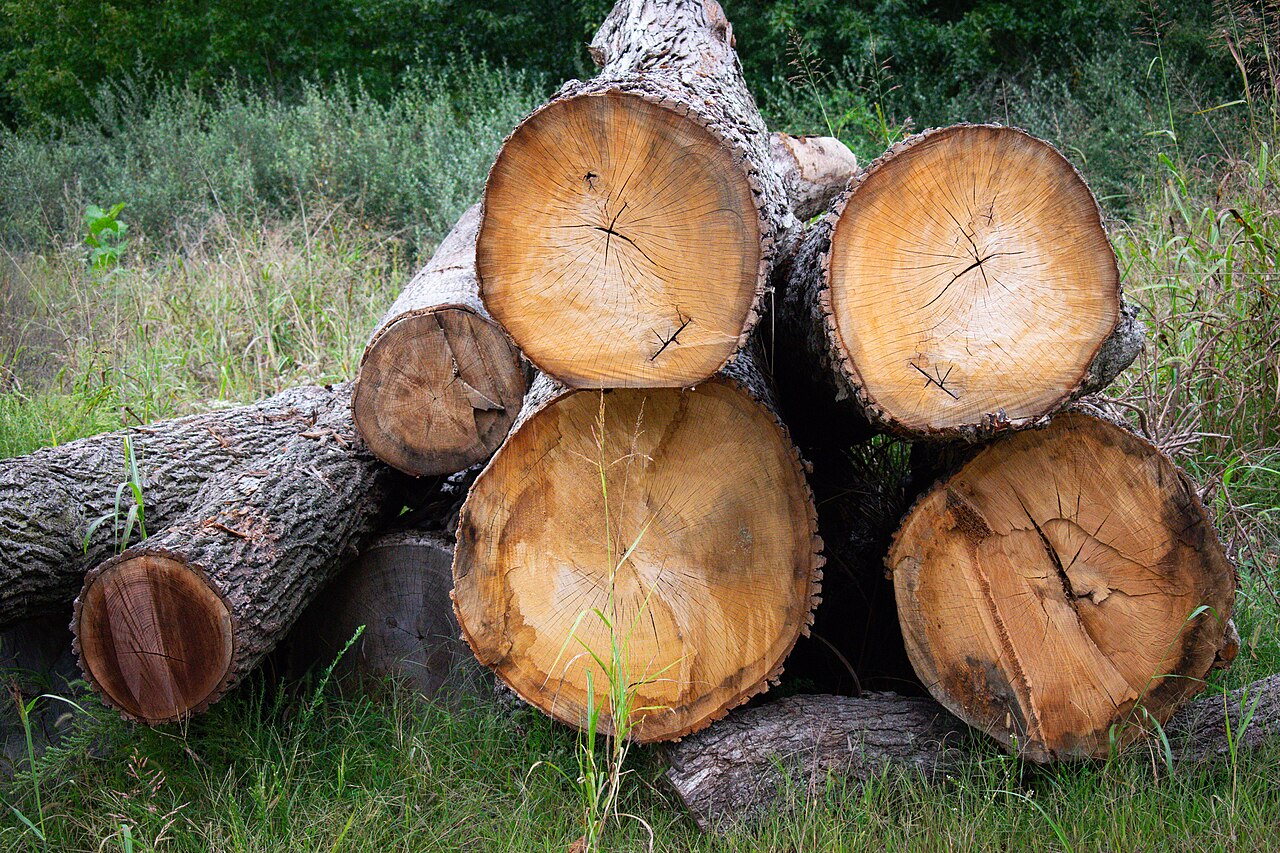
Timber (softwood logs)
Forest product
Debarked trunks stacked in a yard, cut to length, with growth rings visible on the sawn ends. Counted by volume rather than weight. The dominant structural building material in North America, where a single new house absorbs the equivalent of about an acre of managed forest.
Lumber futures trade in Chicago per thousand board feet and are among the most volatile contracts listed — sawmill capacity cannot flex quickly, so a demand swing goes straight into price. Driven by US housing starts and mortgage rates. Related but separately traded: pulp for paper, and wood pellets for power generation.
Kelsey Todd · CC BY-SA 4.0 · Wikimedia Commons
-
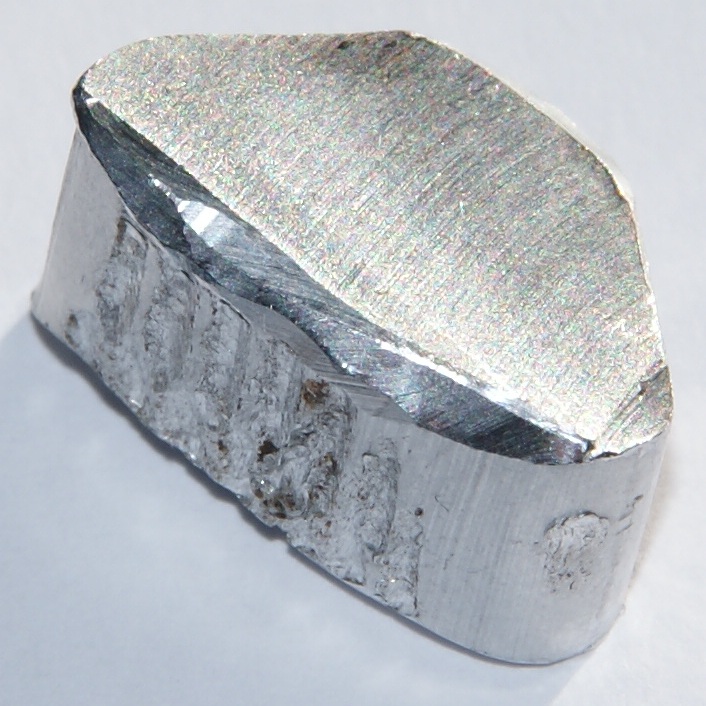
Aluminium
Base metal
Dull silvery-white, and startlingly light — about a third the weight of steel for the same volume. It forms an invisible oxide skin the instant it is exposed, which is why it resists corrosion without plating. Smelting it consumes so much electricity that plants are sited next to dams and it is nicknamed "congealed power".
Traded per tonne on the LME and the SHFE. China makes more than half the world's supply. Electricity is roughly 30-40 percent of the production cost, so the price tracks power markets and carbon policy closely; recycling needs about 5 percent of the energy of primary smelting, making scrap a structural part of supply.
Unknown author Unknown author · CC BY 3.0 · Wikimedia Commons
-
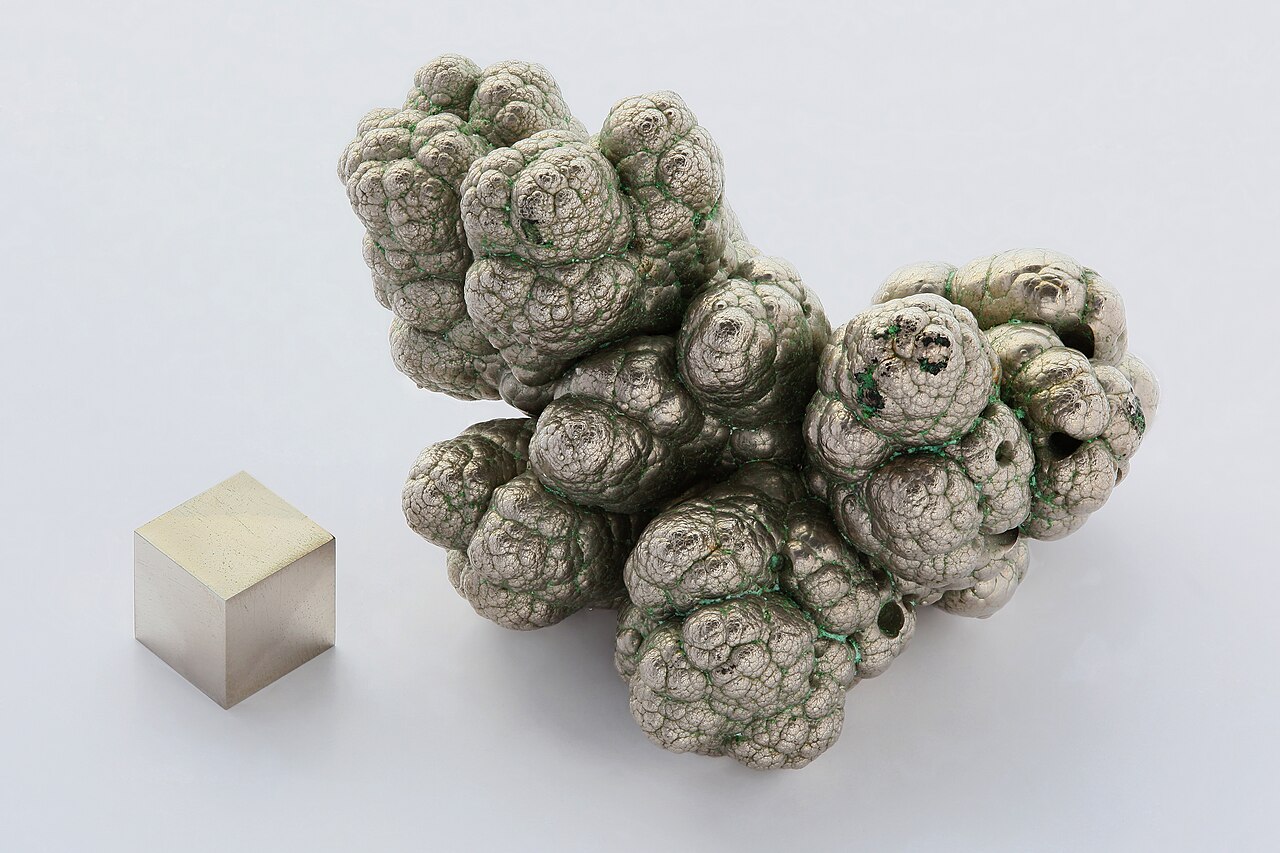
Nickel
Base metal
Hard, silvery and faintly yellow-tinged, magnetic, and very slow to corrode. Two-thirds of it goes into stainless steel to stop cutlery and sinks from rusting. The remainder is now fought over by battery makers.
Traded per tonne on the LME, which suspended and cancelled trades during the March 2022 short squeeze — a reminder of how thin the deliverable market is. Indonesia has come to dominate supply, and the price hinges on whether its cheap laterite nickel can be upgraded to the Class 1 purity that batteries need.
Alchemist-hp ( talk ) ( www.pse-mendelejew.de ) · FAL · Wikimedia Commons
-
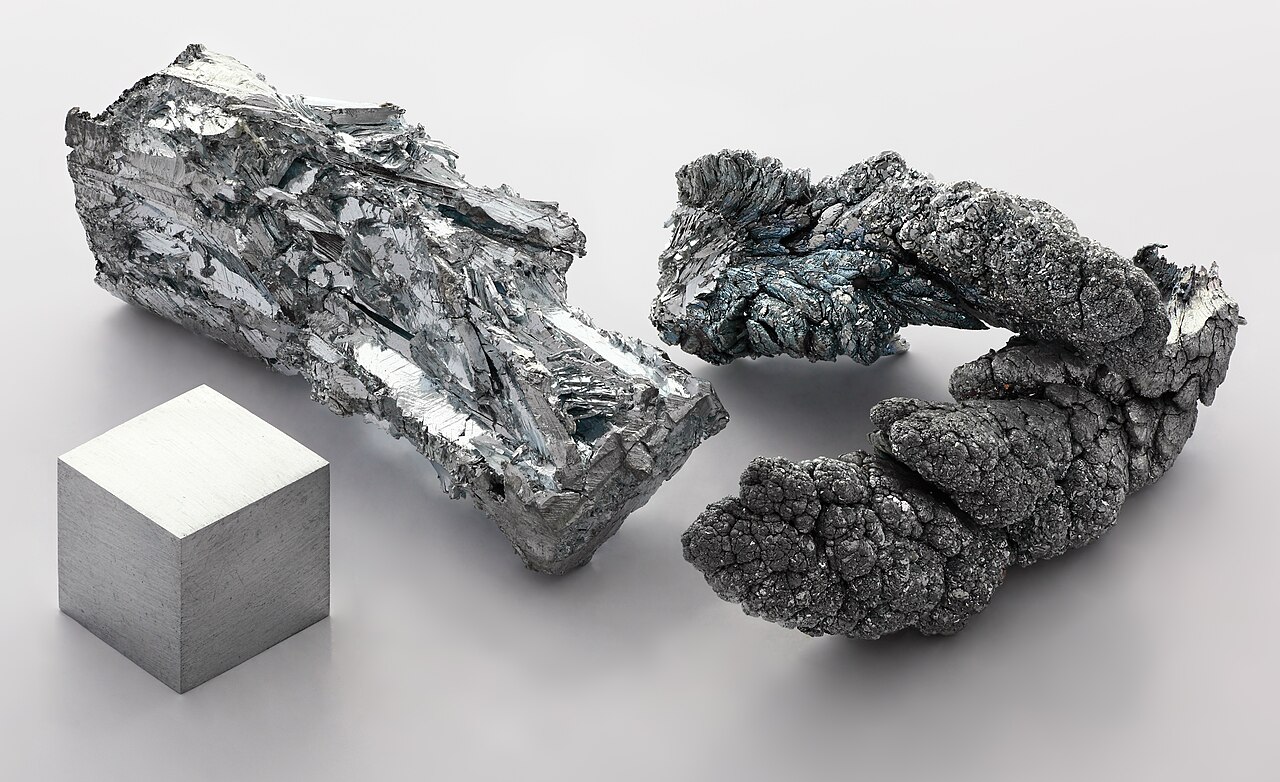
Zinc
Base metal
Bluish-grey and brittle at room temperature, with a crystalline glitter on a fresh break. Its main job is sacrificial: bonded to steel it corrodes first and leaves the steel underneath intact, which is what galvanised guardrails and roofing sheets rely on.
Traded per tonne on the LME. Around half of consumption is galvanising, so demand tracks construction and infrastructure. Most of it is mined alongside lead and silver, and China both mines and smelts the largest share. Smelter treatment charges are a closely watched signal of how tight concentrate supply is.
Alchemist-hp ( talk ) ( www.pse-mendelejew.de ) · FAL · Wikimedia Commons
-
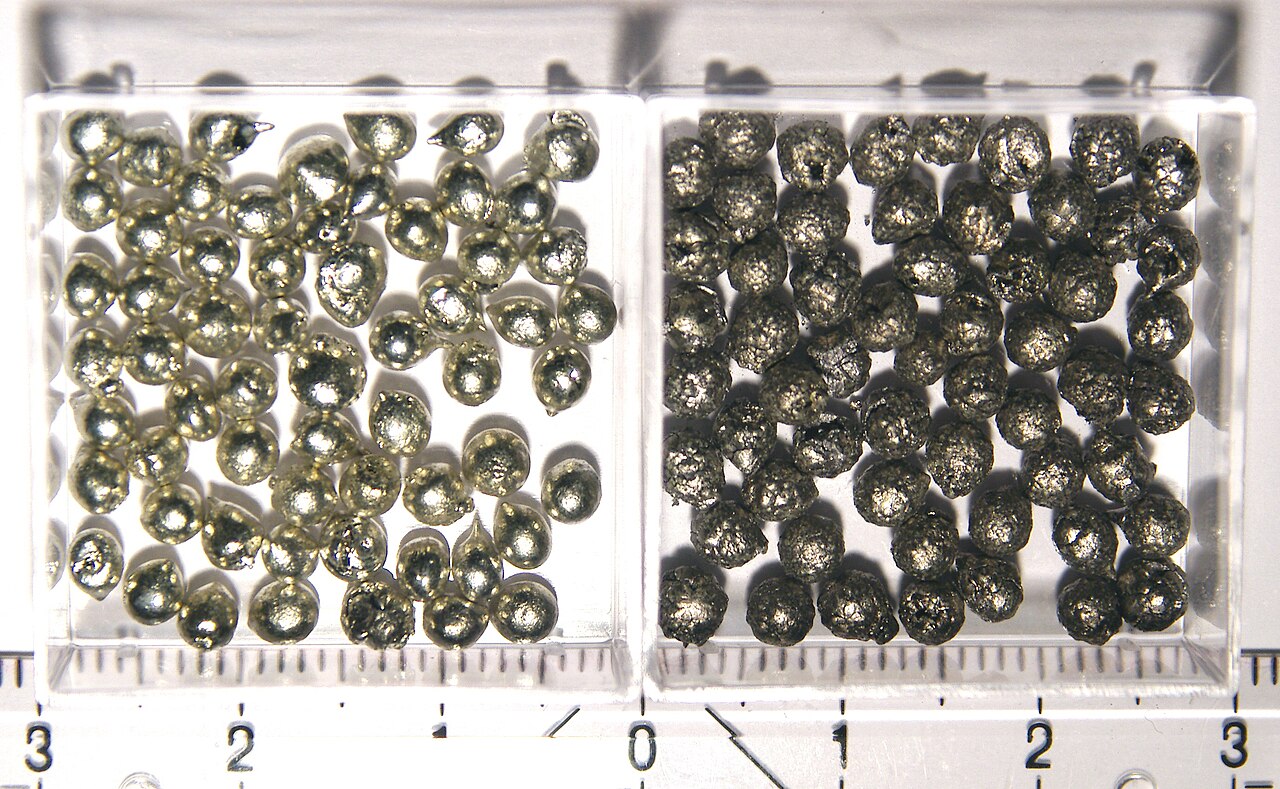
Tin
Base metal
Soft, silvery-white and low-melting — you can cut it with a knife and melt it on a stove. It is the quiet indispensable metal: nearly half of demand is the solder that joins every circuit board on earth, which is why some analysts call it the most electronics-dependent metal there is.
Traded per tonne on the LME and the smallest of the major base-metal markets, which makes it prone to squeezes. Supply is concentrated in China, Indonesia and Myanmar, plus artisanal production in the DRC; Myanmar's Wa State mining suspensions have repeatedly moved the price. Reserves are unusually short-lived relative to other base metals.
Alchemist-hp ( talk ) ( www.pse-mendelejew.de ) · CC BY-SA 3.0 de · Wikimedia Commons
-
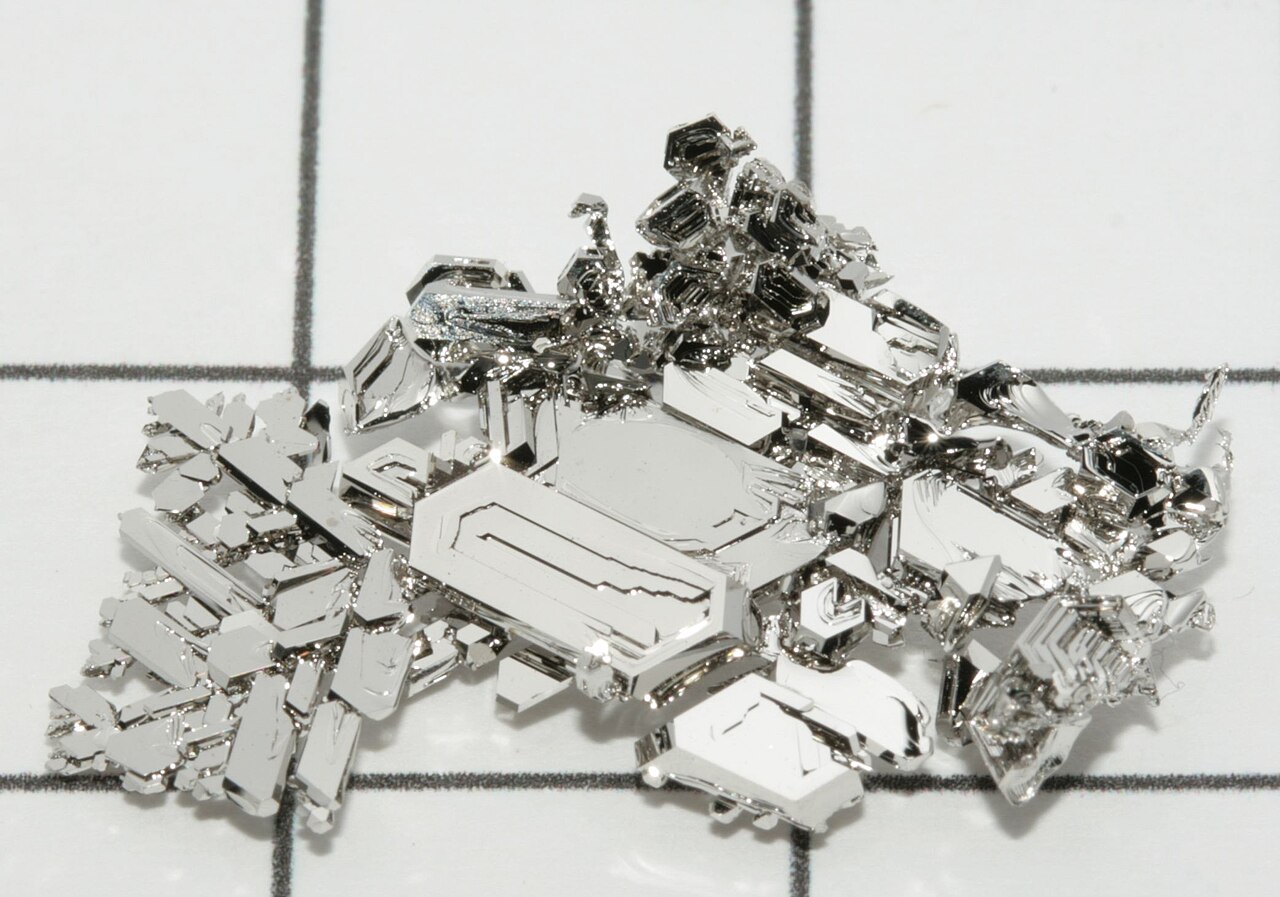
Platinum
Precious metal
Steely white-grey, dense, and so stubbornly unreactive that acid will not touch it. Rarer in the ground than gold by a wide margin. Its largest single use is chemical rather than decorative: it sits inside the exhaust of a diesel engine turning poison into carbon dioxide.
Quoted per troy ounce. South Africa's Bushveld Complex supplies roughly 70 percent of mine output, making the price hostage to power cuts and deep-level mine stoppages. Autocatalyst demand is the swing factor, and it substitutes against palladium; hydrogen electrolysers and fuel cells are the new demand story.
Periodictableru · CC BY 3.0 · Wikimedia Commons
-
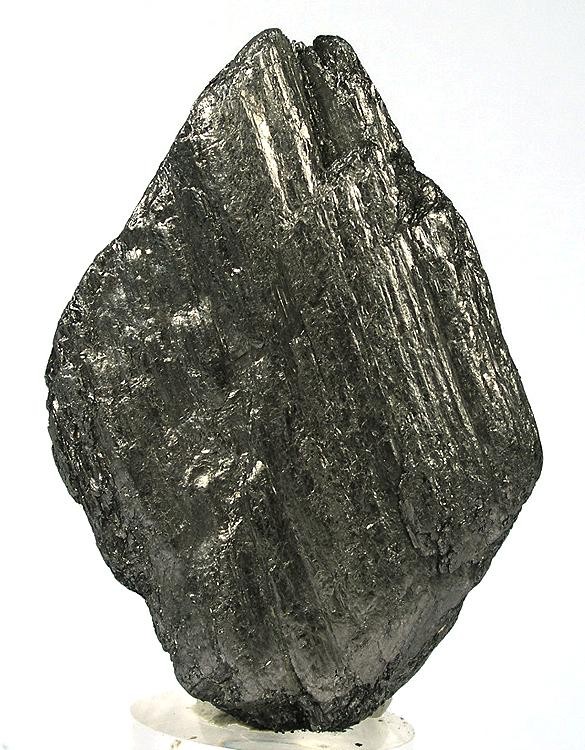
Graphite
Battery / industrial mineral
Steel-grey to black, opaque, with a slippery, greasy feel that leaves marks on your fingers and on paper. Soft enough to scratch with a fingernail, yet it conducts electricity and survives a furnace. Chemically identical to diamond, and about as different as two materials can be.
Not exchange-traded; sold on contract by flake size and purity. By weight it is the largest single ingredient in a lithium-ion battery — the anode — and China controls the great majority of both mining and the spherical-purification step, which is why Western battery makers treat it as a strategic chokepoint. Traditional uses are refractories, crucibles and brake linings.
Robert M. Lavinsky · CC BY-SA 3.0 · Wikimedia Commons
Harder 25
Ores and minerals you would meet in a geology course or a mining report.
-
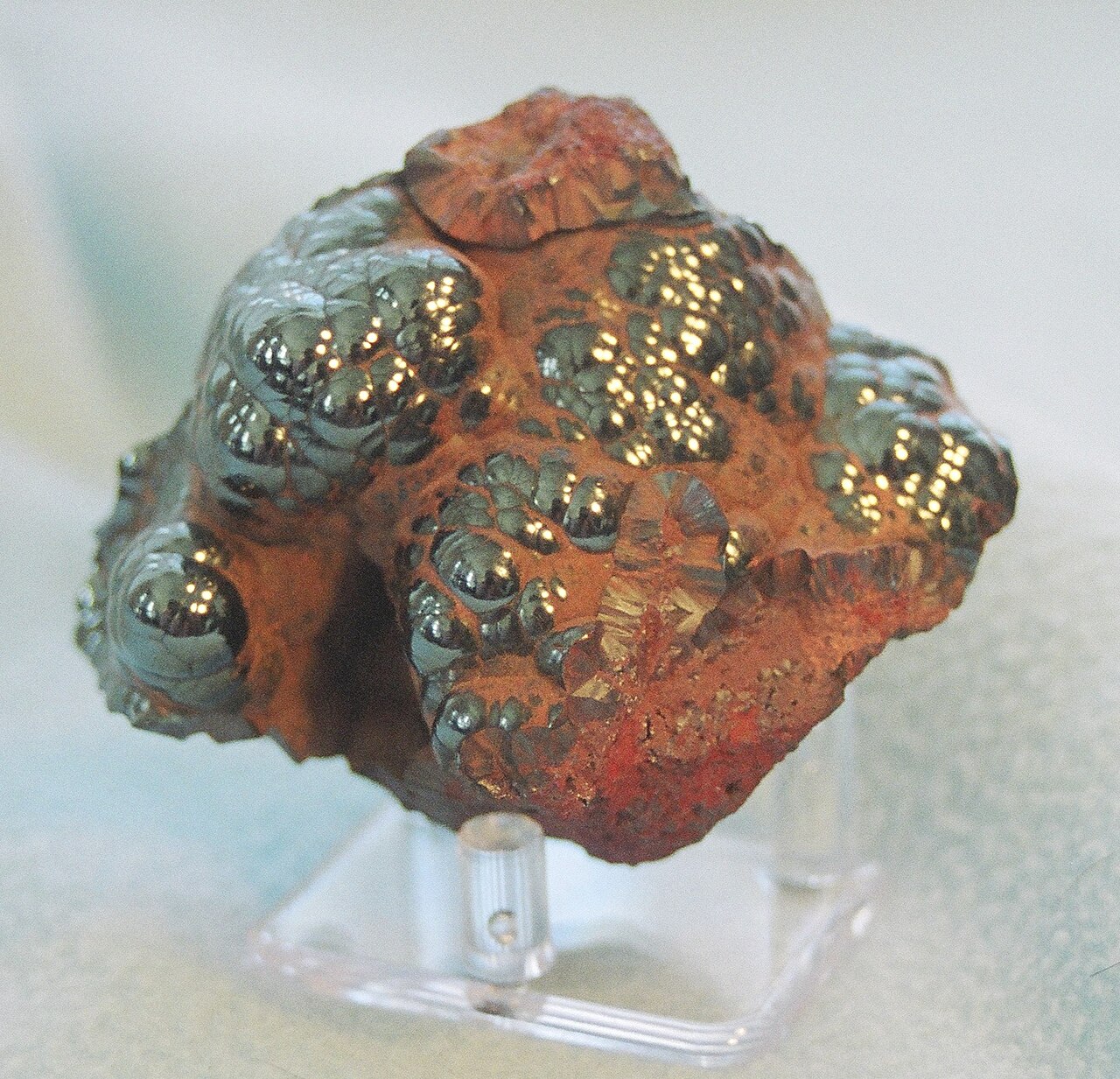
Hematite
Iron ore mineral
Steel-grey to black with a metallic to dull lustre, sometimes in kidney-shaped botryoidal masses. The giveaway is the streak: rub it on unglazed porcelain and it draws a blood-red line, whatever colour the specimen itself is. Not magnetic.
The single most important iron ore, about 70 percent iron by weight, and the reason the Pilbara and the Carajas district exist. Direct-shipping hematite ore needs little beneficiation, which is why Australian and Brazilian producers sit at the bottom of the cost curve. Its red streak is also the pigment ochre.
DanielCD~commonswiki · CC BY-SA 3.0 · Wikimedia Commons
-
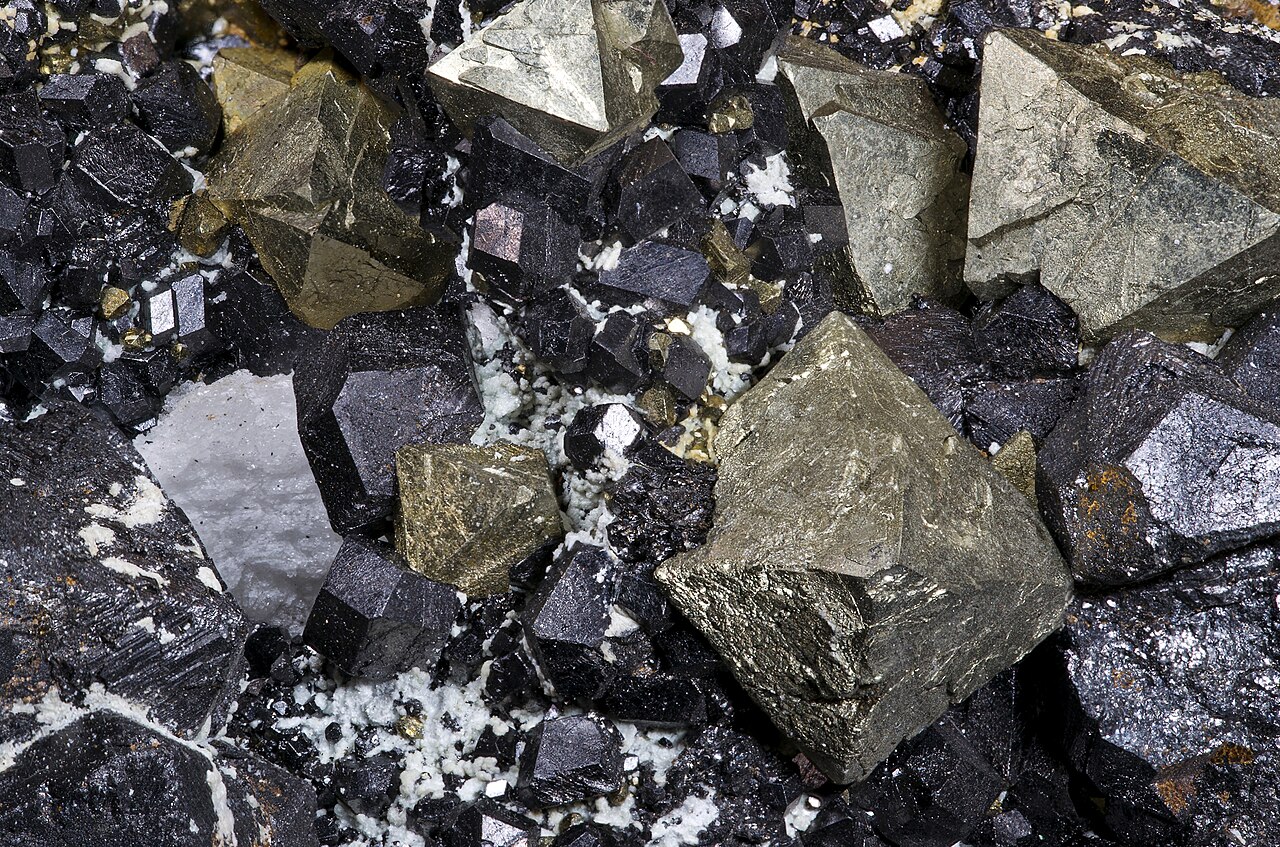
Magnetite
Iron ore mineral
Black, heavy, metallic, and often in sharp octahedral crystals. The one property no other common ore shares: it is strongly magnetic on its own, enough to deflect a compass needle or pick up a paperclip. Its streak is black, not red.
Lower-grade than hematite as mined but it magnetically separates cheaply into a very clean, high-iron concentrate — ideal for pellet feed and for the direct-reduced iron that green steelmaking needs. That premium has revived magnetite projects in Australia and Scandinavia despite their higher processing cost.
Archaeodontosaurus · CC BY-SA 3.0 · Wikimedia Commons
-
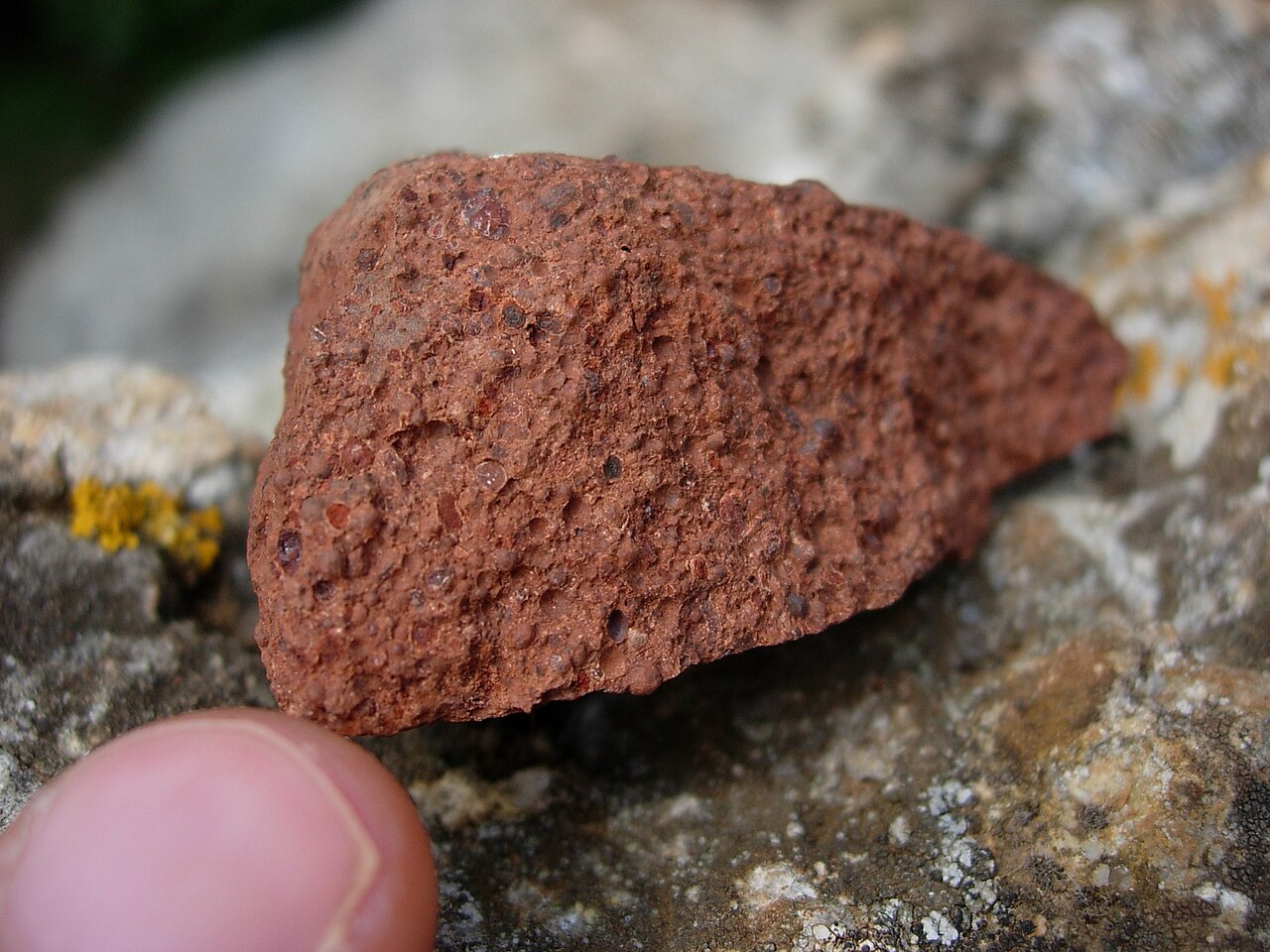
Bauxite
Aluminium ore
Earthy, chalky-looking rock in brick-red to buff brown, very often full of small round pea-like nodules set in a fine matrix. Soft, light, and not metallic at all despite being the only ore of a major metal. Forms as a tropical weathering crust.
Refined in two stages: the Bayer process dissolves it into alumina, then smelters electrolyse alumina into aluminium metal, needing roughly four tonnes of ore per tonne of metal. Guinea, Australia and China dominate supply, and Indonesia's and Guinea's export rules have repeatedly shaken the alumina price.
saphon · CC BY-SA 1.0 · Wikimedia Commons
-
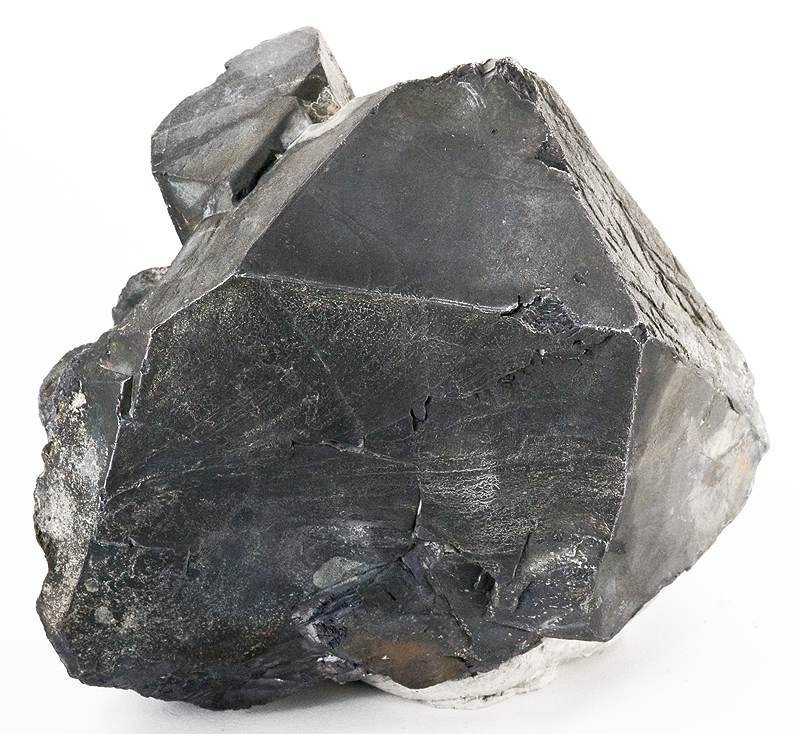
Galena
Lead ore mineral
Bright lead-grey metallic cubes that cleave into perfect smaller boxes when struck. Astonishingly heavy for its size — the densest mineral most collectors ever handle. Tarnishes to a dull grey. Almost always carries silver as a passenger.
The principal ore of lead, with lead-acid car batteries taking around 85 percent of demand, plus radiation shielding and roof flashing. Its silver by-product is a major share of world silver supply. Lead trades per tonne on the LME; the market is unusual in that recycled metal supplies more than half of consumption.
Robert M. Lavinsky · CC BY-SA 3.0 · Wikimedia Commons
-
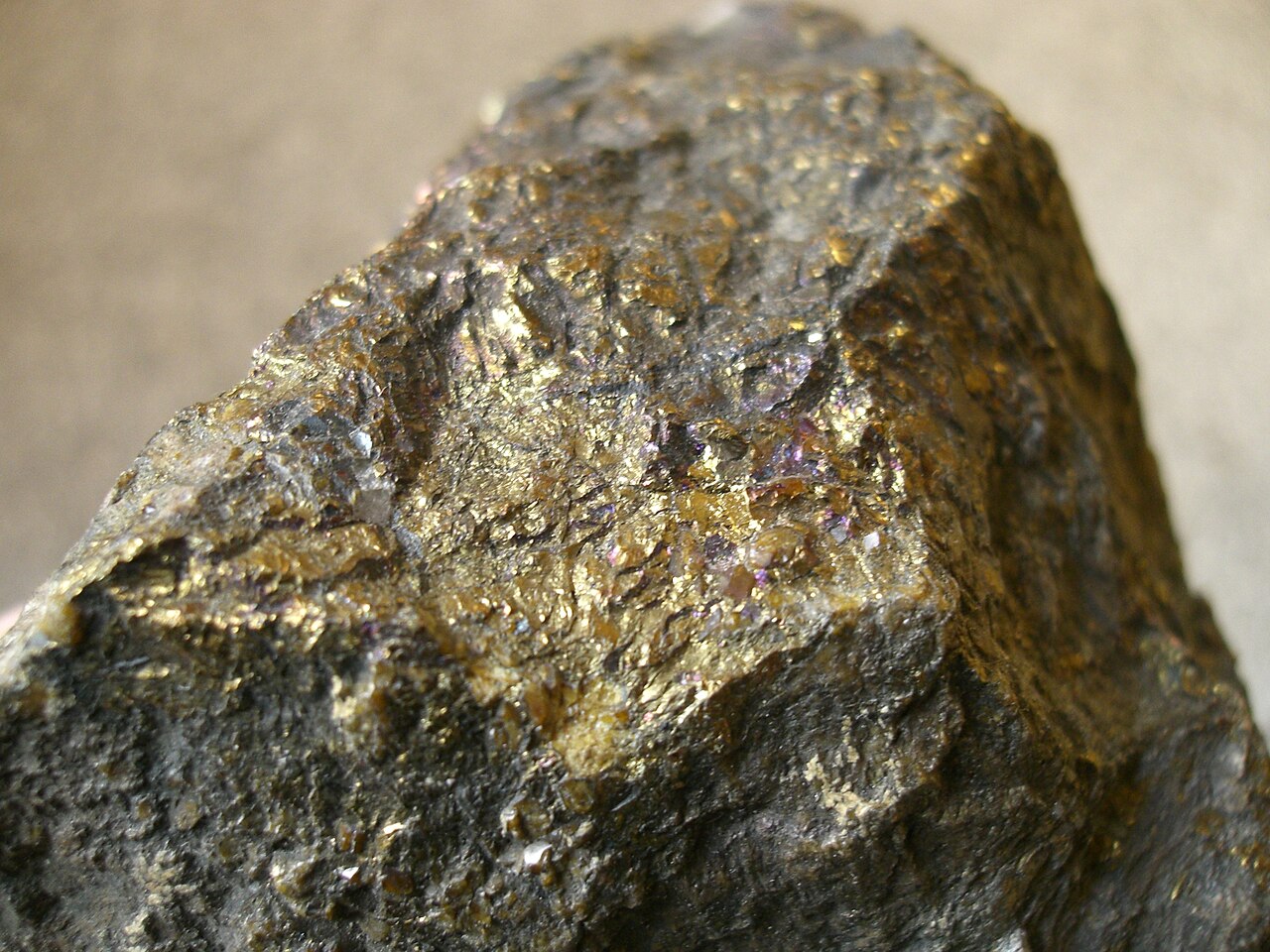
Chalcopyrite
Copper ore mineral
Brassy golden-yellow with a greenish cast and often an iridescent tarnish. Softer than the pyrite it resembles, and it draws a greenish-black streak. Wedge-shaped crystals. This one mineral supplies most of the world's copper.
By far the dominant copper ore, the backbone of the great porphyry mines of Chile, Peru and Arizona. It is crushed, floated into a 25-30 percent copper concentrate, then smelted — unlike oxide ores, which are leached. Smelter treatment and refining charges on that concentrate are the market's tightness gauge.
Chmee2 · CC BY-SA 3.0 · Wikimedia Commons
-
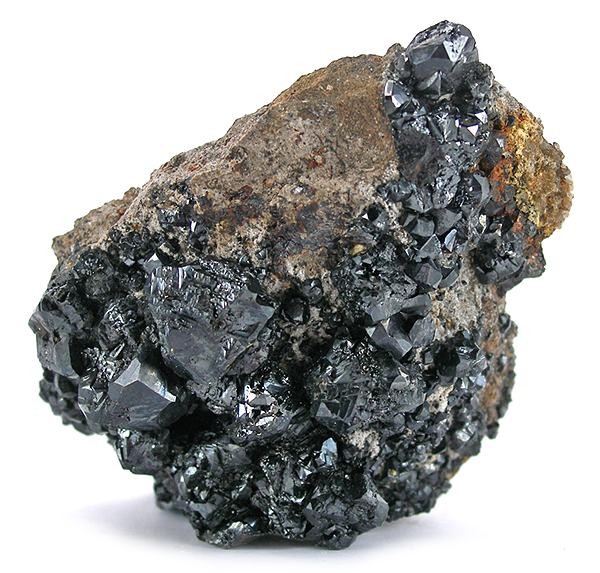
Sphalerite
Zinc ore mineral
Resinous to almost gemmy, in honey-yellow, red-brown or near-black, with a distinctive bright submetallic glint on cleavage faces. Softer than it looks and it gives off a rotten-egg smell if dropped in acid. The overwhelming source of one galvanising metal.
The world's main zinc ore and also, incidentally, the main commercial source of indium, gallium and germanium — the semiconductor and thin-film-solar minor metals ride along as smelter by-products. Usually mined with galena in the same deposit, so zinc and lead supply move together.
Robert M. Lavinsky · CC BY-SA 3.0 · Wikimedia Commons
-
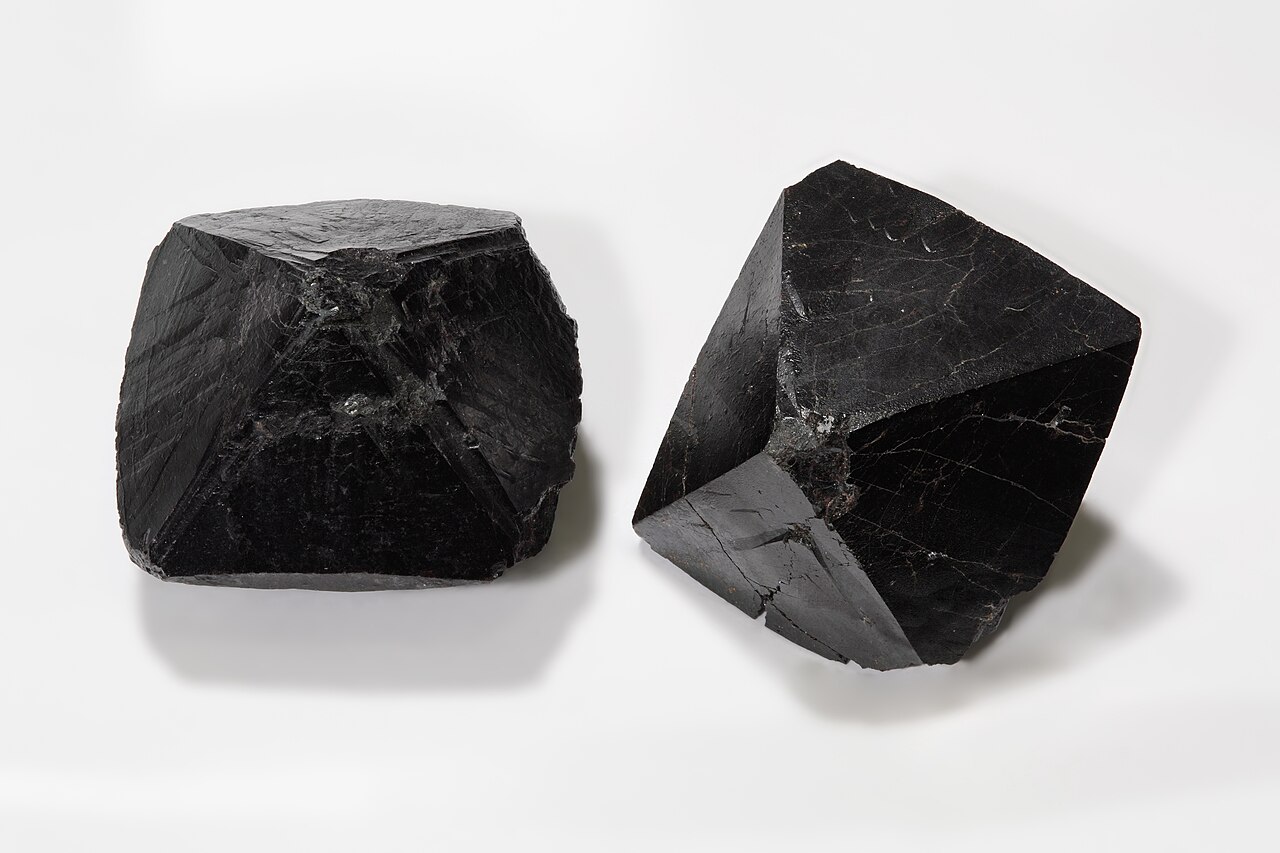
Cassiterite
Tin ore mineral
Dark brown to black, greasy and adamantine at once, in stubby wedge-shaped twins. Remarkably heavy, which is why it concentrates in river gravels and can be panned. Hard enough to survive being tumbled hundreds of kilometres downstream.
Essentially the only ore of tin. Historically dug from alluvial gravels in Malaysia, Indonesia and Nigeria; its density is what makes gravity separation work. Today much comes from artisanal workings in the DRC, Rwanda and Myanmar, which is why tin is a flagship conflict-minerals reporting metal under Dodd-Frank Section 1502.
Alchemist-hp ( talk ) ( www.pse-mendelejew.de ) · GFDL 1.2 · Wikimedia Commons
-
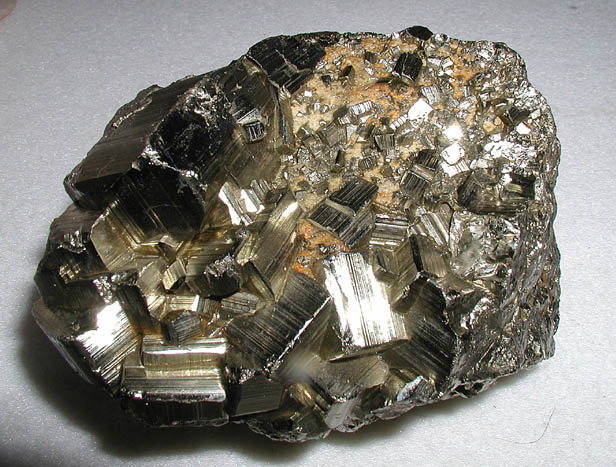
Pyrite
Lookalike / sulfur source
Pale brass-yellow, metallic, and often in startlingly perfect cubes with fine parallel striations across each face. Hard — it will strike a spark from steel — and its streak is greenish-black. Generations of prospectors have been fooled by it.
Known as fool's gold and largely worthless as an ore, though it has been roasted for sulfuric acid and is sometimes a gold carrier itself. Its real economic significance is negative: oxidising pyrite in waste rock generates acid mine drainage, the single largest long-term environmental liability at most metal mines.
Pyrite from wp-de by w:en:User:Arpingstone · CC BY-SA 3.0 · Wikimedia Commons
-
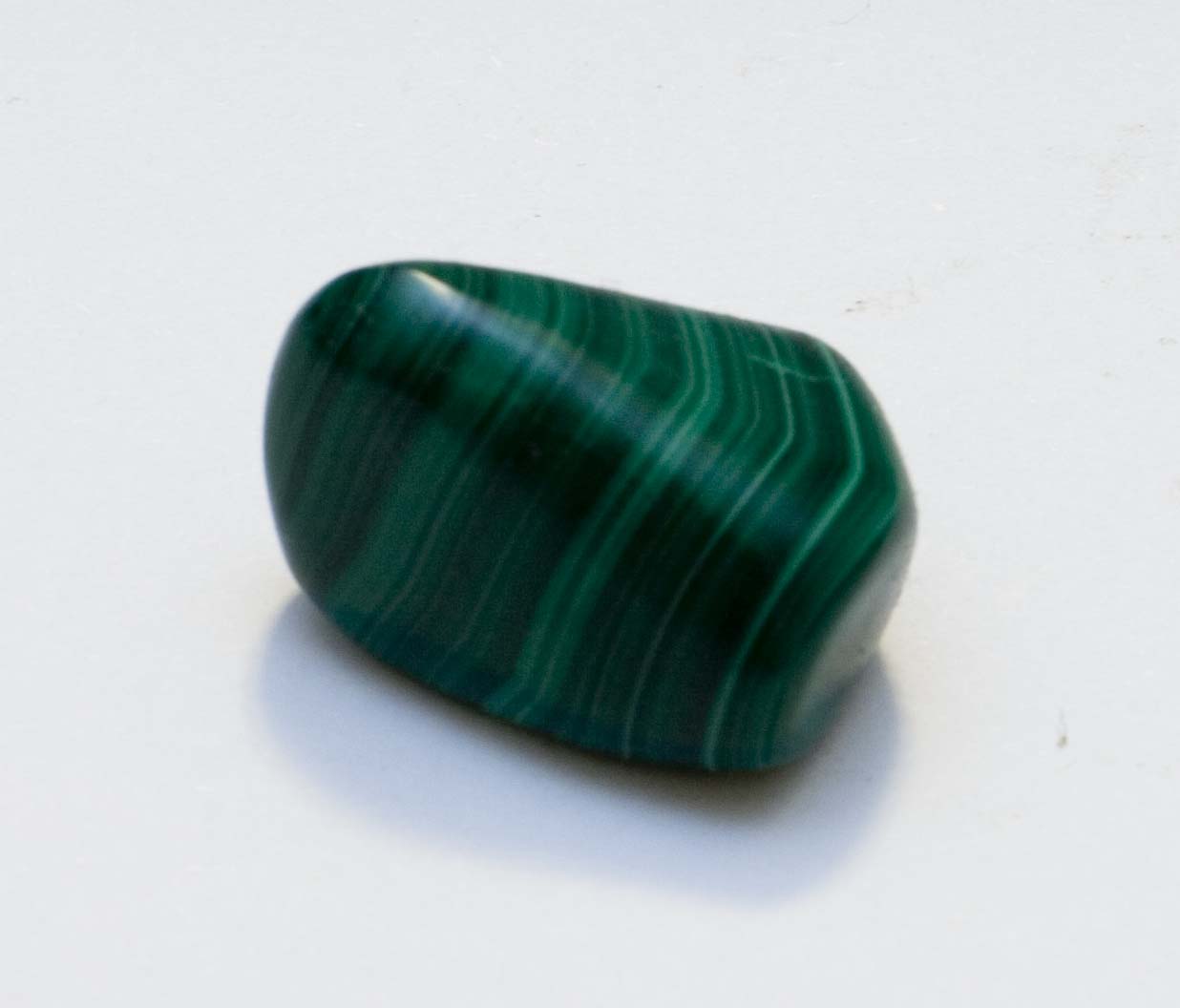
Malachite
Copper ore mineral
Unmistakable vivid green, usually in banded, silky, botryoidal crusts rather than crystals. Soft enough to carve, and it fizzes in dilute acid. Prospectors have used its stain on outcrops as a surface signpost to the metal below for five thousand years.
A secondary copper carbonate formed where copper sulfides weather near surface. Too small a share of tonnage to matter as a primary ore in most districts, but in the Central African Copperbelt oxide ores like this are leached with sulfuric acid and won directly as cathode by SX-EW, skipping smelting entirely. Also the oldest green pigment.
Kelly Martin · CC BY-SA 2.5 · Wikimedia Commons
-
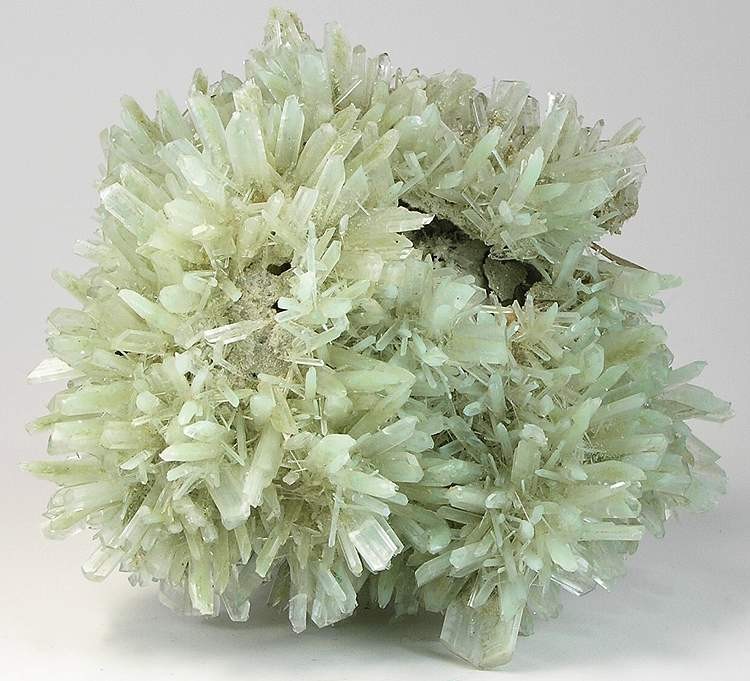
Gypsum
Industrial mineral
Colourless to white, sometimes in clear tabular "fishtail" twins or silky fibrous masses. So soft you can scratch it with a fingernail. Heat it and it gives up its water as steam, then sets hard again when re-wetted — the whole basis of an enormous building-products industry.
Calcined into plaster of Paris and pressed into wallboard, which is where most of it goes; it is also added to cement to control setting time. Sold regionally because it is low-value and heavy. A large and growing share of supply is synthetic, scrubbed out of coal-plant flue gas, so coal-plant closures actually tighten wallboard feedstock.
Robert M. Lavinsky · CC BY-SA 3.0 · Wikimedia Commons
-
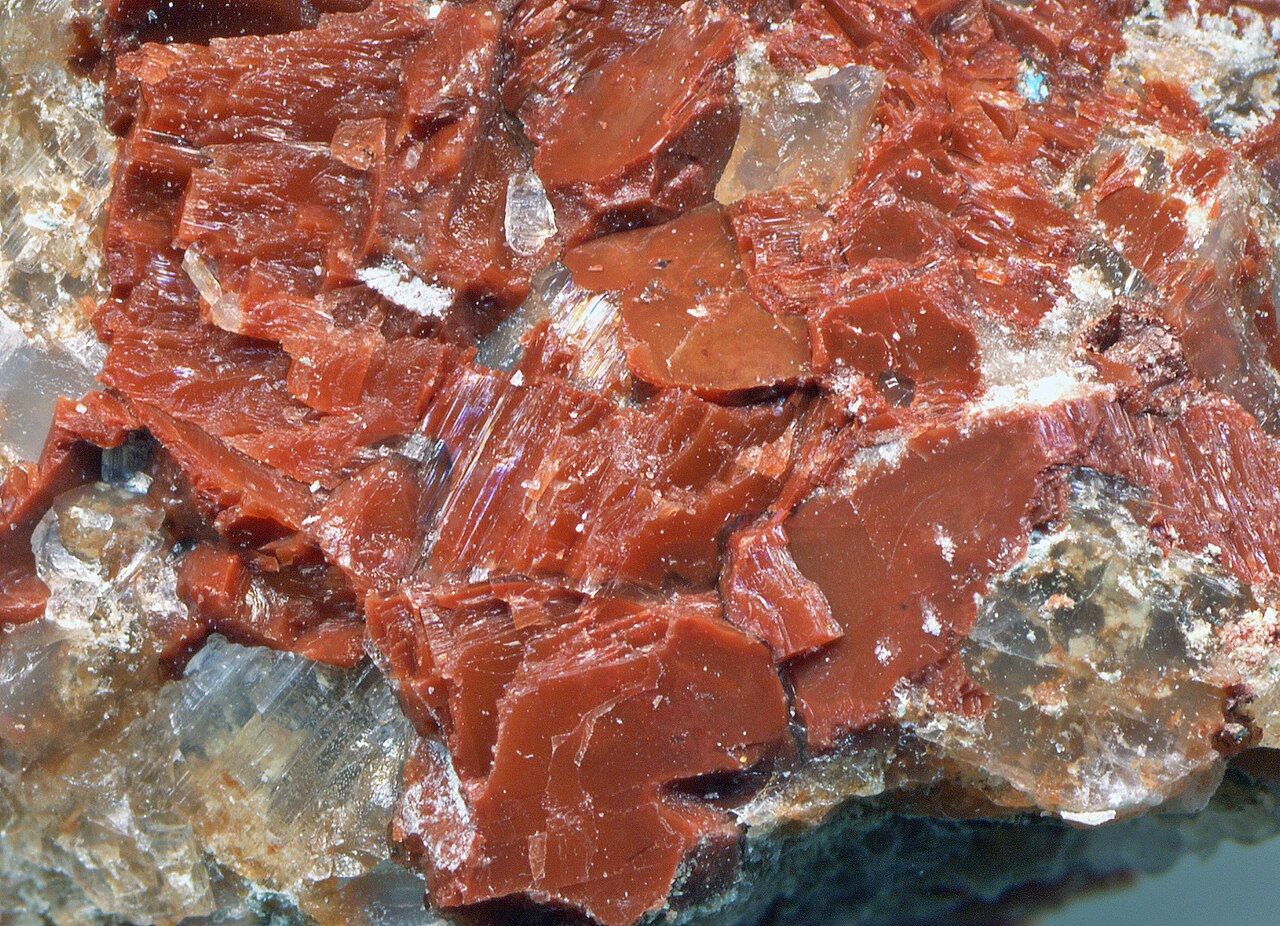
Potash (sylvite)
Fertiliser mineral
Glassy cubes very like rock salt but typically flushed a strong milky orange-pink or red by iron inclusions. Bitter rather than salty, and slightly softer. Mined from ancient evaporated seabeds, almost entirely to be spread on fields.
The K in NPK fertiliser, needed for root development and drought tolerance, with no substitute. Sold as potassium chloride (MOP) per tonne on annual or quarterly contracts rather than an exchange. Supply is strikingly concentrated in Canada, Russia and Belarus, and the 2021-22 sanctions on Belarusian potash reshaped global trade routes.
James St. John · CC BY 2.0 · Wikimedia Commons
-
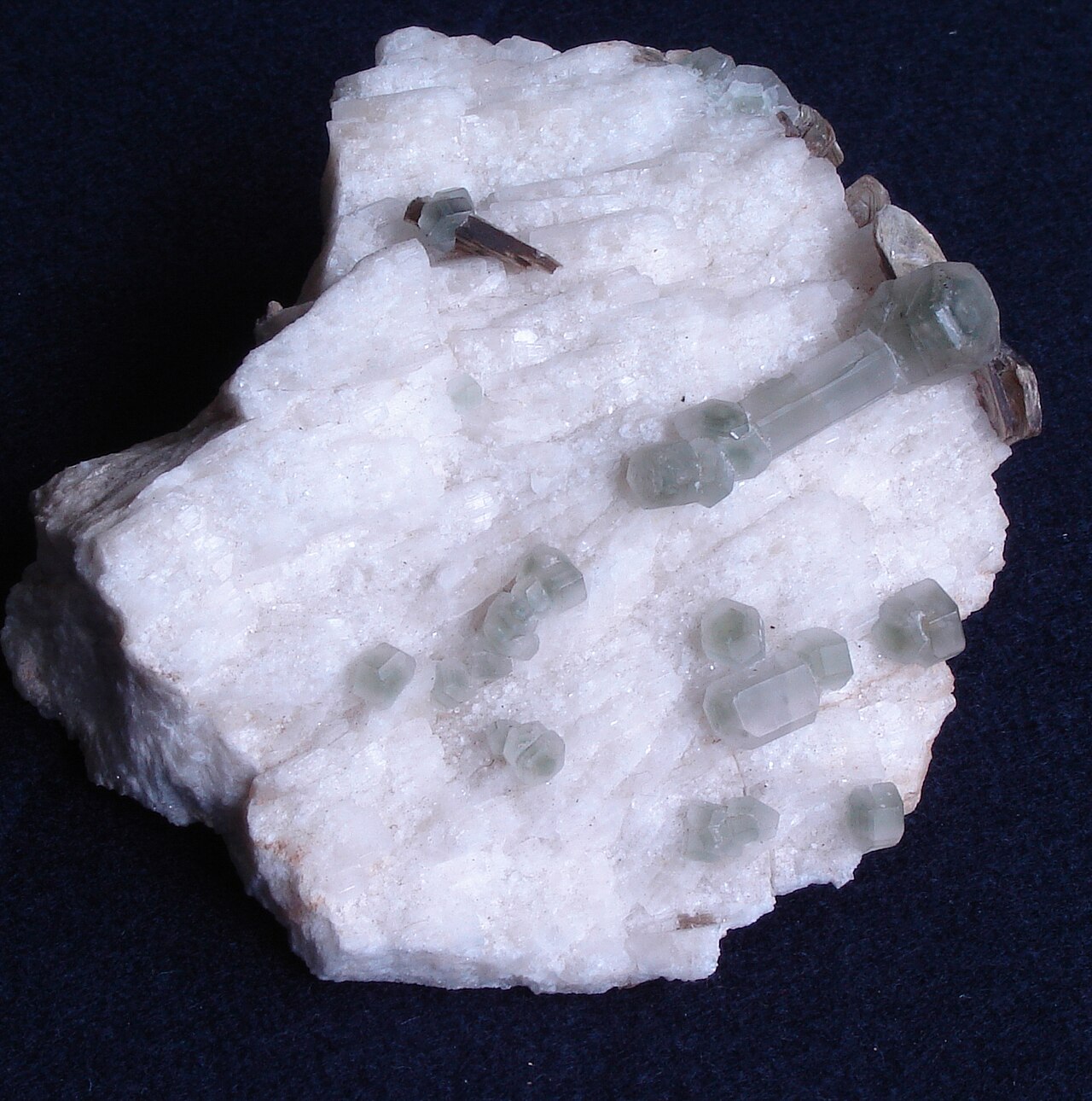
Phosphate rock (apatite)
Fertiliser mineral
Hexagonal prisms in sea-green, blue-green or brown, glassy but easily scratched by a knife. Most commercial material is not crystalline at all but a dull, earthy marine sediment full of fossil fragments. It is also the mineral your teeth and bones are made of.
The P in NPK, dissolved in sulfuric acid to make phosphoric acid and then DAP or MAP fertiliser. Morocco holds the overwhelming majority of world reserves, giving it structural pricing power; the US, China and Russia are the other main producers. There is no synthetic substitute — phosphorus cannot be manufactured, only mined and recycled.
Unknown photographer · CC BY-SA 2.0 br · Wikimedia Commons
-
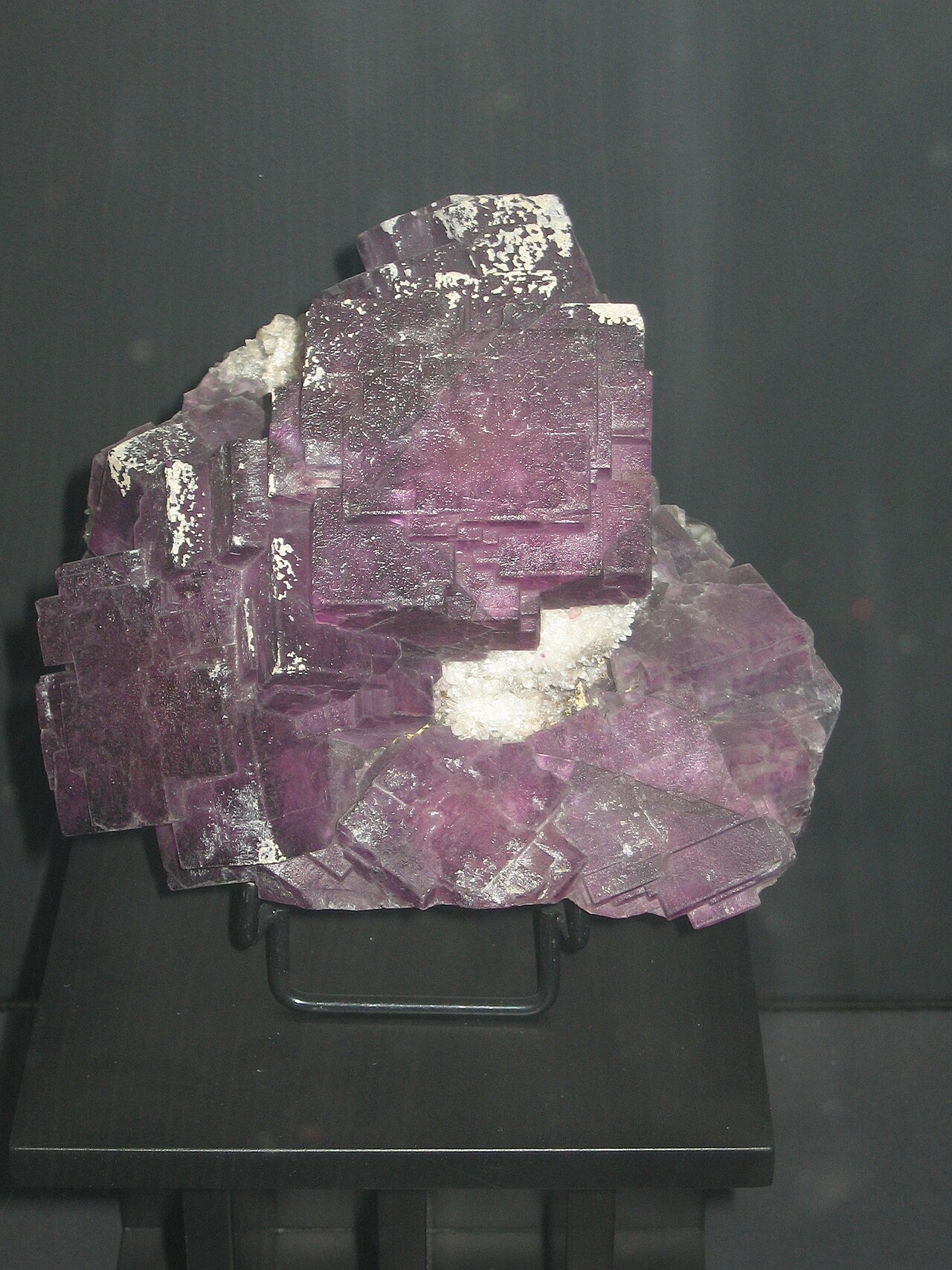
Fluorite
Industrial mineral
Transparent cubes and octahedra in purple, green, yellow or blue, sometimes several colours banded in one crystal. Soft enough to scratch with a knife but not a fingernail. Many specimens glow under ultraviolet light — the phenomenon is named after this mineral.
Traded as acid-grade fluorspar per tonne, the sole feedstock for hydrofluoric acid and therefore for every fluorochemical — refrigerants, Teflon, and the lithium hexafluorophosphate salt in battery electrolyte. Also a metallurgical flux in steelmaking. China supplies the majority, and it appears on the EU and US critical minerals lists.
Gia.cossa · CC BY-SA 2.5 · Wikimedia Commons
-
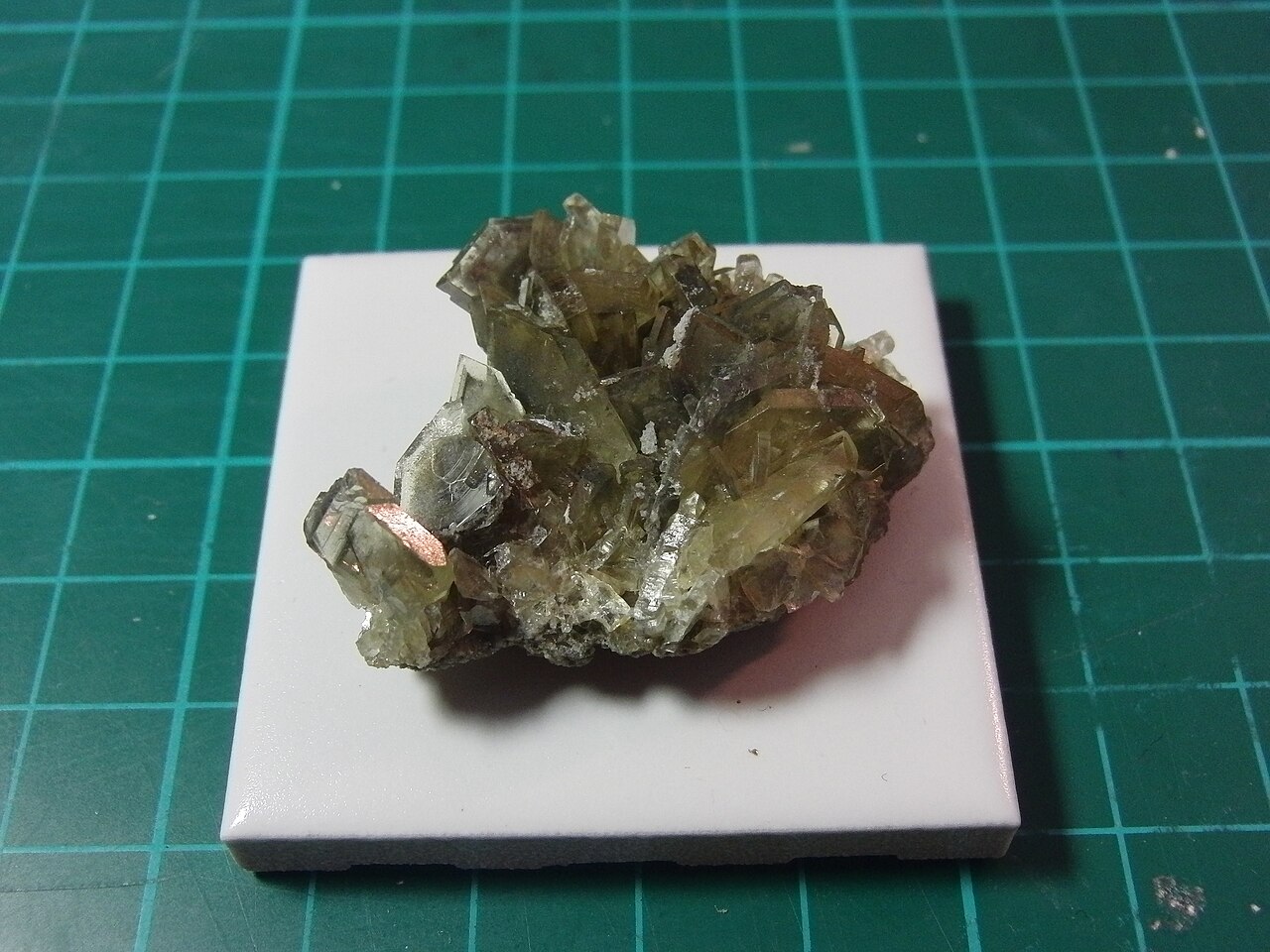
Barite
Oilfield mineral
White to pale honey, in tabular "desert rose" plates or blocky crystals, and dull rather than metallic. The clue is in the hand: it is conspicuously heavy for a pale, soft, non-metallic mineral, far denser than the quartz or calcite it sits with.
Ground and sold per tonne almost entirely as weighting mud for oil and gas drilling — its density holds back formation pressure and prevents blowouts, so demand tracks the rig count rather than any consumer market. China, India and Morocco lead output. Minor uses: radiography contrast agents and friction products.
GOKLuLe · CC BY-SA 3.0 · Wikimedia Commons
-
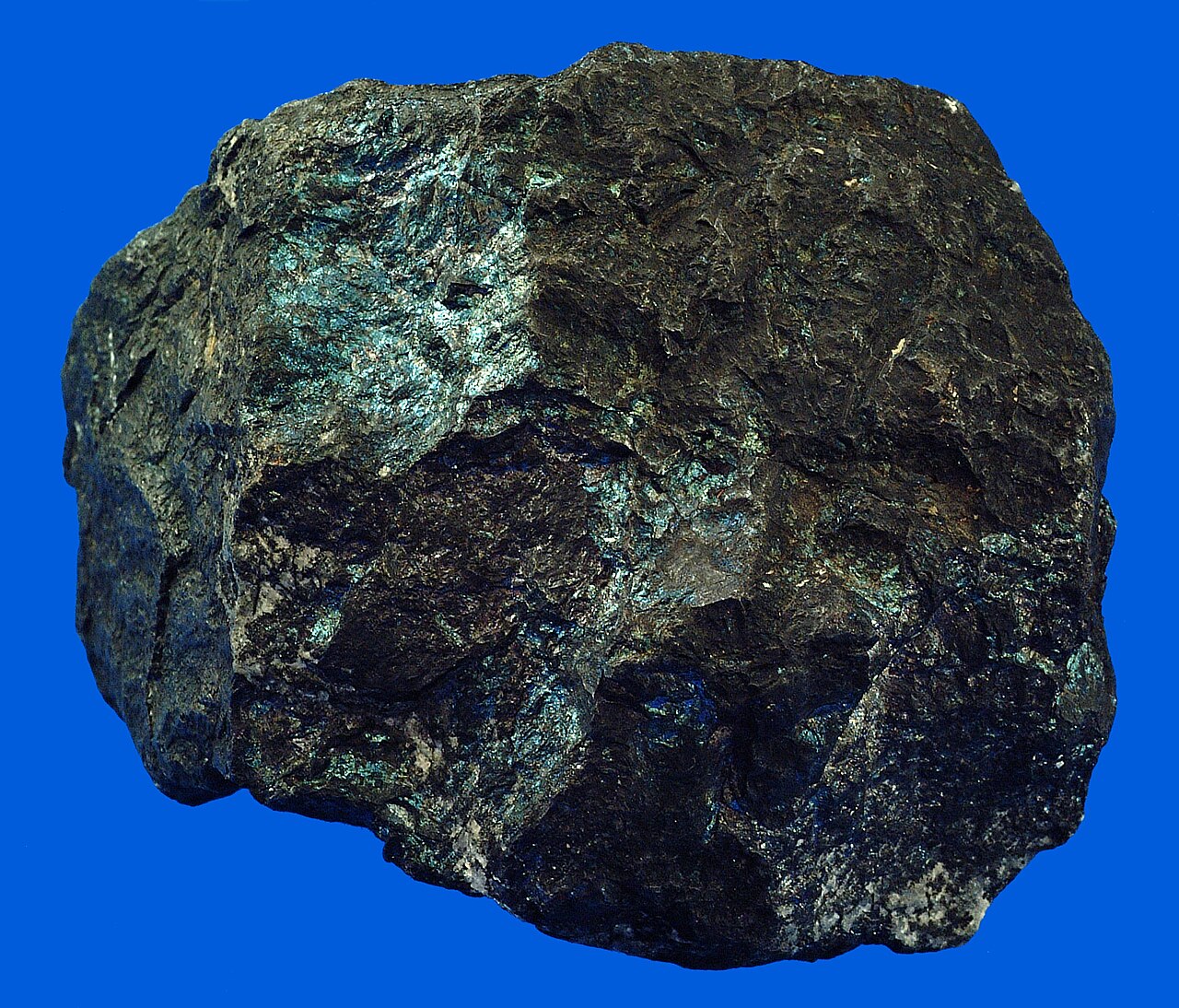
Bornite
Copper ore mineral
Bronze-brown on a fresh break, but exposed surfaces tarnish within days into a lurid iridescent film of blue, purple and magenta. Collectors call it peacock ore. Softer than pyrite and a good deal richer in the metal it carries.
A high-grade copper sulfide, about 63 percent copper against chalcopyrite's 35, so it is a welcome upgrade in the mill even though it is far less abundant. Common in the enriched supergene blankets that sit above porphyry deposits and at Butte, Montana and in the Zambian Copperbelt.
Darla Sondrol · CC0 · Wikimedia Commons
-
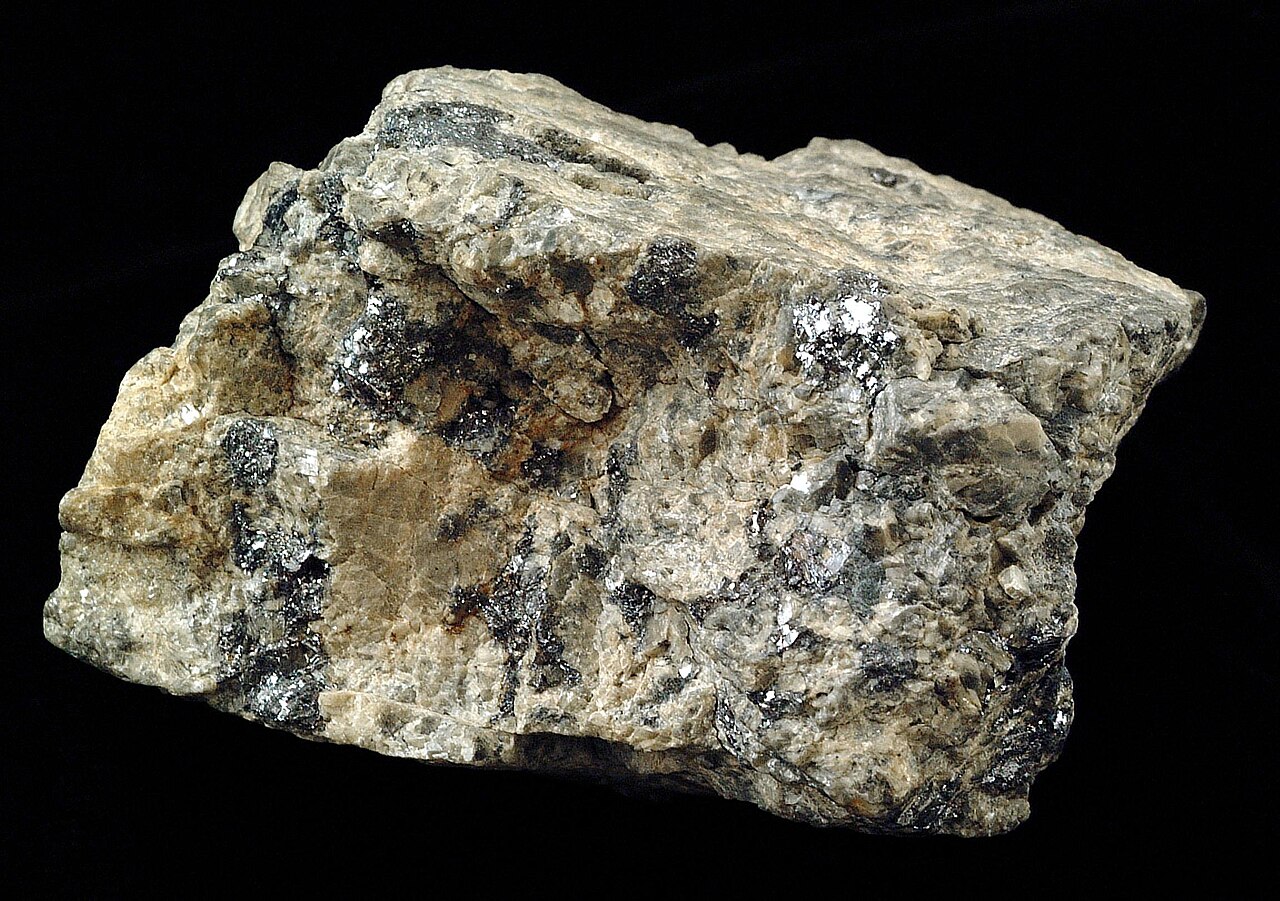
Molybdenite
Steel-alloy ore
Lead-grey, strongly metallic, in soft flexible hexagonal flakes that smear greasily on your fingers and on paper — almost indistinguishable from graphite by feel, but noticeably heavier and bluer. Slippery enough to be sold as a dry lubricant.
The only significant ore of molybdenum, which goes into high-strength low-alloy steels, pipeline steel and stainless — it raises strength and heat resistance and resists chloride pitting. Roughly half of supply is a by-product of copper porphyry mines, so its price is only loosely connected to its own demand. Quoted per pound of contained metal.
Nessa Eull · CC0 · Wikimedia Commons
-
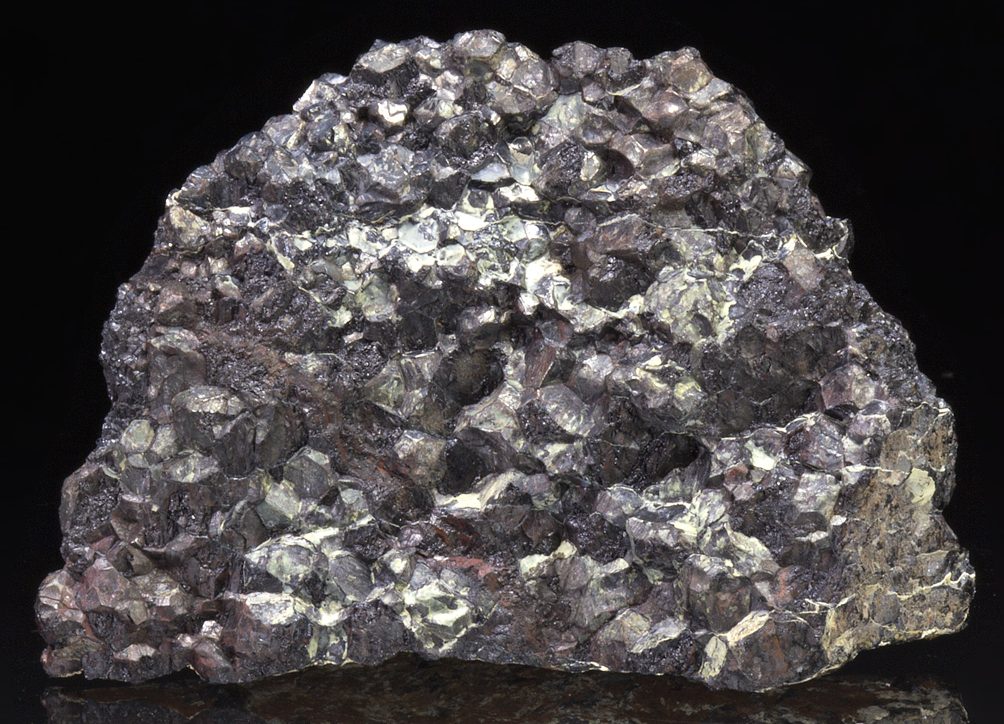
Chromite
Steel-alloy ore
Black, submetallic and heavy, usually in granular masses rather than crystals, and weakly magnetic at most. Its streak is dark brown, which separates it from the black oxides it resembles. Found in layered igneous intrusions and in serpentinised ultramafic rock.
The sole commercial source of chromium, smelted into ferrochrome and then into stainless steel, which takes about 90 percent of it — chromium is precisely what makes stainless stainless. South Africa dominates ore supply and China dominates ferrochrome smelting, so power tariffs in both countries move the price. Also used for refractory bricks and chrome plating.
Weinrich Minerals, Inc. · Public domain · Wikimedia Commons
-
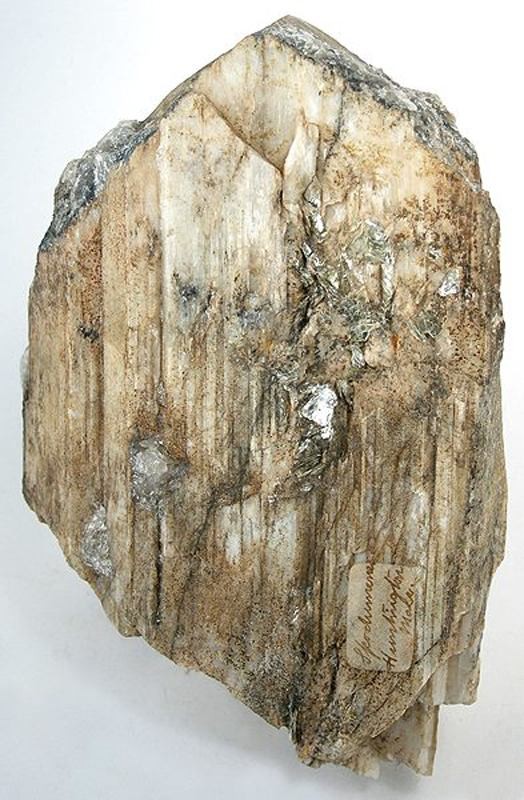
Spodumene
Battery mineral
Pale grey-green to cream, in long flattened blades with strong lengthwise cleavage, found in coarse granite pegmatites where single crystals can reach the size of a telegraph pole. Unremarkable to look at, and the reason Western Australia's mining boom of the 2020s happened.
The main hard-rock lithium ore, sold as a 6 percent Li2O concentrate priced per tonne, then converted into lithium carbonate or hydroxide for cathodes. Australia leads mine supply while China does most conversion; the alternative source is South American brine, which is cheaper but slower to ramp. Its price collapsed roughly 80 percent from the 2022 peak.
Robert M. Lavinsky · CC BY-SA 3.0 · Wikimedia Commons
-
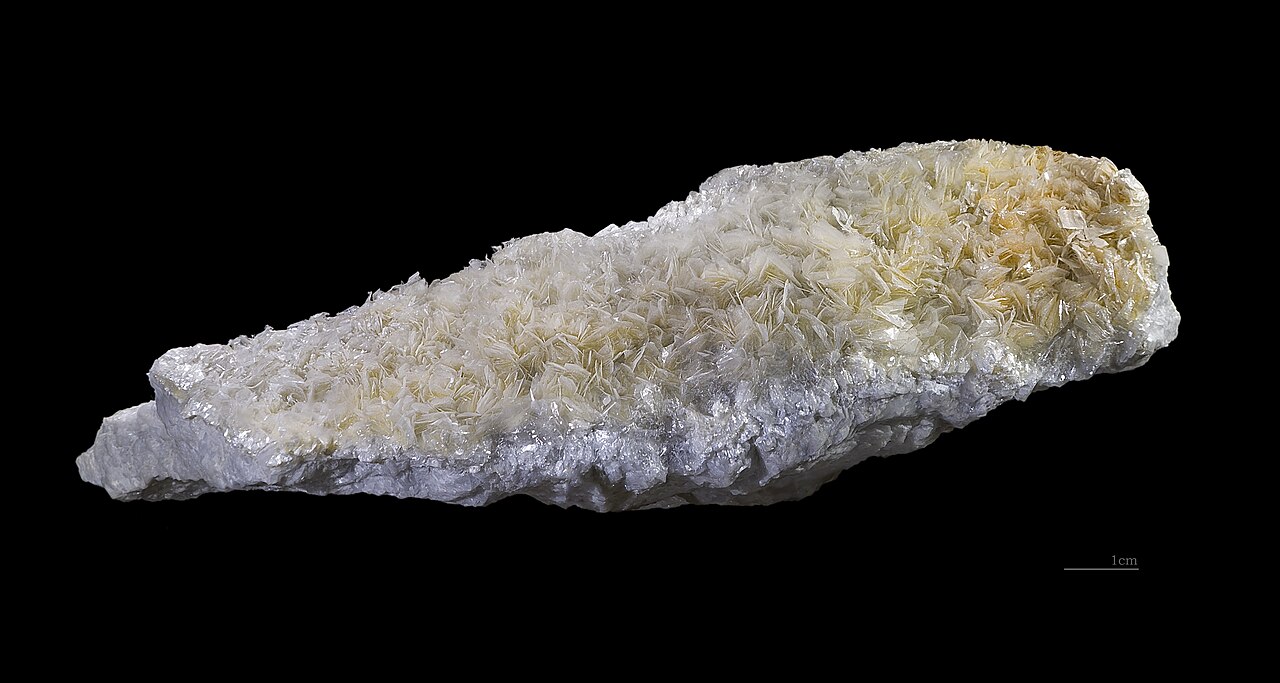
Talc
Industrial mineral
Pale white, grey or apple-green in soft foliated masses with a distinctly soapy, slippery feel. The softest mineral on the standard hardness scale — a fingernail leaves a furrow. Carved as soapstone for millennia.
Sold by brightness, particle shape and purity. The largest market is not cosmetics but plastics and paper filler, plus paint and ceramics. Its commercial problem is geological: talc forms in the same ultramafic rocks as asbestos, so tremolite contamination and the resulting litigation have reshaped the industry and closed mines.
Didier Descouens · CC BY-SA 4.0 · Wikimedia Commons
-
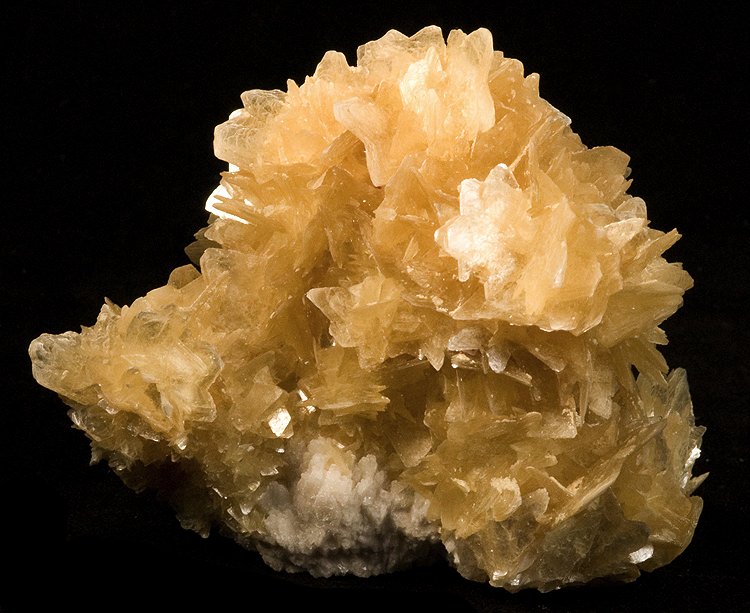
Mica (muscovite)
Industrial mineral
Splits into paper-thin, springy, transparent sheets you can peel apart with a fingernail, silvery or pale brown and glittering. The sheets survive heat that would destroy plastic and do not conduct electricity — which is why they lined the windows of stoves and early capacitors.
Two markets: sheet mica, hand-cobbed and used in electrical insulation, and far larger ground mica, used as filler and pearlescent pigment in paint, drilling mud, cosmetics and joint compound. India and Madagascar supply much of the cosmetic-grade material, and child labour in that artisanal supply chain is the sector's central ESG issue.
Robert M. Lavinsky · CC BY-SA 3.0 · Wikimedia Commons
-
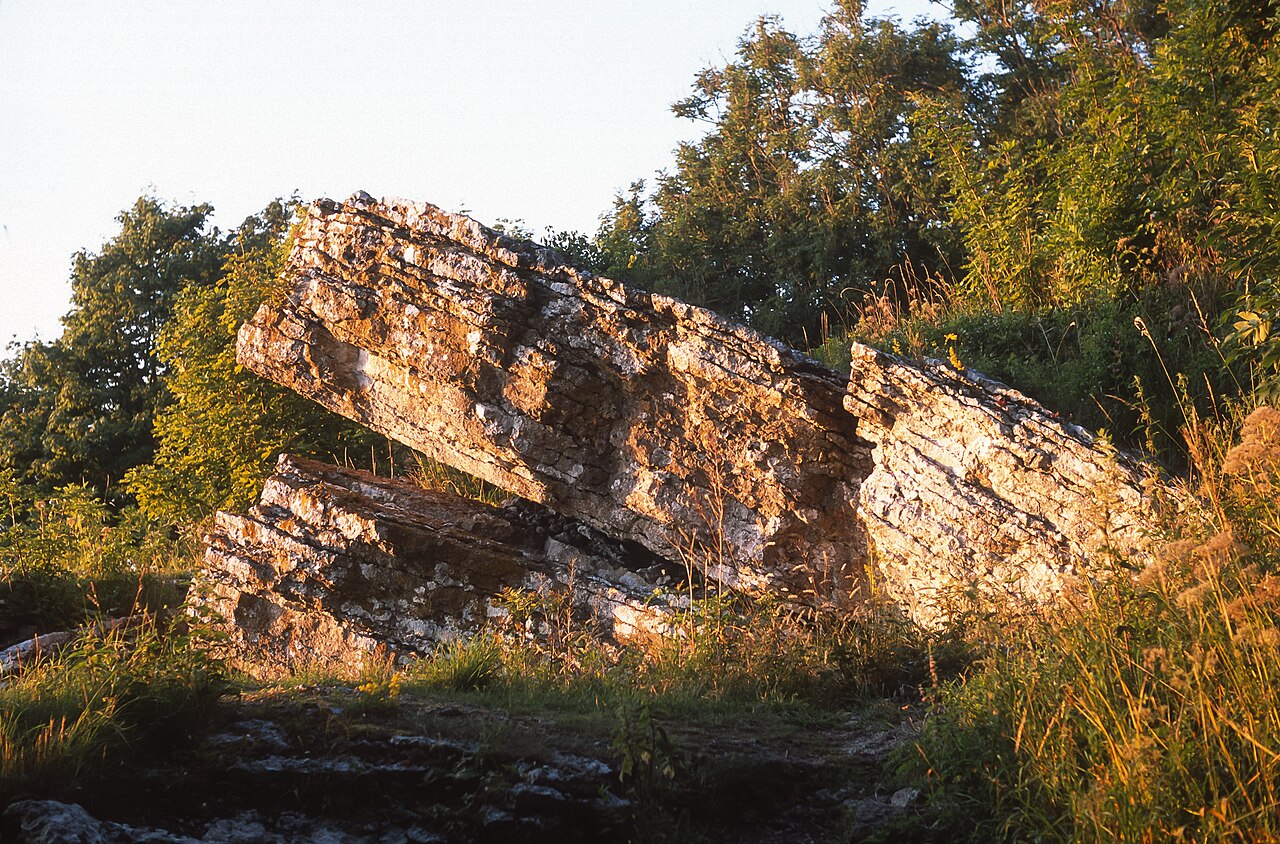
Limestone
Bulk construction mineral
Pale grey to cream, fine-grained, often packed with shell and coral fragments. Easily scratched by a knife and it fizzes vigorously in vinegar or dilute acid. The most-quarried rock on earth by volume, and the raw material behind the second most-used substance after water.
Burned with clay in a kiln to make cement clinker, and used as blast-furnace flux, aggregate, agricultural lime and glass feedstock. Sold locally because transport dominates cost. Cement production is around 7-8 percent of global CO2 emissions, over half of it from the chemistry of driving carbon out of this rock rather than from the fuel.
neekoh.fi · CC BY 2.0 · Wikimedia Commons
-
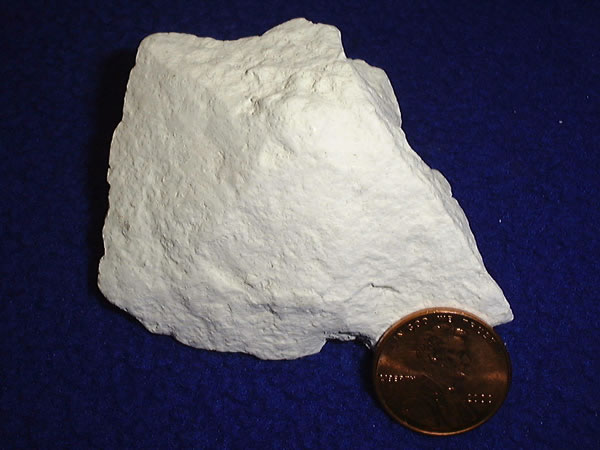
Kaolin (china clay)
Industrial mineral
A soft, chalk-white, earthy clay that feels faintly greasy and sticks to a wet tongue. Formed by the deep weathering of granite feldspars. Fired at high temperature it turns translucent and rings when struck — the discovery that made porcelain possible.
Sold on brightness, particle size and viscosity. The biggest use is paper coating, which has declined with print, so producers have pivoted to ceramics, paint, rubber, fibreglass and pharmaceuticals. The US (Georgia), Brazil and the UK (Cornwall) are classic sources. High-purity varieties are now sought as the feedstock for low-carbon calcined-clay cement.
Unknown photographer · Public domain · Wikimedia Commons
-
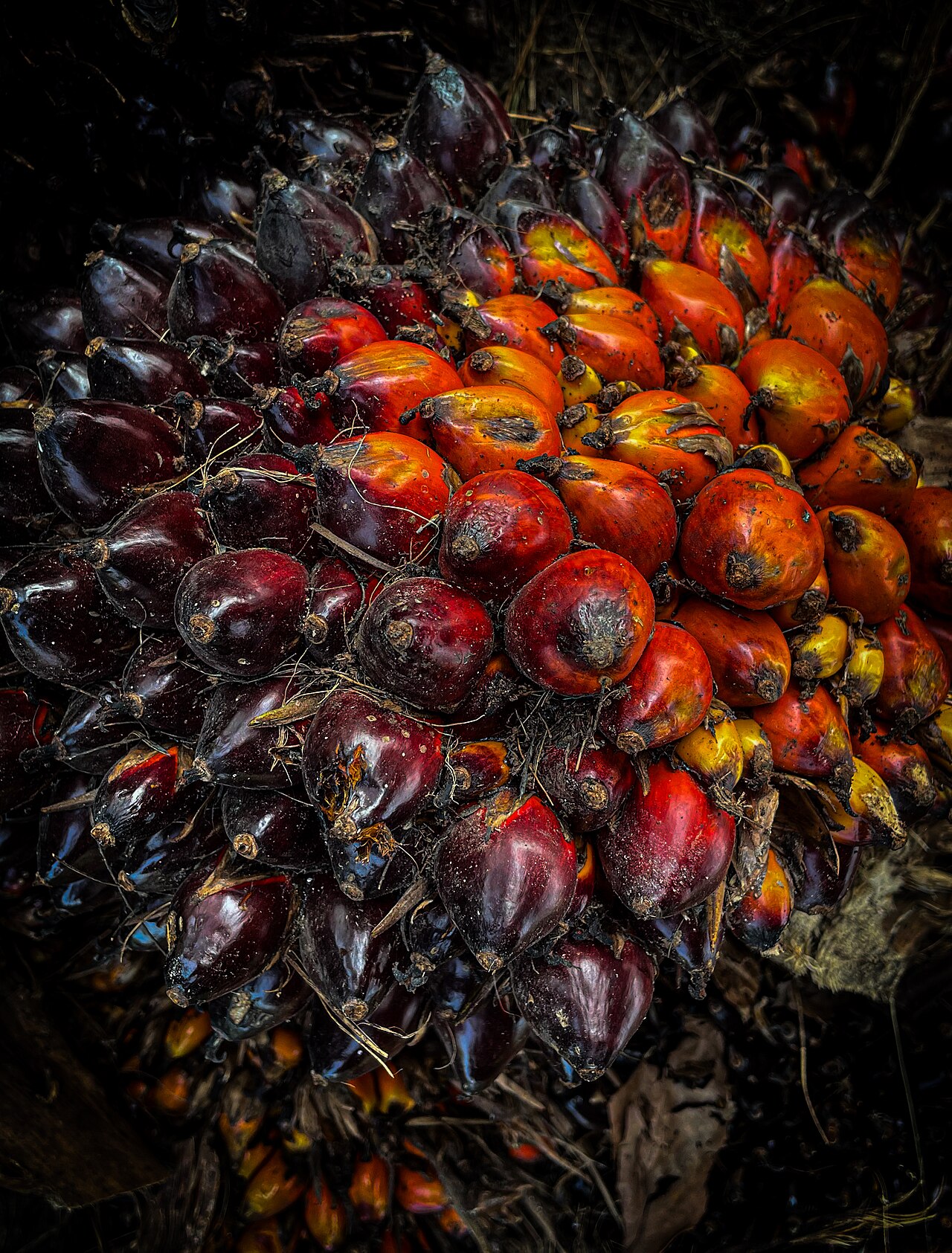
Oil palm fruit
Soft commodity
Tight clusters of plum-sized fruit turning from black to bright orange-red as they ripen, packed into a spiky bunch that can weigh 25 kilos. Both the orange flesh and the kernel inside are pressed for fat, and the plant yields more of it per hectare than any other crop by a wide margin. Grown almost entirely within ten degrees of the equator.
Crude palm oil trades per tonne on Bursa Malaysia, the global benchmark, with palm kernel oil priced separately. Indonesia and Malaysia grow about 85 percent of it. It ends up in roughly half of packaged supermarket goods plus biodiesel, so its price is linked to both food demand and fuel mandates. Deforestation is the defining controversy.
Officialbernard1 · CC BY 4.0 · Wikimedia Commons
-
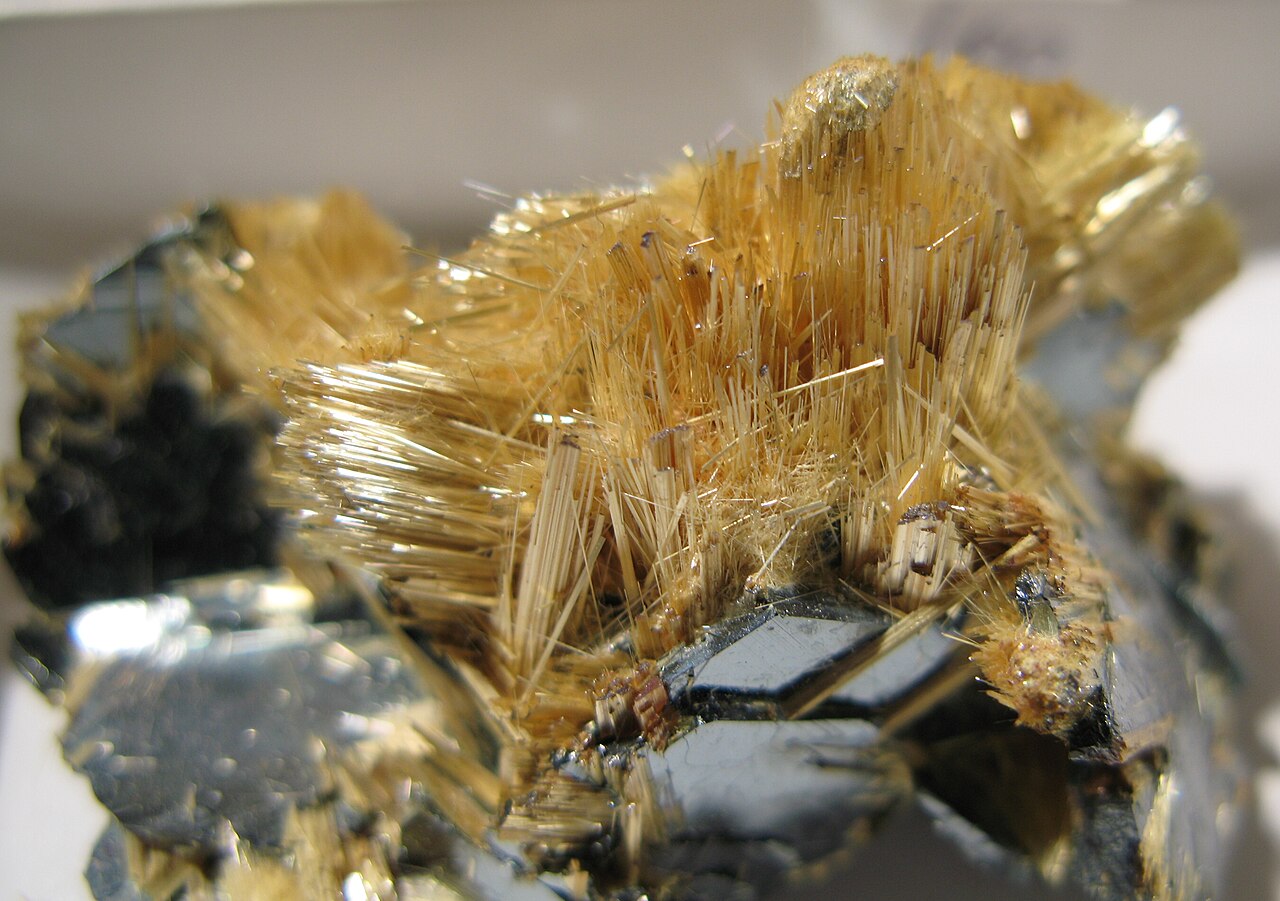
Rutile
Titanium ore mineral
Reddish-brown to almost black, with a brilliant near-adamantine lustre and slender striated prisms that often form knee-shaped twins. Heavy, hard, and chemically tough enough to survive weathering into beach sands, where it is dredged.
The highest-grade natural titanium dioxide feedstock, about 95 percent TiO2, so it commands a large premium over the alternative ore. Around 90 percent of titanium mined worldwide never becomes metal at all — it becomes the white pigment in paint, paper, plastics and sunscreen. Australia, Sierra Leone and South Africa are key producers.
Ra'ike (see also: de:Benutzer:Ra'ike ) · CC BY-SA 3.0 · Wikimedia Commons
-
Zircon
Industrial mineral
Small, hard, stubby square prisms with pyramid ends, in honey-brown, pink or colourless, with a high glassy to adamantine lustre. Extremely durable — individual grains have survived four billion years, making them the oldest datable pieces of the earth's crust.
Mined from heavy-mineral beach sands alongside the titanium minerals and sold per tonne. The dominant use is milled into ceramic tile opacifier, so demand tracks Chinese and Indian construction; the rest goes to refractories, foundry sand and zirconium metal for nuclear fuel cladding. Its uranium content is what makes it the workhorse of geological dating.
Joanna Scott · CC BY-SA 3.0 · Wikimedia Commons
Especialista 25
Lookalikes, minor ores and the specimens that catch people who know the others.
-
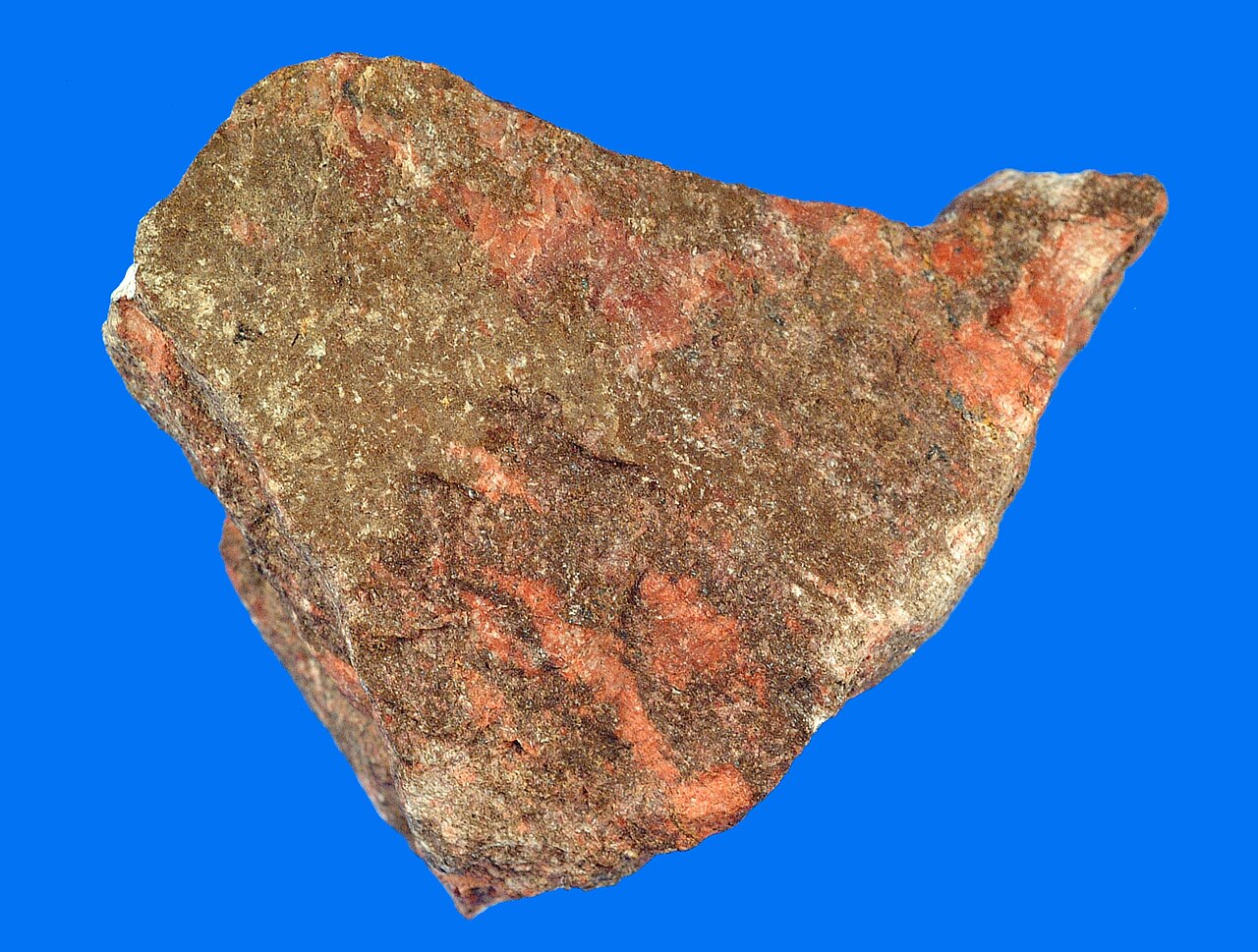
Bastnäsite
Rare earth ore
Waxy honey-yellow to reddish-brown, in tabular or granular masses with a dull resinous lustre, easy to mistake for a weathered carbonate. Mildly radioactive. Two deposits of it — one in California, one in Inner Mongolia — have between them set the terms of an entire strategic industry.
A fluorocarbonate and the leading ore of the light rare earths — cerium, lanthanum, neodymium and praseodymium. Mountain Pass in California and Bayan Obo in China are the type examples; Bayan Obo alone underpins China's dominance of neodymium-iron-boron magnets for EV motors and wind turbines. Unlike monazite it carries little thorium, which greatly simplifies permitting.
Darla Sondrol · CC0 · Wikimedia Commons
-
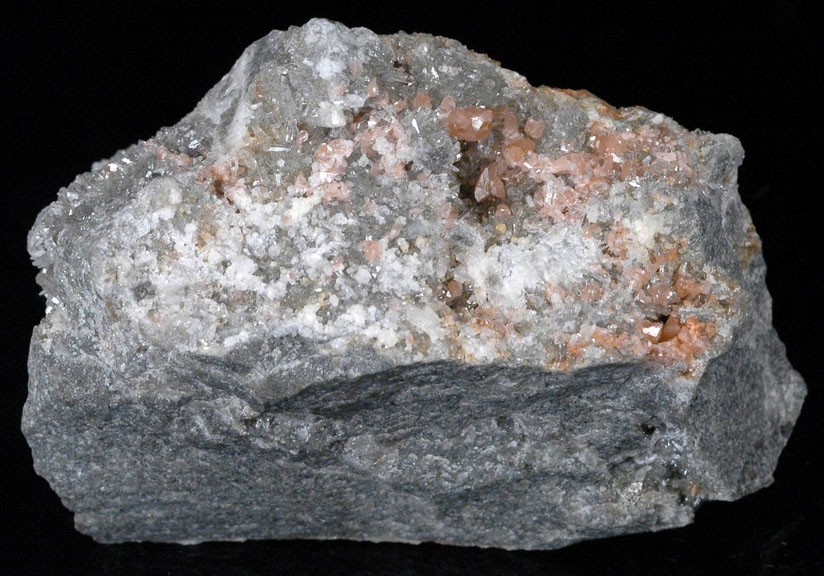
Monazite
Rare earth ore
Resinous yellow-brown to reddish-brown, in small flattened wedge-shaped grains, unusually heavy, and found concentrated in beach sands with the titanium minerals. Detectably radioactive — which is precisely the commercial problem with it.
A rare earth phosphate, richer than bastnasite in the valuable heavy rare earths, and historically the main source before its thorium content made handling and tailings disposal a regulatory burden. Recovered as a by-product of mineral-sand mining in India, Brazil and Australia, and increasingly reconsidered as the West hunts for non-Chinese heavy rare earth supply.
Robert M. Lavinsky · CC BY-SA 3.0 · Wikimedia Commons
-
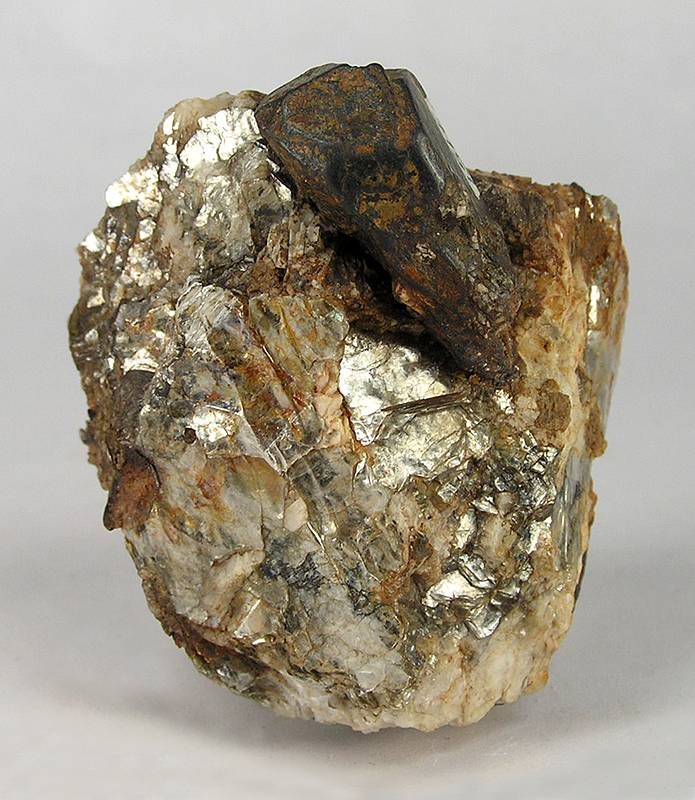
Columbite-tantalite (coltan)
Critical metal ore
Dull black to brownish-black, submetallic, in blocky or tabular crystals, and extremely heavy — dense enough to be panned out of stream gravel by hand with a shallow pan. Two minerals in a continuous series, mined and sold together as one dark sandy concentrate.
The source of tantalum and niobium. Tantalum makes the tiny high-capacitance capacitors in phones and laptops; niobium micro-alloys pipeline and structural steel. Tantalum comes largely from artisanal workings in the DRC and Rwanda and is one of the 3TG conflict minerals; niobium is quite different — over 80 percent comes from a single Brazilian mine at Araxa.
Robert M. Lavinsky · CC BY-SA 3.0 · Wikimedia Commons
-
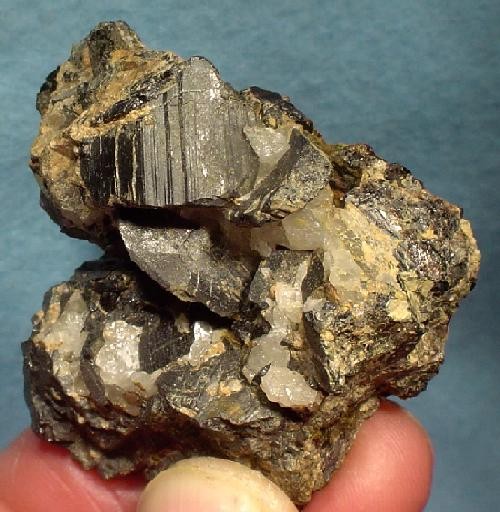
Wolframite
Tungsten ore
Brownish-black to iron-black, submetallic, in flattened bladed crystals with one perfect cleavage, and startlingly heavy. Found in high-temperature quartz veins and greisens with tin minerals. Its metal has the highest melting point of any.
One of the two ores of tungsten, made into tungsten carbide for cutting tools and mining bits, plus heavy alloys and filaments. China supplies roughly 80 percent of world tungsten and operates export quotas, which is why it sits near the top of every critical-minerals list. Concentrate is priced per metric tonne unit of WO3, quoted out of Rotterdam.
Robert M. Lavinsky · CC BY-SA 3.0 · Wikimedia Commons
-
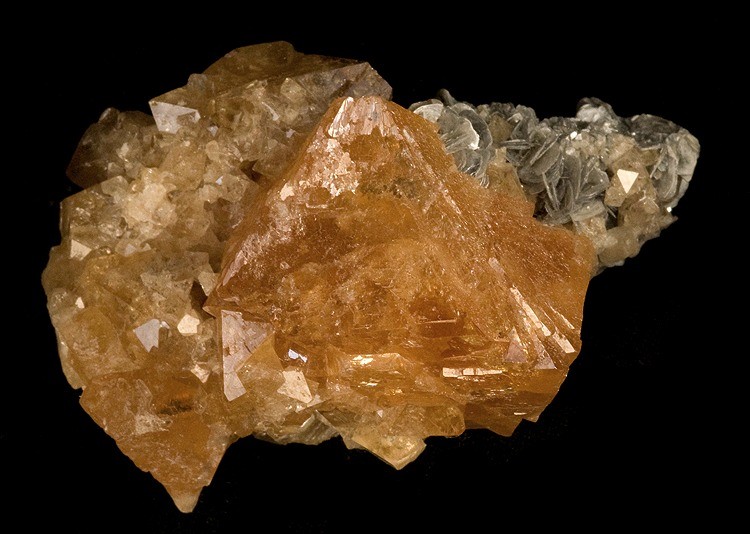
Scheelite
Tungsten ore
Waxy orange-brown to pale grey-white pseudo-octahedral crystals with an oily adamantine lustre, heavy for a pale mineral. The identification trick is a lamp: it fluoresces a vivid bright blue-white under shortwave ultraviolet, unlike the black ore it competes with.
The calcium tungstate ore of tungsten, and the form that dominates the very large skarn deposits, including Sangdong in South Korea and Cantung in Canada. Its UV fluorescence is genuinely used as a field and mill sorting tool. It shares tungsten's end uses: carbide tooling, armaments, and a rising role in heavy counterweights.
Robert M. Lavinsky · CC BY-SA 3.0 · Wikimedia Commons
-
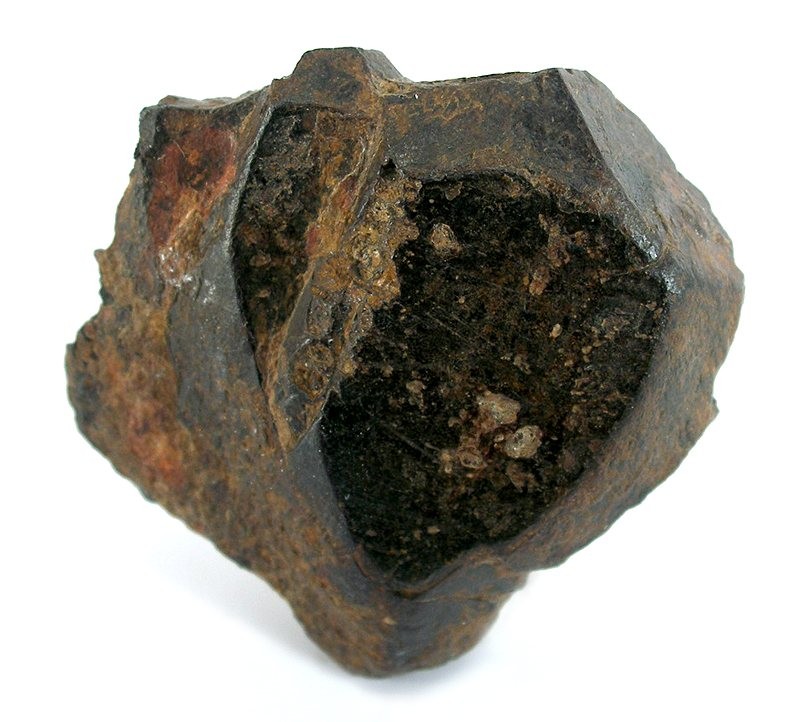
Ilmenite
Titanium ore
Iron-black, submetallic, in thick tabular plates or as heavy black sand grains, weakly magnetic and with a black to brownish streak. The lower-grade of the two main ores of its metal, and by far the more abundant — it is dredged from coastal dunes by the million tonnes.
About 50-65 percent TiO2, so it must be upgraded — either smelted to titania slag or chemically treated by the sulfate pigment route — whereas rutile can go straight into the chloride route. It supplies the bulk of world titanium feedstock. Main producers: China, South Africa, Australia, Mozambique, Canada.
Robert M. Lavinsky · CC BY-SA 3.0 · Wikimedia Commons
-
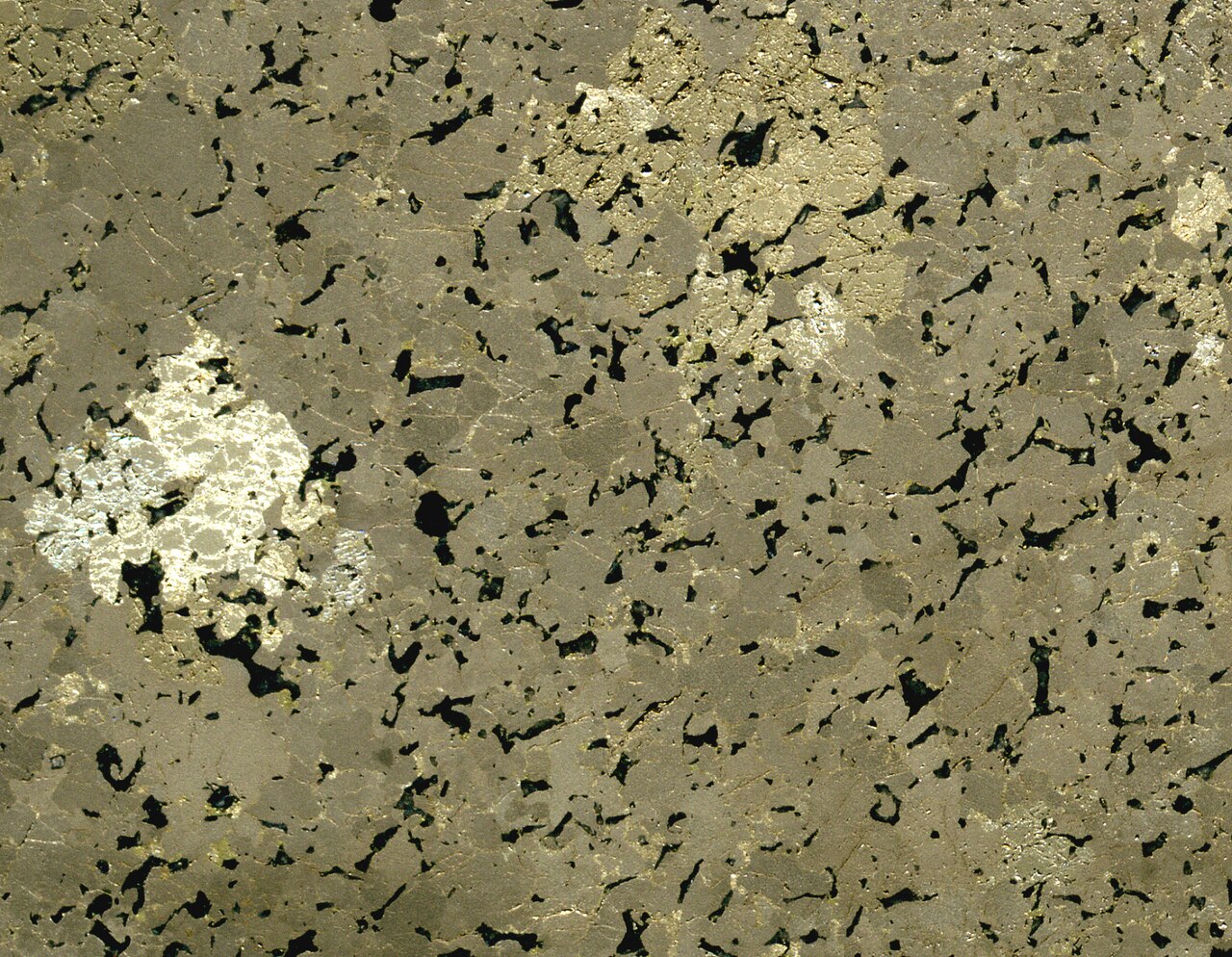
Pentlandite
Nickel ore
Pale bronze-yellow, metallic, non-magnetic, usually in granular masses interlocked with a brassier, magnetic companion sulfide rather than in crystals of its own. Found in the base of layered mafic intrusions and in ancient meteorite-impact structures.
The principal sulfide ore of nickel and the source of virtually all high-purity Class 1 nickel — the kind batteries need. Sudbury in Ontario, Norilsk in Siberia and the Bushveld are the classic districts. Sulfide ore also carries copper, cobalt and the platinum-group metals as by-products, which is why one Norilsk outage can move four separate metal markets.
James St. John · CC BY 2.0 · Wikimedia Commons
-
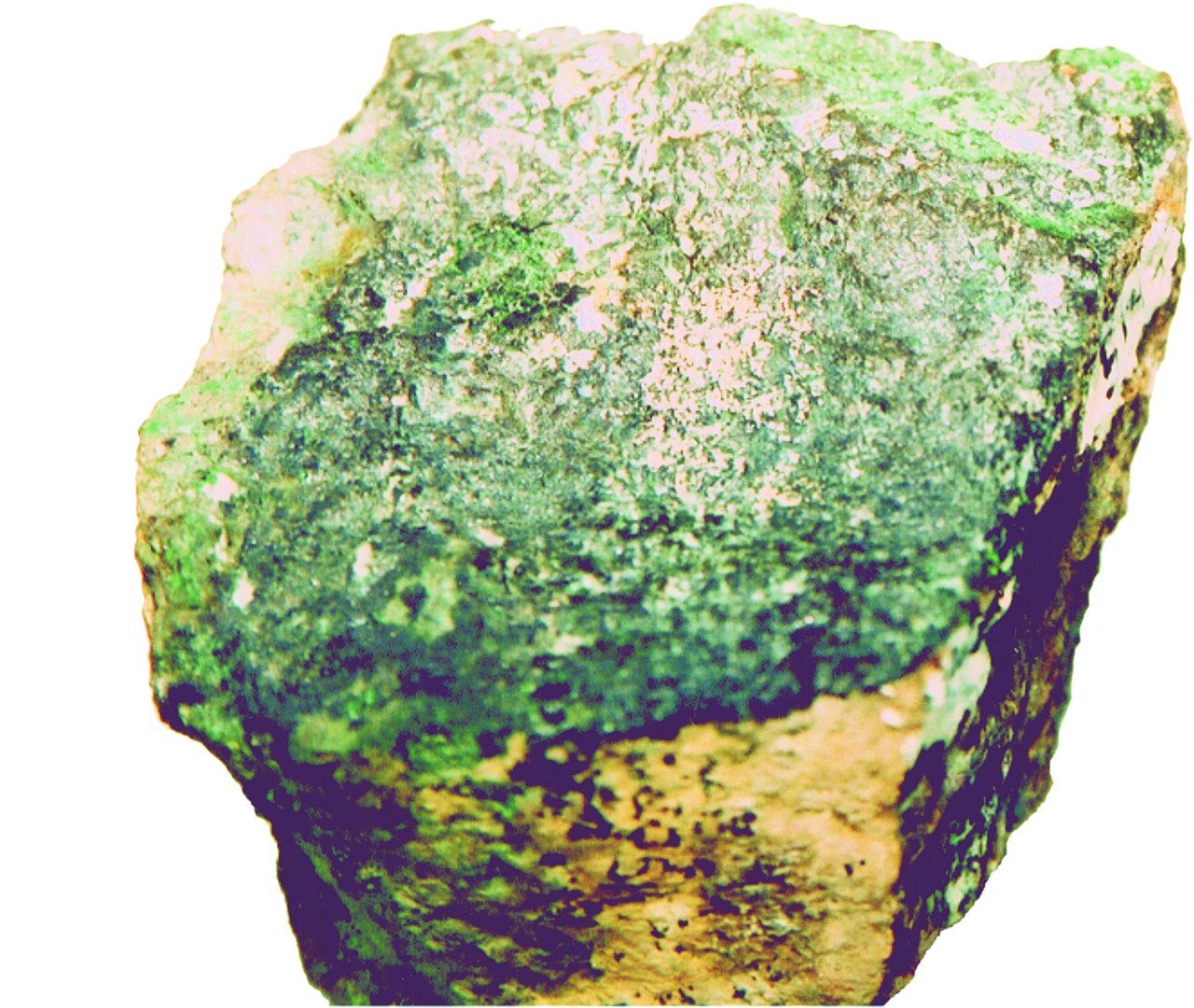
Garnierite
Nickel ore
A soft, earthy, apple-green to bright emerald crusty material that looks more like a stain or a clay than an ore, often smeared through weathered serpentine. Not a single mineral but a field name for a green nickel-bearing mixture. Forms in tropical soils above ultramafic rock.
The typical ore of nickel laterite, the weathering blanket that supplies Indonesia, New Caledonia and the Philippines. Laterite is cheap to dig but hard to refine: it must be smelted to ferronickel or nickel pig iron, or leached under high-pressure acid to reach battery grade. Indonesia's build-out of this route is what crashed the nickel price after 2022.
Toma1974 · CC BY-SA 4.0 · Wikimedia Commons
-
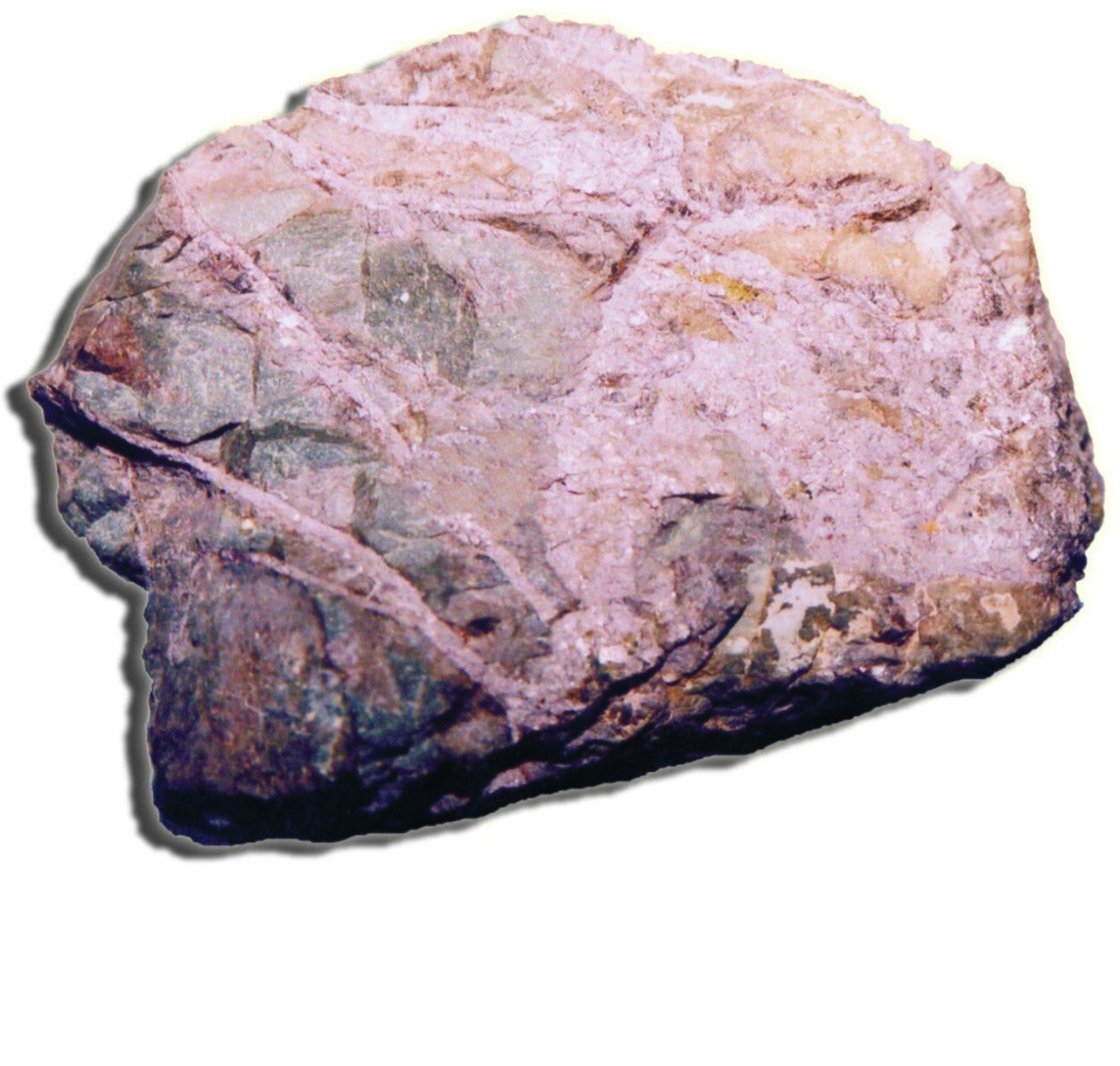
Cobaltite
Battery metal ore
Silver-white to steel-grey with a pinkish or violet cast, metallic and brittle, in small striated cubes or pyritohedra. Often weathers to a distinctive pink or peach bloom on the surface. Its metal was named for a goblin blamed by German miners for the arsenic fumes it gave off.
A cobalt sulfarsenide. Cobalt stabilises the cathode in most lithium-ion batteries and makes the superalloys in jet turbines. Around 70 percent of mine supply is a by-product of copper mining in the DRC, much of it from artisanal pits, which is why cathode chemists have worked hard on low-cobalt NMC and cobalt-free LFP formulations.
AyselkaDjabrailova · CC BY-SA 4.0 · Wikimedia Commons
-
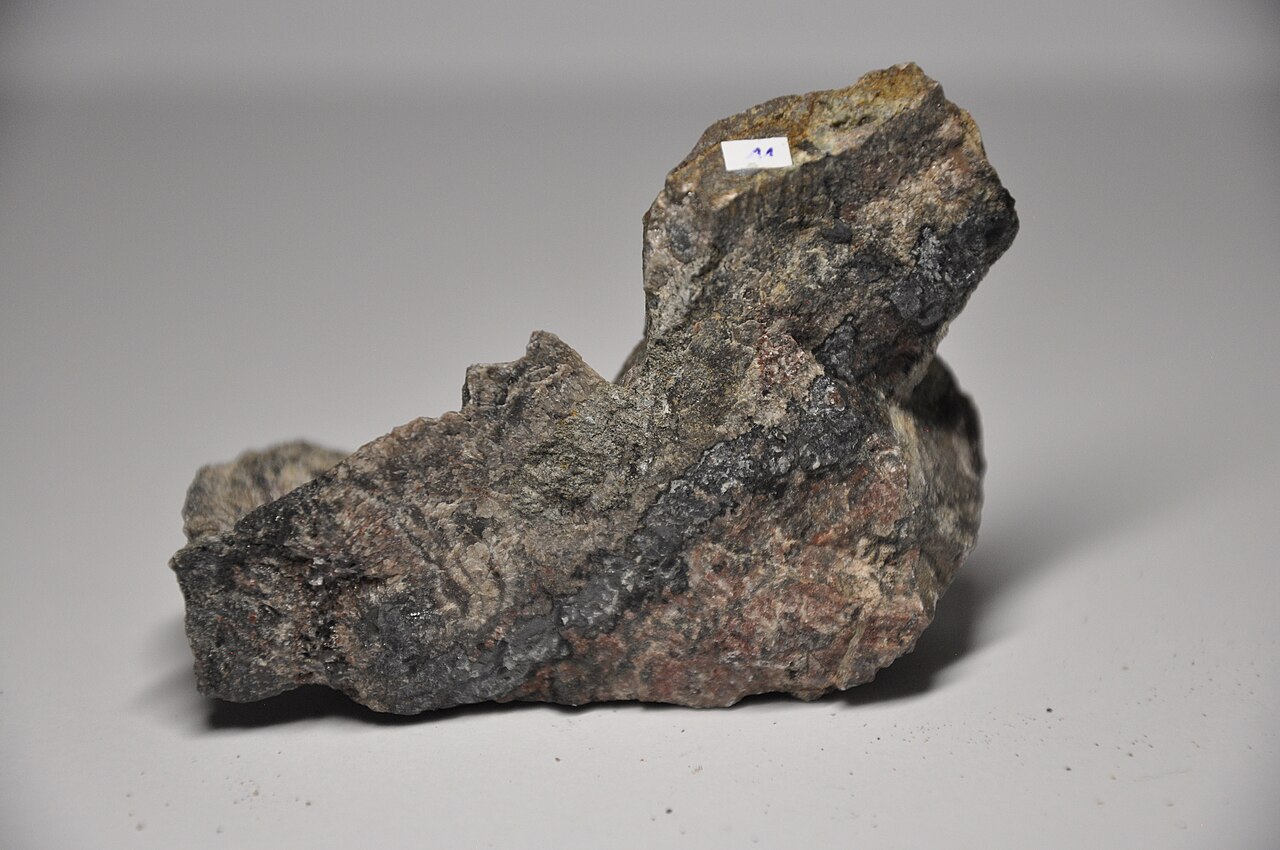
Uraninite (pitchblende)
Nuclear fuel ore
Greasy pitch-black to brownish-black, botryoidal or massive, with a dull submetallic lustre and an exceptional density. Strongly radioactive — a Geiger counter identifies it across a room. Marie Curie extracted two new elements from residues of this ore.
The main uranium oxide ore, mined at very high grades in Canada's Athabasca Basin and by in-situ leaching in Kazakhstan, which is now the largest producer. Milled to yellowcake (U3O8), priced per pound on term contracts rather than an exchange — utilities buy years ahead, so spot volumes are thin and the price gaps hard.
H238 · CC BY-SA 4.0 · Wikimedia Commons
-
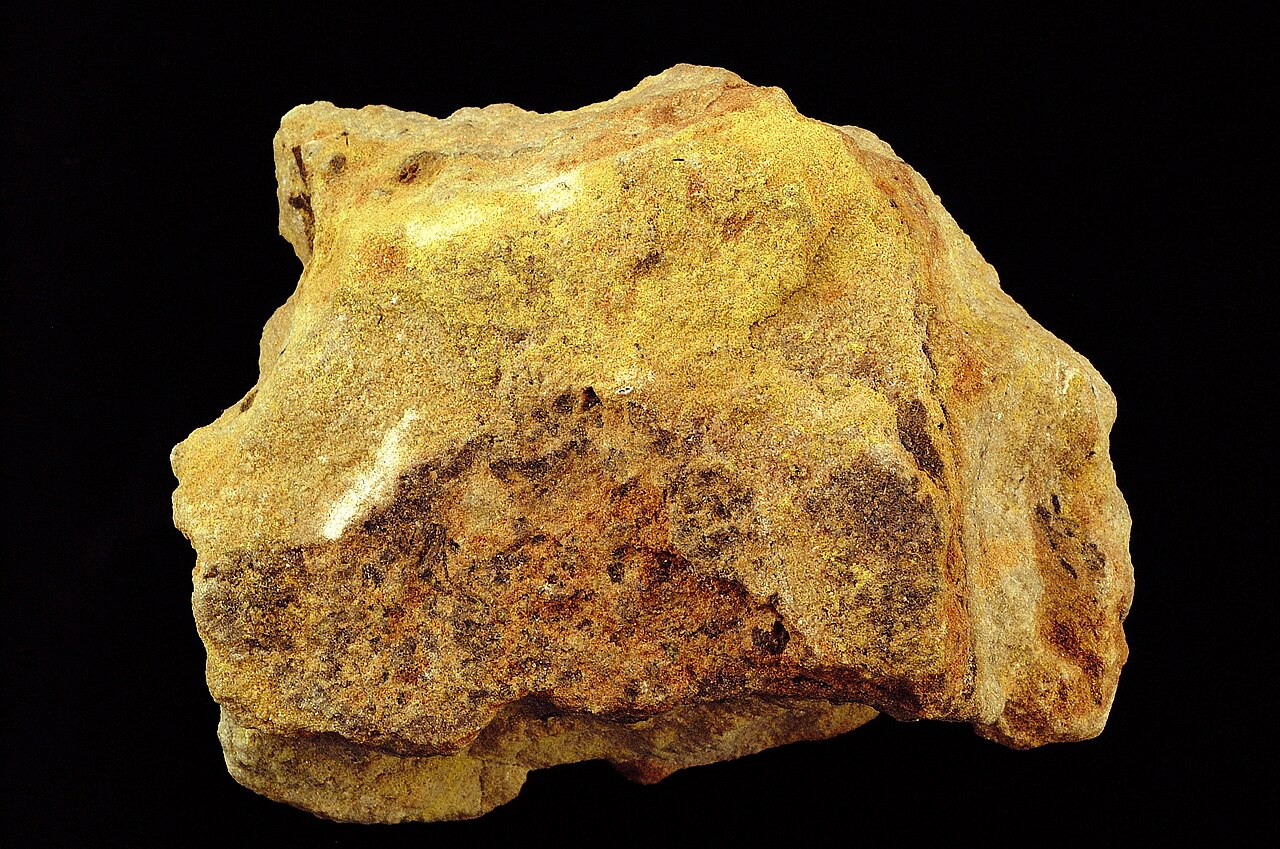
Carnotite
Nuclear fuel ore
A powdery, canary to lemon-yellow crust or coating on sandstone, so soft it rubs off on your hand. Highly radioactive despite the harmless colour. Characteristic of the sandstone plateaus of the American Southwest, where it drove a 1950s prospecting rush.
A uranium-vanadium mineral and the ore of the Colorado Plateau, where the same rock was mined for vanadium for steel in one decade and uranium for weapons and reactors in the next. Grades are lower than Athabasca's, so most of these mines are only economic at high uranium prices, making them a standing swing supply.
Darla Sondrol · CC0 · Wikimedia Commons
-
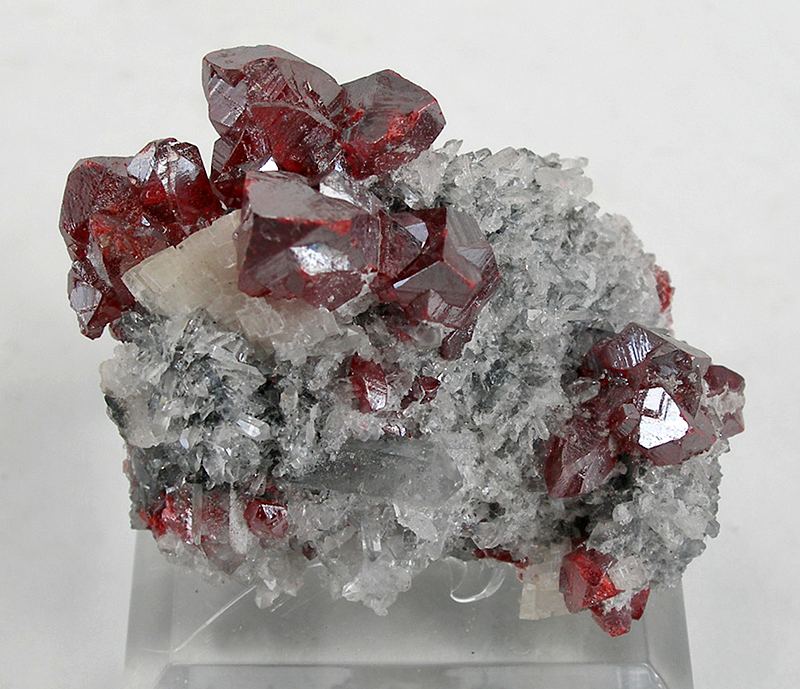
Cinnabar
Minor metal ore
Vivid scarlet to brick-red, in small adamantine rhombohedral crystals or red earthy crusts, and remarkably heavy. Soft enough to scratch with a copper coin. Ground for millennia as the pigment vermilion, despite yielding the only metal that is liquid at room temperature.
Mercury sulfide, roasted to drive off the metal as vapour. Almost the entire legitimate market has closed under the 2013 Minamata Convention, which phases out mercury in products and mining. Most remaining demand is illegal artisanal gold mining, where mercury amalgamation is the dominant method and the dominant health hazard.
Robert M. Lavinsky · CC BY-SA 3.0 · Wikimedia Commons
-
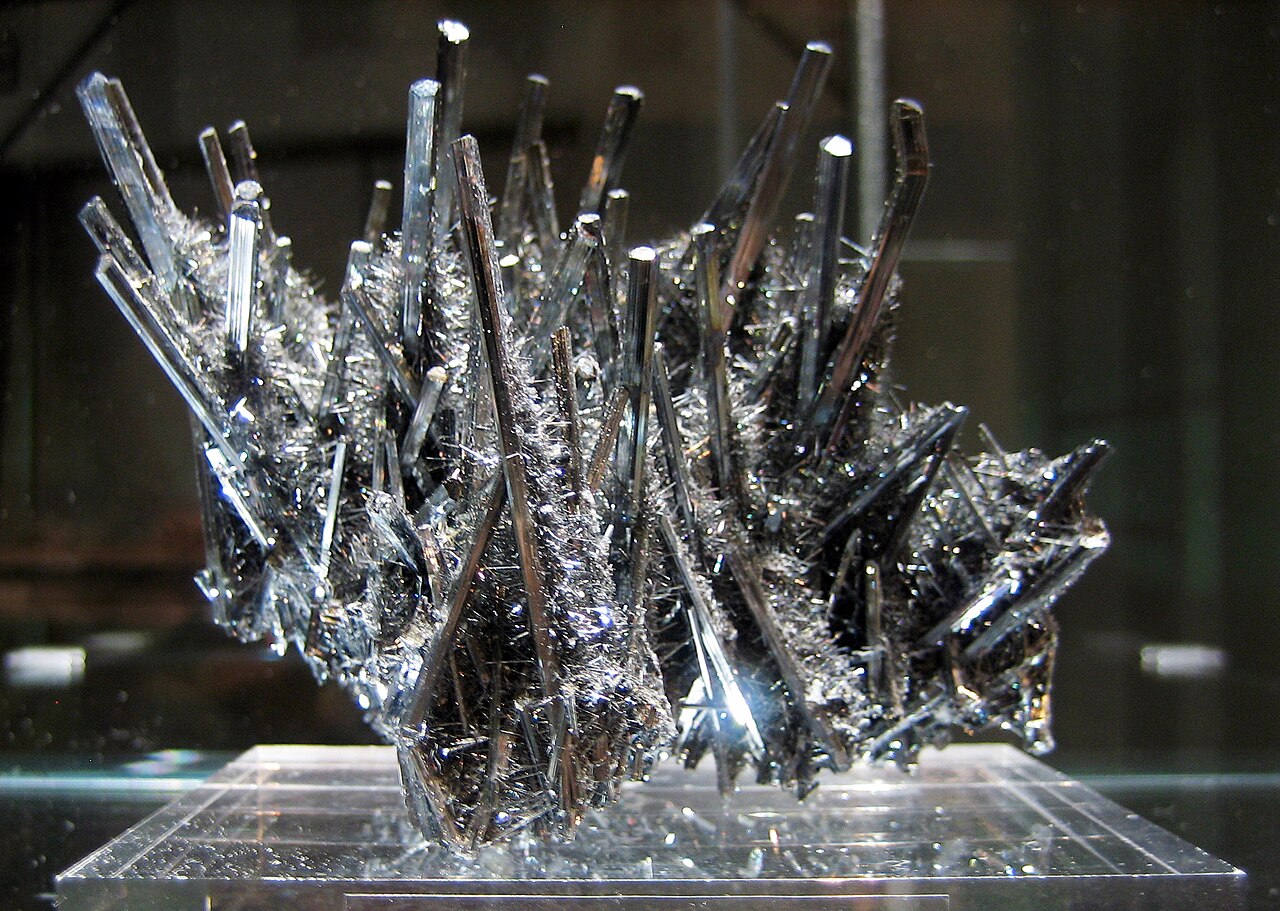
Stibnite
Critical metal ore
Spectacular silvery lead-grey metallic needles and radiating blades with a bright splendent lustre, soft enough to mark paper and low-melting enough to fuse in a candle flame. Grows in some of the most dramatic crystal sprays in mineralogy.
The sole important ore of antimony, used in flame retardants, lead-acid battery alloy, ammunition and increasingly in liquid-metal grid storage batteries. China, Tajikistan and Russia dominate supply; China's 2024 export controls sent the price to record highs and put antimony on every Western critical list.
User:pepperedjane · Public domain · Wikimedia Commons
-
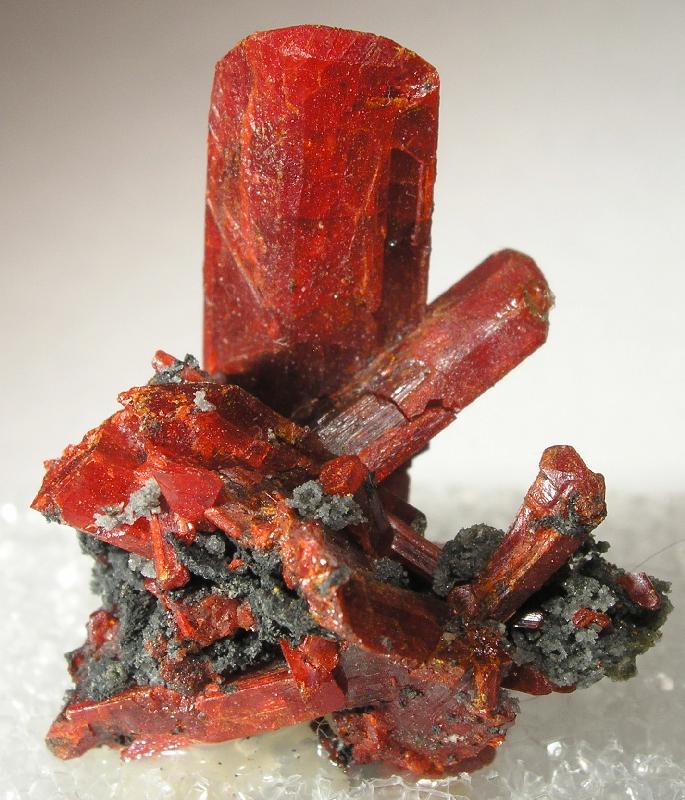
Realgar
Minor metal ore
Brilliant orange-red to ruby-red, resinous rather than metallic, in short prismatic crystals or granular crusts. Notoriously unstable: leave a specimen in daylight for a few years and it crumbles to an orange-yellow powder. Toxic to handle.
An arsenic sulfide, historically mined for pigment, rat poison and pest control. Almost no arsenic is mined for its own sake today — it is captured from copper and gold smelter flue dust and is largely an unwanted liability. The small legitimate market is gallium arsenide semiconductors and wood preservative, both shrinking.
Robert M. Lavinsky · CC BY-SA 3.0 · Wikimedia Commons
-
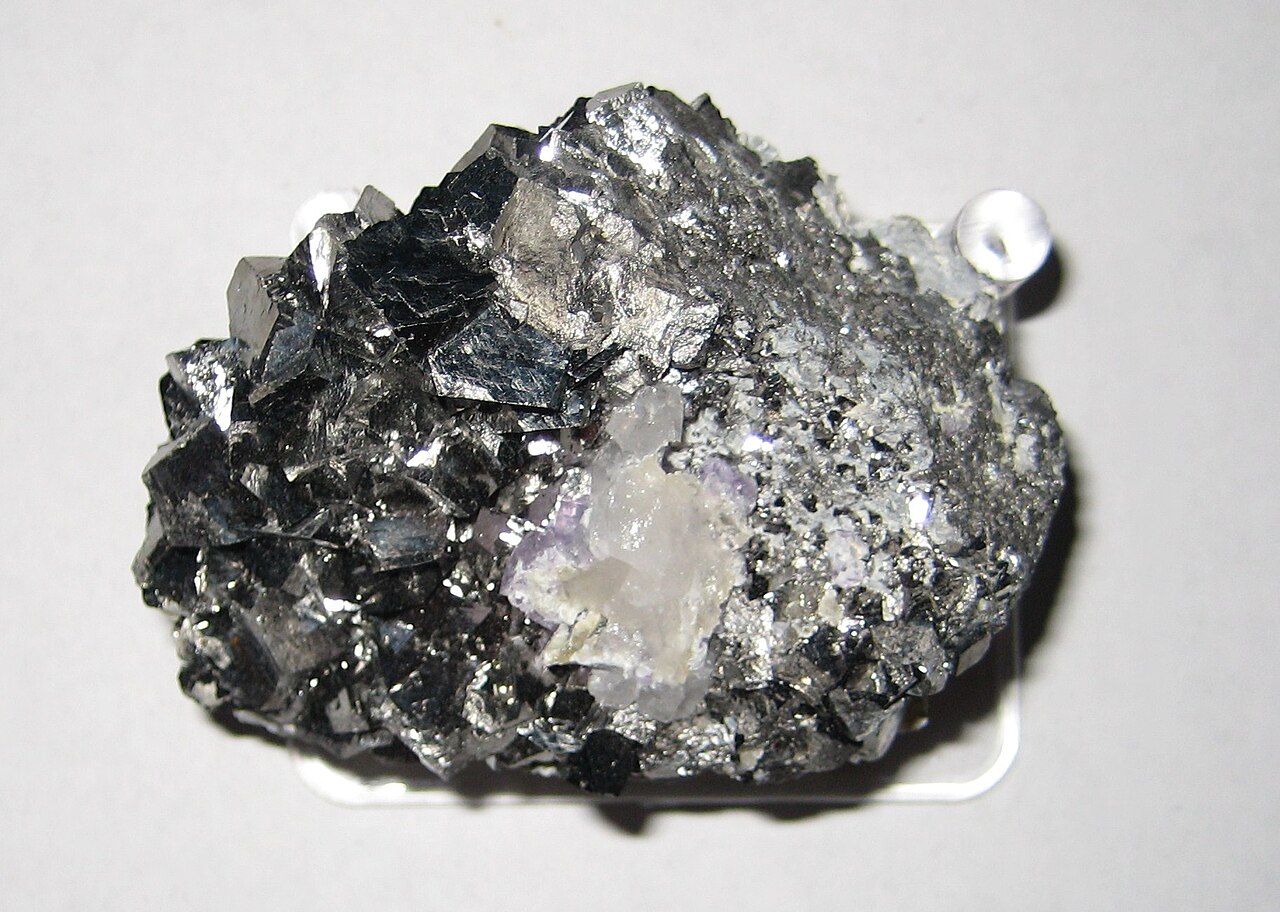
Arsenopyrite
Refractory gold host
Silver-white to steel-grey metallic prisms, often striated and cross-twinned, tarnishing dull grey. Strike it with a hammer and it gives off a sharp garlic smell. Superficially very like the brassier fool's gold it grows beside, but paler and colder in tone.
The classic host of refractory gold: gold locked inside this crystal lattice will not respond to ordinary cyanide leaching, so the ore must first be roasted, pressure-oxidised or bio-oxidised. That extra step is why two deposits of the same grade can have completely different economics, and it is the main source of arsenic in mine waste.
SDCDeaCerte · CC BY 2.0 · Wikimedia Commons
-
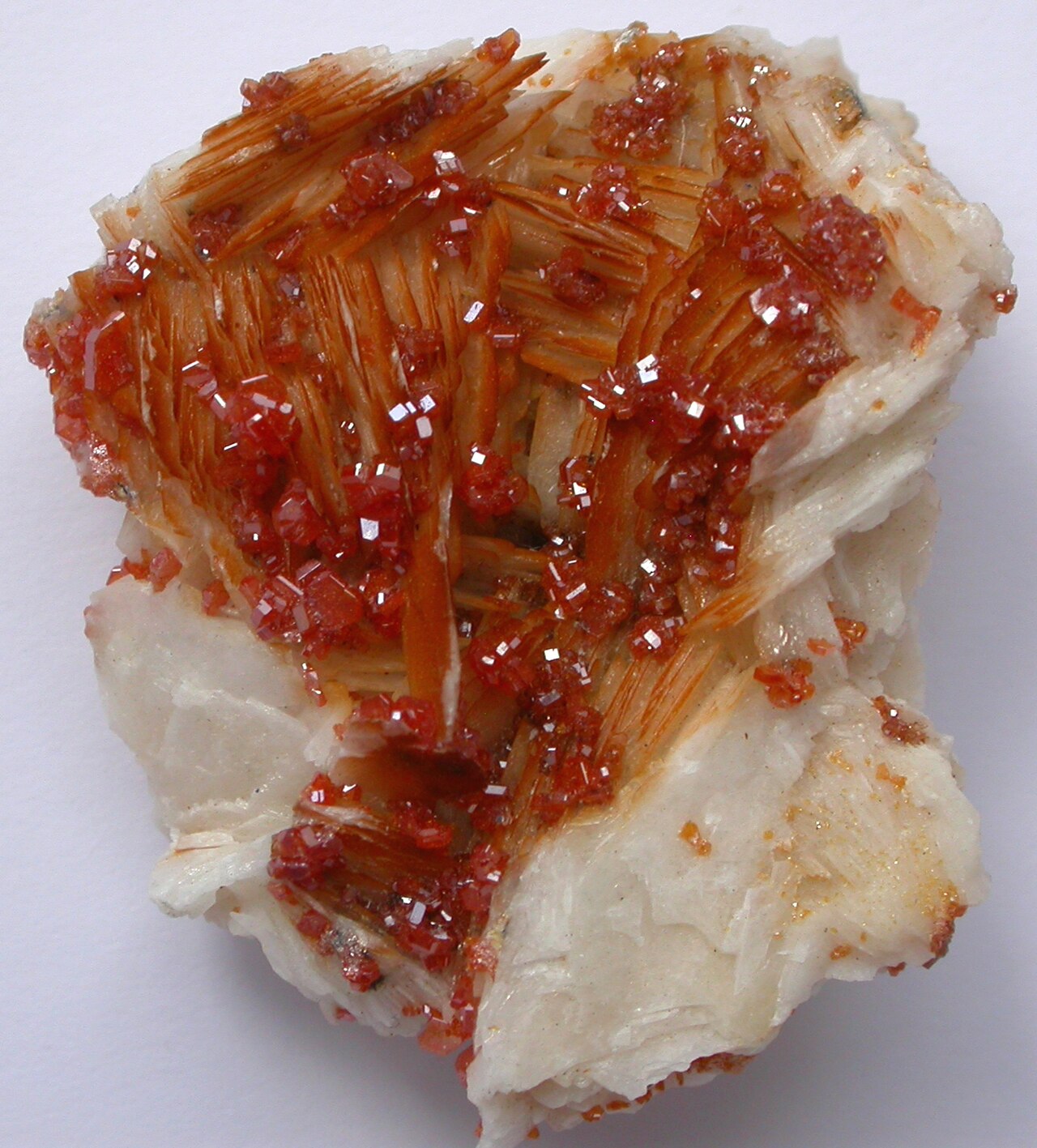
Vanadinite
Steel-alloy / battery ore
Brilliant orange-red to brownish-red hexagonal barrel-shaped crystals with a resinous lustre, crusting cavities in weathered lead deposits. Very heavy, very soft, and popular with collectors for the intensity of its colour. Mibladen in Morocco is the classic locality.
A secondary lead vanadate, a minor ore of vanadium — which mostly comes as a by-product of steel slag, uranium ore and heavy oil residues. Vanadium's traditional use is ferrovanadium to strengthen rebar; the growth story is the vanadium redox flow battery, a long-duration grid-storage technology that leases rather than consumes its electrolyte.
Ra'ike (see also: de:Benutzer:Ra'ike ) · CC BY 2.5 · Wikimedia Commons
-
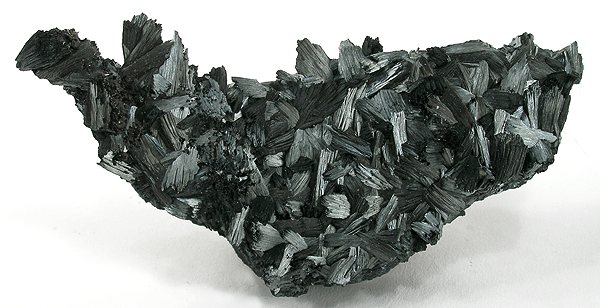
Pyrolusite
Steel-alloy ore
Sooty black to dark steel-grey, often in soft powdery botryoidal crusts or delicate branching dendrites that look like fossil ferns on a rock face. Soft enough to blacken your fingers. Its streak is black, and it is not magnetic.
The chief ore of manganese, over 90 percent of which goes into steel as a deoxidiser and alloy — there is no substitute at any price, making it quietly one of the most indispensable metals. South Africa, Gabon and Australia lead supply. The other use is battery cathodes: electrolytic manganese dioxide in alkaline cells and manganese in NMC and LMFP lithium cathodes.
Robert M. Lavinsky · CC BY-SA 3.0 · Wikimedia Commons
-
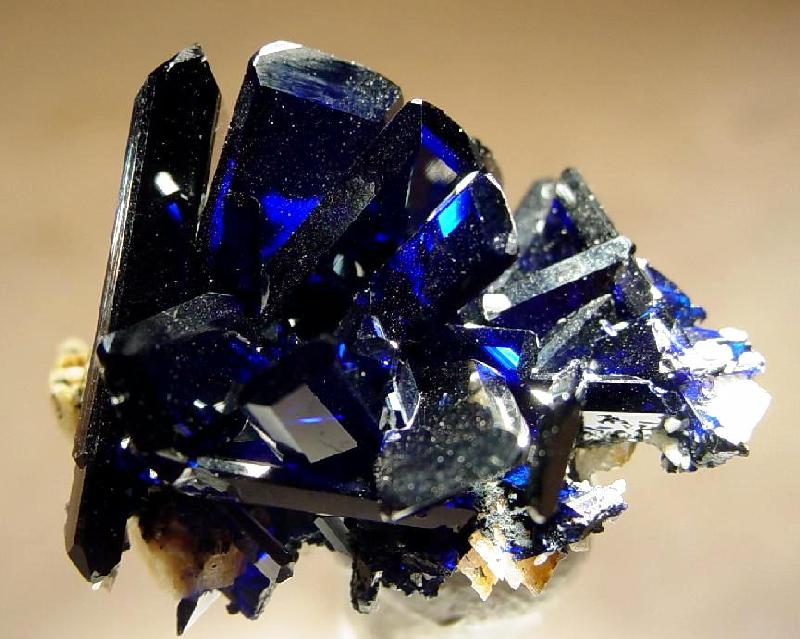
Azurite
Copper ore mineral
Deep, intense azure to violet-blue, in blocky crystals or earthy crusts, frequently seen half-converted into a green companion mineral along its edges — the blue is the less stable of the pair. Soft, and it fizzes in acid.
A copper carbonate in the oxidised cap of copper deposits, always a minor ore but a superb surface indicator for prospectors. Its historical importance is as a pigment: it was the principal blue of European painting before Prussian blue, and its habit of altering to green over centuries is why some Renaissance skies have turned the wrong colour.
Robert M. Lavinsky · CC BY-SA 3.0 · Wikimedia Commons
-
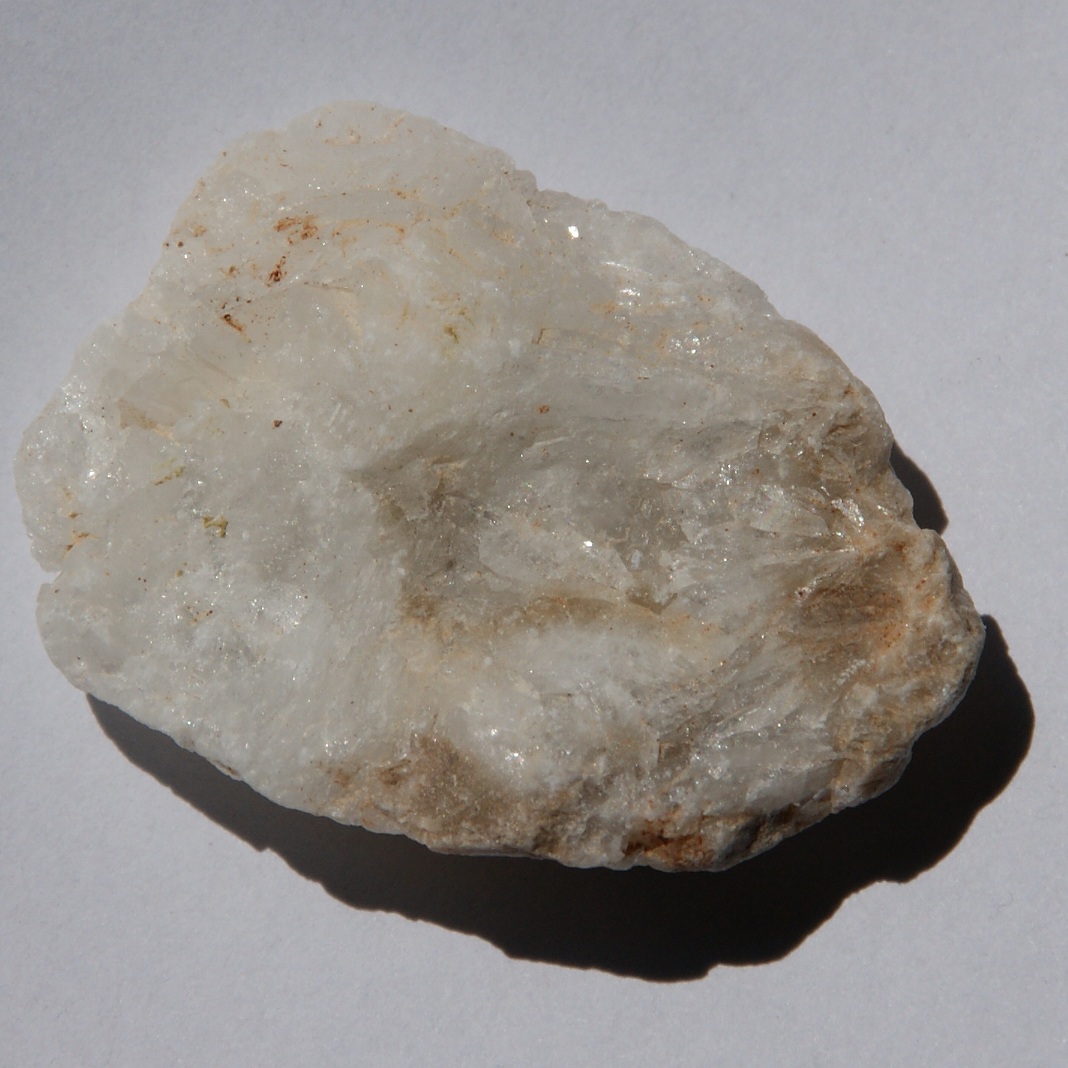
Celestine
Minor industrial mineral
Pale sky-blue to colourless tabular or prismatic crystals, glassy, brittle, and heavy for something so pale — though slightly less dense than the very similar mineral it is easily confused with. Lining geodes in Ohio and Madagascar in showy blue clusters.
The main ore of strontium. Its historic market, the strontium carbonate that absorbed X-rays in the faceplate of cathode-ray-tube televisions, vanished with flat screens — a rare case of a mineral commodity losing most of its demand in a decade. What remains: ferrite magnets, pyrotechnic red flares, and drilling fluid additives.
Hi-Res Images of Chemical Elements · CC BY 3.0 · Wikimedia Commons
-
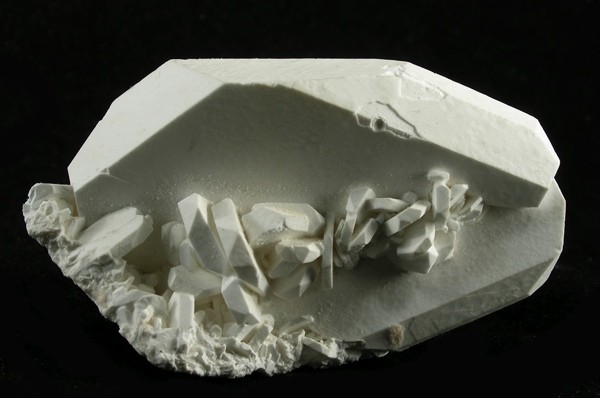
Borax
Industrial mineral
Dull white to grey-green, chalky and very soft, in blocky crystals that lose water in dry air and go powdery and opaque on the surface. Tastes faintly sweet-alkaline. Hauled out of the Mojave desert by famous twenty-mule teams in the 1880s.
A hydrated sodium borate, the main source of boron. Used in borosilicate glass and glass fibre — the largest markets by far — plus ceramic glazes, detergents, wood preservative and micronutrient fertiliser. Supply is a near-duopoly: Rio Tinto's Boron mine in California and Eti Maden in Turkey, which between them hold most of world reserves.
Robert M. Lavinsky · CC BY-SA 3.0 · Wikimedia Commons
-
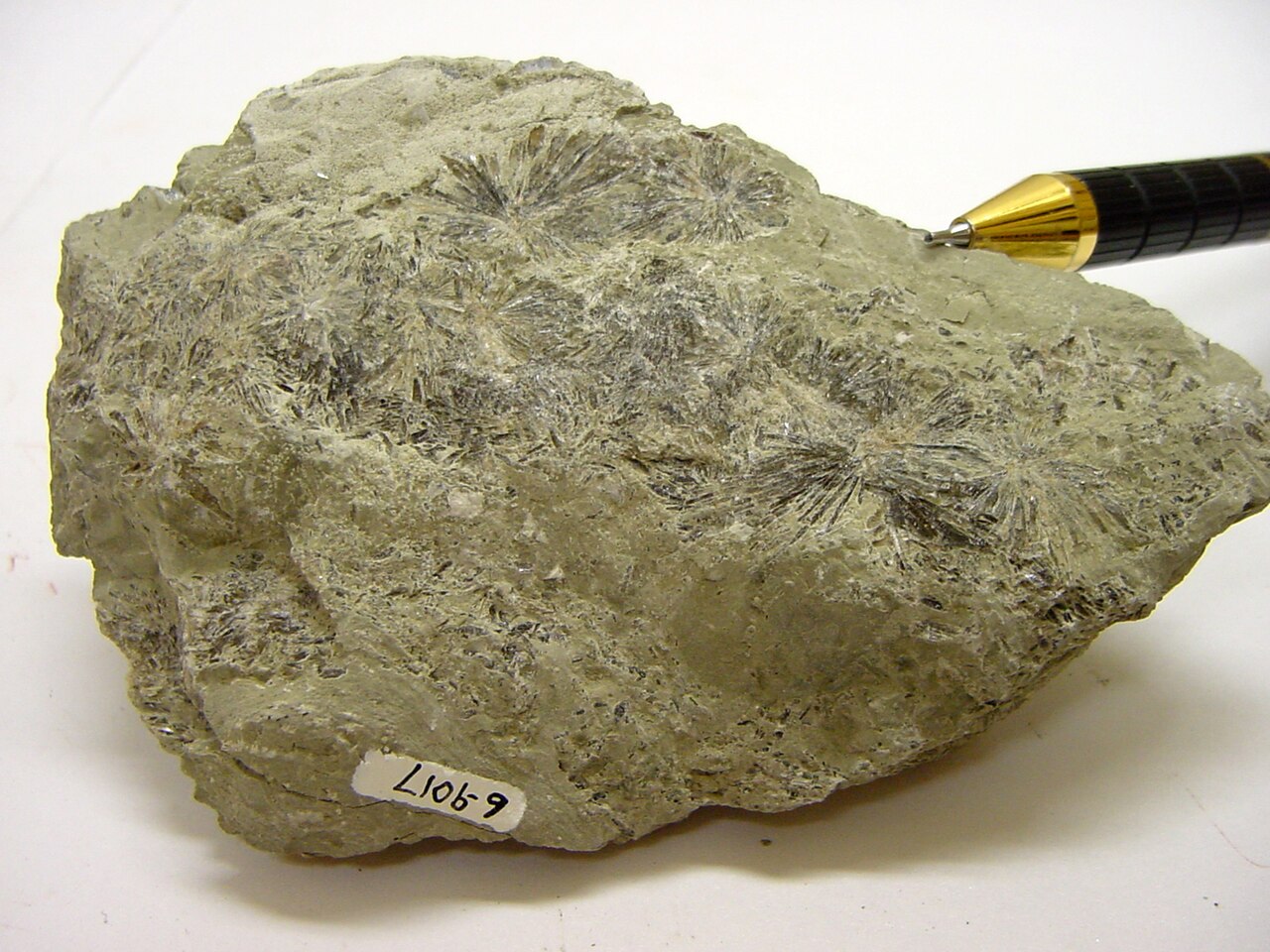
Trona
Industrial mineral
Grey-white to yellowish fibrous or bladed masses with a silky lustre, soft, and distinctly alkaline to the tongue. Bedded in ancient lake deposits — the Green River Basin of Wyoming holds the largest known body of it in the world.
The natural ore of soda ash (sodium carbonate). About half of soda ash goes into glass, the rest into detergents, chemicals and, increasingly, lithium carbonate processing. Wyoming's natural trona competes with the synthetic Solvay process used elsewhere, and is both cheaper and much less carbon-intensive — a rare case of the mined route being the greener one.
Andrew Silver · Public domain · Wikimedia Commons
-
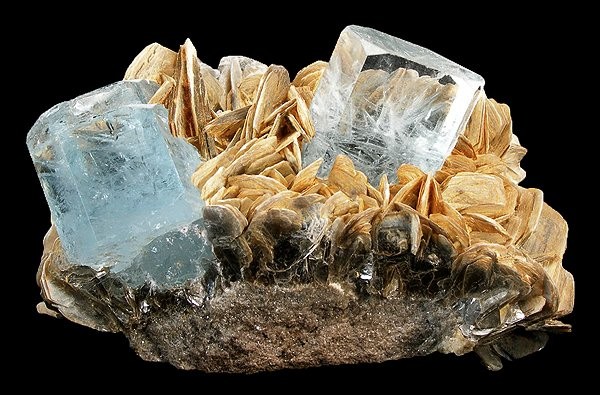
Beryl
Critical metal ore / gemstone
Hard hexagonal prisms with flat ends, glassy, in pale green, blue, yellow or pink — the same species supplies both emerald and aquamarine depending on trace impurities. Grows to enormous size in granite pegmatites; single crystals have exceeded a tonne.
The main ore of beryllium, a metal that is stiffer than steel at a fraction of the weight and transparent to X-rays, used in aerospace, satellite optics and copper-beryllium springs. Supply is extraordinarily concentrated — the Spor Mountain deposit in Utah supplies the majority of world output. Beryllium dust causes an incurable lung disease, so handling is tightly regulated.
Robert M. Lavinsky · CC BY-SA 3.0 · Wikimedia Commons
-
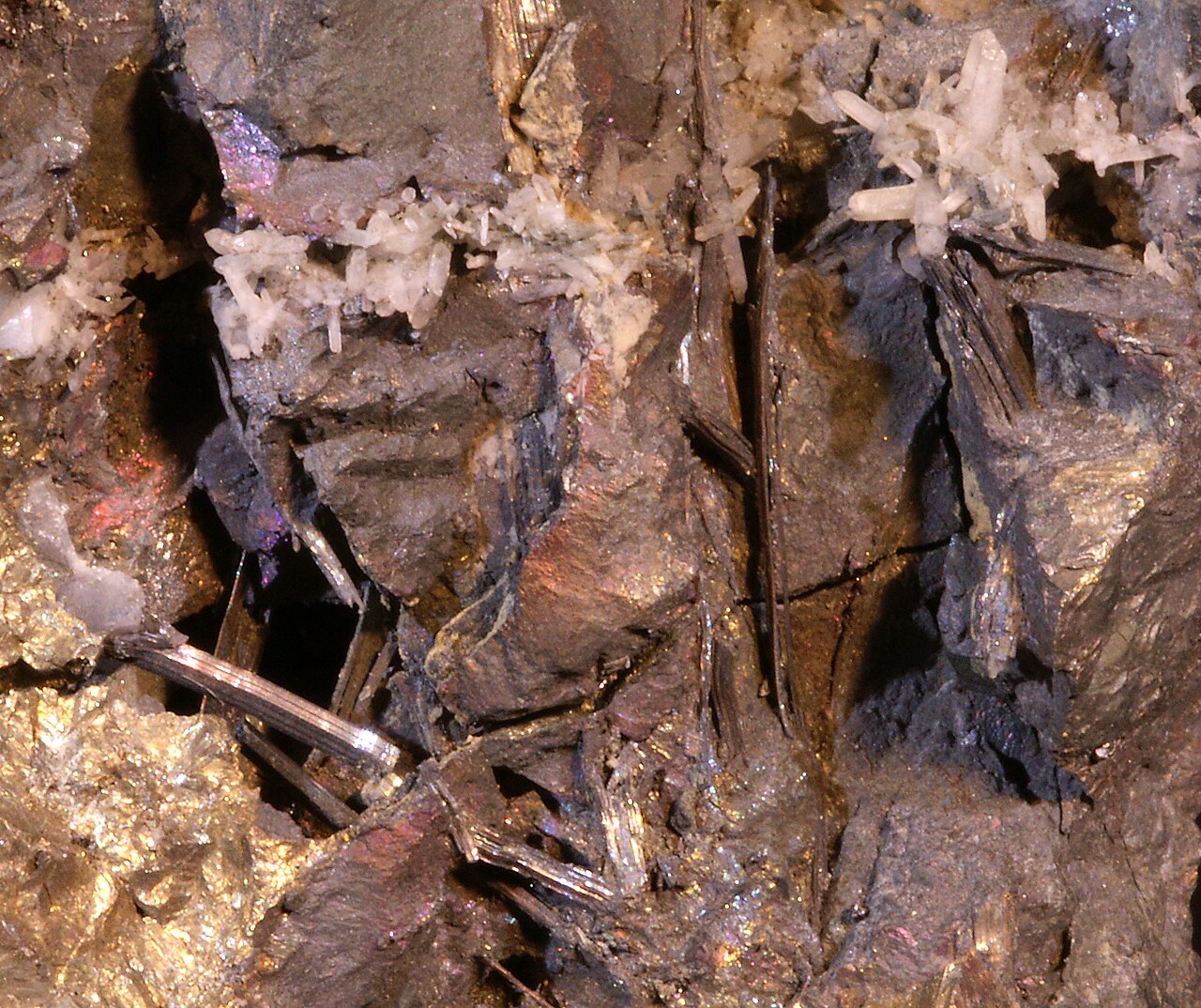
Bismuthinite
Minor metal ore
Lead-grey to tin-white metallic needles and fibrous masses with a bright lustre that tarnishes to a faint iridescent yellow. Soft and flexible. Very easily confused with two other grey needle-forming sulfides, and separated in practice only by chemistry or density.
The sulfide ore of bismuth, almost all of which is a by-product of lead, tungsten and copper smelting rather than mined for itself. It is the one heavy metal considered non-toxic, which is its commercial opening: it substitutes for lead in plumbing solder, fishing weights, ammunition and free-machining brass, and it is the active ingredient in stomach remedies.
Didier Descouens · CC BY-SA 4.0 · Wikimedia Commons
-
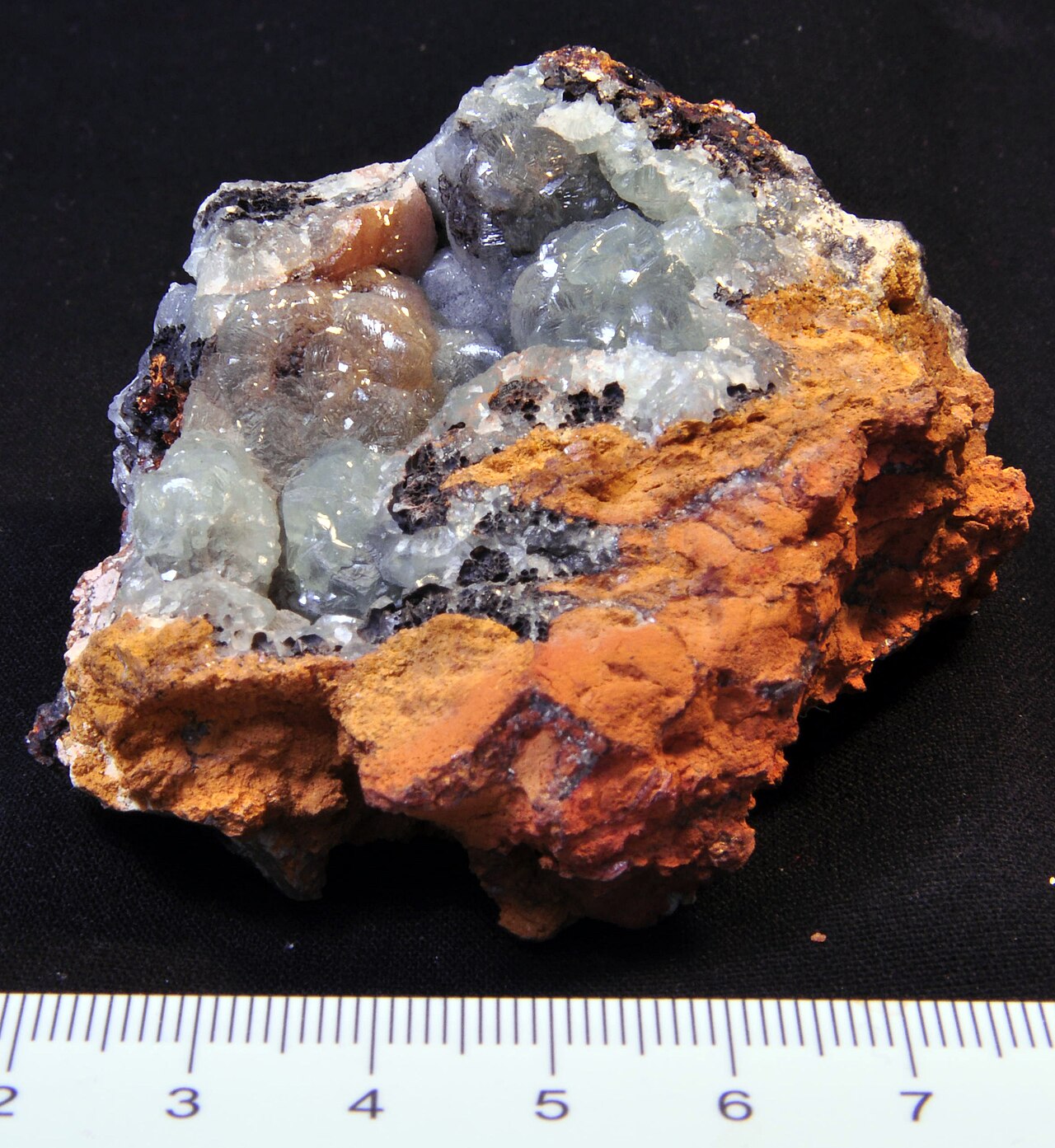
Smithsonite
Zinc ore mineral
Botryoidal, grape-like crusts with a soft pearly to silky lustre, in apple-green, blue-green, pink or honey-yellow. Rounded and lumpy rather than crystalline, and it fizzes in acid. Named after the Englishman whose bequest founded a famous American institution.
A zinc carbonate from the oxidised zone above zinc sulfide ore, historically the "calamine" that was smelted for brass before sphalerite was understood. Now a minor ore, but oxide zinc deposits are being revisited because they can be leached and electrowon without a smelter — attractive where sulfur dioxide capture is expensive.
Lluís Casas · CC BY 3.0 · Wikimedia Commons
-
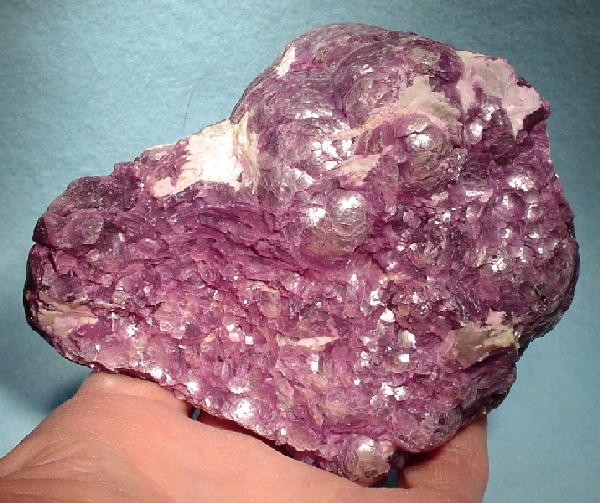
Lepidolite
Battery mineral
A distinctly lilac to rose-violet mica that splits into thin flexible flakes, glittering and soft. The colour comes from manganese traces. Found in the same pegmatites as the pale bladed mineral that dominates hard-rock supply of the same metal.
A lithium-bearing mica and the third lithium source after spodumene and brine. Lower grade and fluorine-rich, so conversion is harder and dirtier, but China's Jiangxi province built a large lepidolite industry anyway to secure domestic supply. Those high-cost operations are the marginal tonne in the lithium market, and they shut down first when prices fall.
Robert M. Lavinsky · CC BY-SA 3.0 · Wikimedia Commons
Photographs from Wikimedia Commons, each credited to its photographer and licence above and in full on the credits page. Specimen set compiled 2026-09-29. Educational only — nothing here is investment advice.