A metal that arrives uninvited
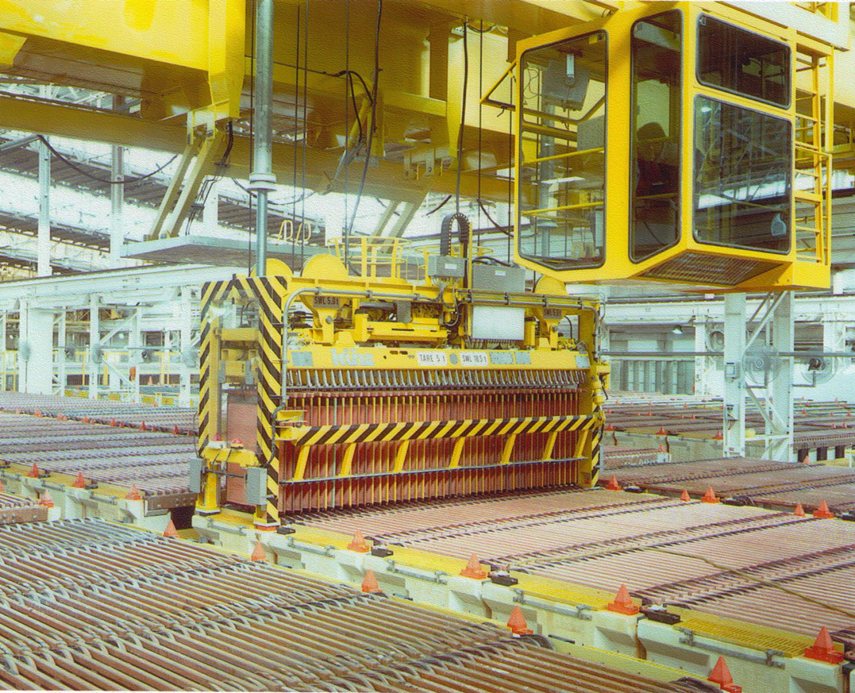
When a copper smelter processes its concentrate, the furnace does not produce only copper. Bound up in the same ore are traces of tellurium, selenium, bismuth, and often silver. None of these were the reason anyone sank a shaft or moved a tonne of rock. They simply came along. This is the central fact of by-product and companion metal supply: a large number of elements reach the market not because someone decided to produce them, but because stopping them from appearing would itself require effort. The economics follow from that fact in ways that are easy to misread.
What makes a metal a by-product
The distinction between a primary metal and a by-product is not geological—it is economic. A primary metal is one whose value is large enough, relative to the cost of mining, to justify extraction in its own right. A by-product is one whose value does not clear that bar on its own, but which can be recovered at marginal additional cost once the primary metal is already being processed. The same element can be primary in one deposit and a by-product in another, depending on grades, metallurgy, and prevailing prices.
Indium offers a clear illustration. It occurs in sphalerite, the principal zinc mineral, typically at very low concentrations. No one mines sphalerite to get indium. But zinc smelters that process large volumes of concentrate can recover indium from the residues of that process at a cost far below what a dedicated indium mine would require—if such a thing were even feasible. The result is that global indium supply is almost entirely a function of zinc smelting throughput, not of indium demand.
The same pattern holds across a long list of elements: tellurium from copper refining, rhenium from molybdenite roasting (itself often a by-product of copper porphyry mining), gallium from aluminium refining, bismuth from lead smelting, and several platinum-group metals that emerge together because their geochemistry keeps them associated in the ore. In each case, the production rate is set upstream, by decisions made about a different metal entirely.
The supply response problem
This creates an asymmetry that anyone working near these supply chains needs to understand. When demand for a primary metal rises, producers can respond: open new mines, expand existing ones, invest in additional capacity. The supply curve behaves more or less as economists expect. When demand for a by-product metal rises, producers of that metal cannot respond in the same way, because they do not control the lever. They can improve recovery rates within the smelter—capture a higher fraction of what is already present in the feed—but they cannot increase the total amount of by-product available without increasing primary metal output, and that decision belongs to an entirely different set of market participants responding to an entirely different price signal.
The practical consequence is that by-product supply tends to be inelastic in the short to medium term. A surge in demand for tellurium does not cause copper miners to mine more copper. It causes the price of tellurium to rise until either demand moderates, recovery rates improve, or—occasionally—a deposit is found where the by-product grade is high enough to justify treating it as a co-product or even a primary target. That last outcome is rare and takes years.
A worked illustrative example
Suppose, for illustration, that a hypothetical copper mine processes ore grading 0.8% copper and that the associated concentrate contains a small fixed ratio of selenium relative to copper—say, for the sake of arithmetic, that every tonne of copper metal recovered is accompanied by a quantity of selenium that the refinery can either capture or discard. If the refinery's recovery circuit captures half of the selenium present, and the copper output is a certain volume, then selenium output is determined entirely by that volume and that recovery fraction. If selenium demand doubles, the refinery might invest in improving its recovery circuit to capture, say, three-quarters instead of half—a meaningful increase, but one still bounded absolutely by however much selenium the copper feed contains. To get more selenium than the copper circuit can yield, you would need either more copper production or a different ore source. Neither response is quick or cheap, and neither is motivated by the selenium price alone.
This arithmetic is illustrative, but the structure it describes is real. The ceiling on by-product supply is set by primary metal production, and the floor of by-product supply is set by the cost of the recovery circuit relative to the by-product price. Below a certain price, the smelter may not bother recovering the by-product at all; above it, recovery improves incrementally. Neither end of that range is very elastic.
Co-products and the blurred boundary
Some metals sit in a middle category. Molybdenum is often a by-product of copper porphyry mining, but in some deposits its grade and value are high enough that it functions more like a co-product—one whose price genuinely influences whether a given section of ore is worth processing. Silver occupies a similar position in many lead-zinc operations. When a metal reaches co-product status, the supply response improves, because operators have some reason to adjust processing decisions based on its price. The boundary between by-product and co-product is not fixed; it shifts as prices and processing costs move.
For supply chain purposes, the important question is always: who is making the production decision, and what price are they responding to? If the answer is a copper miner responding to the copper price, then the supply of every metal that rides along with copper is structurally tied to copper's fortunes, not to its own.
Concentration without intent
It is worth noting that smelting and refining can concentrate by-product elements to levels that make recovery practical even when the ore grade is very low. The geometry of pyrometallurgical and hydrometallurgical processes tends to sweep certain elements into specific streams—flue dusts, anode slimes, leach residues—where they accumulate. The smelter becomes, in effect, a concentrator for elements it was not designed to handle. Whether those concentrated streams are then processed further depends on the economics of the moment and the technical capability of the facility.
For the reader going further
The behaviour described here connects directly to formal frameworks for analysing material criticality, where supply concentration and by-product dependency are treated as quantifiable risk factors. Readers working on criticality assessment or resource efficiency policy will find that the metallurgical relationships between host and companion metals—sometimes called geometallurgical associations—are the necessary starting point before any flow analysis or scenario modelling can be grounded in physical reality.