Start with a mountain that has something useful inside it
Imagine a hillside in northern Chile. The rock looks ordinary from the outside — dusty, grey, unremarkable. But a geologist has collected samples and sent them to a laboratory, and the results show that a large volume of that rock contains copper minerals scattered through it. That is the beginning of a mine. Everything that follows is an organised attempt to get those minerals out, separate them from the surrounding rock, and turn them into something a smelter or a factory can actually use.
Finding and proving the ore body
Before any digging starts, a team of geologists drills long, narrow holes into the ground and pulls out cylinders of rock called drill core. They measure exactly where the useful minerals are, how concentrated they are, and how deep the ore body extends. This work can take years. Only once enough drilling has been done can engineers say with confidence how much ore is present and whether it is worth mining. Without that work, a company would be digging blind.
Deciding how to dig
There are two broad ways to reach ore. If the ore body sits close to the surface, miners remove everything above it layer by layer, creating a large open pit — a terraced hole that can eventually be wide enough to see from a satellite. If the ore sits far underground, miners dig tunnels and shafts down to it instead, which is called underground mining. Open pits tend to handle very large volumes of lower-grade ore. Underground mines are usually smaller but can reach ore that would be buried under too much waste rock to remove economically from the surface. Many mines use both methods at different stages of their life.
Breaking the rock
Rock does not come out of the ground in handy pieces. Miners drill a pattern of holes into the rock face, load those holes with explosive, and then fire them in a carefully timed sequence. The blast breaks the rock into fragments small enough for equipment to handle. The noise, the dust cloud, and the cloud of fumes that follow a blast are the most visible moment in the whole process, but the real work is in the planning beforehand.
Moving the broken rock
Once the rock is broken, enormous machines called excavators or shovels scoop it up and load it into dump trucks. In a large open pit, these trucks can carry many times the weight of an ordinary road truck, and they drive up and down the terraced walls of the pit on roads cut into the rock. In an underground mine, the broken rock is loaded onto smaller vehicles that travel through the tunnels to a shaft, where it is lifted to the surface in skips — large metal containers that ride up and down the shaft like a very industrial lift.
Separating ore from waste
Most of the rock that comes out of a mine is waste — plain rock with no useful minerals in it. This waste is taken to a separate area called a waste rock dump and piled up. The ore — rock that contains enough mineral to be worth processing — goes to a different part of the site. Deciding which rock is ore and which is waste happens continuously, because the grade (the concentration of the useful mineral) varies from place to place through the ore body.
Crushing and grinding
Ore arrives at the processing plant as chunks that might be the size of a small car or the size of a fist. A series of crushers and mills reduces those chunks progressively, first to gravel size and then to a fine powder, roughly the consistency of sand or even flour. This matters because the mineral grains are locked inside the rock. You have to grind the rock finely enough to free those grains before you can separate them.
Concentrating the mineral
Once the ore is ground fine, the processing plant uses physical or chemical methods to separate the useful minerals from the waste rock powder. A common method for metals like copper is called froth flotation. The ground ore is mixed with water and certain chemicals, and air is bubbled through the mixture. Mineral grains stick to the bubbles and float to the surface as a froth, while the waste rock sinks. The froth is collected and dried to produce a concentrate — a powder that is much richer in the target mineral than the original ore was.
To see why this matters, consider an illustrative example. Suppose a mine processes ore that contains, on average, one part copper for every two hundred parts of rock. After flotation, the concentrate might contain roughly one part copper for every four parts of material. That concentrate is far cheaper to transport to a smelter than the original ore would have been, because most of the useless rock has been left behind at the mine site as a fine wet waste called tailings.
Tailings and water
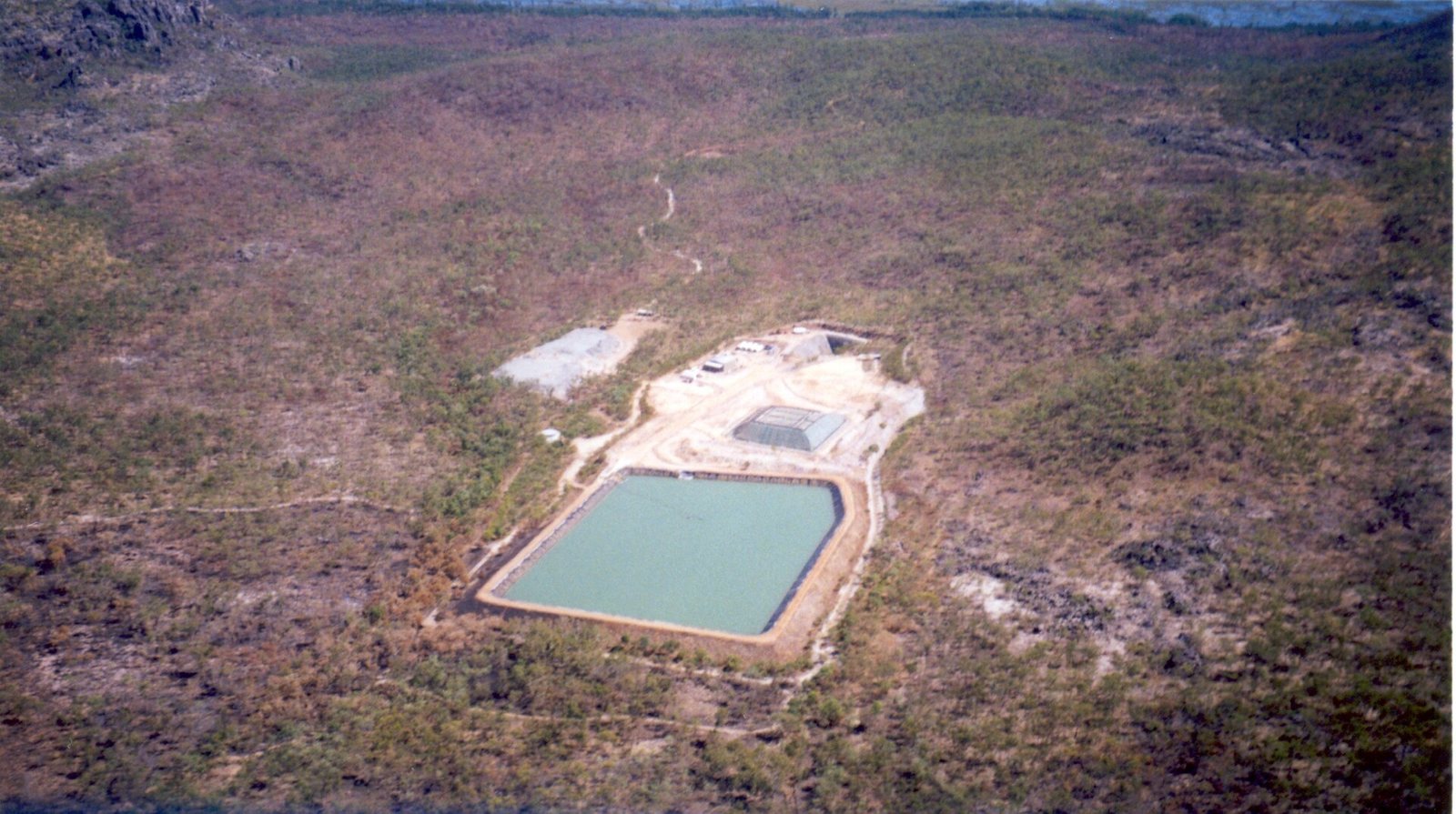
Tailings are the largest waste product of the processing plant by volume. They are pumped as a slurry to a tailings storage facility — a large engineered pond, usually surrounded by embankments. Managing tailings carefully matters both because of the volume involved and because the water and residual chemicals in them need to be contained. A well-run mine recycles as much of that water as possible back into the processing plant.
From the gate
The concentrate — or sometimes a more refined product, depending on the mineral — is loaded into trucks or onto conveyor belts, and eventually into containers or bulk carriers for the journey to a smelter or refinery, which may be on the other side of the world. The mine's job ends there. What happens next, the smelting, refining, and manufacturing that turns concentrate into metal and eventually into a product, is a separate chain of steps entirely.
Where to go next
A reader who wants to go deeper might look at how geologists classify ore reserves and resources, how open-pit and underground mining methods differ in detail, or how different minerals require completely different processing routes — the steps that work for copper sulfides, for instance, are quite different from those used for gold or iron ore.