On any given morning, a trader at a copper rod mill can look at a screen and see the price at which copper cathode changed hands in the last few minutes. A lithium carbonate buyer sitting in the same building, talking to the same supplier, cannot do that. The two commodities sit in entirely different pricing worlds, and the difference shapes contracts, hedging strategies, and the economics of entire supply chains. Understanding which world a metal lives in — and why — is the first step to reading any metals market clearly.
Exchange-traded metals: continuous price discovery
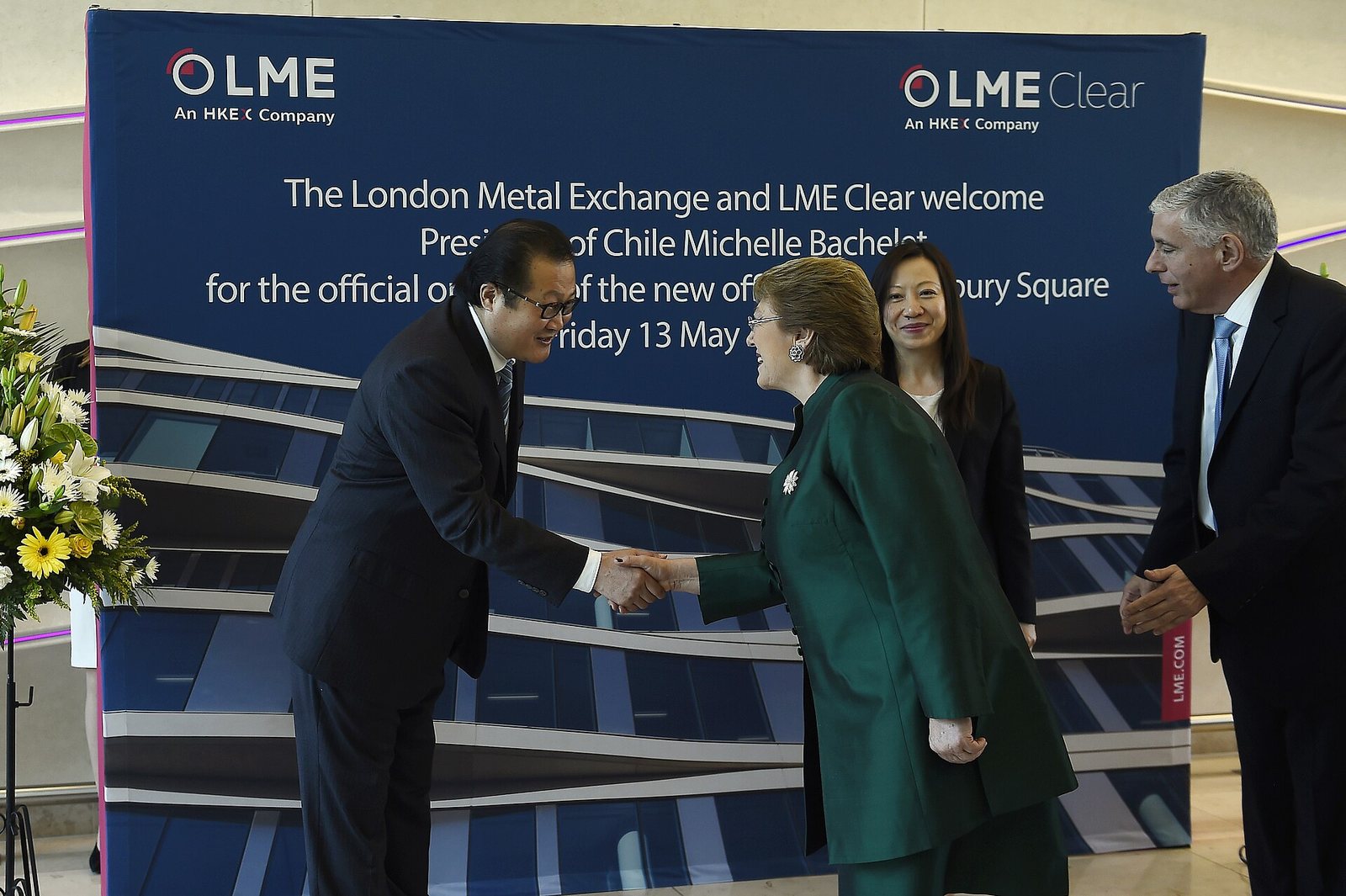
A metal becomes exchange-traded when it is sufficiently standardised and liquid that a central venue can match buyers and sellers in real time. The London Metal Exchange and the CME Group in Chicago are the two dominant venues for base metals. Each contract specifies a grade, a shape, and an approved brand; a warrant — the electronic title to a specific lot of metal sitting in an approved warehouse — can change hands many times before anyone takes physical delivery.
The price that emerges from this process is genuinely discovered rather than declared. At any moment it reflects the collective view of merchants, producers, consumers, and financial participants about prompt and forward value. Because contracts are standardised, a producer can sell forward — locking in a price for metal that will not be produced for months — and a fabricator can buy forward without knowing exactly which mine's cathode will eventually arrive. The exchange's clearing house stands between every trade, removing counterparty risk and making the price usable as a reference point by people who never intend to touch the metal at all.
The settlement price published at the close of a trading session — the LME's official cash price, for instance — becomes the basis on which physical contracts are written. A copper rod producer might agree to sell cable to a utility company at LME cash plus a conversion premium. The premium covers fabrication cost and margin; the LME component floats with the market. Both parties accept the exchange price as neutral ground precisely because neither of them set it.
Benchmark-negotiated pricing: the annual contract
For iron ore, coking coal, and historically for many minor metals, the exchange model either does not exist or has not taken hold. Instead, a price is established once — quarterly or annually — through direct negotiation between large producers and large consumers. The agreed figure then becomes the benchmark that smaller participants reference in their own contracts for the same period.
Iron ore illustrates how this worked for decades. A handful of Australian and Brazilian miners would negotiate with Japanese and Korean steelmakers each year. Once a number was settled, it radiated outward through the industry. The system had obvious advantages for planning: both sides knew their cost and revenue base for the year ahead. It had equally obvious disadvantages when spot conditions diverged sharply from the benchmark, which eventually contributed to iron ore shifting toward a more index-linked model — though the negotiation instinct remains alive in markets where spot liquidity is thin.
Benchmark negotiation still dominates where the product is not genuinely fungible. A specific grade of manganese ore from a specific source may have metallurgical properties that make it preferred for certain furnace charges; the buyer and seller negotiate a price that reflects that specificity, not a generic commodity price.
Assessed prices: the published estimate
Many critical and specialty metals — lithium, cobalt, rare earths, high-purity germanium — are neither liquid enough for an exchange nor traded in volumes that produce reliable bilateral benchmarks. Their prices are assessed. A price-reporting agency (PRA) such as Fastmarkets, S&P Global Commodity Insights, or OPIS surveys transactions, bids, and offers from market participants, applies a defined methodology, and publishes a figure that represents, in the agency's judgement, where the market cleared or would have cleared on that day.
The assessed price carries more uncertainty than an exchange settlement because it rests on reported data rather than executed exchange trades. Volume may be low; some transactions may be withheld by participants who consider them commercially sensitive; the methodology choices — which trades to include, how to weight outliers — affect the result. PRAs publish their methodologies and submit to external review precisely because their numbers end up embedded in long-term contracts. A cobalt sulfate contract referencing a PRA assessment is legally binding on both parties; the integrity of the underlying methodology therefore has real commercial consequences.
Assessment is not a lesser form of pricing; it is the appropriate form when the alternative is no price at all. For materials where each lot differs in purity, mineralogy, or associated elements, a single exchange price would be misleading. The assessment attempts to capture where actual deals are happening, imperfect as that window may be.
A worked example: concentrates and the payable metal calculation
Consider how these worlds interact in a copper concentrate sale — this example is illustrative. Suppose a hypothetical mine produces a concentrate containing, say, 28% copper by weight. The smelter that buys it does not pay for 28% of every tonne; it pays for the payable portion, which the contract defines as the assayed copper content minus a small deduction that covers analytical uncertainty and handling loss. Suppose the contract states that 96.5% of the contained copper is payable.
The price applied to that payable copper is not negotiated between mine and smelter — it is the LME cash settlement price on the quotational period specified in the contract, often an average of daily settlements across the month of shipment. The smelter then deducts treatment charges and refining charges (TC/RC), which are negotiated, sometimes against an annual benchmark set by large producers and smelters. The final invoice is therefore a hybrid: an exchange price for the metal content, a negotiated charge for the processing service.
This layering — exchange price for the commodity, negotiated terms for the service, assessed prices for by-products such as the gold or silver recovered in refining — is typical of how complex ores move through a supply chain. Each pricing mechanism appears where it fits the nature of the market, not by convention alone.
What to read next
Readers who want to go deeper should look at how price-reporting agency methodologies are constructed and audited, the role of IOSCO's principles for financial benchmarks in that process, and the specific mechanics of LME warrant trading and lending rates. The interaction between paper markets and physical delivery — when and why exchange prices can diverge from spot physical premiums — is where much of the real complexity lives.