The mine you cannot see
In the San Manuel district of Arizona, a copper operation once pumped acidic solution through boreholes into fractured rock, waited for the liquid to pick up copper as it seeped through, then collected it at the surface and processed it through electrowinning cells. No open pit. No blasting crew. No haul trucks working eighteen-hour shifts. The copper came out of the ground dissolved in water, as ions in solution rather than as chunks of ore. That process — in-situ recovery, sometimes called in-situ leaching — is one of two techniques that together make up what the industry loosely calls solution mining: extracting metal by dissolving it and pumping the resulting liquid to the surface for processing.
Why dissolve the ore at all?
Conventional mining moves material. Drill, blast, load, haul, crush, grind — every tonne of rock that contains a little metal must be shifted through a sequence of energy-intensive steps before the metal can be separated. For deposits that are deep, low-grade, or located in terrain where large earthworks are impractical, the cost and disruption of that sequence can make the deposit unworkable. Dissolving the metal in place removes several steps from the chain. The orebody itself becomes the reactor.
The idea is not new. Miners in Europe were inadvertently practicing a crude form of it centuries ago when water draining through old workings picked up copper and deposited it on iron scrap left in the drainage channels. What is different today is the engineering around fluid management, monitoring, and the hydrometallurgical plants that process the pregnant solution once it reaches the surface.
In-situ recovery: the process
In-situ recovery (ISR) works by injecting a lixiviant — a liquid chosen to dissolve a target metal — into a permeable orebody through injection wells. The fluid percolates through the rock, reacts with the mineral grains, and loads up with dissolved metal. It then flows, under the natural pressure gradient or with help from pumps, to extraction wells where it is brought to the surface. In uranium operations, the lixiviant is typically either a mild acid or an alkaline carbonate solution, depending on the local geology. For copper, dilute sulfuric acid is common.
The geometry of the well field matters considerably. Wells are usually arranged in patterns — often a central extraction well surrounded by injection wells — so that the fluid sweep covers as much of the orebody as possible without short-circuiting from injection point to extraction point. Keeping the fluid within the target zone is the central operational challenge: the aquifer around the deposit must be monitored continuously, and operators maintain a pressure balance designed to prevent lixiviant from migrating outside the permitted area.
ISR is the dominant method for uranium production in Kazakhstan and is used widely in the United States. It is also employed for copper in certain oxide deposits, and there is active research into extending it to deeper or more complex orebodies.
Heap leaching: the engineered pile
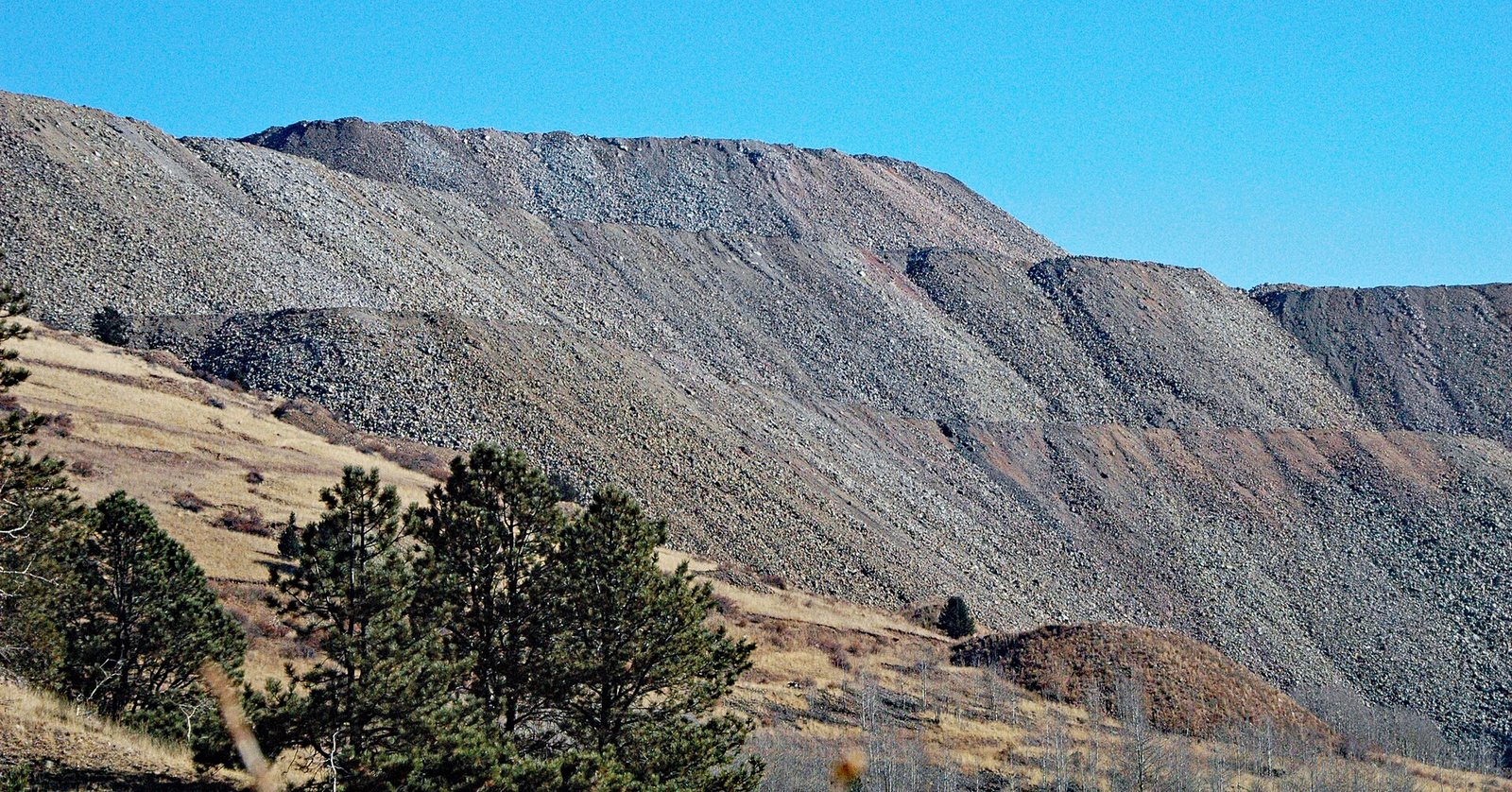
Heap leaching is a surface process, but it shares the core idea: dissolve the metal in a controlled way and collect the solution. Crushed ore — or sometimes run-of-mine material that has not been crushed at all — is stacked in layers on a lined pad. Pipes or drip emitters distribute lixiviant across the top of the heap. The solution percolates downward through the ore, loading with metal, and collects in a pond at the base of the pad. From there it goes to a processing plant, typically a solvent extraction and electrowinning circuit for copper, or a Merrill-Crowe or carbon-adsorption circuit for gold and silver.
The liner beneath the heap is critical to the environmental acceptability of the process: it prevents solution from reaching the natural groundwater. Modern heap designs use composite liners and leakage detection layers. The pads are engineered to drain evenly, because pooling within the heap can restrict oxygen flow and slow the leaching reactions.
To illustrate the arithmetic in a simplified way, suppose a mine is processing ore at an illustrative grade of 0.4% copper. For every thousand tonnes of ore stacked on the pad, that represents four tonnes of copper in the rock. Heap leach operations typically do not recover all the metal in the ore — some remains locked in mineral forms the lixiviant cannot reach, and some is simply not contacted by the solution. If an illustrative recovery rate of 70% is assumed, the operation would expect to collect roughly 2.8 tonnes of copper in solution from that thousand tonnes. The remaining 1.2 tonnes stays in the spent heap. This is lower recovery than a conventional concentrator followed by a smelter would achieve, but the capital and operating costs are substantially lower, which can make a marginal deposit economical when conventional processing would not be.
What the two methods share
Both ISR and heap leaching separate metal extraction from bulk rock movement. Both produce a metal-bearing solution — the pregnant leach solution — as their primary output rather than a physical concentrate. Both depend on controlling where the lixiviant goes and ensuring it does not contact unintended groundwater or surface water. And both are most naturally suited to oxide minerals, which tend to dissolve more readily in acid than the sulfide minerals that dominate many of the world's largest deposits. Applying solution mining to primary sulfide orebodies, where copper or other metals are bound in sulfide crystal structures, remains a significant technical problem that researchers continue to work on.
Limitations and where this sits in the broader picture
Neither method is universally applicable. ISR requires a permeable orebody surrounded by geology that will contain the lixiviant — tight, impermeable rock with no natural fractures connecting to usable aquifers. Heap leaching requires land for the pad, an impermeable foundation, and climatic conditions where evaporation does not exceed solution supply or where weather does not freeze the heap solid. Both methods leave a legacy: spent heaps must be managed after closure, and ISR well fields require aquifer restoration, a process that can take many years.
The economics, the regulatory frameworks, and the chemistry of specific lixiviant systems are topics that sit at level three of this series. Readers looking further into the subject would benefit from examining how solvent extraction and electrowinning circuits process the pregnant solution, how aquifer restoration is designed for uranium ISR, and how bacterial-assisted heap leaching accelerates leach kinetics in low-grade sulfide ores.