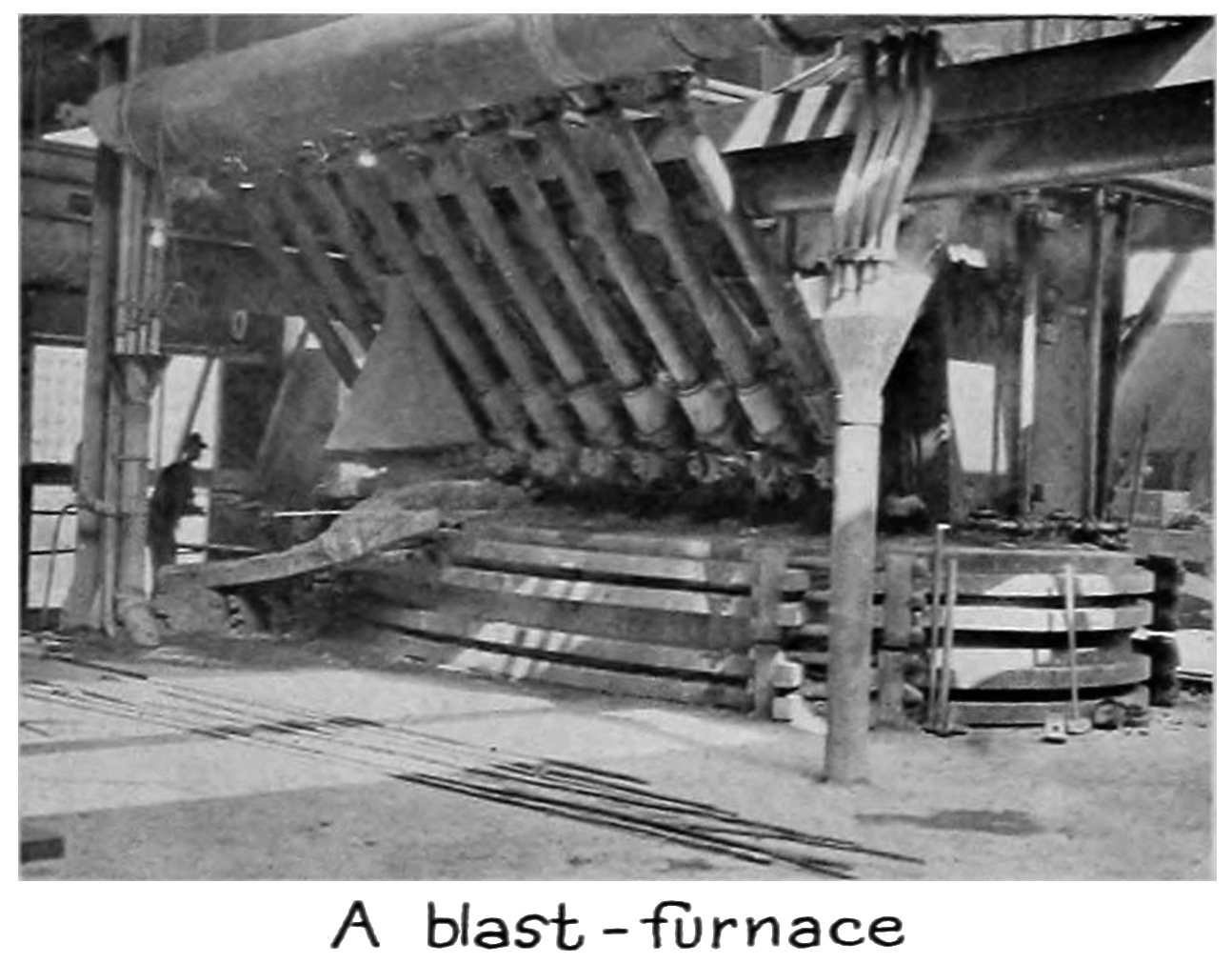
A copper smelter receives a grey-green powder that is perhaps thirty percent copper by mass. What leaves the refinery, weeks later, is a copper cathode so pure that a single kilogram contains only a few milligrams of everything that is not copper. The distance between those two states — concentrate and refined metal — is crossed through a sequence of high-temperature and electrochemical steps, each of which does a specific job and each of which sheds material that becomes a by-product in its own right. Understanding that sequence is the foundation for understanding where refined metal comes from and why its production is inseparable from the production of a dozen other commodities.
From concentrate to matte or blister: the smelting stage
Smelting takes a dried concentrate and exposes it to high temperatures alongside a flux — commonly silica or limestone — that combines with unwanted elements and floats them off as slag. For a sulfide copper concentrate, the furnace converts iron sulfides preferentially into iron silicate slag, which is tapped from the bottom of the vessel and discarded or sold as a construction aggregate. What remains is a copper-rich sulfide phase called matte, typically carrying well over half its mass as copper.
A second, shorter oxidising step — converting — blows air or oxygen through the molten matte. This burns off the remaining sulfur as sulfur dioxide and the remaining iron as more slag. The product is blister copper, named for the bubbles of trapped gas that form as it solidifies. Blister copper is already a high-grade material, but it still carries enough impurities — lead, arsenic, antimony, bismuth, nickel, gold, silver — to disqualify it from most electrical and industrial uses.
The sulfur dioxide released during converting is not simply a waste stream. Many smelters route it directly to a sulfuric acid plant on site, where it is oxidised further and absorbed into water. The acid produced is sold, primarily to the fertiliser industry. This internal market for a by-product gas is one reason large copper smelters are often co-located with acid plants, and it materially affects the economics of the whole operation.
Fire refining and the anode
Before electrolytic refining can begin, blister copper is fire-refined in an anode furnace. An oxidising gas is blown through the melt to remove sulfur, then a reducing agent — historically green wood poles, now more commonly natural gas or propane — removes the excess oxygen taken on during that oxidation. The result is cast into large flat slabs called anodes, which are around ninety-nine percent copper. That final one percent matters enormously: it contains the gold, silver, and platinum-group metals that make refining economically worthwhile beyond the copper itself.
Electrolytic refining: how the last fraction of a percent is removed
Anodes are suspended in a tank of copper sulfate solution alongside thin sheets of pure copper or stainless steel that act as cathodes. When a direct current passes through the cell, copper dissolves from the anode and deposits on the cathode with very high selectivity. More reactive impurity metals — iron, nickel, cobalt — dissolve into solution but do not deposit. Less reactive metals — gold, silver, the platinum-group elements, selenium, tellurium — do not dissolve at all. They fall from the anode as a dense residue at the bottom of the tank, collectively called anode slime or anode mud.
The cathode copper that plates out over several days reaches a purity commonly described as four nines, meaning 99.99% copper. This is the standard traded on metal exchanges and used in electrical wiring, heat exchangers, and similar applications where conductivity or corrosion resistance must not be compromised by trace elements.
Anode slime is the by-product that often determines whether a copper refinery is profitable. It is processed separately to recover gold and silver, which can appear in concentrations far higher than in the original ore because they have been chemically concentrated through every upstream step. Selenium and tellurium, both of which have specialist industrial uses in electronics and photovoltaics, are also recovered from this residue. The electrolyte solution itself is periodically purged and treated to recover nickel sulfate, which enters the battery materials supply chain.
A worked illustrative example
The following figures are illustrative only and do not represent any specific operation. Suppose a smelter receives concentrate assaying thirty percent copper. After smelting and converting, suppose the blister copper yield is such that roughly ninety-two percent of the copper in the feed reports to blister, with the remainder lost to slag or flue dust. Fire refining and electrolytic refining together recover a further high proportion of that copper, say ninety-eight percent of what entered the anode furnace. If we start with one hundred tonnes of copper in concentrate form, the smelter might expect around ninety tonnes of copper in refined cathode form after all processing losses are accounted for. The ten tonnes of copper that did not become cathode is not simply gone: some is in slag sold as aggregate, some is in flue dusts recirculated or sold for separate treatment, and a small fraction is genuinely lost. The arithmetic here is approximate by design — real operations track each stream precisely — but it illustrates why processing engineers speak of overall recovery as a product of many sequential step recoveries, each of which must be optimised independently.
Other metals, other routes
The broad structure of smelting followed by electrolytic or chemical refining appears across many base metals, though the details differ considerably. Zinc is typically refined by electrowinning from a leach solution rather than from a cast anode, because zinc anodes dissolve unevenly. Nickel refining may follow a hydrometallurgical route — pressure oxidation and solvent extraction — particularly for laterite ores that do not respond well to conventional smelting. Lead smelting relies on different flux chemistry and must manage the behaviour of a suite of by-product metals including bismuth and antimony. In each case the pattern holds: concentration followed by smelting followed by refining, with by-products at each stage that represent both a revenue opportunity and a processing obligation.
Where to go next
Readers who want to go deeper should look at the thermodynamics of the Ellingham diagram, which explains why different sulfides and oxides respond differently to oxidising conditions and underpins the logic of every smelting flowsheet. From there, the electrochemistry of the Pourbaix diagram provides an equivalent foundation for understanding which species dissolve or deposit under given conditions in hydrometallurgical refining. Both tools are covered in the Level 4 articles in this track.