A pencil and a long journey
The graphite in a pencil starts as dark rock blasted from an open pit, possibly thousands of kilometres from the factory that makes the pencil, which is itself thousands of kilometres from the shop where you buy it. By the time the pencil reaches your hand, that graphite has been crushed, floated in water, dried, shaped into a rod, baked, and fitted into a wooden sleeve — and at every step, someone has moved it, checked it, and passed it on. That whole chain of steps, from rock to finished object, is what people mean when they say supply chain.
Nine stages, one material
Most mineral supply chains follow the same broad shape, whatever the material. It helps to think of them as nine stages placed end to end.
The first stage is exploration: geologists search for ore bodies underground or near the surface. The second is mining: rock is extracted, either by digging open pits or by tunnelling underground. The third is beneficiation, sometimes called mineral processing: the raw ore is crushed and the valuable mineral is separated from the worthless rock around it, which is called gangue. The fourth is smelting or refining: heat and chemistry are used to turn a mineral concentrate into a purer metal or chemical compound. The fifth is alloying or further processing: the pure material is often mixed with other elements or processed into a more useful form, such as a sheet, a wire, or a powder. The sixth is component manufacturing: a factory turns that processed material into a part — a battery cell, a circuit board, a bearing. The seventh is product assembly: components are combined into a finished product. The eighth is distribution: the product moves through wholesalers, ports, and warehouses toward a customer. The ninth is end of life: the product is discarded, and the material is either lost, landfilled, or sent back into the chain through recycling.
Each stage has its own set of companies, countries, workers, and risks. A disruption at any one of them can stop the whole chain.
A worked example — illustrative only
Suppose, as a purely illustrative example, that a mine produces ore containing a small fraction of copper by weight. The mine crushes the ore and floats the copper minerals in a froth to produce a concentrate that contains a much higher fraction of copper — perhaps ten times higher than the original ore. That concentrate is then shipped to a smelter, possibly in a different country, which produces blister copper. A refinery then electro-refines the blister copper into cathode copper with very high purity. A rolling mill buys the cathode and draws it into wire. A cable factory buys the wire and wraps it in insulation. An electrician fits it into a building. At each handover, the material gains value and becomes harder to substitute quickly if something goes wrong upstream.
Notice how many of those steps happen after the mine. The mine is just the beginning.
Why the weakest link is rarely the mine
People often picture the mine as the part that could break. If there is no ore, there is no metal — that part is true. But mines are usually large, long-planned operations with years of ore reserves mapped out in advance. They are not the most fragile point in the chain.
Smelters and refineries are often far more concentrated. For many materials, only a handful of facilities in the world can perform a particular processing step. If one closes — because of a power shortage, a labour dispute, or a fire — there is no quick replacement. Building a new smelter takes many years and very large amounts of capital, so the industry cannot simply add capacity overnight.
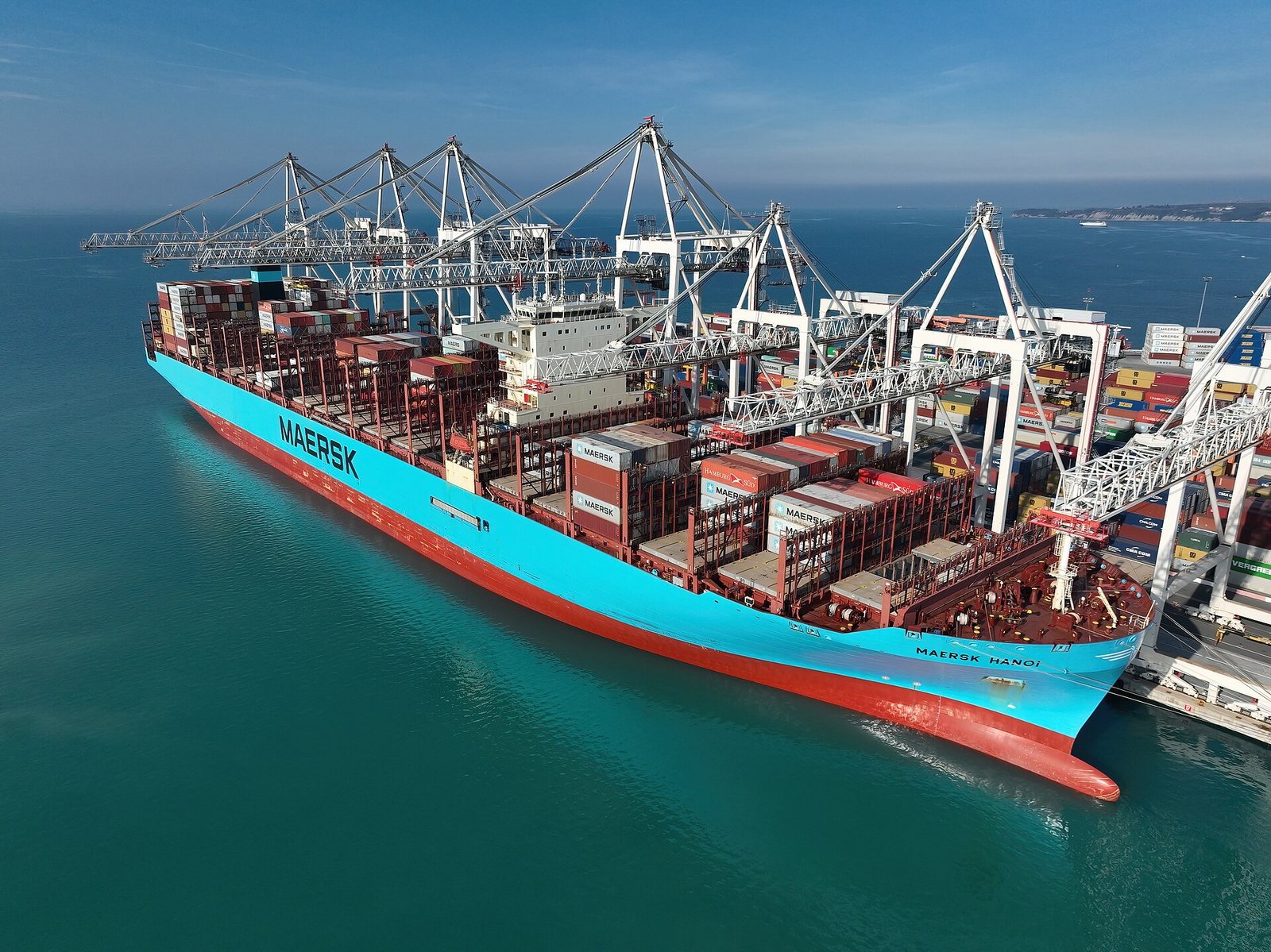
Transport is another hidden fragility. Ore and concentrate travel by ship, rail, and road. A port closure, a blocked canal, or a shortage of specialist shipping containers can strand material even when the mine is running perfectly and the smelter is ready and waiting.
Further down the chain, the assembly stage is often the most geographically concentrated of all. For some products, a single region or even a single factory accounts for most of the world's output of a particular component. Because that factory sits at the end of a long chain, a disruption there cannot be fixed by producing more ore at the mine. The ore is already there; what is missing is the capacity to finish the job.
The chain is also a loop
A supply chain is not quite a straight line. At the end-of-life stage, some of the material can be recovered and fed back in, skipping the early stages entirely. Recycled aluminium, for instance, can re-enter the chain at the alloying or rolling stage, bypassing mining and smelting. This shortens the chain, saves energy, and reduces dependence on the early stages. The proportion of a material that actually makes it back into the chain varies widely between materials and between countries, and it depends on how well the collection and sorting systems work.
When people talk about making supply chains more resilient, they often mean finding ways to shorten the chain, duplicate its most fragile stages, or strengthen the recycling loop so that less new material needs to travel all nine steps from the beginning.
Where to go next
This article has treated the supply chain as a single path, but in practice it branches and rejoins in complicated ways — the same refined copper cathode might go to a wire mill in one country and a plumbing tube mill in another, while offcuts from both mills might be recycled back to the same refinery. Readers who want to understand those complexities, and how analysts map them using tools such as material flow analysis and input-output tables, will find the Level 2 and Level 3 articles in this track a useful next step.