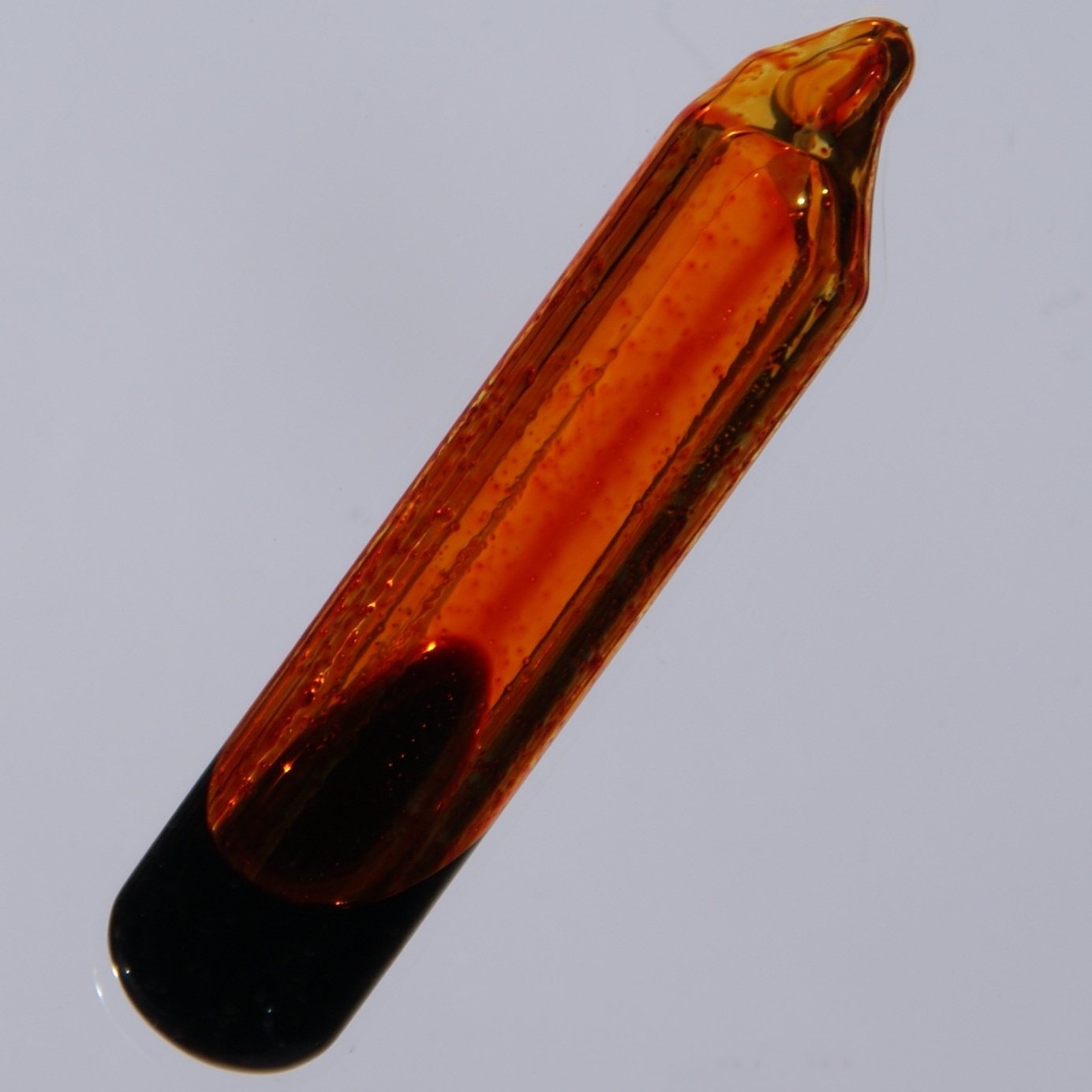
Wat is het?
The only non-metal that is liquid at room temperature, pulled out of very salty water.
Waarom is het van belang?
Brominated flame retardants slow fires in electronics and furniture; bromine also goes into drilling fluids and into some grid-battery chemistries.
Where it is in the Earth
Bromine does not concentrate in solid rock the way most metals do. It is a halogen — a family of reactive non-metals that includes chlorine and fluorine — and it behaves chemically much like chlorine, readily dissolving in water as the bromide ion. Over geological time, bromine that was dispersed through ordinary seawater became concentrated wherever seawater was trapped and then evaporated. As a body of seawater shrinks, salts crystallise out in a predictable sequence: calcium carbonate first, then gypsum, then common salt (halite), and finally, because bromide stays in solution longer than chloride, the residual brine grows progressively richer in bromine. The thick salt sequences left behind by ancient dried-up seas — called evaporite basins — are therefore the primary source of the world's bromine, either locked into halite beds underground or still dissolved in the brines that saturate those beds.
The geography of production follows directly from this. The Dead Sea basin, shared by Israel and Jordan, sits in one of the world's most extreme natural evaporation environments and is fed by a catchment that has concentrated salts over millions of years; the Dead Sea brine contains bromine at levels vastly higher than ordinary seawater. China's production comes from saline lakes and underground brines in its interior basins, formed by similar evaporative processes in enclosed continental depressions. Japan extracts bromine from deep formation waters — brines trapped in sedimentary rock — that were concentrated by geological processes over a long period. The United States holds large declared reserves, principally in Arkansas, where Pennsylvanian-age evaporite brines lie beneath the surface, though current U.S. output is withheld from public reporting.
What matters practically is that bromine's geology is almost entirely a story of water chemistry rather than hard-rock mineralogy. There are no distinct bromine ore minerals in the conventional sense — the ore mineral table for bromine is empty precisely because bromine is won from brine, not from a crystalline solid. The "grade" of a deposit is the concentration of bromide in the brine, and the richness of the Dead Sea brine is the main reason Israel and Jordan together account for the large majority of world output.
Getting it out
Because bromine occurs in brine rather than solid rock, the extraction method is closer to water pumping than to conventional mining. Wells are drilled into the brine-bearing formation or, in the Dead Sea case, the lake itself is the source. Brine is pumped to the surface, sometimes after solar evaporation ponds have raised its concentration further, and then piped directly to a chemical plant. There is no blasting, no crushing, and effectively no solid waste in the sense that hard-rock mining produces waste rock or tailings. The energy cost of pumping and the capital cost of wells and pipelines are the main physical constraints on how much brine a producer can move.
In the Dead Sea operations, the southern basin is managed as a series of large evaporation pans where brine is allowed to concentrate before being collected. This solar concentration step reduces the volume of liquid that must be processed chemically, which matters because the subsequent treatment steps consume energy and reagents. For underground formation brines — as in Arkansas or Japan — the approach is more purely extractive: injection of water may be used to keep the formation pressure high enough to sustain flow, though the specifics of those operations are not detailed in publicly available data for every site. The grade of brine that is economic to process depends on the cost of the downstream chemistry; richer brines need less concentration work before treatment, which shifts the economics considerably.
What pulls on it
The largest single use for bromine has historically been in brominated flame retardants — compounds added to plastics, circuit boards, and upholstered furniture to slow ignition and reduce flame spread. When a material containing these compounds is exposed to heat, bromine-containing gases are released that interrupt the chemical chain reactions sustaining a flame. Electronics manufacturing is the dominant outlet here: printed circuit boards, connectors, and housings all rely on flame retardant treatments to meet international safety standards. The volume of bromine going into this use is sensitive to electronics production rates globally, and to regulatory decisions about which specific brominated compounds are acceptable, since some have faced restrictions on environmental or health grounds in certain jurisdictions.
A second substantial demand stream is drilling fluids. Dense bromide solutions — particularly zinc bromide and calcium bromide brines — are used in oil and gas well completion to control pressure in the wellbore without allowing solid particles to damage the reservoir. This use is tightly coupled to the rate of drilling activity, particularly for high-pressure, high-temperature wells where the density advantage of bromide brines over alternatives is most pronounced. A third, structurally different demand stream is emerging in grid-scale energy storage: certain flow battery chemistries use bromine compounds as one electrode material, and as electricity grids add more intermittent renewable generation, interest in long-duration storage has drawn attention to bromine-based systems. This use remains small relative to the flame retardant and drilling markets, but it represents a qualitatively different driver — one tied to energy infrastructure investment rather than consumer electronics cycles.
Demand could shift sharply in either direction if regulatory frameworks changed. A broadening of restrictions on specific brominated flame retardants would redirect demand toward alternative chemistries, though many brominated compounds in current use have passed review and remain approved. Conversely, a sustained increase in grid storage deployment could add demand that has little historical precedent in bromine markets. The agricultural use of bromine — once large, centred on methyl bromide as a soil fumigant — has declined substantially following its phase-out under the Montreal Protocol due to its ozone-depleting properties, a reminder that regulatory action can structurally close an end market.
Wie het produceert
Bekijk het op een kaart →Production
Productionmetric tons 2025 (geschat) Wereldtotaal 430,000 metric tons
USGS Mineral Commodity Summaries 2026 · Elemental bromine content. · bron ↗
Schuif de tabel zijwaarts voor de overige kolommen.
| Land | Productie | Aandeel van de wereld |
|---|---|---|
| Israel | 200,000 | 46.5% |
| Jordan | 110,000 | 25.6% |
| China | 90,000 | 20.9% |
| Japan | 20,000 | 4.7% |
| India | 7,000 | 1.6% |
| Ukraine | 6,000 | 1.4% |
| United States | Withheld | — |
| Wereldtotaal | 430,000 | 100% |
"Ingehouden" betekent dat de USGS het cijfer heeft onderdrukt om gegevens van een individueel bedrijf niet prijs te geven — het betekent niet nul. Landrijen tellen niet altijd op tot het wereldtotaal, omdat de bron elk cijfer afzonderlijk afrondt en niet altijd een regel "overige landen" uitsplitst.
Wie de reserves bezit
Reserves
Reservesmetric tons 2025
USGS Mineral Commodity Summaries 2026 · bron ↗
| Land | Reserves | Aandeel van de wereld |
|---|---|---|
| United States | 11,000,000 | — |
| Jordan | 360,000 | — |
| China | 130,000 | — |
| Ukraine | Not applicable | — |
| Japan | Not applicable | — |
| India | Not applicable | — |
| Israel | Large | — |
| Wereldtotaal | Large | 100% |
Prijs
average unit value of imports (cost, insurance, and freight), dollars per kilogram, bromine content
Jaargemiddeldedollars per kilogram
Grondslag: average unit value of imports (cost, insurance, and freight), dollars per kilogram, bromine content. Jaargemiddelden zoals gepubliceerd in USGS Mineral Commodity Summaries 2026 · bron ↗. Dit zijn referentiejaargemiddelden, geen live marktkoers.