鉱石から製品まで、経路を追跡
The Materials Atlas
素材 鉱山・鉱床 処理・精製 管理移転経路 サプライチェーン 企業 ニュース
棚別素材 バッテリー材料 希土類元素 銅・電気 半導体材料 核物質 航空宇宙・防衛 貴金属 鉄鋼・合金金属 工業用鉱物 農業用鉱物 エネルギー原材料 鉱石鉱物 周期表
需要 最終市場 技術 素材計算機 地図 スクリーナー
学習・ツール 学ぶ用語集 データに質問するAIエージェント 調査・データAPI ★ 保存済み
概要 運営について方法論 データソースお問い合わせ 免責事項
表示オプション
🧭 ガイドビュー 鉱石品位、精鉱、精錬、副産物といった用語が初めての方へ。閲覧しながらすべての用語をわかりやすく解説します。同じデータを、解説付きでご覧いただけます。
⚡ 専門家向け解説 業界の知識はお持ちのはず。データのみを——簡潔、迅速、コンパクトに、余分な説明なしで。これがデフォルト表示です。
テーマ
インターフェース言語
深度 素材ページは4段階のレベルで構成されている。任意の素材ページでレベルを選択すると、その設定が記憶される。
★ 保存済み 調査・データ
Bromine

工業用鉱物

Bromine Br · 35

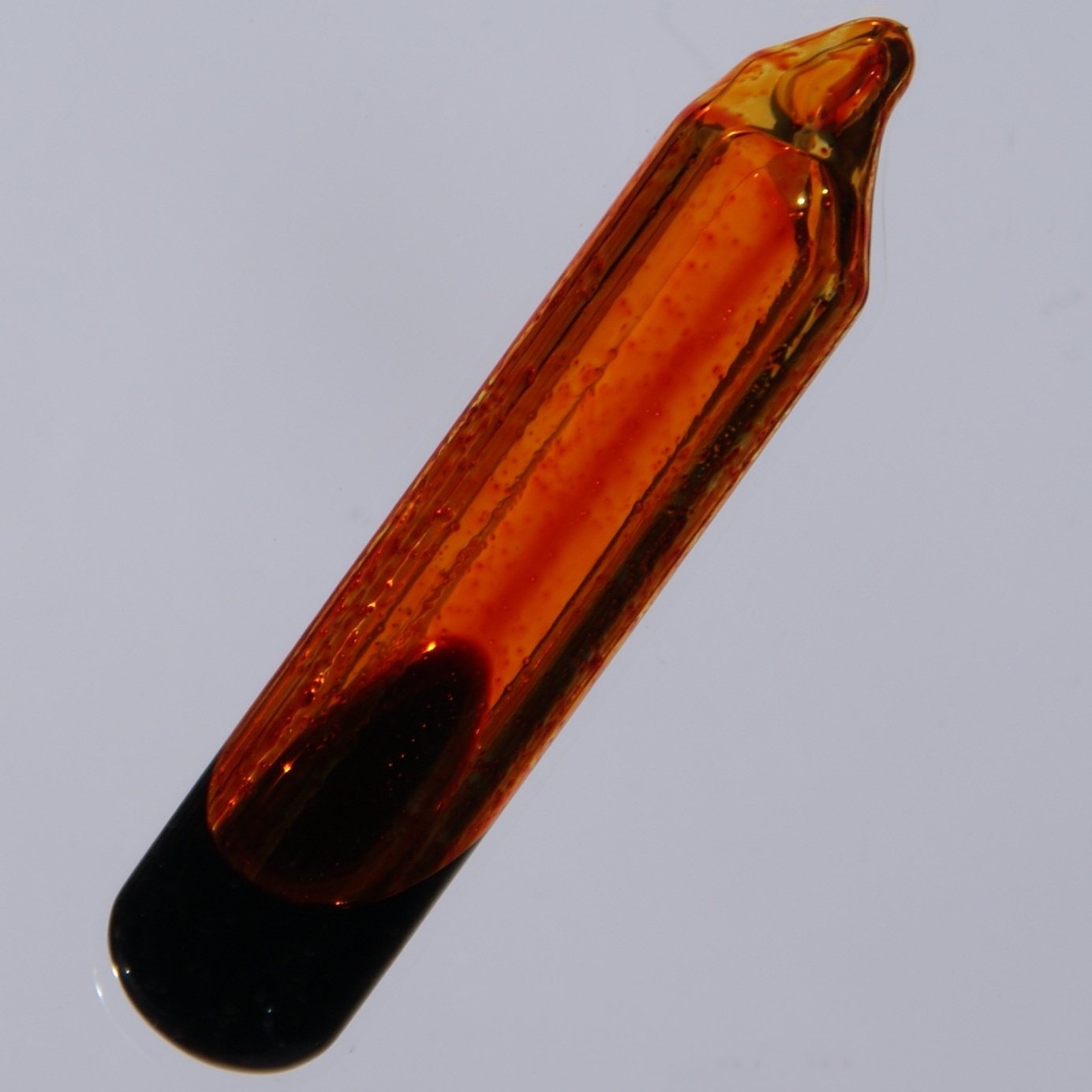
The only non-metal that is liquid at room temperature, pulled out of very salty water.

Bromine-ampoule · Jurii · CC BY 3.0 · Wikimedia Commons

これは何か

The only non-metal that is liquid at room temperature, pulled out of very salty water.

なぜ重要なのか

Brominated flame retardants slow fires in electronics and furniture; bromine also goes into drilling fluids and into some grid-battery chemistries.

Where it is in the Earth

Bromine does not concentrate in solid rock the way most metals do. It is a halogen — a family of reactive non-metals that includes chlorine and fluorine — and it behaves chemically much like chlorine, readily dissolving in water as the bromide ion. Over geological time, bromine that was dispersed through ordinary seawater became concentrated wherever seawater was trapped and then evaporated. As a body of seawater shrinks, salts crystallise out in a predictable sequence: calcium carbonate first, then gypsum, then common salt (halite), and finally, because bromide stays in solution longer than chloride, the residual brine grows progressively richer in bromine. The thick salt sequences left behind by ancient dried-up seas — called evaporite basins — are therefore the primary source of the world's bromine, either locked into halite beds underground or still dissolved in the brines that saturate those beds.

The geography of production follows directly from this. The Dead Sea basin, shared by Israel and Jordan, sits in one of the world's most extreme natural evaporation environments and is fed by a catchment that has concentrated salts over millions of years; the Dead Sea brine contains bromine at levels vastly higher than ordinary seawater. China's production comes from saline lakes and underground brines in its interior basins, formed by similar evaporative processes in enclosed continental depressions. Japan extracts bromine from deep formation waters — brines trapped in sedimentary rock — that were concentrated by geological processes over a long period. The United States holds large declared reserves, principally in Arkansas, where Pennsylvanian-age evaporite brines lie beneath the surface, though current U.S. output is withheld from public reporting.

What matters practically is that bromine's geology is almost entirely a story of water chemistry rather than hard-rock mineralogy. There are no distinct bromine ore minerals in the conventional sense — the ore mineral table for bromine is empty precisely because bromine is won from brine, not from a crystalline solid. The "grade" of a deposit is the concentration of bromide in the brine, and the richness of the Dead Sea brine is the main reason Israel and Jordan together account for the large majority of world output.

Getting it out

Because bromine occurs in brine rather than solid rock, the extraction method is closer to water pumping than to conventional mining. Wells are drilled into the brine-bearing formation or, in the Dead Sea case, the lake itself is the source. Brine is pumped to the surface, sometimes after solar evaporation ponds have raised its concentration further, and then piped directly to a chemical plant. There is no blasting, no crushing, and effectively no solid waste in the sense that hard-rock mining produces waste rock or tailings. The energy cost of pumping and the capital cost of wells and pipelines are the main physical constraints on how much brine a producer can move.

In the Dead Sea operations, the southern basin is managed as a series of large evaporation pans where brine is allowed to concentrate before being collected. This solar concentration step reduces the volume of liquid that must be processed chemically, which matters because the subsequent treatment steps consume energy and reagents. For underground formation brines — as in Arkansas or Japan — the approach is more purely extractive: injection of water may be used to keep the formation pressure high enough to sustain flow, though the specifics of those operations are not detailed in publicly available data for every site. The grade of brine that is economic to process depends on the cost of the downstream chemistry; richer brines need less concentration work before treatment, which shifts the economics considerably.

What pulls on it

The largest single use for bromine has historically been in brominated flame retardants — compounds added to plastics, circuit boards, and upholstered furniture to slow ignition and reduce flame spread. When a material containing these compounds is exposed to heat, bromine-containing gases are released that interrupt the chemical chain reactions sustaining a flame. Electronics manufacturing is the dominant outlet here: printed circuit boards, connectors, and housings all rely on flame retardant treatments to meet international safety standards. The volume of bromine going into this use is sensitive to electronics production rates globally, and to regulatory decisions about which specific brominated compounds are acceptable, since some have faced restrictions on environmental or health grounds in certain jurisdictions.

A second substantial demand stream is drilling fluids. Dense bromide solutions — particularly zinc bromide and calcium bromide brines — are used in oil and gas well completion to control pressure in the wellbore without allowing solid particles to damage the reservoir. This use is tightly coupled to the rate of drilling activity, particularly for high-pressure, high-temperature wells where the density advantage of bromide brines over alternatives is most pronounced. A third, structurally different demand stream is emerging in grid-scale energy storage: certain flow battery chemistries use bromine compounds as one electrode material, and as electricity grids add more intermittent renewable generation, interest in long-duration storage has drawn attention to bromine-based systems. This use remains small relative to the flame retardant and drilling markets, but it represents a qualitatively different driver — one tied to energy infrastructure investment rather than consumer electronics cycles.

Demand could shift sharply in either direction if regulatory frameworks changed. A broadening of restrictions on specific brominated flame retardants would redirect demand toward alternative chemistries, though many brominated compounds in current use have passed review and remain approved. Conversely, a sustained increase in grid storage deployment could add demand that has little historical precedent in bromine markets. The agricultural use of bromine — once large, centred on methyl bromide as a soil fumigant — has declined substantially following its phase-out under the Montreal Protocol due to its ozone-depleting properties, a reminder that regulatory action can structurally close an end market.

Turning ore into product レベル 3

Once brine reaches the plant, the standard extraction route is chlorination followed by steaming out. Chlorine gas is bubbled through the acidified brine; because chlorine is more reactive than bromine, it displaces bromide ions from solution, liberating elemental bromine as a dissolved vapour. Steam or air is then blown through the liquid to strip the bromine vapour out of solution — a step called blowing out or steaming out — and the vapour is collected and condensed. The condensed bromine, at this stage a crude liquid, is then distilled to remove residual water and chlorine compounds. The product that leaves the plant as elemental bromine has a density of 3.1 grams per cubic centimetre and a melting point of −7.2 °C, which means it is a dense, dark red-brown liquid under normal handling conditions — a physical fact that influences storage and transport design considerably.

Many bromine compounds are made at or near the extraction site rather than shipped as elemental bromine, because elemental bromine is corrosive and volatile enough to make long-distance transport more expensive and more tightly regulated than shipping the finished compound. Hydrobromic acid, sodium bromide, and various organic bromide intermediates are therefore common traded forms. The conversion chemistry for these compounds is well-established, but each step introduces a yield loss and a reagent cost. Where a producer is also making potash or other salts from the same brine — as is common in the Dead Sea — the bromine operation shares infrastructure costs, and the economics of any one product depend partly on the revenues from the others.

Recovery efficiency from brine is high relative to hard-rock mineral processing because the target element is already in solution and the chemistry is selective, but it is not complete: some bromide remains in the spent brine after blowing out, and the degree to which that residual is recovered in a second pass depends on plant design and the economics of marginal recovery. Published production figures are stated on an elemental bromine content basis, which allows comparison across producers who sell different compound mixes, but it requires each producer to account for bromine across multiple product streams — a source of minor inconsistency in reported totals.

Substitution and recycling レベル 3

In flame retardants, bromine's main competitors are phosphorus-based and nitrogen-based compounds, as well as aluminium hydroxide and other mineral fillers that work by absorbing heat rather than by chemical interference. The substitution is technically feasible for many applications, and it has already happened at scale in some product categories — certain consumer electronics brands have moved toward halogen-free board designs driven by customer and regulatory pressure. The trade-off is typically performance: halogen-free alternatives often require higher loadings to achieve equivalent flame retardancy ratings, which can affect the mechanical and electrical properties of the finished component. For some high-layer-count or high-frequency circuit board constructions, the performance gap remains significant enough that brominated systems are retained. The cost of reformulation and re-qualification under product safety standards also creates inertia that slows substitution even where the chemistry is available.

In drilling fluids, the density advantage of zinc bromide and calcium bromide brines is difficult to replicate without using similarly dense fluids; formate brines (potassium or caesium formate) can substitute in some completions but at considerably higher cost. For bromine-based flow batteries, vanadium flow and iron-air systems are the principal alternatives, each with different energy density, cycle life, and cost characteristics — the competition among these chemistries is unresolved and depends heavily on site-specific requirements.

Recycling of bromine from products at end of life is limited. Brominated flame retardants are distributed throughout plastics in small concentrations, and recovering bromine from mixed electronic waste streams involves either high-temperature processing that risks forming unwanted by-products or solvent extraction steps that add cost. Some bromine is recovered from spent drilling fluids on-site — the fluid is filtered and reconcentrated before reuse — but this is fluid management rather than recycling in the material-recovery sense. The structural reason recycling rates are low is dispersion: bromine enters products in small proportions and is mixed with many other materials, making concentration back to a usable form expensive relative to the cost of primary bromine.

Where the chain is fragile レベル 4

The production picture that emerges from the data is one of strong geographic concentration. Israel and Jordan together account for the large majority of world output — 200,000 and 110,000 metric tonnes respectively out of a world total of 430,000 metric tonnes in 2025 — and both draw from the same hydrological system: the Dead Sea and its associated brines. A disruption affecting that basin, whether from political instability, water management disputes, or infrastructure failure, would affect a disproportionate share of global supply simultaneously. The two countries are not interchangeable from a logistics standpoint, but they share a common geological source and a common regional risk environment. This is qualitatively different from supply concentration in a commodity where production is dispersed across unrelated geological settings.

The United States presents an instructive contrast. U.S. reserves are declared at 11,000,000 metric tonnes — by far the largest figure reported for any single country — yet current U.S. production is withheld from public reporting (coded W in the USGS data), and the country is a net importer with import reliance estimated below 25 percent for 2025, supplied primarily from Israel, Jordan, and China. This means a large identified resource base is not translating into proportionate production, likely reflecting the economics of bringing Arkansas brine operations to full capacity against competition from Dead Sea producers with lower costs. Reserve figures for Jordan, China, and most other producers are either not available or described only qualitatively as large, which limits any rigorous assessment of how long current production rates can be sustained from known resources.

Reporting conventions introduce additional uncertainty. World production totals for bromine are compiled primarily from national survey responses and trade data; where a major producer withholds output data, the world total is an undercount or an estimate. Production is reported on an elemental bromine content basis, but the mix of products sold varies by producer — some sell primarily elemental bromine, others almost entirely as compounds — and the conversion assumptions embedded in reported figures are not always disclosed. The emergin flow-battery demand stream, if it grows rapidly, would create a new source of demand-side uncertainty that existing reporting frameworks, calibrated to flame retardant and drilling-fluid cycles, would be slow to capture. Lead times for new brine extraction capacity are shorter than for hard-rock mines but are still measured in years once permitting, well drilling, and plant construction are included, meaning that a sudden demand increase could not be met from greenfield sources quickly.

数値の読み方に注意してください。 Elemental bromine content. Elemental bromine and bromine compounds.

Production

Productionmetric tons 2025 (推定値) 世界合計 430,000 metric tons

USGS Mineral Commodity Summaries 2026 · Elemental bromine content. · 出典 ↗

テーブルを横にスクロールすると残りの列が表示されます。

生産 世界に占める割合
Israel 200,000 46.5%
Jordan 110,000 25.6%
China 90,000 20.9%
Japan 20,000 4.7%
India 7,000 1.6%
Ukraine 6,000 1.4%
United States Withheld
世界合計 430,000100%

「非開示」とは、個別企業のデータが特定されないようUSGSが数値を公表しなかったことを意味し、ゼロを意味するものではありません。出典が各数値を独立して丸め処理しており、「その他の国」の内訳を常に示しているわけではないため、各国の数値の合計が世界合計と一致しないことがあります。

埋蔵量の保有者

「埋蔵量」は厳密な用語です。既知の鉱床のうち、現在の価格と現在の技術で経済的に採掘できる部分を指し、地中に存在するすべてのものを意味するわけではありません。埋蔵量は、価格が上昇するか新たなプロセスが開発されると増加し、逆の場合は減少します。

Reserves

Reservesmetric tons 2025

USGS Mineral Commodity Summaries 2026 · 出典 ↗

埋蔵量世界に占める割合
United States 11,000,000
Jordan 360,000
China 130,000
Ukraine Not applicable
Japan Not applicable
India Not applicable
Israel Large
世界合計 Large100%

価格

average unit value of imports (cost, insurance, and freight), dollars per kilogram, bromine content

年間平均dollars per kilogram

2021 · 2.85 高 3.29 dollars per kilogram 2025 · 3.00

基準: average unit value of imports (cost, insurance, and freight), dollars per kilogram, bromine content. 以下に公表された年間平均値: USGS Mineral Commodity Summaries 2026 · 出典 ↗. これらは参照用の年間平均値であり、リアルタイムの市況相場ではない。

素材

全素材 重要鉱物 レアアース バッテリー材料 鉱石鉱物 周期表 スクリーナー

地下

鉱山・鉱床 処理・精製 地図

経済

管理移転経路 サプライチェーン 最終市場 技術 企業 素材計算機

学ぶ

学ぶ用語集 データに質問するAIエージェント 調査・データオープンAPI ニュース★ 保存済み

運営について

運営についてお問い合わせ 方法論データソース 編集方針 プライバシーポリシー利用規約 免責事項