Wat is het?
The rare earth in the magnet that works where neodymium cannot: very hot, or very cold, or in a place that must not corrode.
Waarom is het van belang?
Samarium-cobalt magnets are weaker than neodymium ones but hold their strength past 300 C, which is why they are in missiles, aircraft actuators and downhole tools.
Where it is in the Earth
Samarium belongs to the lanthanide series, the group of fifteen chemically similar metals that sit together in the periodic table and behave in broadly similar ways in nature. Because they are so alike chemically, the lanthanides rarely separate from one another during geological processes; they travel together and concentrate together. The result is that samarium is not found in its own dedicated mineral the way copper or lead might be. Instead it rides along as a minor constituent inside minerals whose dominant metals are cerium, lanthanum, and neodymium.
The two minerals that matter most are bastnasite and monazite. Bastnasite is a fluorocarbonate — a carbonate mineral that also contains fluorine — and it forms primarily in unusual igneous rocks called carbonatites, which originate from carbonate-rich magmas deep in the mantle. These magmas are rare, but when they cool and crystallise they produce exceptionally high concentrations of rare earth elements relative to ordinary granite or basalt. Monazite is a phosphate mineral that forms in granites and in metamorphic rocks, but it also survives erosion well enough to accumulate as a heavy mineral in river and beach sands, called placers, over geological time. In both cases, samarium concentrates because the crystal structures of these minerals accommodate lanthanide ions rather readily, pulling them out of solution or melt as the mineral grows.
The largest known accumulations of these minerals are in China, principally in the Bayan Obo deposit in Inner Mongolia, which is a carbonatite-related iron-niobium-rare earth system of unusual scale. Significant bastnasite and monazite resources also exist in the United States, Australia, India, Brazil, and parts of Africa. The geographical distribution of samarium resources therefore mirrors the distribution of rare earth deposits generally, because samarium cannot be separated from the other lanthanides at the mining stage.
Getting it out
Because samarium occurs inside bastnasite and monazite rather than as its own mineral, mining it means mining whichever rare earth deposit contains those minerals in sufficient quantity. Large carbonatite-hosted bastnasite deposits are typically worked by open-pit methods: the rock is blasted, loaded, and trucked to a processing facility. Monazite in hard rock follows similar open-pit practice where the rock type allows. Monazite recovered from coastal or riverine placer sands uses dredging or wet gravity methods rather than blasting, because the mineral grains are already liberated from the surrounding material by natural weathering.
Grade, in rare earth mining, is usually expressed as a percentage of total rare earth oxide in the ore. Samarium oxide makes up only a small share of the total rare earth oxide content of any given bastnasite or monazite deposit; the dominant rare earths are cerium and lanthanum, with neodymium also present in significant quantities. This means that even at a richly mineralised deposit, the samarium fraction is modest. For every tonne of samarium oxide eventually recovered, very large quantities of ore must move and very large quantities of the other rare earth oxides — particularly cerium and lanthanum, for which demand is comparatively thin — must also be produced. This by-product arithmetic shapes the economics of samarium supply in ways that go well beyond the grade of samarium itself.
What pulls on it
The principal use of samarium is in samarium-cobalt permanent magnets, a material class that trades somewhat lower magnetic strength than the more familiar neodymium-iron-boron magnets in exchange for substantially superior performance at high temperatures and in corrosive environments. Neodymium-iron-boron magnets lose their magnetisation above roughly 80 to 200 degrees Celsius depending on grade, whereas samarium-cobalt retains useful magnetic properties well beyond 300 degrees Celsius. This makes samarium-cobalt the material of choice in environments where a neodymium magnet would simply stop working: jet engine actuators, guidance systems in missiles, sensors embedded in oil and gas drilling equipment, and compact motors operating in chemically aggressive surroundings.
Beyond magnets, samarium has established roles in two quite different areas. Samarium-153, a radioactive isotope produced in nuclear reactors, is used in cancer treatment — specifically in palliative care for bone pain caused by cancer that has spread to the skeleton. Samarium also appears in control rods and shielding applications in nuclear reactors, where its capacity to absorb neutrons is the relevant property. These non-magnet uses are individually small but technically specific, meaning samarium cannot easily be left out of them.
Demand growth in magnets depends heavily on whether defence and aerospace procurement programmes expand, and on whether robotics and high-reliability industrial motors shift toward samarium-cobalt rather than alternatives. Growth in neodymium magnet demand driven by electric vehicles does not directly pull samarium along, because the operating conditions of most automotive motors do not require samarium-cobalt's temperature tolerance. A sharp change in samarium demand would most plausibly come from a sustained increase in defence spending in markets that rely on precision-guided weapons, or from a materials shift in downhole drilling as oil and gas exploration moves into hotter reservoirs.
Waar het in het gesteente vandaan komt
Alle ertsmineralen →Dit zijn de mineralen die daadwerkelijk samarium. Een afzetting is alleen een ertslichaam als een van beide voldoende geconcentreerd is om de winning ervan te bekostigen.
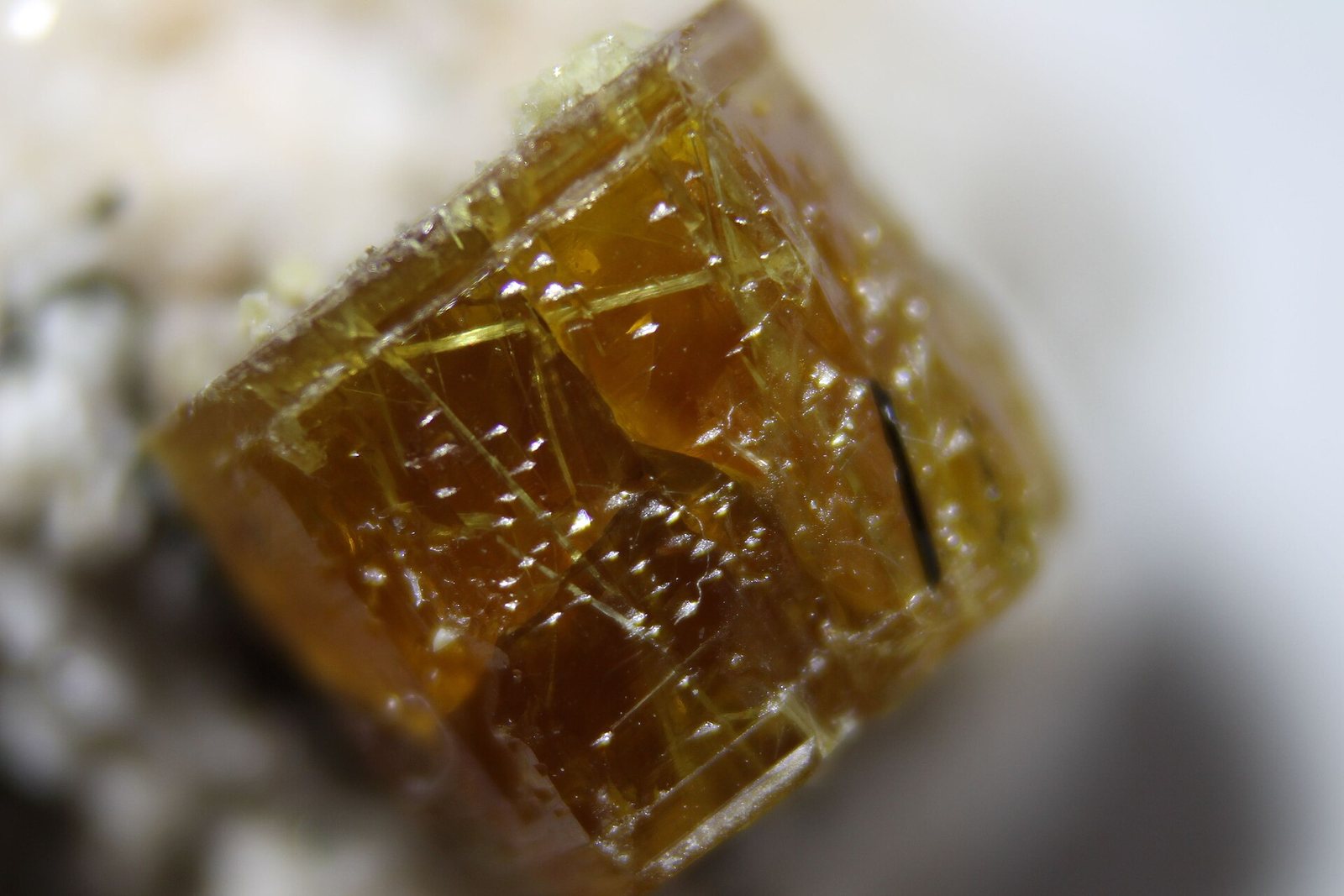
Bastnäsite
The world's principal light rare-earth mineral, mined from carbonatites. Low in thorium, which makes it easier to…
Monazite
A rare-earth phosphate found in heavy mineral sands. Carries thorium, so it is radioactive enough to be regulated.
Prijs
average, dollars per kilogram: Samarium oxide, 99.5% minimum
Jaargemiddeldedollars per kilogram
Grondslag: average, dollars per kilogram: Samarium oxide, 99.5% minimum. Jaargemiddelden zoals gepubliceerd in USGS Mineral Commodity Summaries 2026 · bron ↗. Dit zijn referentiejaargemiddelden, geen live marktkoers.
Waarvoor het wordt gebruikt
Alle eindmarkten →| Eindmarkt | Wat het daar doet | Belang |
|---|---|---|
| Aerospace & Defence | High-temperature magnets | Belangrijk |
| Robotics & Automation | High-temperature or compact magnets | Heden |