Đây là gì?
A mica-like mineral that unfolds into a concertina when heated, becoming light, fireproof and full of air.
Tại sao điều này quan trọng?
Exfoliated vermiculite insulates, lightens concrete and holds water in potting compost. Historic contamination of one deposit with asbestos shaped the modern testing regime.
Where it is in the Earth
Vermiculite belongs to the phyllosilicate group of minerals — the same broad family as micas and clays, built from flat sheets of silicate tetrahedra bonded together. What distinguishes vermiculite is the way water molecules and exchangeable cations (positively charged atoms such as magnesium) are trapped between those sheets. When the mineral is heated rapidly, that interlayer water turns to steam and forces the sheets apart like the bellows of a concertina, expanding the particle to many times its original volume. This process is called exfoliation, and it is the property that makes vermiculite commercially interesting.
Deposits form where magnesium-rich igneous rocks — most often ultramafic rocks such as dunite, pyroxenite or peridotite, which originate deep in the Earth's mantle — have been chemically altered by hot, water-bearing fluids over long geological time. This alteration, known as hydrothermal or supergene weathering, converts the original minerals (particularly phlogopite mica and biotite) into vermiculite by introducing water and sometimes other elements into the crystal structure. The process requires the right combination of parent rock chemistry, percolating groundwater and, in many cases, prolonged tropical or subtropical weathering near the surface. This explains why the world's largest working deposits are found in southern Africa and Brazil, where ancient ultramafic bodies have been exposed to deep weathering over tens or hundreds of millions of years.
The ore bodies typically occur as irregular lenses, sheets or zones within or alongside the ultramafic parent rock, often associated with carbonatites (carbonate-rich igneous intrusions) or at the contact between mafic and felsic rocks. Grade — the proportion of true vermiculite mineral in the mined material — varies considerably within a single deposit, and the spatial distribution of high-grade zones tends to be complex. This makes resource estimation more demanding than for a simple, laterally continuous sedimentary deposit. The largest known reserves by published estimate sit in the United States, South Africa, Turkey and Brazil, though the reserve figures for several producing countries including Russia, Uganda and Zimbabwe are not available in the standard reporting.
Getting it out
Virtually all vermiculite is won by open-pit mining, sometimes called open-cast mining. The ore lies close enough to the surface that removing it with excavators and front-end loaders is far more practical than driving tunnels underground. Overburden — the soil and barren rock that sits on top of the ore — is stripped away first and stockpiled so that it can be used to rehabilitate the pit once mining is finished. The ore beneath is then drilled, blasted if it is competent rock, or simply dug if the weathering has left it soft and friable, which is common in tropical deposits.
Grade in this context means the proportion of vermiculite mineral in the run-of-mine ore. Because vermiculite deposits formed by weathering tend to be heterogeneous — pockets of rich ore mixed with barren host rock and altered material — the head grade (the average grade of everything that enters the processing plant) can vary considerably from one part of a pit to another. Selective mining, where diggers follow higher-grade zones and leave lower-grade material behind or blend it carefully, is common practice. The ratio of waste moved to usable concentrate produced is not a single fixed number; it depends on the deposit's geometry and the cut-off grade chosen, which in turn depends on the cost of processing and the value of the product.
Because exfoliation — the heating step that transforms the raw mineral into the light, expanded product — is straightforward and uses standard furnace equipment, it is often carried out close to the end customer rather than at the mine. This means the export product is typically a dried and sized raw concentrate, shipped in bulk or in bags by particle-size fraction, and the expansion happens at a plant closer to the construction site, horticulture supplier or factory that will use it. South Africa, the United States and Brazil are the principal producing countries, and the gap between South Africa's reserve position and its current output share suggests that production capacity rather than in-ground resource is the binding constraint at present.
What pulls on it
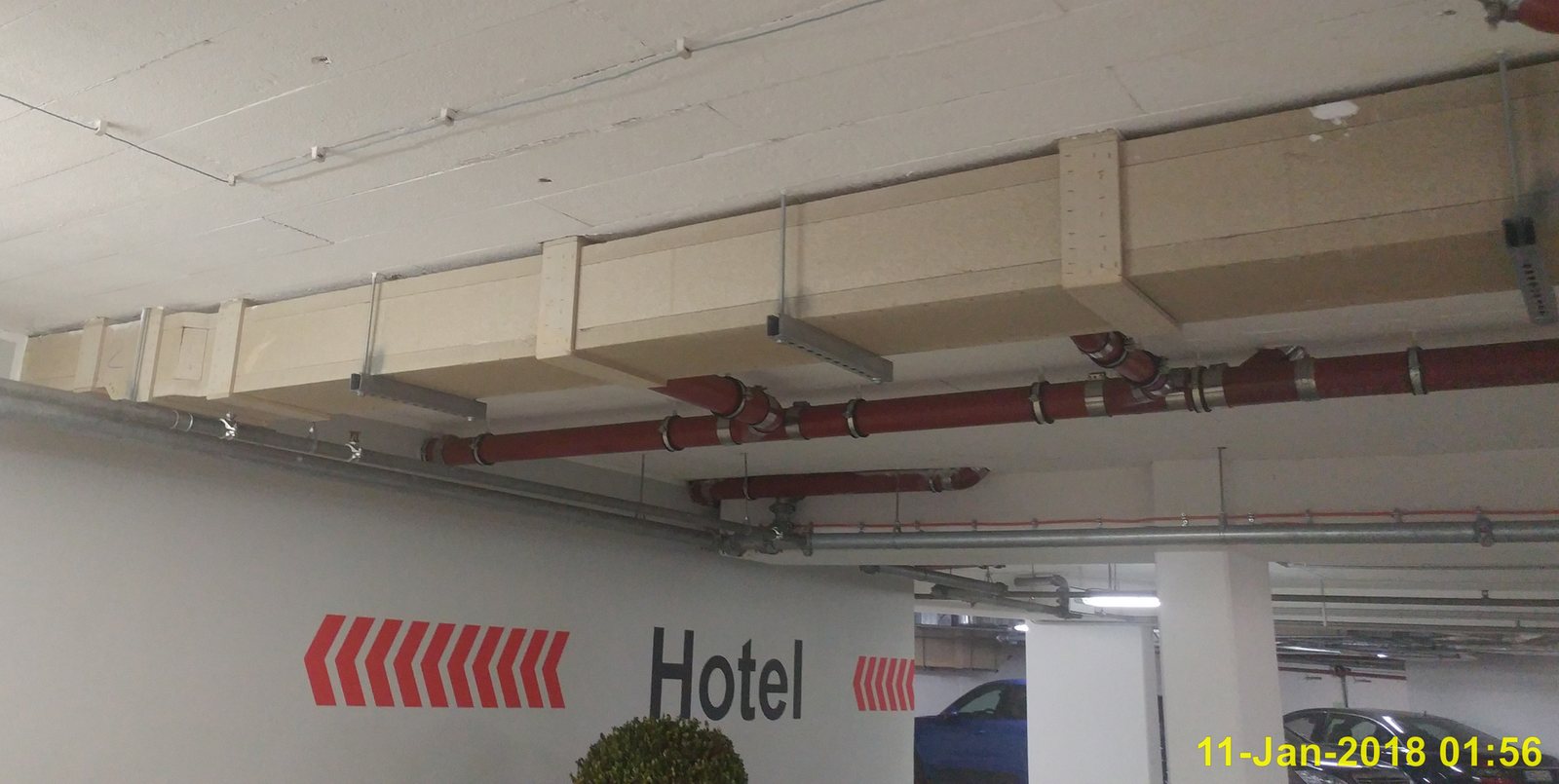
The single largest use of exfoliated vermiculite is in construction, where it appears as a lightweight aggregate in fireproofing sprays, insulating plasters and void-fill concrete. Its combination of low density, resistance to high temperatures and chemical inertness makes it useful wherever a material must not contribute to a fire. Attic insulation was historically a major market, though that segment contracted significantly after it emerged that ore from one particular deposit — Libby, Montana — was contaminated with asbestiform amphibole minerals. The legacy of that episode is a regulatory and reputational sensitivity to fibrous mineral contamination that now shapes testing requirements across the industry, and which made buyers far more cautious about loose-fill insulation applications in particular.
Horticulture is the other large and relatively stable demand category. Vermiculite holds water and air simultaneously within its expanded structure, making it useful in potting mixes and seed germination media where drainage and aeration need to be balanced. It is inert, sterile and pH-neutral, which suits applications where consistent growing conditions matter. This use is not closely tied to any single country's construction cycle, giving the mineral a degree of demand diversification that a purely construction-linked material would lack.
Smaller volumes go into friction materials (brake linings and clutch facings, where its heat resistance is the relevant property), as a carrier for agricultural chemicals, and into specialist refractory and high-temperature applications. For demand to shift sharply upward, there would need to be either a significant expansion in construction activity in markets that prefer vermiculite-based fireproofing, or adoption in a new application at scale. For demand to fall sharply, a broadly adopted substitute in horticulture or a change in construction fireproofing standards would be the most plausible drivers. Neither trajectory is predetermined by the current structure of the market.
Ai sản xuất nó
Xem trên bản đồ →Mine production
Mine productionthousand metric tons 2025 (ước tính) Tổng toàn cầu 460.0 thousand metric tons
USGS Mineral Commodity Summaries 2026 · Gross weight of concentrate. · nguồn ↗
Cuộn bảng sang ngang để xem các cột còn lại.
| Quốc gia | Sản lượng | Tỷ phần thế giới |
|---|---|---|
| South Africa | 160.0 | 34.8% |
| United States | 100.0 | 21.7% |
| Brazil | 50.00 | 10.9% |
| Russia | 40.00 | 8.7% |
| China | 40.00 | 8.7% |
| Zimbabwe | 30.00 | 6.5% |
| Uganda | 20.00 | 4.3% |
| Bulgaria | 10.00 | 2.2% |
| Turkey | 10.00 | 2.2% |
| India | 2.00 | 0.4% |
| Uzbekistan | 1.00 | 0.2% |
| Mexico | s | — |
| Tổng toàn cầu | 460.0 | 100% |
"Withheld" có nghĩa là USGS đã ẩn số liệu để tránh tiết lộ dữ liệu của một công ty riêng lẻ — không có nghĩa là bằng không. Tổng các hàng theo quốc gia không phải lúc nào cũng bằng tổng toàn cầu vì nguồn làm tròn từng số liệu một cách độc lập và không phải lúc nào cũng tách riêng dòng "các quốc gia khác".
Ai nắm giữ trữ lượng
Reserves
Reservesthousand metric tons 2025
USGS Mineral Commodity Summaries 2026 · nguồn ↗
| Quốc gia | Trữ lượng | Tỷ phần thế giới |
|---|---|---|
| United States | 25,000 | — |
| South Africa | 14,000 | — |
| Turkey | 11,000 | — |
| Brazil | 6,600 | — |
| China | 2,900 | — |
| India | 1,600 | — |
| Russia | Not applicable | — |
| Bulgaria | Not applicable | — |
| Mexico | Not applicable | — |
| Uganda | Not applicable | — |
| Uzbekistan | Not applicable | — |
| Zimbabwe | Not applicable | — |
| Tổng toàn cầu | Not applicable | 100% |