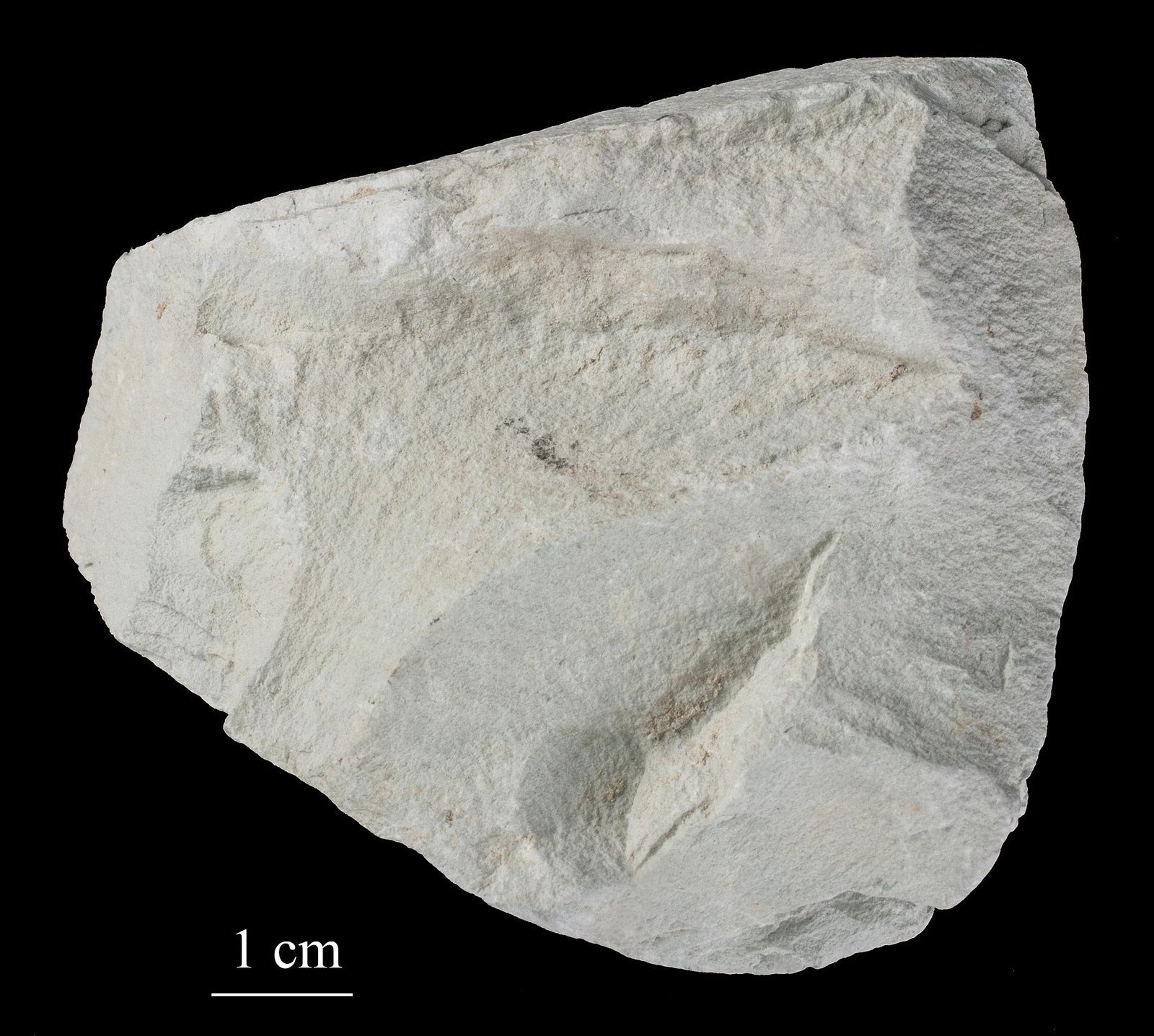
Bu nedir?
Minerals full of molecule-sized cages that trap specific ions and gases and let everything else pass.
Neden önemli?
Zeolites are the original molecular sieve: they soften water, deodorise, clean up radioactive spills and, in synthetic form, crack crude oil into petrol.
Where it is in the Earth
Natural zeolites are a family of hydrated aluminosilicate minerals — framework silicates in which silicon and aluminium atoms are linked by oxygen into a three-dimensional lattice riddled with cavities and channels of very precise, molecular-scale dimensions. Different species have different cage geometries, and it is that geometry which determines which ions or molecules a given zeolite will hold and which it will let pass. The species most commonly traded — clinoptilolite, chabazite and mordenite — differ from one another in the exact arrangement of their internal channels, and those differences translate directly into different industrial applications.
Almost all commercially significant natural zeolite deposits formed from volcanic ash. When layers of fine pyroclastic material — the glassy debris ejected during volcanic eruptions — were buried under shallow lakes or shallow seas, the glass slowly reacted with alkaline, silica-rich water over geological timescales, a process called diagenetic alteration. The result was a sedimentary rock, often called a zeolitic tuff, in which a large fraction of the original ash has been converted to zeolite. The deposits are therefore typically found in geologically young volcanic arcs and back-arc basins: the Carpathian arc through Slovakia and Hungary, the Caucasus region hosting Georgia's deposits, the volcanic island chains of Japan, Korea, Indonesia and the Philippines, and the Basin and Range province of the western United States. Turkey and Cuba sit in analogous tectonic settings. The common thread is a supply of volcanic glass, moderately alkaline pore water and enough burial time — typically millions of years — for the conversion to proceed to useful grades.
The grade of a zeolitic tuff is expressed as the percentage of zeolite mineral in the rock by weight. Because the reaction replaces glass rather than concentrating a trace element from a bulk silicate melt, grades can be remarkably high — the zeolite may form the dominant mineral in the rock — though they vary considerably across a single deposit depending on the original glass chemistry, the composition and temperature of the pore fluids, and the depth of burial. Impurities such as volcanic glass itself, feldspar, clay minerals and opaline silica dilute the useful fraction and affect performance in end-use applications.
Getting it out
Because zeolitic tuffs are sedimentary rocks that sit at or near the surface in relatively flat-lying beds, virtually all natural zeolite is extracted by open-pit quarrying. The overburden — any soil, weathered rock or barren tuff above the ore zone — is stripped away with excavators or scrapers and moved aside. The ore itself is then dug with mechanical shovels or excavators and loaded into trucks for transport to a nearby processing facility. The operation resembles a quarry for any other sedimentary industrial mineral: the machinery is conventional, the capital requirements are modest compared with hard-rock mining, and the environmental footprint per tonne of product is relatively contained.
What open-pit mining means in practice is that the ratio of waste moved to product recovered — the strip ratio — is the principal economic variable alongside ore grade. A deposit with high zeolite content close to the surface and thin overburden can be worked very cheaply; one with low grade or deep cover requires moving proportionally more rock for each tonne of saleable material. Because natural zeolites compete on price with relatively inexpensive materials such as perlite, bentonite and diatomite, the economics strongly favour deposits that combine high grade with shallow geometry. This is one reason the production geography is concentrated in places where volcanic tuff sequences have been gently folded or are essentially flat-lying, keeping the ore accessible without deep stripping.
There is no underground mining of significance in this commodity, and no hydrometallurgical or brine-based extraction. The ore is essentially the product: the zeolite mineral is already present in useful concentrations in the rock as it comes from the pit, and the main task of subsequent processing is to clean and size it rather than to chemically transform it.
What pulls on it
Natural zeolite reaches markets through a range of applications that share the same underlying mechanism: the mineral's internal cage structure preferentially traps certain ions or molecules while leaving others free to pass. In water treatment, clinoptilolite granules remove ammonium ions from wastewater — useful in municipal sewage plants and in aquaculture facilities where elevated ammonia is toxic to fish. In agriculture, zeolite mixed into sandy or degraded soils holds fertiliser ions and releases them slowly, reducing leaching losses; this use is growing in parts of the world where water scarcity and fertiliser costs are both increasing. In the construction industry, zeolitic tuff has a long history as a lightweight aggregate and as a pozzolanic addition to cement — the Romans used a naturally occurring material of this type in their concrete — and there is renewed interest in this application as the cement industry looks for partial clinker substitutes that reduce carbon dioxide emissions.
Animal feed is another established outlet: clinoptilolite is approved as a feed additive in several jurisdictions on the basis that it can adsorb ammonia in the gut and may bind certain mycotoxins (fungal poisons that contaminate grain). The remediation of radioactively contaminated sites has provided episodic but significant demand; zeolites were used after nuclear accidents to remove caesium and strontium from contaminated water, and both governments and nuclear operators stockpile material against future need. Odour control — in cat litter, composting facilities and agricultural buildings — is a large-volume, lower-price outlet that absorbs substantial tonnage. For demand to shift sharply upward, the most plausible driver would be widespread adoption of zeolite-amended concrete, which would require significantly larger volumes than any current application. A sharp downward shift is harder to construct because the commodity serves many independent end markets simultaneously, making it relatively insensitive to any single sector's fortunes.
Turning ore into product Seviye 3
Processing natural zeolite is primarily a physical rather than a chemical exercise. Run-of-mine tuff is first crushed — typically in jaw crushers followed by roll or impact crushers — to break it down from quarry-sized blocks to a manageable particle size. It is then screened to separate size fractions, because different end markets specify very different particle sizes: a water-treatment application may demand a coarse granule, a soil-amendment use may want a fine powder, and an animal-feed additive will have its own specification. The choice of how finely to grind is therefore driven by the product slate rather than by any metallurgical recovery consideration; unlike a metal ore, there is no liberation problem to solve, because the zeolite is already distributed through the rock rather than locked inside a discrete mineral grain that must be freed from gangue.
Where higher purity is needed, the crushed material may be washed to remove soluble salts and fine clay particles, then dried to a controlled moisture content. Air classification — passing the powder through an upward current of air that carries away the finest particles — can separate zeolite-rich fractions from denser or coarser impurities. For the most demanding applications, notably those requiring a guaranteed minimum zeolite content for ion-exchange capacity, a beneficiation step using froth flotation or dense-medium separation may be applied, though many producers supply unbeneficiated tuff directly for lower-grade uses such as bulk soil amendment. The key quality parameters that processors control are zeolite content, cation-exchange capacity (the number of exchangeable ions per unit mass, measured in milliequivalents per hundred grams), particle-size distribution and moisture. Losses during processing are modest — fines generated during crushing that fall below the coarsest product specification can often be sold into powder markets — so overall recovery of saleable product from mined ore is high relative to metal concentrates.
Because each zeolite species has a different internal geometry, the species identity matters as much as purity. A clinoptilolite-rich tuff and a chabazite-rich tuff may be indistinguishable to the eye but behave quite differently in an ion-exchange column or a gas-separation cartridge. Processors therefore characterise ore not just by zeolite content but by species distribution, typically using X-ray diffraction analysis. This is a source of commercial differentiation: a deposit dominated by the correct species for a high-value application commands a premium that a mixed or misidentified lot cannot.
Substitution and recycling Seviye 3
The substitutes for natural zeolite depend entirely on the application, because the material is not consumed for a single property but for several quite different ones across its end markets. In water softening and ion exchange, synthetic zeolites and ion-exchange resins are technically superior alternatives: they can be engineered with precise pore sizes and higher exchange capacities, and they dominate the high-value end of the market. The data block notes that synthetic zeolites constitute a separate and larger market than natural material; this reflects the fact that synthetics captured the refining and petrochemical applications — fluid catalytic cracking, most notably — where performance specifications are stringent enough to justify their considerably higher cost. Natural zeolite competes where the volume is large, the price pressure is high and the specification is met adequately by the natural material at its natural purity.
In soil amendment, competing materials include perlite, vermiculite, biochar and bentonite, each of which offers a somewhat different combination of water retention, cation-exchange capacity and bulk density. None replicates the specific ion-exchange selectivity of clinoptilolite for ammonium, so in applications where ammonium removal is the objective the substitution is imperfect. In concrete and cement, supplementary cementitious materials such as fly ash, ground granulated blast-furnace slag and calcined clays are the main competitors; they are produced in much larger volumes and at lower cost per tonne in most markets. For odour control, activated carbon and certain clay minerals can serve similar functions, and the choice is largely driven by local price and availability. Recycling of natural zeolite is not practised at scale: once used in a soil-amendment or water-treatment application the mineral is dispersed and recovery is impractical. In closed systems such as ion-exchange columns, the zeolite can be regenerated by flushing with a concentrated salt solution, which desorbs the trapped ions and restores exchange capacity — but this regeneration eventually reaches a limit and the exhausted material is disposed of rather than reclaimed.
Kim üretiyor
Haritada gör →Mine production
Mine productionmetric tons 2025 (tahmini) Dünya toplamı 1,300,000 metric tons
USGS Mineral Commodity Summaries 2026 · Gross weight of natural zeolite; synthetic zeolites are a separate and larger market. · kaynak ↗
Kalan sütunlar için tabloyu yatay kaydırın.
| Ülke | Üretim | Dünya payı |
|---|---|---|
| Slovakia | 280,000 | 21.5% |
| Georgia | 240,000 | 18.5% |
| Korea, Republic of | 160,000 | 12.3% |
| China | 150,000 | 11.5% |
| Russia | 130,000 | 10.0% |
| Indonesia | 120,000 | 9.2% |
| United States | 80,000 | 6.2% |
| Turkey | 58,000 | 4.5% |
| Hungary | 31,000 | 2.4% |
| Cuba | 15,000 | 1.2% |
| Philippines | 6,300 | 0.5% |
| Jordan | 1,000 | 0.1% |
| Chile | 240.0 | 0.0% |
| Dünya toplamı | 1,300,000 | 100% |
"Gizli tutulmuş", USGS'nin tek bir şirketin verisini ifşa etmekten kaçınmak amacıyla rakamı yayımlamadığı anlamına gelir; sıfır anlamına gelmez. Kaynak her rakamı bağımsız olarak yuvarladığı ve her zaman "diğer ülkeler" satırını ayrıştırmadığı için ülke satırları her zaman dünya toplamına eşit olmayabilir.