Module 3 · Smelting, refining and the narrow link
Smelting: from concentrate to blister
Level 2 · Working knowledge 10 min read 4 questions
Concentrate is melted with oxygen. Iron and sulfur burn off, the sulfur is captured as acid rather than released, and what is left is about 98% copper.
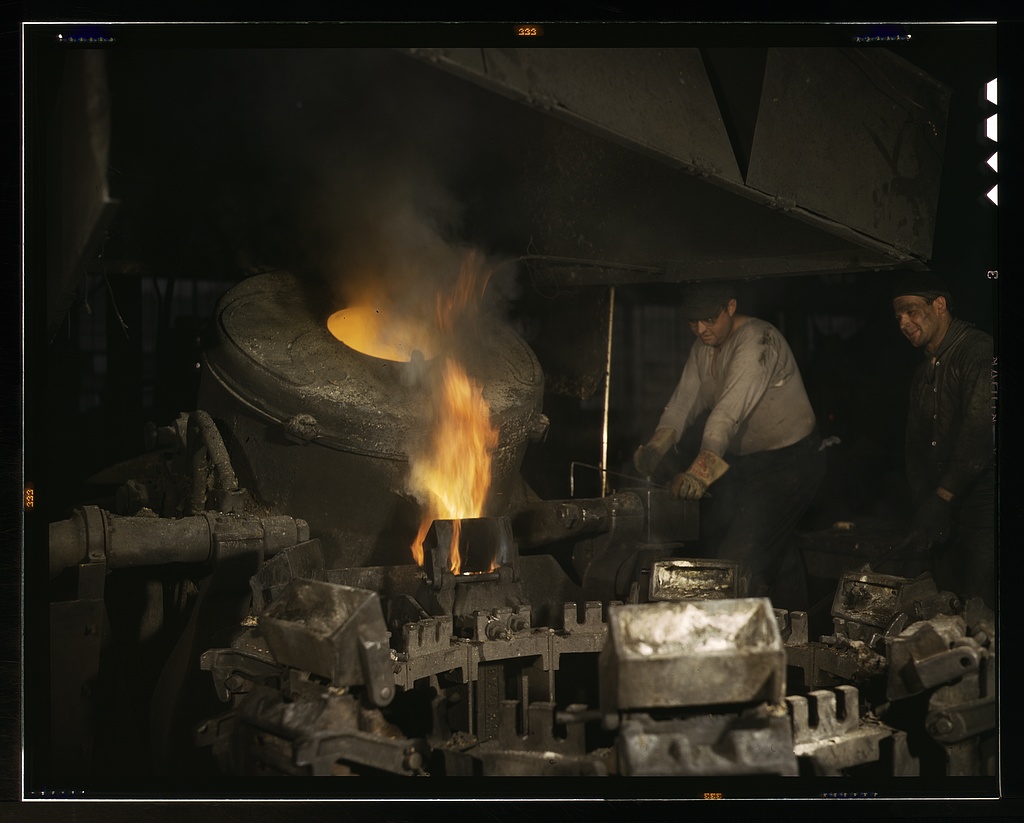
Concentrate arriving at a smelter is roughly a quarter to a third copper. The rest is mostly iron and sulfur, bound up with the copper in chalcopyrite, plus whatever gangue survived flotation. Smelting removes the iron and the sulfur by exploiting a convenient piece of chemistry: at high temperature, in the presence of oxygen, iron prefers to become an oxide and copper prefers to stay a sulfide.
The three operations inside a smelter
The name blister comes from the appearance: sulfur dioxide escaping as the metal solidifies leaves the surface blistered. It is copper, and it is nowhere near good enough to use as a conductor.
The sulfur is the point
Each tonne of copper smelted liberates a substantial mass of sulfur. Released, it would be sulfur dioxide, and the environmental history of copper smelting is largely the history of that fact. Modern smelters capture the gas and convert it to sulfuric acid, which is sold. The copper to the grid chain page states the modern practice directly: the sulfur is captured as sulfuric acid rather than released.
What a smelter charges, and why it is a market
A smelter does not usually buy copper. It buys concentrate and charges for the service of turning it into metal, under terms that are among the most closely watched numbers in the industry.
- Treatment charge (TC)
- A fee per dry tonne of concentrate treated.
- Refining charge (RC)
- A fee per pound of payable copper refined.
- Payable metal
- The share of contained copper the miner is actually paid for. The smelter keeps a small deduction, because some copper is unavoidably lost in slag.
- Penalties
- Deductions for deleterious elements - arsenic especially, also bismuth, antimony, fluorine, mercury - which complicate smelting and restrict where the concentrate can go at all.
- Credits
- Payment for gold and silver in the concentrate, recovered downstream.
Arsenic, and why some concentrate has nowhere to go
Arsenic deserves its own paragraph because it is an increasingly binding constraint. As the clean upper parts of deposits are mined out, more concentrate carries arsenic, and smelters have limits - regulatory and technical - on how much they can accept. Such material is blended down into cleaner concentrate, routed to the minority of smelters equipped for it, or treated in a dedicated roasting step first. A high-arsenic concentrate can be perfectly good copper and still have almost no buyers, which is a very clear illustration of this site's recurring theme: the constraint is somebody else's plant, not the resource.
- Smelting exploits iron's preference for oxygen over copper's, and the sulfur reaction supplies much of the heat.
- Modern smelters capture sulfur as sulfuric acid, which links them to leach operations and fertiliser.
- TC/RCs price smelting capacity and move inversely to concentrate scarcity.
- Matte
- The copper-iron sulfide melt produced by smelting, before converting.
- Blister copper
- Converter product, about 98% copper.
- TC/RC
- Treatment and refining charges: what a smelter is paid to turn concentrate into metal.
- Payable metal
- The share of contained metal a miner is actually paid for.
- Guixi Smelteron this site
- Atlantic Copper Smelter, Huelvaon this site
- Smelting and refiningon this site
- Sulfuron this site
Check yourself
1. Smelting copper concentrate requires relatively little added fuel because:
The sulfur reaction supplies much of the process heat, which is why oxygen enrichment matters so much to smelter efficiency.
2. Concentrate becomes scarce relative to world smelting capacity. Treatment and refining charges will most likely:
TC/RCs are the price of smelting capacity. Scarce feed means smelters bid for it by accepting lower charges.
3. A concentrate with high arsenic content is difficult to sell because:
It is a smelter-side constraint. The copper is fine; the number of plants that can legally and technically process it is small.
4. Blister copper is:
It is the converter's product: copper, but far too impure to use as a conductor.