Module 2 · Mining and concentrating
The oxide route: heap leaching and SX-EW
Level 2 · Working knowledge 9 min read 4 questions
A completely different way to make the same cathode, without a smelter - and a reminder that the cheap route is not always the profitable one.
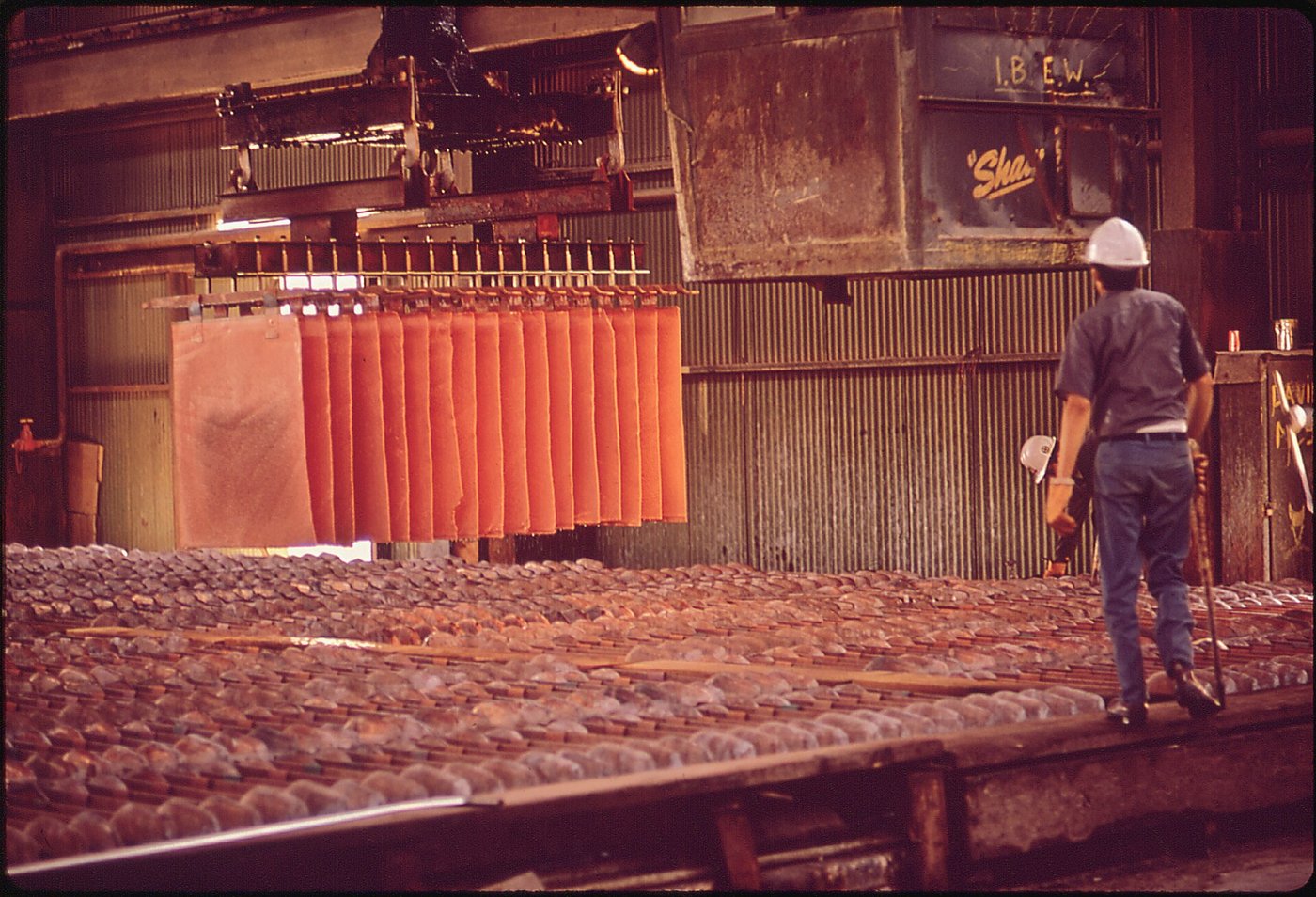
Everything in the previous lesson applies to sulfide ore. The oxide cap from lesson 2 cannot be floated - oxidised copper minerals do not respond to sulfide collectors - so it takes a different route entirely, one that produces finished cathode at the mine without a smelter anywhere in the picture.
The abbreviation for the last two steps together, used universally, is SX-EW. The output is the same product a smelter-and-refinery chain produces: copper cathode. Morenci in Arizona is a large example, and much of the Congolese cathode trade comes out of leach operations.
Why it is attractive
- No smelter. Cathode is made at the mine, so there is no concentrate to ship, no treatment charge to pay and no dependence on smelting capacity on another continent. For a landlocked producer that is a decisive advantage.
- Water efficiency. The acid solution is largely recirculated, which suits arid regions.
- No sulfur dioxide. There is no smelting step, so there is no sulfur dioxide to capture - although there is also no sulfuric acid produced as a by-product, so the acid has to be bought in.
- Lower capital per tonne than a concentrator and smelter, and it can be built in stages.
Why it is not the answer to everything
- It only works on oxide and some secondary sulfide ore. Primary chalcopyrite leaches very slowly under ordinary heap conditions, which is why the oxide cap is a finite opening rather than a permanent alternative.
- Recovery from a heap is generally lower than from a well-run concentrator, and copper left in the heap is not recoverable later.
- It consumes purchased sulfuric acid, linking mine costs to the acid market - which is itself supplied largely by smelters and by oil refineries removing sulfur. The chains connect.
- SX-EW makes finished cathode at the mine, with no smelter and no concentrate shipment.
- It forfeits the gold, silver and PGM credits that sulfide concentrate carries.
- Oxide caps are finite, so the leach route is usually a phase of a mine's life rather than its whole life.
- SX-EW
- Solvent extraction and electrowinning: cathode made from a leach solution without a smelter.
- Pregnant leach solution
- The copper-bearing liquid draining from a heap.
- Electrowinning
- Plating metal out of a solution, as distinct from electrorefining an impure anode.
- Morencion this site
- Congolese copper cathode, tracedon this site
- Hydrometallurgyon this site
- In-situ recoveryon this site
- Sulfuron this site
Check yourself
1. The main commercial disadvantage of the SX-EW route compared with the concentrate-and-smelt route is that it:
Both routes make 99.99% cathode. What SX-EW leaves behind is the gold, silver and PGM revenue that anode slimes at an electrorefinery would capture.
2. Heap leaching is applied to oxide ore rather than primary sulfide ore because:
It is a dissolution-rate problem. Chalcopyrite is stubborn under ordinary heap conditions, which is why the oxide cap is a limited opportunity.
3. For a landlocked copper producer, the biggest attraction of SX-EW is that it:
Shipping concentrate is expensive and exposes the producer to smelter terms and capacity. Making cathode at the mine removes both.
4. SX-EW operations link copper mining to the oil industry because:
Purchased acid is a real cost line, and the world's elemental sulfur comes largely from refining and from smelters capturing sulfur dioxide.