Module 3 · Smelting, refining and the narrow link
The narrow link: where refined copper is actually made
Level 3 · Specialist 11 min read 4 questions
Mining is spread across a dozen countries. Refining is not. This lesson is the two USGS tables side by side and what follows from the difference.
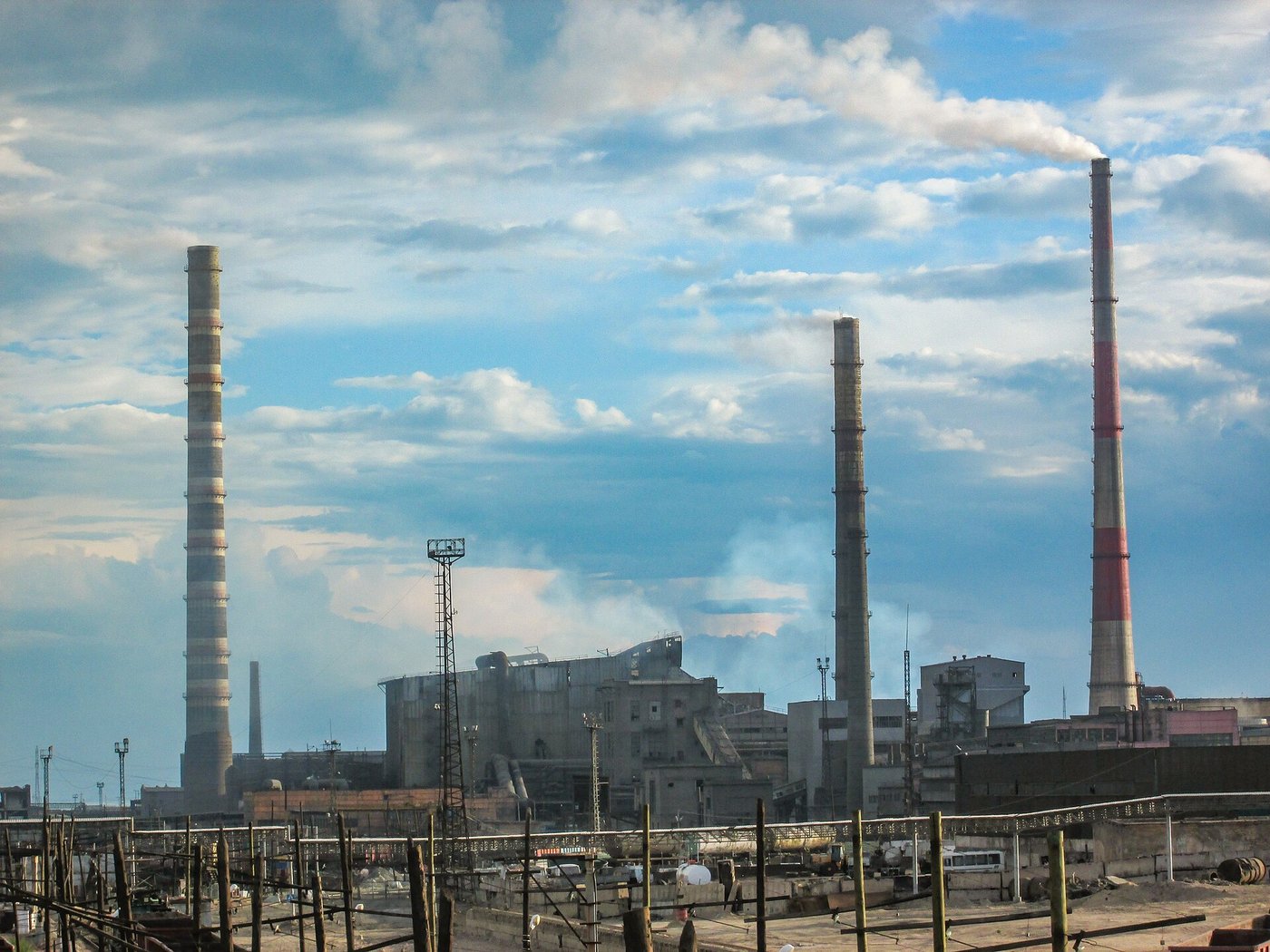
The single most important structural fact about copper is that the map of mines and the map of refineries are different maps. Here they are.
| Country | Thousand t | Share of world |
|---|---|---|
| Chile | 5,300 | 23.0% |
| Congo (Kinshasa) | 3,200 | 13.9% |
| Peru | 2,700 | 11.7% |
| China | 1,800 | 7.8% |
| Russia | 1,300 | 5.7% |
| United States | 1,000 | 4.3% |
| Zambia | 940 | 4.1% |
| Australia | 730 | 3.2% |
| Kazakhstan | 710 | 3.1% |
| Indonesia | 710 | 3.1% |
| Mexico | 690 | 3.0% |
| Canada | 500 | 2.2% |
| Poland | 410 | 1.8% |
| Other countries | 3,000 | 13.0% |
| World total | 23,000 | 100% |
2025, estimated · USGS Mineral Commodity Summaries 2026, as published on commodityeducation.com/material/copper
Mine production is contained copper in concentrate or cathode.
| Country | Thousand t | Share of world |
|---|---|---|
| China | 14,000 | 48.3% |
| Congo (Kinshasa) | 2,800 | 9.7% |
| Chile | 1,700 | 5.9% |
| Japan | 1,400 | 4.8% |
| Russia | 950 | 3.3% |
| United States | 850 | 2.9% |
| India | 620 | 2.1% |
| Korea, Republic of | 610 | 2.1% |
| Germany | 610 | 2.1% |
| Poland | 560 | 1.9% |
| Kazakhstan | 500 | 1.7% |
| Mexico | 480 | 1.7% |
| Australia | 460 | 1.6% |
| Indonesia | 400 | 1.4% |
| Peru | 340 | 1.2% |
| Canada | 320 | 1.1% |
| Zambia | 270 | 0.9% |
| Other countries | 2,100 | 7.2% |
| World total | 29,000 | 100% |
2025, estimated · USGS Mineral Commodity Summaries 2026, as published on commodityeducation.com/material/copper
Refinery production is finished cathode, and includes metal refined from scrap as well as from concentrate.
What the difference actually says
Chile mines 23.0% of the world's copper and refines 5.9% of it. China mines 7.8% and refines 48.3%. Peru mines 11.7% and refines 1.2%. The pattern is not an accident and it is not primarily about geology - it is about where it made sense to build the capital-intensive middle of the chain.
- Smelters follow demand and power, not ore. A smelter wants cheap, reliable electricity, a port, an acid buyer and a nearby fabrication industry. Ore can be shipped; a smelter cannot.
- Concentrate ships economically. At 25-30% copper it is dense and valuable enough per tonne to bear ocean freight, so there is no strong physical reason to smelt at the mine.
- Scale and time. A smelter is a multi-year, multi-billion construction with a long payback, so capacity accumulates where investment conditions have been stable and where it has been policy to build it.
- The DRC is the exception that proves the rule. It refines a large share of what it mines because the leach route from lesson 6 makes cathode on site - a way around the smelter, not a way of building one.
What follows from it
- Miners are exposed to smelter terms. A concentrate producer without its own smelting has to accept the TC/RC market, and that market is set by the balance between world concentrate supply and a capacity base it does not control.
- Refined copper trade is separate from concentrate trade. They have different prices, different participants and different policy exposure. Export restrictions on one are not restrictions on the other.
- Policy has leverage here that it does not have at the mine. Where processing is concentrated, export controls and industrial policy have real effect - which is the same argument this site makes for rare earth separation and for battery chemicals.
- Resource nationalism aims at this gap. Producing countries that want to capture more of the chain try to build smelters or require domestic processing. It is slow, capital-hungry and frequently attempted.
- Chile mines 23.0% of world copper and refines 5.9%; China mines 7.8% and refines 48.3%.
- Mine and refinery production must never be added - the same metal appears in both.
- Smelters locate for power, ports, acid buyers and downstream industry, which is why the two maps differ.
- Mine production
- Contained copper in concentrate or cathode, measured at the mine.
- Refinery production
- Finished cathode, from concentrate or from scrap.
- Resource nationalism
- Policy aimed at capturing more of the chain domestically, usually by requiring local processing.
- Copper to the gridon this site
- Copper - production tableson this site
- Guixi Smelteron this site
- Chokepointson this site
- Export controlson this site
Check yourself
1. Adding the world mine production total to the world refinery production total gives a figure that is:
The two series measure the same metal at two stages. Summing them double-counts, which is exactly what the material page warns against.
2. Smelters are built where they are mainly because they need:
Concentrate travels well, so the smelter can locate for its own inputs and customers rather than for the ore.
3. The DRC refines an unusually high share of the copper it mines because:
SX-EW bypasses the smelter entirely, which is particularly valuable for a landlocked producer.
4. A country restricts exports of copper concentrate. The immediate effect on refined copper trade is:
They are distinct trades. A concentrate restriction hits smelters' feed; it does not directly restrict cathode movement.