Module 5 · Scrap, price and failure
Where the copper chain actually breaks
Level 3 · Specialist 10 min read 4 questions
Water in the Atacama, a smelter fleet on the wrong continent, a decade of permitting, and an arsenic limit. Ranked by how often they bind.
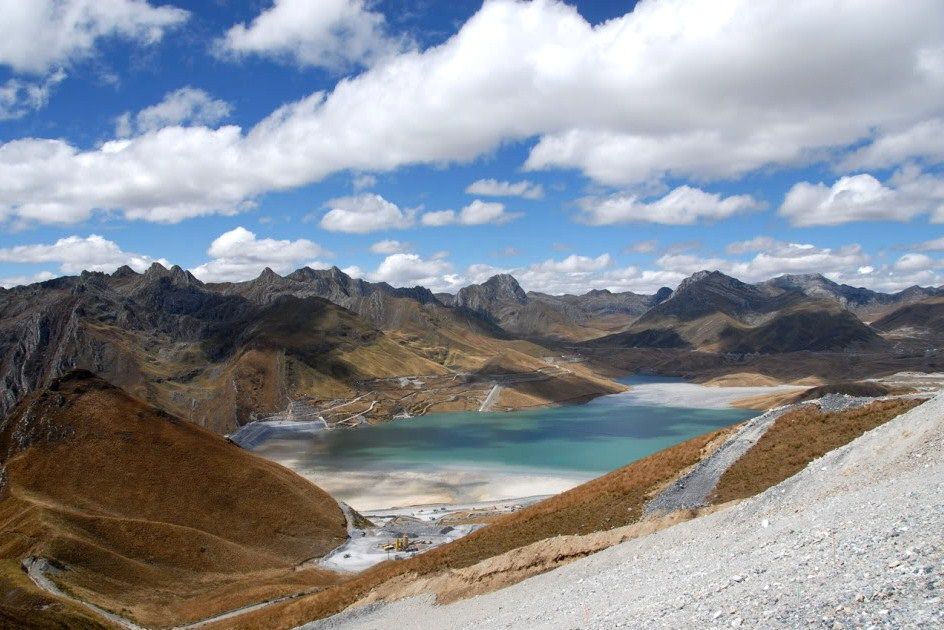
Copper's failure modes are more predictable than oil's, because the chain is shorter and its narrow point is obvious. That does not make them easier to fix - in several cases the fix takes a decade by construction.
The failure modes
| Failure mode | Where | What it looks like |
|---|---|---|
| Smelting and refining concentration | Processing stage | TC/RC volatility; miners exposed to terms set by a capacity base they do not own |
| Grade decline and rising strip ratios | Mine | Output flat or falling despite more rock moved; unit costs drifting up across the industry |
| Water and power constraints | Mine, especially Andean | Desalination and pumping capital; production limited by water allocation rather than by ore |
| Permitting and social licence | New projects | Decade-plus lead times; announced projects that never reach a decision |
| Impurity limits, arsenic especially | Concentrate market | Good copper concentrate with very few possible buyers |
| Concentrated country risk | Chile, Peru, DRC | Tax, royalty, permitting and logistics changes affecting a large share of world supply at once |
| Logistics out of central Africa | Midstream | Long road hauls to distant ports; cost and delay on a growing share of supply |
Qualitative ranking, not time-specific · Structured from the constraints described on this site's copper, mine and chain pages
Ordered by how routinely each binds, not by severity. The rarest are not on the list at all: a single mine failure, however large, is absorbed more easily than any of the above.
Why none of these is solved by higher prices quickly
This is the point that separates copper from short-cycle commodities. A higher price does not create water in the Atacama, does not shorten a permitting process, does not propagate a block cave faster, and does not build a smelter in under half a decade. What it does is raise the cut-off grade - pulling forward marginal material - and accelerate scrap collection, which is the fastest-responding part of the whole system.
The comparison this site keeps making
Copper's narrow link is a smelter. Rare earths' narrow link is a separation plant. Battery chemicals' is a refining step. Oil's is a refinery configured for a particular crude. In every case it is the middle of the chain - the capital-intensive, long-lead, geographically concentrated processing stage - and in every case the resource itself is not the binding constraint.
That is the argument at what is a supply chain and at chokepoints, and copper is its cleanest illustration: twelve countries mine meaningful quantities of it, and roughly half the world's refined output comes from one.
- Copper's narrow link is processing capacity, not ore.
- Higher prices cannot create water, permits or smelters; they can lower cut-off grades and pull in scrap.
- Supply contracts quickly and expands slowly, which shapes every response to a shock.
- Narrow link
- The stage in a chain with the least substitutable capacity.
- Social licence
- Community and political acceptance of an operation, distinct from legal permitting.
- Chokepointson this site
- What is a supply chain?on this site
- Copper to the gridon this site
- Copper - the material pageon this site
- Where the oil chain breaks, for contrastanother lesson
Check yourself
1. Which of copper's constraints responds fastest to a higher price?
Cut-off grade and scrap are the two fast levers. Everything else in the chain moves on a multi-year or decade timescale.
2. The parallel this site draws between copper, rare earths and battery chemicals is that in each case the binding constraint is:
It is always the middle of the chain: smelter, separation plant, refinery. The resource is rarely what binds.
3. A concentrate producer with high-arsenic material faces difficulty because:
It is a buyer-availability problem created by somebody else's plant limits - the recurring pattern in this course.
4. Why can copper supply contract faster than it can expand?
Losing output is an event; adding it is a decade-long project. That asymmetry governs how the market responds to shocks.