Module 2 · Upstream: finding it and lifting it
Getting it out of a conventional field
Level 2 · Working knowledge 10 min read 4 questions
Primary, secondary and tertiary recovery, what a well actually produces alongside oil, and why a field's cost per barrel rises for its whole life.
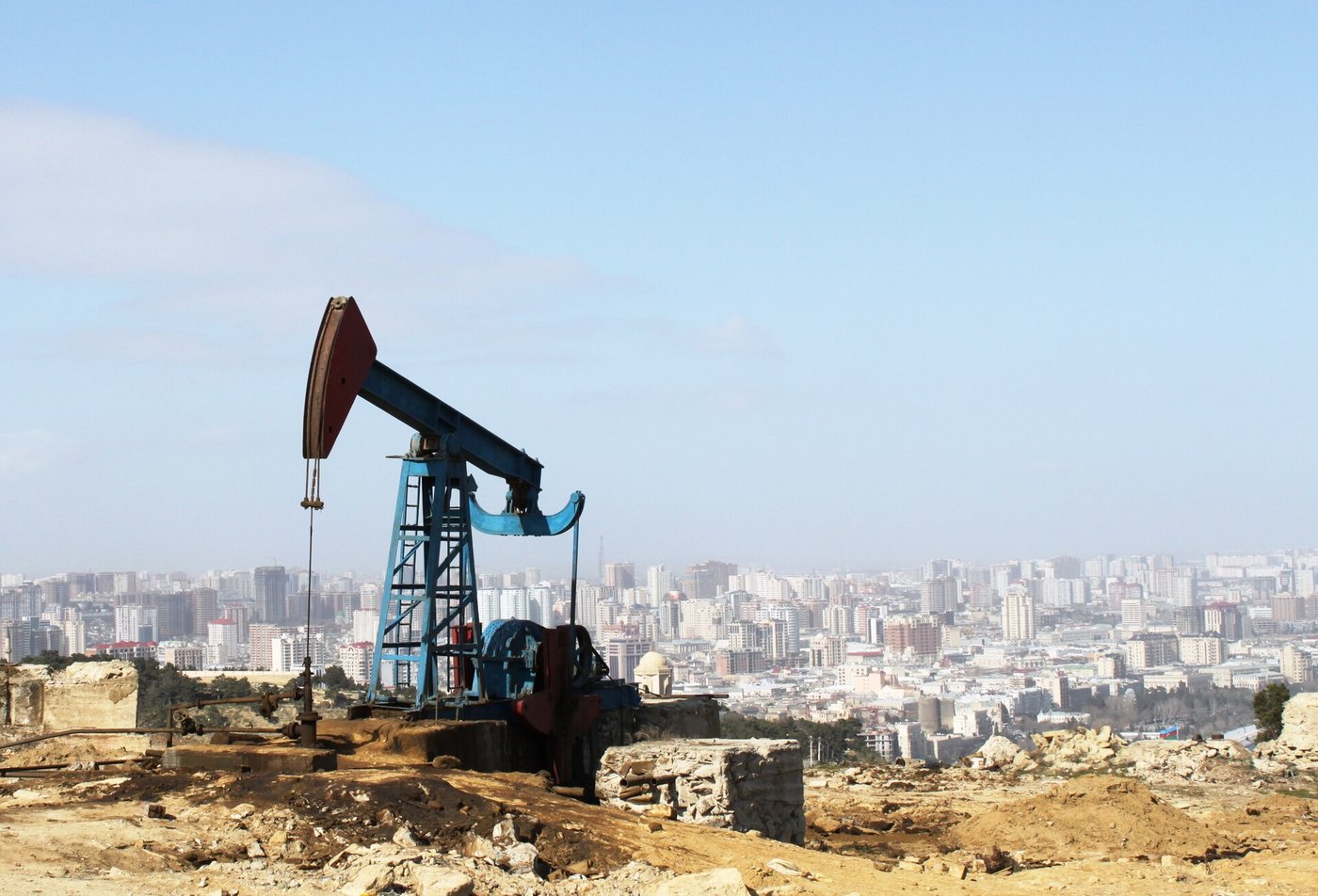
A conventional reservoir holds oil in connected pore space under pressure. Drill into it and that pressure does the work of lifting the oil, at least at first. Everything that happens afterwards is an effort to keep a pressure difference between the reservoir and the wellbore once nature has stopped providing one.
Three stages of recovery
- Primary
- The reservoir's own energy drives oil to the surface: compressed gas expanding, water moving in from an underlying aquifer, or simply the oil expanding as pressure drops. Cheapest per barrel, and it recovers the smallest share.
- Secondary
- Pressure is maintained artificially, almost always by injecting water, sometimes gas, through dedicated injection wells. The injected fluid also sweeps oil towards the producers. Most of the world's conventional production has been through waterflood for decades.
- Tertiary, or enhanced oil recovery
- Changing the physics rather than just the pressure: steam to reduce viscosity, carbon dioxide or other gases to dissolve into the oil and make it flow, or surfactants and polymers to change how oil and water interact with the rock. Expensive, and applied where the remaining barrels justify it.
What actually comes up the well
Not oil. A well produces a stream of oil, gas and water together, and the proportions change through the life of the field - typically towards more water and more gas. Surface facilities separate the three before anything can be sold.
Custody transfer is worth pausing on. It is the metered, contractually defined moment at which ownership of a specific quantity of oil passes from one party to another. Every handover in this course is one of these, and the custody journeys on this site are built around exactly that idea: who held it, where, and what was left behind.
Water cut, decline, and why costs only go one way
Water cut is the share of the produced liquid that is water. It rises through a field's life, and every percentage point means more fluid lifted, separated, treated and injected for the same oil. Decline is the fall in production rate as pressure and remaining oil fall. Together they mean the cost of producing a barrel from a given field rises for its entire life, which is why fields end not when the oil runs out but when the next barrel costs more than it fetches.
- Primary, secondary and tertiary recovery are three ways of maintaining a pressure difference, at rising cost.
- A well produces oil, gas and water together; produced water is usually the largest stream in a mature field.
- Lifting cost and the price needed to sanction new supply are different numbers and answer different questions.
- Water cut
- The share of produced liquid that is water.
- Custody transfer
- The metered, contractual moment when ownership of a defined quantity passes between parties.
- Lifting cost
- The cash cost of producing a barrel from an existing well, excluding capital already spent.
- Cost curveson this site
- Crude oil - getting it outon this site
- Natural gason this site
- Tailings, for the mining comparisonon this site
Check yourself
1. Waterflooding a reservoir is an example of:
Secondary recovery maintains reservoir pressure artificially, and water injection is by far the most common way of doing it.
2. In a mature conventional field, the largest fluid stream arriving at the surface facilities is usually:
Water cut rises through a field's life and routinely exceeds oil volumes, which is why water handling dominates the surface plant.
3. A producer says its lifting cost is well below the current oil price, yet will not sanction a new project at that price. This is:
Cash cost from an existing well and the full-cycle cost of new supply are different questions with different answers.
4. Associated gas is flared when:
Flaring is what happens when there is no route to market and no re-injection option - an infrastructure failure rather than a technical necessity.