Rock to product, traced
The Materials Atlas
Materials Mines & deposits Processing & refining Custody journeys Supply chains Companies Countries News
Materials by shelf Battery Materials Rare Earth Elements Copper & Electrical Semiconductor Materials Nuclear Materials Aerospace & Defence Precious Metals Steel & Alloy Metals Industrial Minerals Agricultural Minerals Energy Raw Materials Ore minerals Periodic table
Demand End markets Technologies Material calculator Maps Screener
Learn & tools LearnGlossary Ask the DataAI agents Research & dataAPI ★ Saved
About About usMethodology Data sourcesContact Disclaimer
Reading options
🧭 Guided View New to this — ore grades, concentrate, refining, by-products? We explain every term as you browse, in plain English. Same data, with the help built in.
⚡ Expert View You already know the industry. Just the data — clean, fast and compact, with no extra explanations. This is the default view.
Theme
Interface language
Depth Material pages are written at four levels. Pick one on any material page and it is remembered.
★ Saved Research & data
Natural Gas

Energy Raw Materials

Natural Gas

Mostly methane, the lightest hydrocarbon, and the source of nearly all the hydrogen used by industry today.

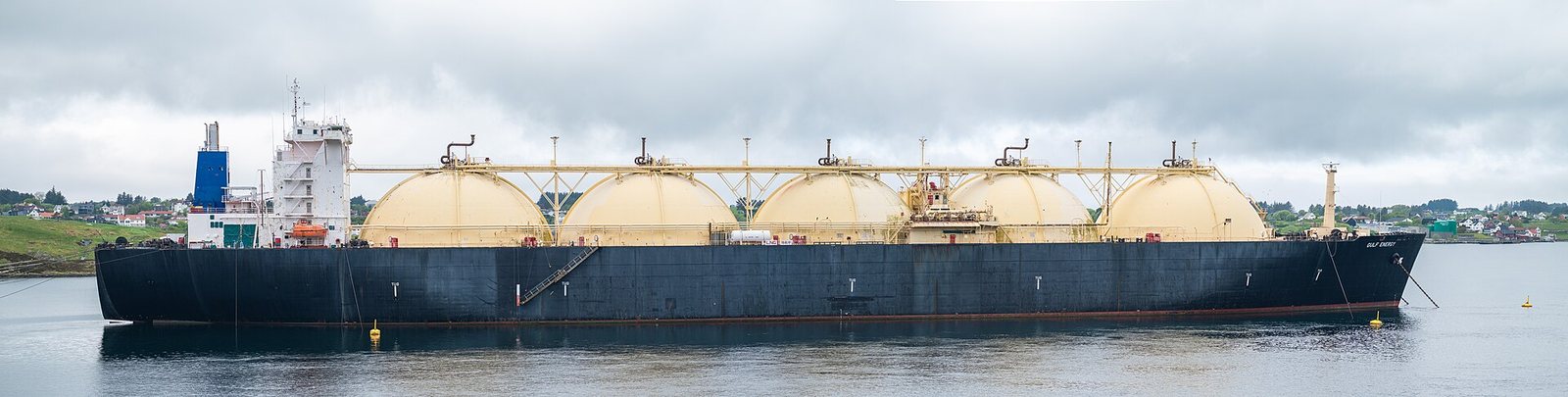
2023-05-20 02 LNG tanker, GULF ENERGY - IMO 7390143 · Gordon Leggett · CC BY-SA 4.0 · Wikimedia Commons

What is it?

Mostly methane, the lightest hydrocarbon, and the source of nearly all the hydrogen used by industry today.

Why does it matter?

Gas makes the ammonia that makes fertiliser, the hydrogen that refines fuel, and the helium that cools MRI magnets. Its role as chemical feedstock is as important as its role as fuel.

Where it is in the Earth

Natural gas is not a mineral in the conventional sense — it is not a solid crystalline compound found in a specific layer of rock. It is instead a mixture of hydrocarbons, overwhelmingly methane, that formed over geological timescales from organic matter buried under heat and pressure. When ancient marine organisms — algae, zooplankton, the fine organic rain of shallow seas — were buried quickly enough to be preserved rather than oxidised, they were cooked slowly by the Earth's internal heat. At relatively modest temperatures this organic material yields oil; at greater depth and higher temperatures, where oil itself begins to break down, it yields the shorter hydrocarbon chains we call gas. The depth at which this happens, known as the gas window, varies with local geology but is generally deeper than the oil window above it.

Gas, once generated, does not stay where it forms. Being buoyant relative to the surrounding brine-saturated rock, it migrates upward through permeable formations until something stops it. That something is a trap: a geometrical arrangement of rock layers that creates a sealed pocket. The most familiar kind is an anticline, a dome-shaped fold where permeable reservoir rock — typically sandstone or limestone — is capped by impermeable shale or evaporite. Gas accumulates at the top of the dome. Other traps are formed by faults, pinching-out sediment layers, or ancient salt domes that punch upward through the sedimentary column. The world's largest gas accumulations are in the great sedimentary basins that line passive continental margins and interior rift systems, wherever burial was deep and rapid and where intact cap rocks have survived hundreds of millions of years of tectonism.

Unconventional gas — the shale gas that transformed North American production in the twenty-first century — breaks this picture somewhat. In shale formations, gas never migrated at all; it remains locked inside the fine-grained source rock itself, held partly in tiny pores and partly adsorbed onto organic carbon. These reservoirs are geographically enormous precisely because they have not concentrated into discrete traps; they underlie whole basins rather than sitting in isolated pockets. The trade-off is that the rock's permeability is extremely low, which is why getting the gas out requires a different method entirely.

Getting it out

Natural gas does not require mining in the sense that coal or metal ores do. It is a fluid, and the method of recovery is drilling: a steel-cased borehole is driven down to the reservoir rock, and once a pressure pathway is opened, the gas flows upward under its own pressure or is lifted by compressors. In a conventional reservoir — the anticline or fault-trap type — a single vertical well can drain a large connected volume of porous rock. The well produces a mixture of gas, water, and often liquid hydrocarbons; these are separated at the surface before the gas enters a pipeline. The concept of grade, so central to solid minerals, translates here into reservoir quality: porosity (the fraction of the rock that is empty space) and permeability (how easily fluid moves through it). A high-quality conventional reservoir can deliver large volumes through relatively few wells.

Unconventional shale gas requires horizontal drilling and hydraulic fracturing, commonly called fracking. The well is drilled vertically to the target depth and then turned to run horizontally through the shale for a kilometre or more. To overcome the rock's near-zero natural permeability, operators pump a high-pressure mixture of water, sand and chemical additives down the well to crack the rock and prop those cracks open with sand grains. The gas then flows through the induced fracture network to the well. Because the drainage radius of any single fracture system is limited, many wells must be drilled across a shale play, often in closely spaced grids. The concept of waste rock that defines metal mining does not apply directly here, but the scale of surface infrastructure — well pads, water handling, pipeline gathering — is substantial relative to the gas produced from each well. Shale wells also decline steeply in their first year or two, requiring constant new drilling to maintain production.

Liquefied natural gas, or LNG, is not a different geological product but a different way of transporting the same gas. When pipeline access is impractical — across oceans, for instance — gas is cooled to minus one hundred and sixty-two degrees Celsius, at which point it becomes a liquid occupying a fraction of its gaseous volume. It is then carried in insulated tankers and regasified at the destination. This step sits between production and end use, but it shapes the geography of supply profoundly: it allows gas fields far from consuming markets to reach them, breaking the constraint that once made gas essentially a regional commodity.

What pulls on it

Natural gas sits in two quite distinct roles that are worth separating clearly. As a fuel, it is burned in power stations, industrial furnaces and domestic boilers to produce heat and electricity. As a feedstock, it is chemically converted — most importantly through steam methane reforming, a process that reacts methane with steam to produce hydrogen — and that hydrogen is then used to make ammonia, to upgrade crude oil in refineries, and in a growing range of chemical processes. These two roles respond to different pressures and carry different risks. Fuel demand is sensitive to the price of competing energy sources and to efficiency improvements; feedstock demand is tied instead to the volume of fertiliser, refined fuel and chemicals that the world requires.

Ammonia production, the foundation of most synthetic fertiliser, accounts for a very large share of global gas consumption in its feedstock role. Agricultural output at current scales is built on the assumption that nitrogen fertiliser is abundantly available, which means it is built on the assumption that gas is abundantly available. This linkage runs through the global food supply in ways that are not always visible: a sharp, sustained increase in gas prices ripples through to fertiliser costs, then to farm economics, then to food prices, as the 2021 to 2022 price spike illustrated plainly. Gas is also the dominant source of industrial hydrogen today, and hydrogen demand is expected to grow if decarbonisation efforts proceed — though that same decarbonisation agenda also motivates producing hydrogen by electrolysis from renewable electricity rather than from gas.

Power generation demand for gas is the portion most exposed to substitution by renewables and nuclear. In markets where wind and solar capacity is expanding, the fraction of electricity generation met by gas tends to decline over time, though gas often retains a role as a dispatchable backup for periods when renewable output is low. Industrial heat at very high temperatures is harder to electrify economically, which tends to make gas demand in heavy industry more persistent. Residential heating demand is sensitive both to efficiency measures in building stocks and to electrification through heat pumps. Overall, the fuel and feedstock roles pull on gas in different directions, and any assessment of future demand has to treat them separately.

Turning ore into product Level 3

Raw wellhead gas rarely meets pipeline or commercial specifications without treatment. It typically arrives carrying water vapour, carbon dioxide, hydrogen sulfide, heavier hydrocarbon liquids and sometimes nitrogen or helium. Water is removed first — water in the presence of CO₂ or H₂S forms acids that corrode steel pipelines, and at low temperatures it can form hydrates, ice-like solids that block flow. Dehydration is achieved by passing the gas through glycol contactors or solid desiccant beds. Acid gases — CO₂ and H₂S — are stripped in amine treating units, where the gas contacts an amine solution that selectively absorbs the acid components; the amine is then regenerated by heating. Where H₂S concentrations are significant, the stripped sulfur is converted to elemental sulfur via the Claus process, which is both an environmental obligation and a saleable by-product.

The heavier hydrocarbon components — ethane, propane, butane and natural gasoline, collectively called natural gas liquids or NGLs — are separated in a gas processing plant by a combination of cooling, expansion and fractionation. NGLs are considerably more valuable per unit of energy than pipeline gas itself, so their recovery is economically important; the split between keeping ethane in the gas stream or extracting it for petrochemical use is a continuous commercial decision driven by relative prices. The residue gas — now predominantly methane — is compressed and metered into the transmission pipeline at a specified heating value, usually expressed in BTU per cubic foot or megajoules per cubic metre. The unit basis matters operationally: different markets trade on volumetric, energy or mass units, and comparisons between them require explicit conversion factors, a source of confusion in published statistics.

When gas is destined for LNG export, it must first be pre-treated to remove CO₂ and water to tighter specifications than pipeline gas, because these compounds freeze at liquefaction temperatures and would block the heat exchangers. Liquefaction itself is achieved through a multi-stage refrigeration cycle using mixed refrigerants or pure component cycles depending on the plant design. Helium, present in trace quantities in some gas streams — notably those of the US mid-continent, Qatar and Algeria — is recovered during liquefaction because it is the only component that remains gaseous at LNG temperatures; the economics of helium extraction are therefore tightly linked to LNG plant throughput.

Substitution and recycling Level 3

Substitution for natural gas depends entirely on which of its uses is under consideration. In power generation, the alternatives are coal, nuclear, hydro, wind and solar — each of which can displace gas in electricity production, though coal carries a worse emissions profile and the others require capital-intensive infrastructure with long lead times. In residential heating, heat pumps powered by electricity can replace gas boilers and do so with a coefficient of performance — meaning they deliver more heat energy than the electricity they consume — that makes them thermodynamically efficient, though their economics depend on the relative prices of electricity and gas in a given market. Neither figure nor forecast is offered here, but the structural relationship is that when electricity is cheap relative to gas, electrification of heat becomes more attractive.

In the feedstock role, substitution is more constrained. Ammonia synthesis requires hydrogen, and today almost all industrial hydrogen comes from steam methane reforming of natural gas. Coal gasification can produce hydrogen and is used in markets where coal is very cheap relative to gas, particularly in China, though with a higher carbon intensity per unit of hydrogen. Electrolytic hydrogen — produced by splitting water using electricity — is technically equivalent as a feedstock and carries no direct carbon emissions if the electricity is low-carbon, but at present its production cost is substantially higher than reforming-based hydrogen in most markets. The cost gap is narrowing as electrolyser technology matures and as carbon pricing in some jurisdictions adds a cost to the emissions from reforming, but a clean substitute available at scale and at comparable cost does not yet exist. This matters because ammonia synthesis is not a small or marginal use; it underpins food production for a very large portion of the human population.

Recycling does not apply to natural gas in the conventional sense — a combusted fuel is not recoverable. However, biogas and biomethane — methane produced from the anaerobic decomposition of organic waste — are chemically close to natural gas and can be injected into existing pipeline infrastructure after upgrading. Captured and purified, biomethane can serve as a partial substitute. The volumes currently available from this route are modest relative to total gas demand, and the resource base is constrained by the availability of suitable organic feedstocks. Synthetic methane, produced by reacting hydrogen with CO₂ captured from the atmosphere or from industrial point sources, is a further option that would allow existing infrastructure to remain in service, but the energy conversion losses at each step make it less efficient than direct electrification of end uses where that is possible.

Read the numbers correctly. Measured in cubic metres, cubic feet or energy units (BTU, MMBtu, MWh) — never interchangeable without conversion. Pipeline gas, LNG at -162 C, NGLs, and helium as a by-product.

Price

Natural gas, European price

Annual averageUS$ per million BTU

1995 · 2.59 high 69.98 US$ per million BTU 2026 · 17.93

Basis: IMF global price of natural gas — Russian border price in Germany / TTF. Annual averages as published in FRED (IMF primary commodity prices) · source ↗. These are reference annual averages, not a live market quote.

What it is used for

All end markets →
End marketWhat it does thereImportance
Agriculture & Food Hydrogen feedstock for ammonia Defining

Export controls

CountryControlApplies to
ThailandExport ban Natural sand (2023).

USGS Mineral Commodity Summaries 2026, table 4 — controls in effect as of January 2026, excluding controls since lifted.

Follow it across the borders

All journeys →

Where a consignment of this material actually goes — every country, every custodian, and what is left behind at each step.

Saudi Arab Light to petrol, almost anywhere The same commodity, a fraction of the effort — because of what the molecule is. from Saudi Arabia · Light sour crude, roughly 33° API, moderate sulfur

In the news

More →

White Hydrogen Drilling Push Gains Momentum Across Three Continents

OilPrice.com02 Sep 2026

Saudi Arabia Plans To Free 1 Mb/d As it Invests in Nuclear Power

OilPrice.com02 Sep 2026

Russia Doubles Dark Fleet to Ship LNG to Asia

OilPrice.com01 Sep 2026

Price, Not Politics, Is Driving Most of India’s Oil Buying

OilPrice.com01 Sep 2026

BP Adds 80 MMcf/d to Egypt’s Gas Supply Two Years Ahead of Schedule

OilPrice.com31 Aug 2026

Europe Gas Prices Jump 5% to Highest Level Since 2023

OilPrice.com31 Aug 2026

Materials

All materials Critical minerals Rare earths Battery materials Ore minerals Periodic table Screener

The ground

Mines & deposits Processing & refining Countries Maps

The economy

Custody journeys Supply chains End markets Technologies Companies Material calculator

Learn

LearnGlossary Ask the DataAI agents Research & dataOpen API News★ Saved

About us

About usContact MethodologyData sources Editorial policy Privacy policyTerms of use Disclaimer