Apa ini?
Coal burned to make steam and therefore electricity — still, despite everything, one of the largest single sources of power in the world.
Mengapa ini penting?
Coal power is also where a large share of the world's gypsum, fly ash and some germanium supply comes from as by-products.
Where it is in the Earth
Thermal coal is fossil carbon: the compressed, chemically altered remains of plant matter that accumulated in swampy lowland forests, mainly during the Carboniferous and Permian periods, though significant deposits formed in the Cretaceous and even the Eocene. When vegetation dies in an oxygen-poor, waterlogged environment, it does not fully decay. Instead it accumulates as peat. Over millions of years, as sediment piles on top, heat and pressure drive off water and volatile gases, gradually converting peat first to lignite (the softest, wettest coal), then to sub-bituminous coal, then to bituminous coal. The rank — the technical term for this degree of transformation — is the single most important geological variable, because rank determines how much energy a given tonne of coal can release when burned.
Thermal coal used in power stations is mostly bituminous or sub-bituminous. The highest-rank coal, anthracite, burns too slowly and commands a different market. The lowest-rank coals, lignites and brown coals, carry so much moisture that they are usually burned close to the mine rather than shipped internationally. The world's largest deposits sit in basins where ancient continental plates preserved thick sedimentary sequences: the Powder River Basin in the United States, the coalfields of the Bowen Basin in Queensland, the Kuznetsk Basin in Russia, and the vast reserves of Inner Mongolia in China. These are all places where the right combination of prolific ancient forests, a subsiding basin to accumulate sediment, and subsequent burial without excessive tectonic disruption happened to coincide.
The quality of coal within a single basin varies considerably. The seam thickness, the depth of burial, the amount of mineral ash mixed into the original plant material, and the concentration of sulfur — which entered the peat from seawater incursion or from pyrite in surrounding rock — all differ from place to place and even within a single seam. These variations matter enormously to buyers, which is why coal is not sold simply by the tonne but by energy content, ash content, sulfur content and moisture, each measured on agreed standard bases.
Getting it out
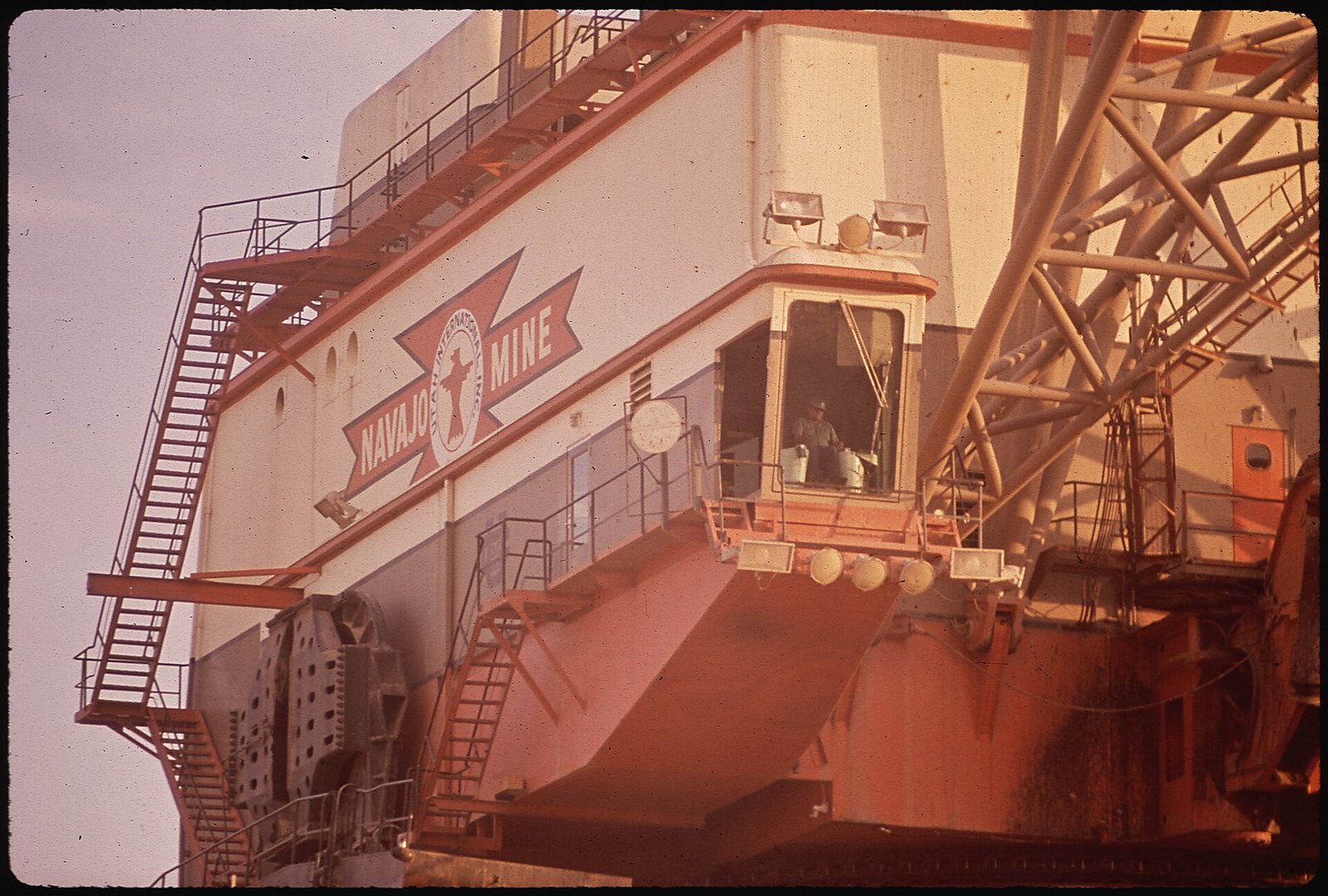
Most thermal coal is extracted by one of two broad methods, and the choice between them is almost entirely dictated by how deeply the seam is buried. Where coal seams lie close to the surface, typically under a cover of rock and soil that is thin relative to the thickness of coal beneath, the economics almost always favour open-cut mining, also called open-pit or strip mining. In open-cut operations, the overburden — the rock and earth sitting above the coal — is drilled, blasted and removed by enormous excavators and trucks before the coal is scooped out and loaded. The stripping ratio, expressed as the volume of overburden removed per tonne of coal recovered, is the central economic variable. A low stripping ratio means relatively little waste must move for each tonne produced; as a deposit deepens or thins, the ratio rises and the economics eventually tip toward underground methods or abandonment.
Where seams are deep, underground mining is used instead. The two main underground approaches are room-and-pillar mining, where coal is extracted in a grid pattern leaving pillars to support the roof, and longwall mining, where a long mechanised shearer cuts across a broad face and the roof behind it is allowed to collapse in a controlled way. Longwall mining recovers a much higher proportion of the coal in place, which is why it dominates in modern high-output underground mines. The trade-off is capital intensity: the equipment is expensive and the logistics of ventilation, gas drainage and personnel movement underground are complex.
One practical consequence of coal's geology is that open-cut mines in thick, shallow deposits can be among the highest-volume mining operations in the world by weight, moving material on a scale that few other commodities require. Underground mines tend to produce less tonnage but at lower waste ratios by volume, though they carry different costs in energy, labour and safety management. In either case the mined coal is rarely immediately saleable: it arrives at the surface as a mix of sizes and often with variable quality, and requires at least crushing and screening before transport.
What pulls on it
The overwhelming use of thermal coal is generating electricity. A coal-fired power station burns pulverised coal to boil water, drives a steam turbine with the resulting steam, and produces electricity. This single end use accounts for the great majority of all thermal coal consumed globally. A much smaller share goes to industrial steam raising — factories and processing facilities that need heat rather than electricity — and some lignite is used directly in district heating schemes in parts of Europe.
Demand is not uniform around the world. Countries in Asia, particularly China and India, account for the largest shares of consumption, partly because their electricity systems grew rapidly during decades when coal was the cheapest available fuel and partly because the alternatives — large-scale hydro, nuclear, domestic gas — were either geographically limited or politically complicated to build quickly. In contrast, demand in Western Europe and North America has fallen substantially over the past two decades, as natural gas became cheaper, as renewable electricity capacity expanded, and as regulatory pressure on carbon dioxide and air pollutants tightened. The direction of change in these regions is well established; the pace is the contested variable.
What would have to be true for global demand to fall sharply is not mysterious: power stations would need to be retired faster than new ones are built, or run at lower utilisation rates, and replacement generation would need to be available and affordable at scale. The complication is that the decision to retire a coal plant is made by individual governments and utilities facing very different electricity systems, grid reliability requirements, capital constraints and political circumstances. Demand is therefore the sum of many separate national trajectories, which is why aggregate global figures have remained large even as consumption in some regions has declined considerably.
Harga
Thermal coal, Australian price
Rata-rata tahunanUS$ per tonne
Dasar: IMF global price of coal — Australia thermal coal, 12,000 btu/lb, FOB Newcastle. Rata-rata tahunan sebagaimana diterbitkan dalam FRED (IMF primary commodity prices) · sumber ↗. Ini adalah rata-rata tahunan referensi, bukan kuotasi pasar secara langsung.