Module 1 · The molecule and the rock
What crude oil actually is
Level 1 · Foundation 8 min read 3 questions
Crude oil is not a substance. It is a mixture of thousands of hydrocarbon molecules, and nearly everything that happens to it between the well and the customer is an attempt to sort that mixture into parts that are individually useful.
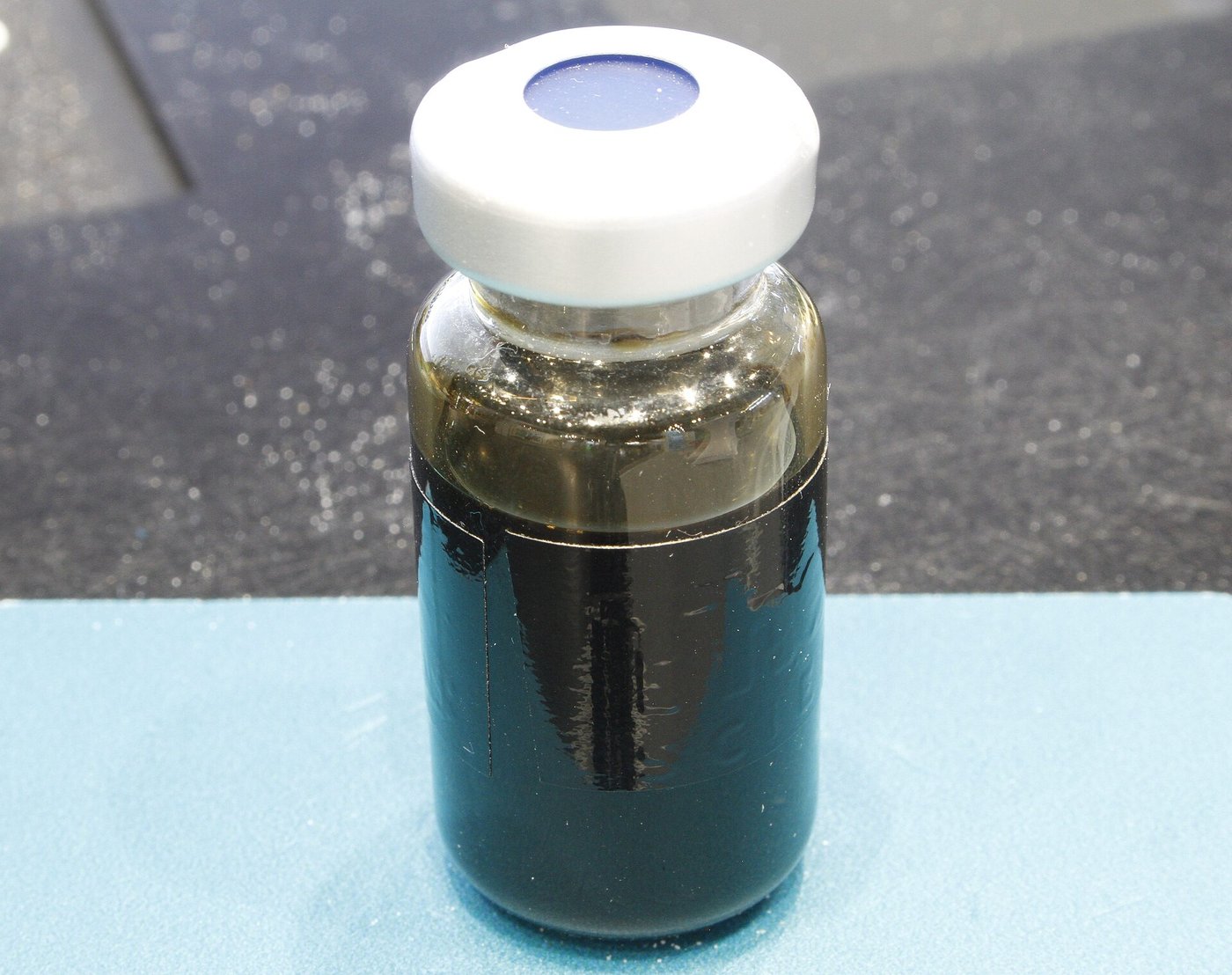
Ask what copper is and the answer is an element: one kind of atom, the same everywhere, and a refinery's job is to remove everything that is not copper. Ask what crude oil is and there is no equivalent answer. Crude oil is a mixture of thousands of different molecules made from carbon and hydrogen, in chains of wildly different lengths, with sulfur, nitrogen, oxygen and trace metals mixed in. No two fields produce quite the same mixture, and no customer anywhere wants the mixture as it comes.
That single fact organises the rest of this course. Copper's chain is a purification story, as the copper chain page puts it. Oil's chain is a sorting story. The value added between the wellhead and the petrol pump is almost entirely the value of separating the mixture into fractions and then rearranging some of those fractions into shapes the market wants more of.
The only chemistry you need
A hydrocarbon molecule is a backbone of carbon atoms with hydrogen attached. The length of the backbone decides almost everything practical about it: short chains are gases, medium chains are liquids that evaporate easily, long chains are thick liquids, and very long chains are waxes and solids. Because boiling point rises with chain length in a predictable way, a mixture of chain lengths can be separated by heating it and catching each fraction as it boils off. That is distillation, and it is the oldest and still the largest single operation in the industry.
| Roughly | Carbon atoms | At room temperature | Sold as |
|---|---|---|---|
| Lightest | 1-4 | Gas | Methane, ethane, propane, butane |
| Light | 5-10 | Volatile liquid | Petrol (gasoline), naphtha |
| Middle | 10-20 | Liquid | Kerosene, jet fuel, diesel, heating oil |
| Heavy | 20-50 | Thick liquid | Lubricating oil, wax, marine fuel |
| Residue | 50+ | Solid or near-solid | Bitumen, asphalt, petroleum coke |
Indicative; not a standard · General refining practice, as described in EIA, Oil and petroleum products explained
Chain-length bands overlap and refiners define cut points by boiling temperature, not by counting carbon atoms. The table is a mental model, not a specification.
Why this makes oil unlike a metal
Three consequences follow, and all three come back in later lessons.
- A barrel is not a unit of quality. Two barrels can both be crude oil and be separated by tens of dollars, because one of them yields mostly the fractions the market pays most for and the other mostly does not.
- Plants are built for particular mixtures. A refinery is a physical configuration of vessels sized for a particular range of feed. Change the feed and the plant does not simply produce a different output; parts of it sit idle while other parts choke.
- Nothing is waste in principle. Every fraction has a buyer somewhere, from the propane in a barbecue cylinder to the petroleum coke baked into the anodes that aluminium smelting consumes. What varies is whether the buyer is close enough to be worth shipping to.
The two things oil does
Oil is burned, and oil is built with. Most barrels are burned: petrol, diesel, jet fuel and marine fuel are what a barrel mostly becomes, and that part of demand is what electrification puts under pressure. A smaller and structurally different share is used as a feedstock - the carbon is embedded in a physical object rather than released as exhaust. Plastics, synthetic fibres, detergents, solvents, lubricants, road asphalt and the petroleum coke behind synthetic graphite all come from that side. Keeping the two apart is the single most useful habit when reading anything about future oil demand.
- Crude oil is a mixture, not a substance; the chain exists to sort it.
- Boiling point tracks chain length, which is why distillation is the core operation.
- Burned barrels and feedstock barrels face different futures and should never be discussed as one number.
- Hydrocarbon
- A molecule made of carbon and hydrogen only. Crude oil is mostly hydrocarbons plus sulfur, nitrogen, oxygen and trace metals.
- Fraction
- A cut of the mixture defined by the temperature range over which it boils.
- Feedstock
- Oil bought to be made into a material rather than burned.
- Crude oil - the material pageon this site
- Petroleum coke, and where it goeson this site
- What is a supply chain?on this site
- EIA, Oil and petroleum products explainedprimary source
Check yourself
1. Why can two barrels, both correctly described as crude oil, trade at prices tens of dollars apart on the same day?
Crude oil is a mixture. What a barrel is worth depends on what can be made from it and which plants can process it, not on its age or the unit it is measured in.
2. Distillation works as a separation method because:
Longer chains boil at higher temperatures, so heating the mixture and catching each fraction as it boils separates the mixture by chain length.
3. Which of these is a feedstock use rather than a combustion use of oil?
Feedstock uses embed the carbon in a product. Naphtha to ethylene to polyethylene is the classic route; the other three burn the barrel.