Module 2 · The species
The softwoods: what gets built out of them
Level 2 · Working knowledge 12 min read 4 questions
Six or seven species groups carry almost all structural construction. Each has a reason it is used where it is, and the buyer is usually a house.
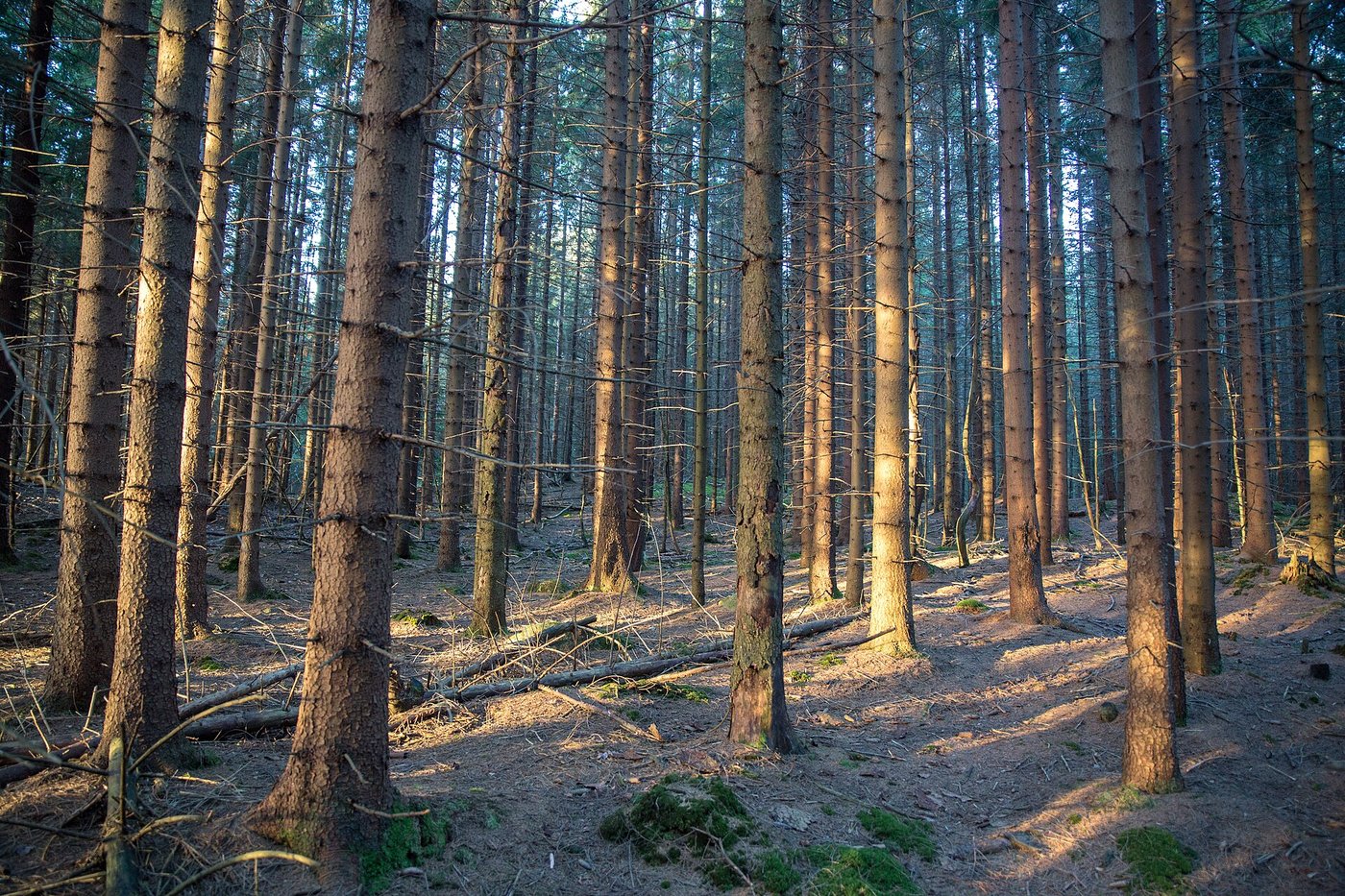
Softwood is the volume business. It is planted, thinned, harvested on a human timescale, sawn into standardised sizes, graded for strength and sold largely to one industry. When a news report says 'lumber prices', it means softwood framing lumber - the 2 x 4s in the CME contract from lesson 13 - and not the walnut in the next lesson.
The commercial softwoods
| Species / group | Where | Why it is chosen | Principal uses | Volume buyer |
|---|---|---|---|---|
| Southern yellow pine (loblolly, longleaf, shortleaf, slash) | US South | Fast-growing, strong for its weight, takes preservative treatment readily | Framing, treated decking and posts, plywood, pallets, poles | Homebuilders; treated-wood plants; pallet manufacturers |
| Douglas-fir | US Pacific Northwest, British Columbia | High strength and stiffness; long clear lengths | Framing, beams, glulam, plywood, timber framing | Homebuilders; engineered-wood producers; Japanese post-and-beam market |
| SPF (spruce-pine-fir) | Canada, US North | Light, stable, straight, easy to nail; the default stud | Wall studs, joists, trusses, pallets | Homebuilders and truss plants, largely via pro dealers |
| Hem-fir (western hemlock and true firs) | US Pacific Northwest, British Columbia | Good strength, takes paint well, dries evenly | Framing, mouldings, joinery | Homebuilders; millwork producers |
| Western red cedar | Pacific Northwest | Naturally decay-resistant heartwood, light, stable | Siding, decking, shingles, fencing, outdoor joinery | Retail and specialty distributors; fencing and decking manufacturers |
| Redwood | Northern California | Decay-resistant heartwood, very stable, large sizes | Decking, siding, garden structures, tanks | Regional retail and landscape trade |
| Eastern white pine | US Northeast, Great Lakes, Canada | Soft, stable, easy to work, holds paint | Boards, panelling, furniture, mouldings, pattern stock | Millwork and furniture makers; retail boards |
| Ponderosa pine | US West | Wide clear boards, stable, machines cleanly | Mouldings, window and door parts, shelving, boards | Millwork plants and retail |
| Sitka spruce | Coastal Alaska and British Columbia | Exceptional strength-to-weight; clear straight grain | Aircraft, boat spars, musical instrument soundboards | Specialty and instrument makers - very small volume, very high value |
| Radiata pine | New Zealand, Chile, Australia | Very fast plantation growth; uniform; treats well | Framing, panels, mouldings, pulp | Plantation owners selling into Asian and domestic construction |
| Larch, hemlock and spruce, European | Northern and central Europe | Uniform plantation stock, strong and consistent | Construction timber, CLT and glulam, pallets, pulp | European construction; CLT and glulam producers |
Current commercial practice · End uses and buyer categories are editorial, compiled from species properties in USDA Forest Service, Wood Handbook (FPL-GTR-190) and from standard trade practice
'Volume buyer' means the industry that consumes the most of that species by board footage, not the highest-paying buyer. The two are usually different: the instrument makers pay the most per board foot for Sitka spruce and buy almost none of it.
Why southern yellow pine is the one to understand
If you learn one softwood, learn this group. It grows fast enough to be a genuine crop on a rotation of a few decades, which is why the US South carries so much planted forest. It is strong for its weight. And - the property that decides its market - its sapwood is permeable, so it accepts preservative treatment right through the piece in a way Douglas-fir and the spruces do not.
That single property is why nearly all pressure-treated decking, fence posts, sill plates and utility poles in the eastern United States are southern yellow pine. The species is not chosen for beauty or for strength. It is chosen because chemistry can get inside it.
Grading: strength, not looks
Softwood structural lumber is graded for what it can carry. Grading rules assign design values based on knot size and position, slope of grain, wane, splits and, in machine graded lumber, a measured stiffness. The grade stamp on a piece carries the species or species group, the grade, the mill and the moisture condition at the time of surfacing.
- Select Structural
- The highest common structural grade; fewest and smallest defects, highest design values.
- No. 1 and No. 2
- The working grades. No. 2 and Better is what most framing packages are specified and sold as.
- No. 3 and Stud
- Lower design values; Stud grade is specifically qualified for vertical use in walls.
- Machine stress rated (MSR)
- Each piece is tested rather than visually assessed, giving tighter design values - used where engineered products need predictable input.
- Appearance grades
- A separate system for boards, siding and finish material, where looks rather than load capacity is the point.
Where softwood demand comes from
Structural softwood demand is dominated by residential construction and by repair and remodelling. Housing starts are therefore the single most watched indicator in the softwood market, with repair and remodel providing a base that is less volatile than new construction. Non-residential construction, industrial uses such as pallets and crating, and treated products for agriculture and utilities make up the rest.
A second, growing buyer is the engineered-wood industry in lesson 11, which consumes softwood as veneer, strands and laminations rather than as finished boards - and which can use smaller and lower-grade logs than a sawmill can, which changes what a thinning is worth.
- Southern yellow pine dominates treated products because its sapwood accepts preservative through the piece.
- Softwood grading measures load capacity, and design values are species-specific at the same grade.
- Housing starts plus repair-and-remodel drive most softwood demand; engineered wood is the growing second buyer.
- SPF
- Spruce-pine-fir: a marketing group of interchangeable northern species sold under one grade stamp.
- Treatability
- How readily a species accepts preservative under pressure.
- Design value
- The load a graded piece of a given species may be assumed to carry.
- MSR
- Machine stress rated: each piece tested rather than visually graded.
- CME lumber contract specificationsprimary source
- USDA Wood Handbookprimary source
Check yourself
1. Southern yellow pine dominates the pressure-treated market because it:
Treatability is the decisive property. Douglas-fir and the spruces resist penetration, so they are not used for treated ground-contact products in the same way.
2. Western red cedar is specified for siding and decking mainly because of its:
Cedar's durability comes from extractives in the heartwood, which is why only heartwood grades are specified for exterior exposure.
3. A No. 2 grade piece of SPF and a No. 2 grade piece of Douglas-fir:
Design values combine grade with species group. Substitution is an engineering decision.
4. Sitka spruce appears in the table as very high value and very low volume because it is used for:
It is a specialty timber. The volume buyer of a species and the highest-paying buyer are usually different.