Course
Lumber and Timber, Stump to Buyer
The species, what a tree is worth in board feet, who buys each kind of wood and what for - and what happens to everything the sawmill could not sell as a board.
The short version
Wood is the one large commodity that grows back, and the only one whose unit of measurement is an argument. A log is scaled by one of three incompatible rules, sold by one of four different price bases, and broken at the mill into a board worth hundreds of dollars a thousand feet and a pile of chips worth tens of dollars a ton. Roughly half of every log leaves the mill as something other than lumber, and what happens to that half decides whether the mill makes money.
Landowners trying to work out what their standing timber is worth, buyers and builders who need to know why one species is specified and another is not, analysts covering forest products, and readers of this site who want the same stump-to-buyer treatment the mineral chains get.
By the end you should be able to- Define a board foot, convert between nominal and actual dimensions, and say why the same log scales differently under Doyle, Scribner and International rules.
- Estimate the board-foot volume of a standing tree from its diameter and merchantable height.
- Name the main commercial softwoods and hardwoods, what each is used for, and which industry is the volume buyer of each.
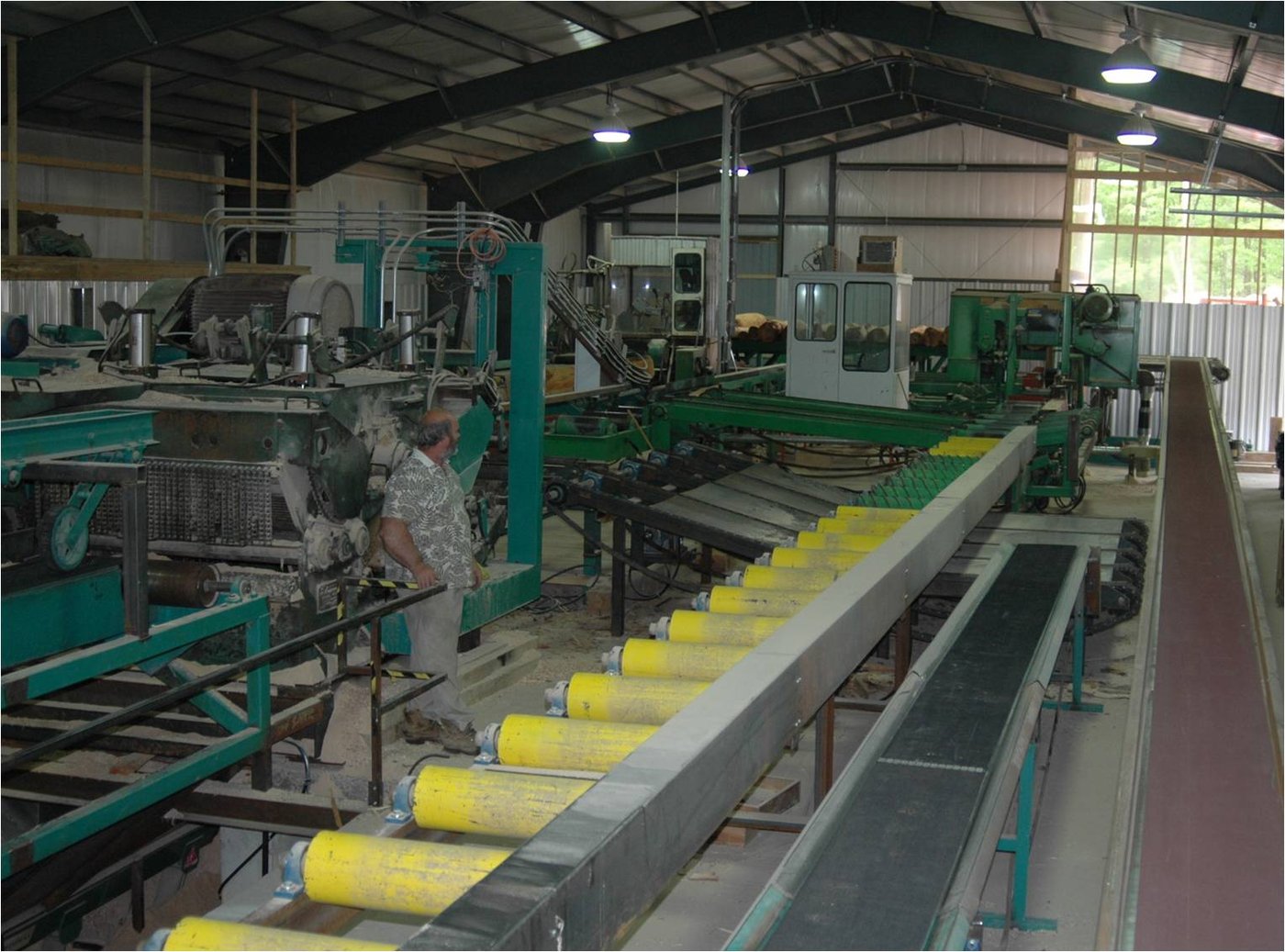
- Follow a log through a sawmill and account for every stream that leaves it, not just the lumber.
- Explain how chips, sawdust, shavings, bark and pallet cores are actually sold, and to whom.
- Read a stumpage price, a delivered price and a mill price without confusing them, and say what a lumber futures contract obliges.
Contents
01What wood is, and how it is measuredThe botany that decides everything, and the unit system that the whole trade argues about.
02The speciesWhat each commercial wood is, what it is used for, and which industry buys the volume of it.
03Stump to millSelling standing timber, sawing it, and finding a home for everything that is not a board.
04The buyers and the marketWho actually buys each kind of wood, what they pay against, and what happens to it after its first life.
- FAO Forestry Production and Trade (FAOSTAT)world roundwood, sawnwood, panels, pulp and pellets
- USDA Forest Service, Forest Inventory and Analysisstanding US timber volume, growth and removals by species
- USDA Forest Service, Wood Handbook (FPL-GTR-190)density, hardness and mechanical properties by species
- Ohio State University Extension, Measuring Standing Treesthe board-foot volume tables used in lesson 4
- National Hardwood Lumber Association grading rulesthe hardwood grades the trade actually transacts on
- CME Group, Lumber futures contract specificationscontract size, deliverable species and delivery mechanism
- Fastmarkets, annual US pallet estimatespallet lumber consumption and the hardwood-to-softwood shift
Educational content only. Nothing in this course is investment, trading, tax or legal advice, a recommendation to buy or sell any commodity, contract or security, or a valuation of any asset. Figures are stated with their reference period and source and are indicative of scale rather than live market quotations; where a range is given, real cases fall outside it. Drafted with AI assistance and editorially reviewed, per the editorial policy. Photographs: 14 from Wikimedia Commons and 1 licensed from Adobe Stock, each credited to its author and licence beneath the picture it appears with.