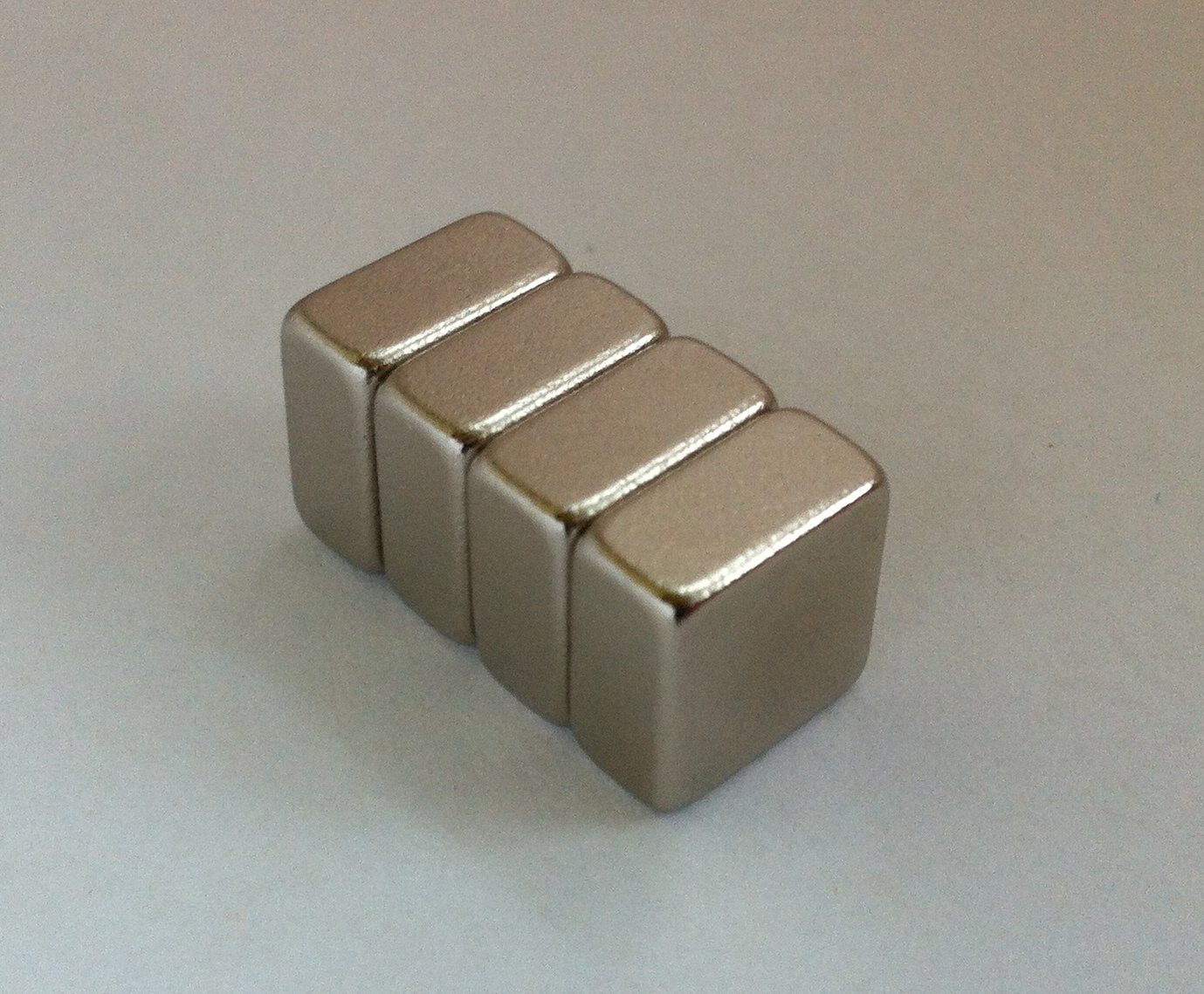
Picture a wind turbine nacelle being lowered onto its tower somewhere off the coast of northern Europe. Inside it sits a permanent magnet generator whose rotor contains perhaps several hundred kilograms of sintered neodymium–iron–boron (NdFeB) magnets. The neodymium in those magnets almost certainly passed through a separation facility in China, was alloyed and pressed in China, and was magnetised in China — even if the ore that fed the process was dug out of the ground in Australia or the United States. That gap between "we have the mine" and "we have the magnet" is the central problem of any discussion about rare-earth supply security, and it is wider than most policy documents acknowledge.
The five steps, briefly stated
The chain that connects a rare-earth orebody to a finished permanent magnet runs through five technically distinct stages: mining and concentration, chemical separation, alloying and master alloy production, magnet fabrication (pressing, sintering, machining), and final magnetisation and coating. Each step requires different capital equipment, different chemical expertise, and a different workforce. Shortfalling at any one of them interrupts supply just as surely as a mine closure would. The significance of this is that a country or company that builds a mine without simultaneously building the downstream infrastructure has added ore to the world but has not added magnets.
Step one: Mining and concentration
Rare-earth elements occur in several ore types — carbonatite-hosted deposits such as Bayan Obo in Inner Mongolia, ion-adsorption clays common in southern China and parts of Southeast Asia, and monazite- or xenotime-bearing mineral sands. After mining, the ore is concentrated by flotation or gravity methods to produce a mixed rare-earth mineral concentrate. This step is relatively well understood globally, and it is the step that the most recent wave of Western investment has targeted. The concentrate is not a usable industrial material; it is the starting point for chemistry.
Step two: Chemical separation
Separation turns a mixed concentrate into individual rare-earth oxides or chlorides of useful purity. The dominant method is solvent extraction, a cascade of liquid–liquid contacts in which different rare-earth ions are pulled preferentially into an organic phase. The process requires large banks of mixer-settler units, precise control of acidity and reagent ratios, and considerable water and acid management. Obtaining individual elements with sufficient purity for magnet use — neodymium and praseodymium principally, dysprosium and terbium for high-coercivity grades — demands hundreds of sequential extraction stages. Only a handful of facilities outside China currently operate at commercial scale for the elements relevant to NdFeB magnets, and those that exist rely in most cases on partially processed feedstock that has itself passed through Chinese intermediate processing.
Step three: Alloying and master alloy production
Separated oxides must be reduced to metal, then combined with iron and a small proportion of boron to make the NdFeB alloy. The reduction is carried out by metallothermic processes — typically using calcium or in some cases molten salt electrolysis — that operate at high temperature and require careful handling of reactive materials. The alloy is then strip-cast into flakes or broken into a coarse powder, producing what is called master alloy or alloy feedstock. This step is almost entirely concentrated in China and Japan. Outside those two countries, commercial-scale master alloy production for NdFeB is, at the time of writing, minimal.
Step four: Magnet fabrication
Alloy flakes are milled to a fine powder under inert atmosphere (oxygen degrades the magnetic properties), aligned in a magnetic field, pressed, and then sintered at high temperature to produce a dense block. That block is then cut and ground to the precise dimensions the customer requires — a process that can waste a significant fraction of the sintered material as swarf. Some manufacturers recover and recycle that swarf; others do not. The tolerances required by motor and turbine designers are tight, and the machining is specialised. Japan hosts several of the world's most capable sintered-magnet producers; Europe and North America have capacity, but it is modest relative to demand.
To see how these losses accumulate, consider an illustrative example. Suppose a fabrication facility starts with a hundred units of alloy by mass. If sintering shrinkage and machining waste together remove a given fraction at each sub-step, the finished magnet output is substantially less than the alloy input — the exact ratio depends on geometry and grade, but the point is that alloy demand must be planned to exceed magnet demand, not equal it. Now carry that logic back up the chain: the alloy facility must be fed more oxide than the alloy output suggests, and the separation facility must process more concentrate than the oxide output suggests. Each upstream stage must be sized for the losses in every downstream stage. A mine sized only to match today's magnet demand, with no account for process losses or downstream capacity constraints, will not be sufficient.
Step five: Magnetisation and coating
Sintered NdFeB blocks are not yet magnets in the functional sense. They must be exposed to a strong pulsed magnetic field to align the magnetic domains — a step called magnetisation or charging. They are also susceptible to corrosion and are typically given surface treatments such as nickel, zinc, or epoxy coatings. These final steps are relatively diffuse geographically and present the least concentration risk of the five, though they are not trivial from a quality-assurance standpoint.
Why "we have a mine" is not the answer
When a government announces support for a new rare-earth mine on the grounds of supply security, it is addressing one step in a five-step chain. If the ore from that mine is shipped to China for separation — as most non-Chinese concentrate currently is — the supply chain remains dependent on the same nodes it was dependent on before. Steps two and three in particular represent the deepest chokepoints today: the chemistry is complex, the capital cost is high, the engineering experience is concentrated, and there are few near-term alternative facilities in the permitting or construction phase that would change that picture at meaningful scale. Building those capabilities takes years and requires policy attention, investment in training, and willingness to tolerate early-stage inefficiencies that a functioning incumbent does not face.
For the reader who wants to go further
The analysis above treats each step as sequential and discrete, but in practice the boundaries between separation, reduction, and alloying are sometimes integrated within a single facility, and the economics of each step interact with those adjacent to it. Readers with a closer interest in the process chemistry should look at the literature on solvent extraction selectivity coefficients for the light and heavy rare-earth splits, and at the comparative energy and reagent economics of calcium reduction versus molten-salt electrolysis for neodymium metal production. Those two technical questions sit at the heart of whether integrated processing outside China is commercially replicable at scale.