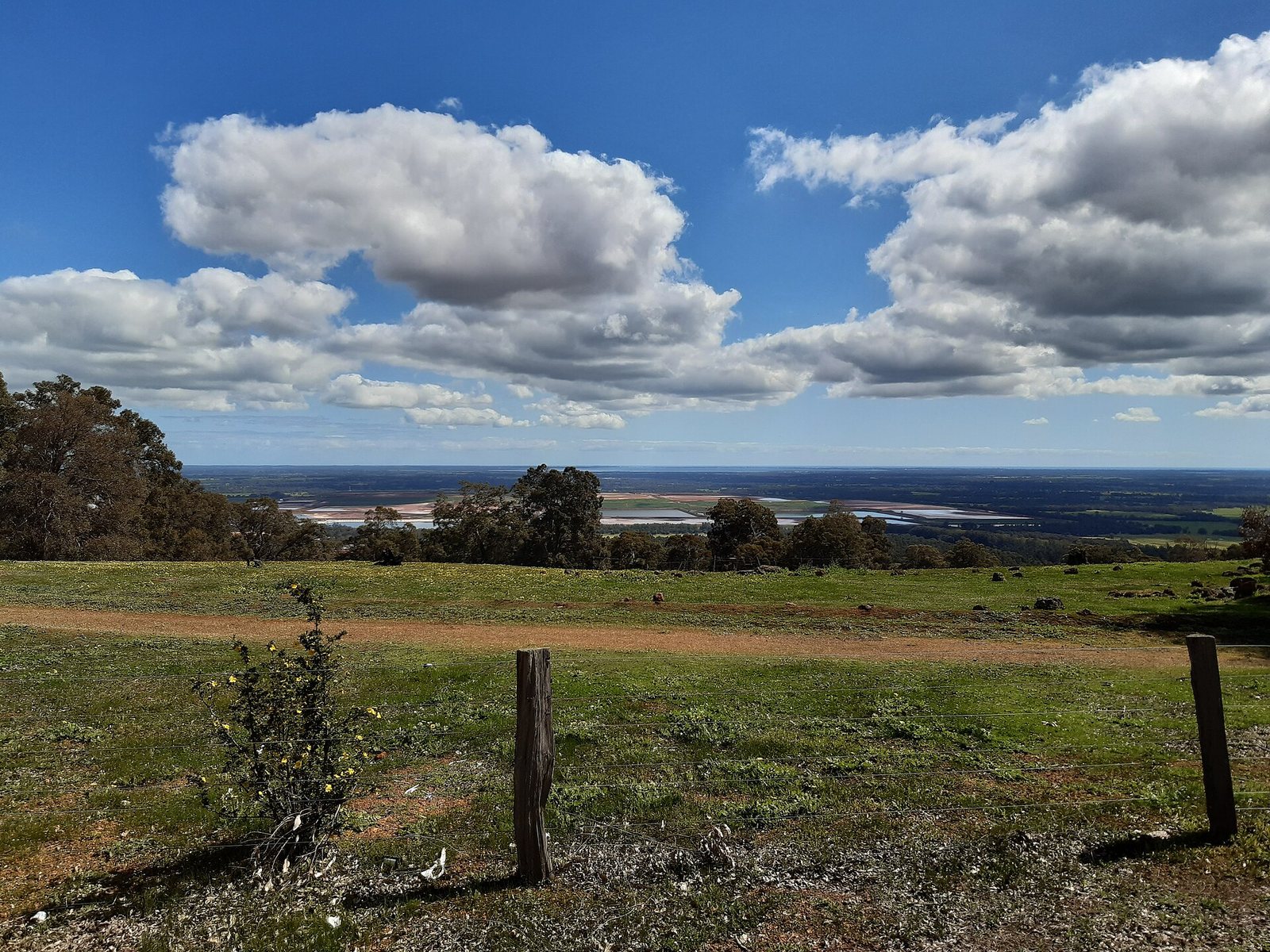
这是什么?
A fine white powder of aluminium oxide, the halfway product between bauxite rock and aluminium metal.
为何重要?
Alumina refining is where most of the bauxite chain's cost, energy and red-mud waste sits.
Where it is in the Earth
Alumina does not occur as a mineral in its own right in the way that, say, copper sulphides occur in a porphyry deposit. It is instead extracted from bauxite, a sedimentary rock — or more accurately a family of rocks — whose defining characteristic is a high concentration of aluminium hydroxide minerals. The three principal hydroxide minerals are gibbsite, boehmite and diaspore, all of which are forms of aluminium combined with water and oxygen. When bauxite is processed, those hydroxide minerals are the ones worth having; the rest of the rock is largely unwanted iron oxides, silica minerals and titanium oxides.
Bauxite forms through a process called laterisation, which is a type of deep chemical weathering. When warm, wet tropical or subtropical climates act on aluminium-bearing rocks over millions of years, rainfall slowly dissolves and carries away the soluble elements — principally silica, sodium, potassium and calcium — and leaves behind the relatively insoluble aluminium and iron compounds. The result is a residual, rust-red or cream-coloured material that can range from soft and earthy to hard and pisolitic (made of small rounded pellets, like fish roe). Because laterisation requires both long spans of geological time and sustained tropical rainfall, the world's major bauxite provinces sit on ancient cratons — stable, geologically quiet landmasses — in the humid tropics. Australia, Brazil, Guinea and western Africa hold the largest known accumulations for this reason.
The concentration of useful aluminium minerals in bauxite is expressed as the available alumina content, usually written as available Al₂O₃. Not all the aluminium in the rock is accessible to the standard chemical process; some is locked in clay minerals that resist extraction. A deposit's value depends not just on how much aluminium is present in total, but on how much can actually be recovered and at what cost. Deposits rich in gibbsite are generally easier and cheaper to process than those dominated by boehmite or diaspore, which require more severe process conditions.
Getting it out
Because bauxite formed by surface weathering, most deposits sit close to the surface or form the surface itself. Open-pit mining — sometimes called open-cast mining — is therefore the standard method. Overburden, meaning the vegetation, soil and any rock that sits above the bauxite layer, is removed by bulldozers and scrapers, after which the bauxite is broken up by blasting or, where the rock is soft enough, simply scraped or dug directly by excavators and loaded onto trucks. The stripped land is typically rehabilitated progressively as the mine face advances, with topsoil stockpiled and returned.
The ratio of waste moved to product recovered is modest by the standards of many hard-rock mines, partly because the ore body is at or near the surface and partly because bauxite grades are relatively high — the useful material makes up a substantial proportion of what is dug. However, because alumina is a high-volume, lower-value commodity compared with metals like copper or gold, operating costs per tonne matter enormously, and the scale of individual operations is correspondingly large. Distance from port and the cost of transporting bulky ore are major factors in determining which deposits are economic to work.
Most bauxite is shipped to a refinery rather than processed at the mine mouth, though some vertically integrated operations co-locate the two. The ore is typically crushed and dried before export or transport, partly to reduce weight and partly because moisture increases shipping costs and can cause handling problems.
What pulls on it
Alumina has two distinct markets. The much larger one is smelter-grade alumina, which is fed to aluminium smelters where it is dissolved in molten cryolite and electrolysed to produce aluminium metal. Because essentially all primary aluminium begins as alumina, and because the two are linked by a fixed stoichiometric relationship — it takes slightly less than two tonnes of alumina to produce one tonne of aluminium — demand for smelter-grade alumina moves almost in lockstep with demand for primary aluminium. The drivers of aluminium demand — construction, transport, packaging and, increasingly, electrical applications in vehicles and grids — therefore govern the largest part of the alumina market.
The smaller chemical-grade market is genuinely separate. Chemical-grade alumina includes a range of purity and crystal-size specifications suited to uses such as abrasives, technical ceramics, catalyst supports, fire-retardant fillers and specialist refractory materials. These applications are individually small but collectively significant, and they are less tightly coupled to the aluminium metal cycle. Some of them are growing as demand for advanced ceramics in electronics and wear-resistant materials increases.
For demand to shift sharply downward, something significant would have to happen to primary aluminium production — either a large-scale substitution of aluminium by another material in its main end uses, or a step-change in secondary aluminium (recycled metal) supply sufficient to displace a meaningful fraction of smelter demand for primary metal. Neither of those conditions has been met historically, though the growth of aluminium recycling does slow, at the margin, the growth rate of demand for primary metal and therefore for alumina.
生产主体
在地图上查看 →Alumina, refinery production
Alumina, refinery productionthousand metric dry tons 2025 (估计值) 全球合计 150,000 thousand metric dry tons
USGS Mineral Commodity Summaries 2026 · Gross weight of alumina (Al2O3), roughly half of which is aluminium by mass. · 来源 ↗
横向滚动表格以查看其余列。
| 国家/地区 | 产量 | 占全球份额 |
|---|---|---|
| China | 93,000 | 62.0% |
| Australia | 17,000 | 11.3% |
| Brazil | 11,000 | 7.3% |
| India | 8,200 | 5.5% |
| Russia | 2,900 | 1.9% |
| United Arab Emirates | 2,300 | 1.5% |
| Saudi Arabia | 1,900 | 1.3% |
| Ireland | 1,700 | 1.1% |
| Jamaica | 1,500 | 1.0% |
| Vietnam | 1,500 | 1.0% |
| Kazakhstan | 1,500 | 1.0% |
| Indonesia | 1,500 | 1.0% |
| Canada | 1,500 | 1.0% |
| Other countries | 1,300 | 0.9% |
| Greece | 850.0 | 0.6% |
| Spain | 810.0 | 0.5% |
| United States | 710.0 | 0.5% |
| Germany | 460.0 | 0.3% |
| Guinea | 360.0 | 0.2% |
| Turkey | 310.0 | 0.2% |
| 全球合计 | 150,000 | 100% |
"未披露"表示美国地质调查局(USGS)为避免泄露单个企业数据而对该数字进行了保密处理——并不意味着数值为零。各国行数之和不一定等于世界合计,原因在于来源对每个数字单独进行四舍五入处理,且并不总是单独列出"其他国家/地区"一行。
价格
average unit value of imports, f.a.s., dollars per metric ton
年度平均值dollars per metric ton
基准: average unit value of imports, f.a.s., dollars per metric ton. 年度平均值,来源: USGS Mineral Commodity Summaries 2026 · 来源 ↗. 以下为参考年度均价,非实时市场报价。
其加工与精炼地点
| 工厂 | 类型 | 阶段 | 国家/地区 | 角色 |
|---|---|---|---|---|
| Bayer-Process Alumina Refineries, Western Australia | 精炼厂 | 加工 | Australia | 产出 |
跟踪其跨境全程
全部溯源记录 →这批材料实际经过的路线——每个国家、每位托管方,以及每个环节留下的内容。
Guinean bauxite to an aluminium window frame Four tonnes of tropical soil, two tonnes of white powder, one tonne of metal — and the metal is made wherever the power is…