Từ quặng đến sản phẩm, có truy xuất nguồn gốc
The Materials Atlas
Vật liệu Mỏ & mỏ quặng Chế biến & tinh luyện Các hành trình quyền sở hữu Các chuỗi cung ứng Công ty Quốc gia Tin tức
Vật liệu theo kệ Vật liệu pin Nguyên tố đất hiếm Đồng & Điện Vật liệu bán dẫn Vật liệu hạt nhân Hàng không vũ trụ & Quốc phòng Kim loại quý Thép & Kim loại hợp kim Khoáng vật công nghiệp Khoáng sản nông nghiệp Nguyên liệu thô năng lượng Các khoáng vật quặng Bảng tuần hoàn
Nhu cầu Các thị trường đầu ra Công nghệ Máy tính vật liệu Bản đồ Bộ lọc
Tìm hiểu & công cụ Tìm hiểuBảng thuật ngữ Hỏi dữ liệuTác nhân AI Nghiên cứu & dữ liệuAPI ★ Đã lưu
Giới thiệu Về chúng tôiPhương pháp luận Nguồn dữ liệuLiên hệ Tuyên bố miễn trách nhiệm
Tùy chọn đọc
🧭 Chế độ xem có hướng dẫn Mới với lĩnh vực này — hàm lượng quặng, quặng tinh, tinh luyện, sản phẩm phụ? Chúng tôi giải thích mọi thuật ngữ khi bạn duyệt, bằng ngôn ngữ dễ hiểu. Cùng dữ liệu đó, với phần hỗ trợ được tích hợp sẵn.
⚡ Chế độ xem chuyên gia Bạn đã hiểu ngành. Chỉ cần dữ liệu — rõ ràng, nhanh và gọn, không có giải thích thêm. Đây là chế độ xem mặc định.
Chủ đề
Ngôn ngữ giao diện
Độ sâu Các trang vật liệu được biên soạn ở bốn cấp độ. Chọn một cấp độ trên bất kỳ trang vật liệu nào và lựa chọn đó sẽ được ghi nhớ.
★ Đã lưu Nghiên cứu & dữ liệu
Clays

Khoáng vật công nghiệp

Clays

Soft, fine-grained rock made of microscopic plates that slide over each other when wet — which is why it can be shaped and then fired hard.

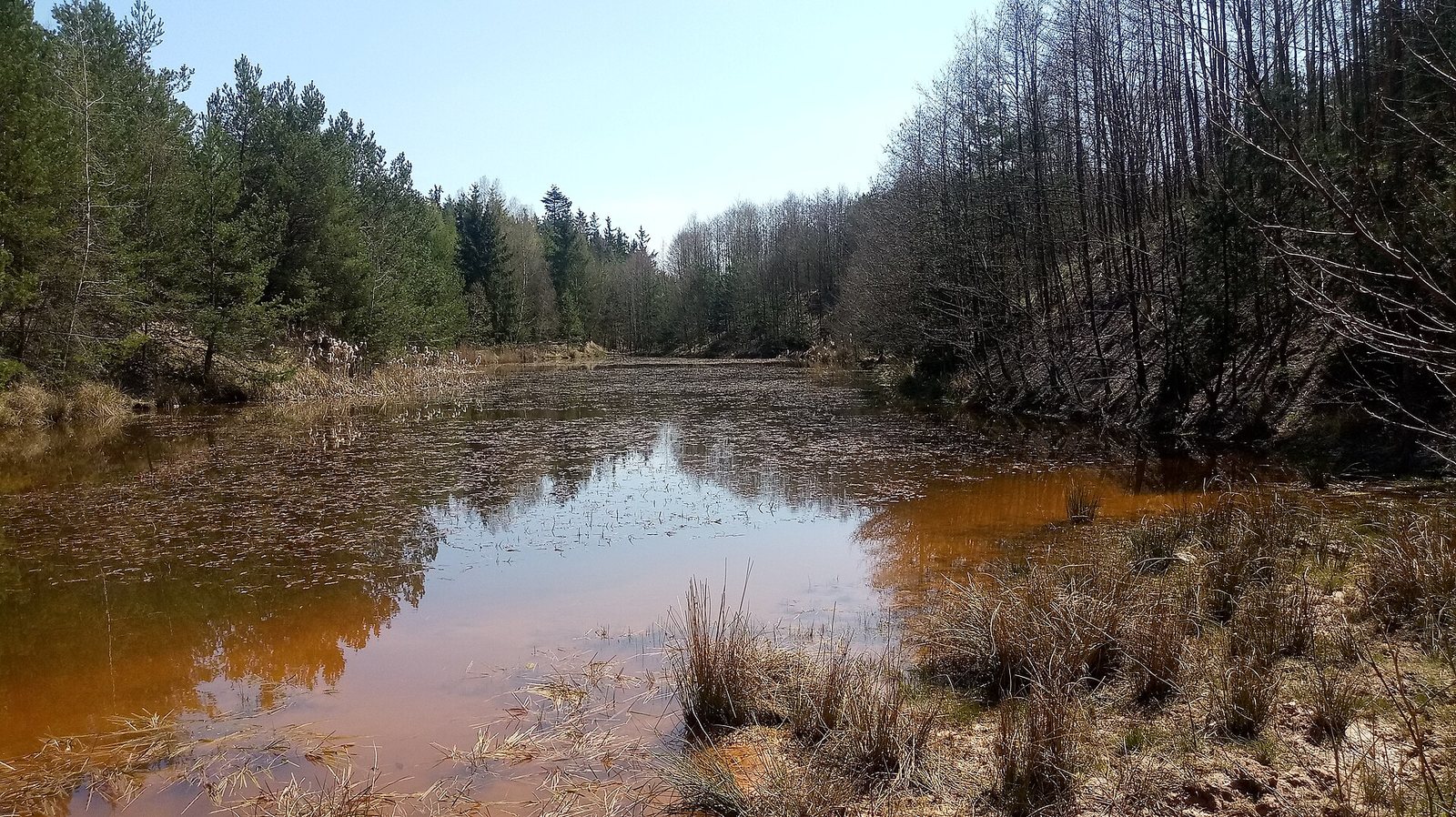
Kaznějov kaolin quarry revitalisation · Jan Macura · CC BY-SA 4.0 · Wikimedia Commons

Đây là gì?

Soft, fine-grained rock made of microscopic plates that slide over each other when wet — which is why it can be shaped and then fired hard.

Tại sao điều này quan trọng?

Kaolin whitens paper and paint, bentonite seals landfills and drills wells, and common clay becomes every brick and roof tile.

Where it is in the Earth

Clays are not a single mineral but a family of sheet-silicate minerals — principally kaolinite, smectite, illite and chlorite — whose defining feature is a layered crystalline structure built from silicon-oxygen and aluminium-hydroxyl sheets stacked in repeating units. The layers are bound loosely enough that water molecules can slide between them, which is what gives wet clay its plasticity. Individual clay particles are extremely fine, typically smaller than two micrometres across, and it is this fineness as much as the crystal chemistry that governs how a particular clay behaves in industry.

Most clay deposits began as other silicate rocks — granite, feldspar-rich sandstone, volcanic ash — that were broken down chemically over long periods by slightly acidic groundwater or hydrothermal fluids. This process, called weathering or hydrothermal alteration depending on its temperature and origin, strips away soluble elements and leaves behind the aluminium-rich clay minerals. Kaolin (the white, relatively pure clay used in paper and ceramics) forms most characteristically where ancient granites have been deeply weathered in warm, humid climates, or where hot fluids have altered feldspar near cooling igneous bodies. This explains why major kaolin districts cluster in humid tropical and subtropical regions, and in geologically old terrains where prolonged weathering has had time to work.

Bentonite, a clay dominated by the swelling mineral montmorillonite, originates differently: it forms when volcanic ash falls into lakes or shallow seas and alters chemically in the presence of alkaline water. Deposits therefore tend to occur in sedimentary basins that once hosted volcanic activity, concentrated in beds that can be traced laterally over wide areas. Ball clay, fire clay and fuller's earth each have their own geological settings, but all share the common thread of being secondary minerals — products of alteration rather than primary crystallisation from a melt. Common clay, the least chemically refined variety and the raw material for bricks, is widespread precisely because almost any fine-grained sediment rich enough in sheet silicates will serve.

Getting it out

Almost all clay is mined in open pit operations, sometimes called open-cast or open-cut workings. The deposit sits at or close to the surface, which makes underground methods unnecessary and uneconomic. Overburden — the soil and rock that sits above the clay — is stripped away with excavators or scrapers and typically stockpiled so it can be replaced during later land restoration. The clay itself is then dug directly, often with hydraulic excavators loading trucks or conveyor systems. Because clay is already soft and disaggregated, no drilling and blasting is required, which keeps mining costs relatively low per tonne removed.

The concept of ore grade works differently for clay than for metal ores. A copper mine's grade tells you how many grams of copper exist in each tonne of rock. For clay, what matters is the mineral purity, brightness (particularly for kaolin used in paper coating), particle-size distribution, and the absence of contaminants such as iron-bearing minerals that discolour the product. A deposit of white kaolin suitable for coating high-quality paper commands a very different value from a deposit of grey-brown common clay suitable only for bricks — even if both sit a few metres below the surface and are mined by identical methods. The price data in the table illustrates this spread: kaolin's average unit value is an order of magnitude higher than fire clay's and several times that of common clay.

Because clay is bulky and relatively low-value per tonne at the common end of the market, transport cost is a significant constraint. Brick clay and common clay are almost never shipped long distances; production is close to the point of use. Higher-value products such as processed kaolin or activated bentonite can bear international freight, and a genuine seaborne trade in these grades has developed over time. Waste ratios vary by deposit, but because overburden is distinct from the clay body itself, the strip ratio (the volume of overburden moved per unit of clay produced) is the primary measure of mining efficiency, and operators choose pit layouts specifically to keep it manageable.

What pulls on it

Clay demand is best understood as a set of largely separate markets that happen to draw on the same geological family of minerals. Common clay and fire clay together account for the largest tonnages and are tied almost entirely to construction activity — bricks, roof tiles, drainage pipes and refractory linings in furnaces and kilns. When residential and infrastructure construction is strong, consumption of these clays rises; when it contracts, so does production. Because common clay is cheap and ubiquitous, there is little international trade and little reason to stockpile; production tracks near-term demand closely.

Kaolin occupies a different position. Its single largest use historically was as a coating and filler for paper — kaolin particles fill the spaces between cellulose fibres and coat the surface, giving paper its smoothness and brightness. The long decline in printing and writing paper in markets with high digital penetration has reduced this source of demand substantially. Paper-grade kaolin producers have responded partly by redirecting material toward other uses: paint, where kaolin extends titanium dioxide and improves opacity; rubber and plastics, where it acts as a functional filler; and ceramics. Demand for kaolin in ceramics has remained relatively stable, while growth has emerged in specialty applications such as geopolymer cements, catalyst supports in petroleum refining, and as a source of aluminium in some advanced material processes.

Bentonite demand is driven by several industries that are not closely linked to each other. Drilling fluid (or drilling mud) formulations use sodium bentonite to lubricate and cool drill bits and to carry rock cuttings out of boreholes; this ties a portion of bentonite demand to oil and gas drilling activity. Iron ore pelletising — pressing fine iron ore concentrate into pellets for blast furnace feed — uses bentonite as a binder, connecting it to steel production. Environmental applications, notably the construction of containment barriers for landfills and the lining of ponds and lagoons, represent a steadier background demand. Fuller's earth is used principally as an absorbent in cat litter, as a carrier for pesticides, and in bleaching edible oils and lubricants. For demand across the clay family to shift sharply, the underlying industries — construction, papermaking, iron and steel, drilling — would need to change in structural ways, which tends to happen slowly.

Turning ore into product Cấp độ 3

Processing steps and their intensity depend almost entirely on which clay type is being prepared and for which end use. At the simplest end, common clay for brick-making may need no more than crushing, screening to remove coarse stones, and blending with water to reach a workable consistency before extrusion and firing. Fire clay for refractory bricks receives similar preparation, with calcination — heating to drive off chemically bound water — added where high-temperature performance demands it. These low-value streams are processed close to the mine because the product value cannot absorb freight for a wet, bulky material.

Kaolin for paper-coating or paint requires a substantially more involved flowsheet. Run-of-mine kaolin is first dispersed in water to form a slurry, then passed through degritting screens to remove coarse quartz and feldspar. The fine fraction is classified by particle size, typically using hydrocyclones or centrifuges, to cut the product to the specification a particular customer requires. Iron-bearing minerals — the principal source of colour contamination — are removed by high-gradient magnetic separation or by chemical bleaching with sodium hydrosulfite (also called sodium dithionite). The product may then be delaminated, a process in which fine grinding breaks stacked kaolinite plates apart into individual platelets, increasing brightness and opacity. Drying follows: spray-drying produces a fine powder, while filter pressing and rotary drying give a coarser, more transportable form. Calcination at higher temperatures converts kaolinite to metakaolin and then to a mixture of mullite and amorphous silica, giving a harder, more chemically inert product used in ceramics and certain specialty applications. Each step is a point of yield loss and energy expenditure, and the balance between the two largely determines plant economics.

Bentonite processing is simpler in most cases. Run-of-mine ore is dried to reduce moisture, crushed and milled to the required particle size, and in some applications sodium-activated — a step in which sodium carbonate is added to convert calcium-dominant smectite into the more strongly swelling sodium form. Fuller's earth, which overlaps mineralogically with bentonite and attapulgite (also called palygorskite), is processed by drying and sometimes acid-activation to increase adsorption capacity, particularly for the animal-feed and bleaching-earth markets. Across all clay types, the key cost drivers are energy (drying and calcination dominate), chemical consumption in beneficiation, and the water management demands of wet processing circuits.

Substitution and recycling Cấp độ 3

Substitution operates differently across the clay types, reflecting how different the uses are. In paper coating, kaolin competes directly with precipitated calcium carbonate (PCC), a synthetic mineral made by carbonating lime. PCC offers high brightness and can be produced on-site at paper mills, and its growth through the 1990s and 2000s displaced a significant portion of kaolin in some paper grades. The substitution was not costless — PCC requires capital investment in on-site plant and alkali-compatible paper chemistry — but the brightness advantages it offered in certain grades made the switch worthwhile for many mills. Kaolin retains advantages in some coated and filled paper applications, and the overall contraction of the paper market has made this a less active front of competition than it once was.

In drilling fluids, synthetic polymer-based systems have been developed that can replace bentonite in some formations, particularly where the swelling behaviour of bentonite causes problems in water-sensitive shales. These synthetic systems tend to cost more per unit volume of mud prepared, so substitution is partial and driven by technical necessity rather than price. In iron ore pelletising, organic binders such as carboxymethyl cellulose have been explored as replacements for bentonite because bentonite introduces silica and aluminium into the pellet, diluting iron content and adding to blast furnace slag. The substitution works technically but is not uniform across the industry. For common clay in bricks, alternatives exist — concrete blocks, autoclaved aerated concrete, timber frame — but they reflect different construction traditions and regulatory environments rather than direct material-for-material switching driven by clay scarcity or price.

Recycling does not apply to clay in any meaningful sense. Once fired into brick or ceramic, the clay minerals have been transformed by heat into new phases and the product cannot be returned to a clay feedstock. Crushed brick can be used as aggregate or fill, which displaces some primary aggregate production, but this is not clay recycling in the material-flow sense. The absence of a recycling stream means that primary production must supply essentially all demand, which is one reason the industry's geography closely follows geology and construction activity rather than scrap availability.

Đọc các con số cho đúng. Gross weight, reported separately by clay type (kaolin, ball clay, bentonite, fire clay, fuller's earth, common clay). Crude, air-floated, calcined and delaminated grades.

Ai sản xuất nó

Xem trên bản đồ →
Có nhiều hơn một bộ số liệu được công bố cho vật liệu này. USGS báo cáo các số liệu này riêng biệt vì chúng đo lường những thứ khác nhau — sản lượng mỏ và sản lượng nhà máy tinh luyện, hoặc các cơ sở hóa học khác nhau. Chúng được hiển thị dưới dạng các bảng riêng biệt và tuyệt đối không được cộng gộp lại với nhau.

Mine production: Bentonite

Mine production: Bentonitethousand metric tons 2025 (ước tính)

USGS Mineral Commodity Summaries 2026 · Gross weight, reported separately by clay type (kaolin, ball clay, bentonite, fire clay, fuller's earth, common clay). · nguồn ↗

Cuộn bảng sang ngang để xem các cột còn lại.

Quốc giaSản lượng Tỷ phần thế giới
Other countries 4,300
United States 4,100
India 3,700
Turkey 2,500
China 2,100
Iran 1,300
Greece 1,000
Czechia 190.0
Spain 120.0
Mexico 80.00
Uzbekistan 60.00
Russia 40.00
Senegal Zero

Mine production: Bentonite, rounded

Mine production: Bentonite, roundedthousand metric tons 2025 (ước tính) Tổng toàn cầu 20,000 thousand metric tons

USGS Mineral Commodity Summaries 2026 · Gross weight, reported separately by clay type (kaolin, ball clay, bentonite, fire clay, fuller's earth, common clay). · nguồn ↗

Cuộn bảng sang ngang để xem các cột còn lại.

Quốc giaSản lượng Tỷ phần thế giới
Tổng toàn cầu 20,000100%

Mine production: Fuller’s earth

Mine production: Fuller’s earththousand metric tons 2025 (ước tính)

USGS Mineral Commodity Summaries 2026 · Gross weight, reported separately by clay type (kaolin, ball clay, bentonite, fire clay, fuller's earth, common clay). · nguồn ↗

Cuộn bảng sang ngang để xem các cột còn lại.

Quốc giaSản lượng Tỷ phần thế giới
United States 2,400
India 730.0
Spain 690.0
Other countries 190.0
Senegal 190.0
Mexico 120.0
Greece 50.00
Turkey 30.00
Iran Zero
Russia Zero
Uzbekistan Zero
Czechia Zero
China Zero

Mine production: Fuller’s earth, rounded

Mine production: Fuller’s earth, roundedthousand metric tons 2025 (ước tính) Tổng toàn cầu 4,400 thousand metric tons

USGS Mineral Commodity Summaries 2026 · Gross weight, reported separately by clay type (kaolin, ball clay, bentonite, fire clay, fuller's earth, common clay). · nguồn ↗

Cuộn bảng sang ngang để xem các cột còn lại.

Quốc giaSản lượng Tỷ phần thế giới
Tổng toàn cầu 4,400100%

Mine production: Kaolin

Mine production: Kaolinthousand metric tons 2025 (ước tính)

USGS Mineral Commodity Summaries 2026 · Gross weight, reported separately by clay type (kaolin, ball clay, bentonite, fire clay, fuller's earth, common clay). · nguồn ↗

Cuộn bảng sang ngang để xem các cột còn lại.

Quốc giaSản lượng Tỷ phần thế giới
Other countries 11,000
India 8,400
China 7,800
Uzbekistan 6,000
Russia 5,000
United States 4,800
Czechia 2,400
Iran 2,100
Turkey 2,000
Spain 400.0
Mexico 50.00
Greece Zero
Senegal Zero

Mine production: Kaolin, rounded

Mine production: Kaolin, roundedthousand metric tons 2025 (ước tính) Tổng toàn cầu 50,000 thousand metric tons

USGS Mineral Commodity Summaries 2026 · Gross weight, reported separately by clay type (kaolin, ball clay, bentonite, fire clay, fuller's earth, common clay). · nguồn ↗

Cuộn bảng sang ngang để xem các cột còn lại.

Quốc giaSản lượng Tỷ phần thế giới
Tổng toàn cầu 50,000100%

"Withheld" có nghĩa là USGS đã ẩn số liệu để tránh tiết lộ dữ liệu của một công ty riêng lẻ — không có nghĩa là bằng không. Tổng các hàng theo quốc gia không phải lúc nào cũng bằng tổng toàn cầu vì nguồn làm tròn từng số liệu một cách độc lập và không phải lúc nào cũng tách riêng dòng "các quốc gia khác".

Giá

average unit value, ex-works, dollars per metric ton: Kaolin

Trung bình nămdollars per metric ton

2021 · 151.0 cao 170.0 dollars per metric ton 2025 · 170.0

Cơ sở: average unit value, ex-works, dollars per metric ton: Kaolin. Trung bình năm theo công bố trong USGS Mineral Commodity Summaries 2026 · nguồn ↗. Đây là mức trung bình hàng năm tham khảo, không phải báo giá thị trường trực tiếp.

average unit value, ex-works, dollars per metric ton: Fire clay

Trung bình nămdollars per metric ton

2021 · 12.00 cao 17.00 dollars per metric ton 2025 · 17.00

Cơ sở: average unit value, ex-works, dollars per metric ton: Fire clay. Trung bình năm theo công bố trong USGS Mineral Commodity Summaries 2026 · nguồn ↗. Đây là mức trung bình hàng năm tham khảo, không phải báo giá thị trường trực tiếp.

average unit value, ex-works, dollars per metric ton: Ball clay

Trung bình nămdollars per metric ton

2021 · 46.00 cao 47.00 dollars per metric ton 2025 · 47.00

Cơ sở: average unit value, ex-works, dollars per metric ton: Ball clay. Trung bình năm theo công bố trong USGS Mineral Commodity Summaries 2026 · nguồn ↗. Đây là mức trung bình hàng năm tham khảo, không phải báo giá thị trường trực tiếp.

average unit value, ex-works, dollars per metric ton: Common clay

Trung bình nămdollars per metric ton

2021 · 17.00 cao 21.00 dollars per metric ton 2025 · 21.00

Cơ sở: average unit value, ex-works, dollars per metric ton: Common clay. Trung bình năm theo công bố trong USGS Mineral Commodity Summaries 2026 · nguồn ↗. Đây là mức trung bình hàng năm tham khảo, không phải báo giá thị trường trực tiếp.

average unit value, ex-works, dollars per metric ton: Bentonite

Trung bình nămdollars per metric ton

2021 · 100.0 cao 110.0 dollars per metric ton 2025 · 110.0

Cơ sở: average unit value, ex-works, dollars per metric ton: Bentonite. Trung bình năm theo công bố trong USGS Mineral Commodity Summaries 2026 · nguồn ↗. Đây là mức trung bình hàng năm tham khảo, không phải báo giá thị trường trực tiếp.

average unit value, ex-works, dollars per metric ton: Fuller’s earth

Trung bình nămdollars per metric ton

2021 · 90.00 cao 91.00 dollars per metric ton 2025 · 88.00

Cơ sở: average unit value, ex-works, dollars per metric ton: Fuller’s earth. Trung bình năm theo công bố trong USGS Mineral Commodity Summaries 2026 · nguồn ↗. Đây là mức trung bình hàng năm tham khảo, không phải báo giá thị trường trực tiếp.

Vật liệu

Tất cả vật liệu Khoáng sản thiết yếu Đất hiếm Vật liệu pin Các khoáng vật quặng Bảng tuần hoàn Bộ lọc

Lòng đất

Mỏ & mỏ quặng Chế biến & tinh luyện Quốc gia Bản đồ

Nền kinh tế

Các hành trình quyền sở hữu Các chuỗi cung ứng Các thị trường đầu ra Công nghệ Công ty Máy tính vật liệu

Tìm hiểu

Tìm hiểuBảng thuật ngữ Hỏi dữ liệuTác nhân AI Nghiên cứu & dữ liệuAPI mở Tin tức★ Đã lưu

Về chúng tôi

Về chúng tôiLiên hệ Phương pháp luậnNguồn dữ liệu Chính sách biên tập Chính sách bảo mậtĐiều khoản sử dụng Tuyên bố miễn trách nhiệm