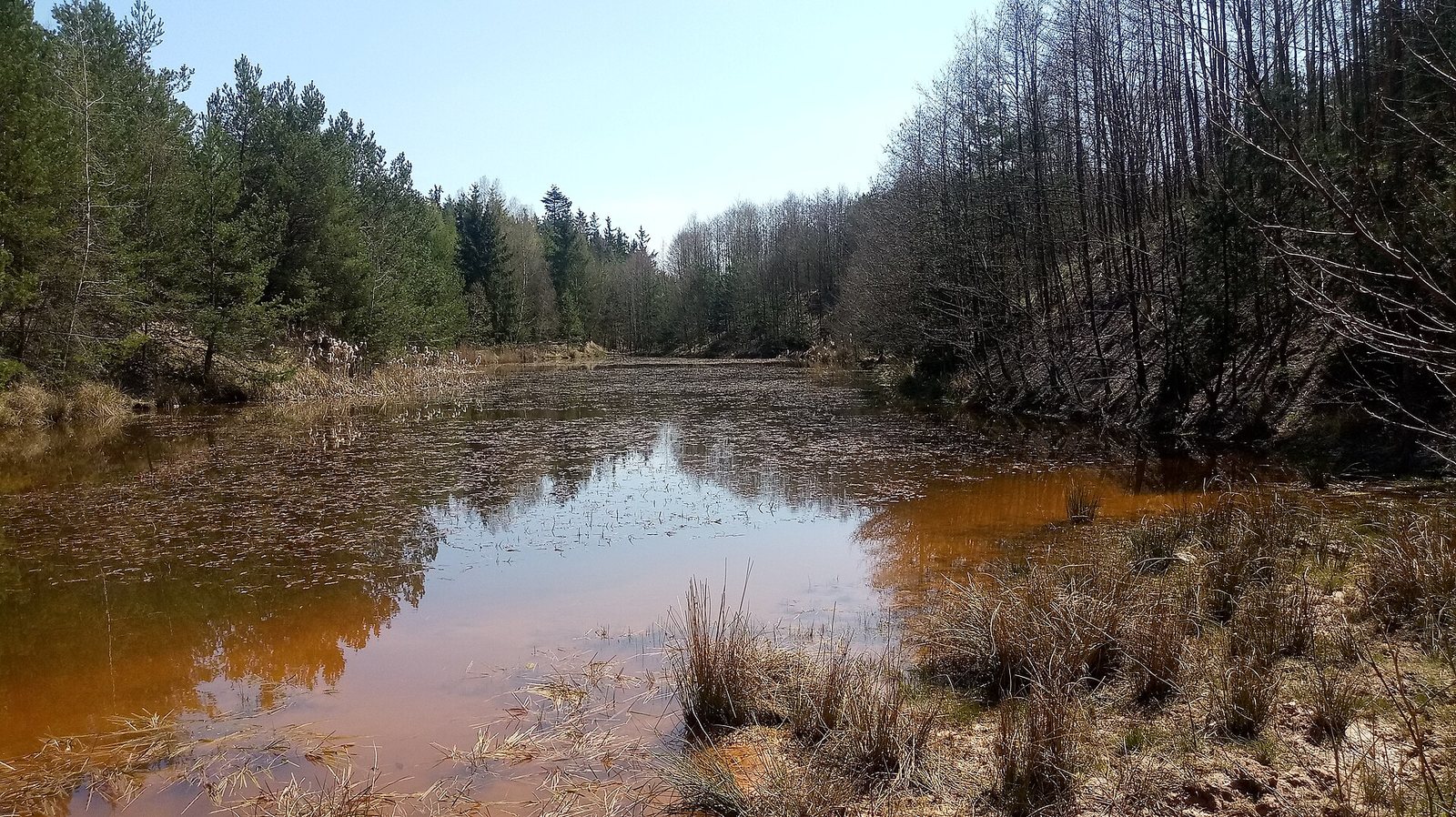
这是什么?
Soft, fine-grained rock made of microscopic plates that slide over each other when wet — which is why it can be shaped and then fired hard.
为何重要?
Kaolin whitens paper and paint, bentonite seals landfills and drills wells, and common clay becomes every brick and roof tile.
Where it is in the Earth
Clays are not a single mineral but a family of sheet-silicate minerals — principally kaolinite, smectite, illite and chlorite — whose defining feature is a layered crystalline structure built from silicon-oxygen and aluminium-hydroxyl sheets stacked in repeating units. The layers are bound loosely enough that water molecules can slide between them, which is what gives wet clay its plasticity. Individual clay particles are extremely fine, typically smaller than two micrometres across, and it is this fineness as much as the crystal chemistry that governs how a particular clay behaves in industry.
Most clay deposits began as other silicate rocks — granite, feldspar-rich sandstone, volcanic ash — that were broken down chemically over long periods by slightly acidic groundwater or hydrothermal fluids. This process, called weathering or hydrothermal alteration depending on its temperature and origin, strips away soluble elements and leaves behind the aluminium-rich clay minerals. Kaolin (the white, relatively pure clay used in paper and ceramics) forms most characteristically where ancient granites have been deeply weathered in warm, humid climates, or where hot fluids have altered feldspar near cooling igneous bodies. This explains why major kaolin districts cluster in humid tropical and subtropical regions, and in geologically old terrains where prolonged weathering has had time to work.
Bentonite, a clay dominated by the swelling mineral montmorillonite, originates differently: it forms when volcanic ash falls into lakes or shallow seas and alters chemically in the presence of alkaline water. Deposits therefore tend to occur in sedimentary basins that once hosted volcanic activity, concentrated in beds that can be traced laterally over wide areas. Ball clay, fire clay and fuller's earth each have their own geological settings, but all share the common thread of being secondary minerals — products of alteration rather than primary crystallisation from a melt. Common clay, the least chemically refined variety and the raw material for bricks, is widespread precisely because almost any fine-grained sediment rich enough in sheet silicates will serve.
Getting it out
Almost all clay is mined in open pit operations, sometimes called open-cast or open-cut workings. The deposit sits at or close to the surface, which makes underground methods unnecessary and uneconomic. Overburden — the soil and rock that sits above the clay — is stripped away with excavators or scrapers and typically stockpiled so it can be replaced during later land restoration. The clay itself is then dug directly, often with hydraulic excavators loading trucks or conveyor systems. Because clay is already soft and disaggregated, no drilling and blasting is required, which keeps mining costs relatively low per tonne removed.
The concept of ore grade works differently for clay than for metal ores. A copper mine's grade tells you how many grams of copper exist in each tonne of rock. For clay, what matters is the mineral purity, brightness (particularly for kaolin used in paper coating), particle-size distribution, and the absence of contaminants such as iron-bearing minerals that discolour the product. A deposit of white kaolin suitable for coating high-quality paper commands a very different value from a deposit of grey-brown common clay suitable only for bricks — even if both sit a few metres below the surface and are mined by identical methods. The price data in the table illustrates this spread: kaolin's average unit value is an order of magnitude higher than fire clay's and several times that of common clay.
Because clay is bulky and relatively low-value per tonne at the common end of the market, transport cost is a significant constraint. Brick clay and common clay are almost never shipped long distances; production is close to the point of use. Higher-value products such as processed kaolin or activated bentonite can bear international freight, and a genuine seaborne trade in these grades has developed over time. Waste ratios vary by deposit, but because overburden is distinct from the clay body itself, the strip ratio (the volume of overburden moved per unit of clay produced) is the primary measure of mining efficiency, and operators choose pit layouts specifically to keep it manageable.
What pulls on it
Clay demand is best understood as a set of largely separate markets that happen to draw on the same geological family of minerals. Common clay and fire clay together account for the largest tonnages and are tied almost entirely to construction activity — bricks, roof tiles, drainage pipes and refractory linings in furnaces and kilns. When residential and infrastructure construction is strong, consumption of these clays rises; when it contracts, so does production. Because common clay is cheap and ubiquitous, there is little international trade and little reason to stockpile; production tracks near-term demand closely.
Kaolin occupies a different position. Its single largest use historically was as a coating and filler for paper — kaolin particles fill the spaces between cellulose fibres and coat the surface, giving paper its smoothness and brightness. The long decline in printing and writing paper in markets with high digital penetration has reduced this source of demand substantially. Paper-grade kaolin producers have responded partly by redirecting material toward other uses: paint, where kaolin extends titanium dioxide and improves opacity; rubber and plastics, where it acts as a functional filler; and ceramics. Demand for kaolin in ceramics has remained relatively stable, while growth has emerged in specialty applications such as geopolymer cements, catalyst supports in petroleum refining, and as a source of aluminium in some advanced material processes.
Bentonite demand is driven by several industries that are not closely linked to each other. Drilling fluid (or drilling mud) formulations use sodium bentonite to lubricate and cool drill bits and to carry rock cuttings out of boreholes; this ties a portion of bentonite demand to oil and gas drilling activity. Iron ore pelletising — pressing fine iron ore concentrate into pellets for blast furnace feed — uses bentonite as a binder, connecting it to steel production. Environmental applications, notably the construction of containment barriers for landfills and the lining of ponds and lagoons, represent a steadier background demand. Fuller's earth is used principally as an absorbent in cat litter, as a carrier for pesticides, and in bleaching edible oils and lubricants. For demand across the clay family to shift sharply, the underlying industries — construction, papermaking, iron and steel, drilling — would need to change in structural ways, which tends to happen slowly.
Turning ore into product 级别 3
Processing steps and their intensity depend almost entirely on which clay type is being prepared and for which end use. At the simplest end, common clay for brick-making may need no more than crushing, screening to remove coarse stones, and blending with water to reach a workable consistency before extrusion and firing. Fire clay for refractory bricks receives similar preparation, with calcination — heating to drive off chemically bound water — added where high-temperature performance demands it. These low-value streams are processed close to the mine because the product value cannot absorb freight for a wet, bulky material.
Kaolin for paper-coating or paint requires a substantially more involved flowsheet. Run-of-mine kaolin is first dispersed in water to form a slurry, then passed through degritting screens to remove coarse quartz and feldspar. The fine fraction is classified by particle size, typically using hydrocyclones or centrifuges, to cut the product to the specification a particular customer requires. Iron-bearing minerals — the principal source of colour contamination — are removed by high-gradient magnetic separation or by chemical bleaching with sodium hydrosulfite (also called sodium dithionite). The product may then be delaminated, a process in which fine grinding breaks stacked kaolinite plates apart into individual platelets, increasing brightness and opacity. Drying follows: spray-drying produces a fine powder, while filter pressing and rotary drying give a coarser, more transportable form. Calcination at higher temperatures converts kaolinite to metakaolin and then to a mixture of mullite and amorphous silica, giving a harder, more chemically inert product used in ceramics and certain specialty applications. Each step is a point of yield loss and energy expenditure, and the balance between the two largely determines plant economics.
Bentonite processing is simpler in most cases. Run-of-mine ore is dried to reduce moisture, crushed and milled to the required particle size, and in some applications sodium-activated — a step in which sodium carbonate is added to convert calcium-dominant smectite into the more strongly swelling sodium form. Fuller's earth, which overlaps mineralogically with bentonite and attapulgite (also called palygorskite), is processed by drying and sometimes acid-activation to increase adsorption capacity, particularly for the animal-feed and bleaching-earth markets. Across all clay types, the key cost drivers are energy (drying and calcination dominate), chemical consumption in beneficiation, and the water management demands of wet processing circuits.
Substitution and recycling 级别 3
Substitution operates differently across the clay types, reflecting how different the uses are. In paper coating, kaolin competes directly with precipitated calcium carbonate (PCC), a synthetic mineral made by carbonating lime. PCC offers high brightness and can be produced on-site at paper mills, and its growth through the 1990s and 2000s displaced a significant portion of kaolin in some paper grades. The substitution was not costless — PCC requires capital investment in on-site plant and alkali-compatible paper chemistry — but the brightness advantages it offered in certain grades made the switch worthwhile for many mills. Kaolin retains advantages in some coated and filled paper applications, and the overall contraction of the paper market has made this a less active front of competition than it once was.
In drilling fluids, synthetic polymer-based systems have been developed that can replace bentonite in some formations, particularly where the swelling behaviour of bentonite causes problems in water-sensitive shales. These synthetic systems tend to cost more per unit volume of mud prepared, so substitution is partial and driven by technical necessity rather than price. In iron ore pelletising, organic binders such as carboxymethyl cellulose have been explored as replacements for bentonite because bentonite introduces silica and aluminium into the pellet, diluting iron content and adding to blast furnace slag. The substitution works technically but is not uniform across the industry. For common clay in bricks, alternatives exist — concrete blocks, autoclaved aerated concrete, timber frame — but they reflect different construction traditions and regulatory environments rather than direct material-for-material switching driven by clay scarcity or price.
Recycling does not apply to clay in any meaningful sense. Once fired into brick or ceramic, the clay minerals have been transformed by heat into new phases and the product cannot be returned to a clay feedstock. Crushed brick can be used as aggregate or fill, which displaces some primary aggregate production, but this is not clay recycling in the material-flow sense. The absence of a recycling stream means that primary production must supply essentially all demand, which is one reason the industry's geography closely follows geology and construction activity rather than scrap availability.
Where the chain is fragile 级别 4
The supply picture for clays is unusual among industrial minerals because the overall resource base is vast and geographically dispersed — common clay in particular is available on every inhabited continent — yet specific high-value grades are more concentrated. The production data in the table illustrates this contrast: the countries listed account for a large share of reported output, but the figures aggregate across clay types in ways that can obscure where the genuinely constrained supply actually sits. High-brightness, paper-grade kaolin of the kind processed in Georgia (United States) or Cornwall (United Kingdom) and the Jari and Rio Capim districts of Brazil comes from deposits whose geological characteristics are not easily replicated elsewhere. The reported figures also carry a structural ambiguity: the unit basis note on this page specifies that clay types are reported separately, but aggregated world totals appear in the production table alongside individual country figures, and it is not always transparent from published sources which clay types a given country figure includes. Researchers working with these data should treat cross-country comparisons with care.
By-product dependence is not a significant factor for most clays — they are primary products rather than by-products of metal mining — but processing bottlenecks are real. Wet-processed kaolin in particular requires substantial water, energy and chemical inputs, and the drying and calcination stages are energy-intensive enough that energy cost movements affect producer margins noticeably. The relatively stable unit values shown in the price history data suggest that the market has not experienced sharp disruptions over the period covered, but this stability reflects in part the commodity nature of most clay grades and the limited speculative trading compared with metals.
Permitting and land-access constraints are increasingly relevant for new clay operations in regions with strong environmental regulation. Open-pit clay mining disturbs significant areas of surface, and while restoration is generally feasible, the time required to obtain permits and carry out restoration programmes has lengthened in many jurisdictions. Lead times from discovery to production for a new kaolin or bentonite operation in a regulated market are measured in years rather than months. This does not currently constitute a supply crisis for most clay types given the abundance of existing operations, but it does mean that the industry's ability to rapidly expand high-grade production in a specific region in response to demand growth is limited by administrative as much as geological constraints.
生产主体
在地图上查看 →Mine production: Bentonite
Mine production: Bentonitethousand metric tons 2025 (估计值)
USGS Mineral Commodity Summaries 2026 · Gross weight, reported separately by clay type (kaolin, ball clay, bentonite, fire clay, fuller's earth, common clay). · 来源 ↗
横向滚动表格以查看其余列。
| 国家/地区 | 产量 | 占全球份额 |
|---|---|---|
| Other countries | 4,300 | — |
| United States | 4,100 | — |
| India | 3,700 | — |
| Turkey | 2,500 | — |
| China | 2,100 | — |
| Iran | 1,300 | — |
| Greece | 1,000 | — |
| Czechia | 190.0 | — |
| Spain | 120.0 | — |
| Mexico | 80.00 | — |
| Uzbekistan | 60.00 | — |
| Russia | 40.00 | — |
| Senegal | Zero | — |
Mine production: Bentonite, rounded
Mine production: Bentonite, roundedthousand metric tons 2025 (估计值) 全球合计 20,000 thousand metric tons
USGS Mineral Commodity Summaries 2026 · Gross weight, reported separately by clay type (kaolin, ball clay, bentonite, fire clay, fuller's earth, common clay). · 来源 ↗
横向滚动表格以查看其余列。
| 国家/地区 | 产量 | 占全球份额 |
|---|---|---|
| 全球合计 | 20,000 | 100% |
Mine production: Fuller’s earth
Mine production: Fuller’s earththousand metric tons 2025 (估计值)
USGS Mineral Commodity Summaries 2026 · Gross weight, reported separately by clay type (kaolin, ball clay, bentonite, fire clay, fuller's earth, common clay). · 来源 ↗
横向滚动表格以查看其余列。
| 国家/地区 | 产量 | 占全球份额 |
|---|---|---|
| United States | 2,400 | — |
| India | 730.0 | — |
| Spain | 690.0 | — |
| Other countries | 190.0 | — |
| Senegal | 190.0 | — |
| Mexico | 120.0 | — |
| Greece | 50.00 | — |
| Turkey | 30.00 | — |
| Iran | Zero | — |
| Russia | Zero | — |
| Uzbekistan | Zero | — |
| Czechia | Zero | — |
| China | Zero | — |
Mine production: Fuller’s earth, rounded
Mine production: Fuller’s earth, roundedthousand metric tons 2025 (估计值) 全球合计 4,400 thousand metric tons
USGS Mineral Commodity Summaries 2026 · Gross weight, reported separately by clay type (kaolin, ball clay, bentonite, fire clay, fuller's earth, common clay). · 来源 ↗
横向滚动表格以查看其余列。
| 国家/地区 | 产量 | 占全球份额 |
|---|---|---|
| 全球合计 | 4,400 | 100% |
Mine production: Kaolin
Mine production: Kaolinthousand metric tons 2025 (估计值)
USGS Mineral Commodity Summaries 2026 · Gross weight, reported separately by clay type (kaolin, ball clay, bentonite, fire clay, fuller's earth, common clay). · 来源 ↗
横向滚动表格以查看其余列。
| 国家/地区 | 产量 | 占全球份额 |
|---|---|---|
| Other countries | 11,000 | — |
| India | 8,400 | — |
| China | 7,800 | — |
| Uzbekistan | 6,000 | — |
| Russia | 5,000 | — |
| United States | 4,800 | — |
| Czechia | 2,400 | — |
| Iran | 2,100 | — |
| Turkey | 2,000 | — |
| Spain | 400.0 | — |
| Mexico | 50.00 | — |
| Greece | Zero | — |
| Senegal | Zero | — |
Mine production: Kaolin, rounded
Mine production: Kaolin, roundedthousand metric tons 2025 (估计值) 全球合计 50,000 thousand metric tons
USGS Mineral Commodity Summaries 2026 · Gross weight, reported separately by clay type (kaolin, ball clay, bentonite, fire clay, fuller's earth, common clay). · 来源 ↗
横向滚动表格以查看其余列。
| 国家/地区 | 产量 | 占全球份额 |
|---|---|---|
| 全球合计 | 50,000 | 100% |
"未披露"表示美国地质调查局(USGS)为避免泄露单个企业数据而对该数字进行了保密处理——并不意味着数值为零。各国行数之和不一定等于世界合计,原因在于来源对每个数字单独进行四舍五入处理,且并不总是单独列出"其他国家/地区"一行。
价格
average unit value, ex-works, dollars per metric ton: Bentonite
年度平均值dollars per metric ton
基准: average unit value, ex-works, dollars per metric ton: Bentonite. 年度平均值,来源: USGS Mineral Commodity Summaries 2026 · 来源 ↗. 以下为参考年度均价,非实时市场报价。
average unit value, ex-works, dollars per metric ton: Kaolin
年度平均值dollars per metric ton
基准: average unit value, ex-works, dollars per metric ton: Kaolin. 年度平均值,来源: USGS Mineral Commodity Summaries 2026 · 来源 ↗. 以下为参考年度均价,非实时市场报价。
average unit value, ex-works, dollars per metric ton: Common clay
年度平均值dollars per metric ton
基准: average unit value, ex-works, dollars per metric ton: Common clay. 年度平均值,来源: USGS Mineral Commodity Summaries 2026 · 来源 ↗. 以下为参考年度均价,非实时市场报价。
average unit value, ex-works, dollars per metric ton: Ball clay
年度平均值dollars per metric ton
基准: average unit value, ex-works, dollars per metric ton: Ball clay. 年度平均值,来源: USGS Mineral Commodity Summaries 2026 · 来源 ↗. 以下为参考年度均价,非实时市场报价。
average unit value, ex-works, dollars per metric ton: Fire clay
年度平均值dollars per metric ton
基准: average unit value, ex-works, dollars per metric ton: Fire clay. 年度平均值,来源: USGS Mineral Commodity Summaries 2026 · 来源 ↗. 以下为参考年度均价,非实时市场报价。
average unit value, ex-works, dollars per metric ton: Fuller’s earth
年度平均值dollars per metric ton
基准: average unit value, ex-works, dollars per metric ton: Fuller’s earth. 年度平均值,来源: USGS Mineral Commodity Summaries 2026 · 来源 ↗. 以下为参考年度均价,非实时市场报价。