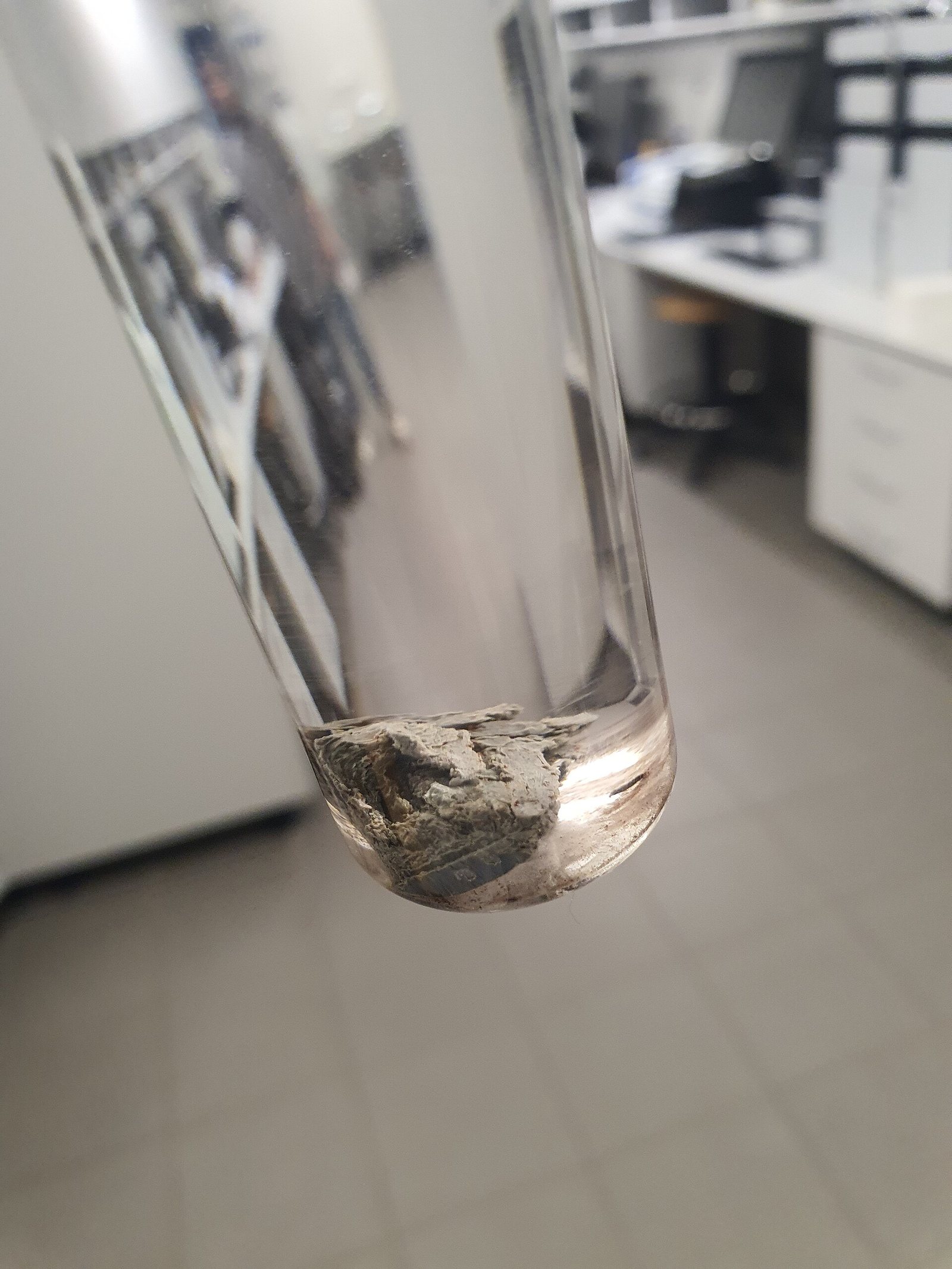
Che cos'è?
The rare earth that glows red under ultraviolet light, and which for decades put the red in every colour television.
Perché è importante?
Europium is a case study in demand collapse: LED and OLED screens need far less phosphor than the cathode-ray and fluorescent tubes they replaced.
Where it is in the Earth
Europium belongs to the lanthanide series, a group of fifteen chemically similar metals that tend to occur together in nature because their ionic radii are close enough that one can substitute for another in a crystal lattice. That substitution is the key to understanding where europium is found: it does not form deposits of its own but instead rides along wherever the lighter rare earths concentrate, slotting into mineral structures dominated by cerium, lanthanum and neodymium. The two main carrier minerals shown in the ore table are bastnasite and ion-adsorption clay, and the geology behind each is quite different.
Bastnasite is a fluorocarbonate mineral — a carbonate that also contains fluorine — that forms in a rock type called a carbonatite. Carbonatites are igneous rocks, meaning they solidified from a melt, but they are unusual in being composed largely of carbonate minerals rather than silicates. They originate from unusually deep-seated magmas rich in carbon dioxide, and as those magmas cool and the volatiles escape, rare earth elements that were dissolved in the melt become concentrated into solid mineral grains. The resulting deposits can be very large, though the grade of any individual rare earth within them is always low in absolute terms. Mountain Pass in California and Bayan Obo in Inner Mongolia are both carbonatite-related systems of this kind.
Ion-adsorption clays are geologically younger and chemically quite different. They form when ancient granites — igneous rocks rich in feldspars — weather slowly under warm, humid conditions over millions of years. As the rock breaks down, rare earth ions that were locked in the original minerals are released into solution and then loosely adsorbed, meaning electrostatically attracted, onto the surface of clay minerals such as kaolinite. The rare earths are not chemically bound; they sit on the clay like dust on a surface. Southern China has the combination of rare-earth-bearing granites and a long history of the right climate that makes these deposits abundant there. Ion-adsorption clays are particularly valued because they tend to be enriched in the heavier rare earths relative to bastnasite, and europium, sitting in the middle of the lanthanide series, occurs in commercially useful proportions in both deposit types.
Getting it out
Because europium does not form its own ore bodies, it is never mined for its own sake. Every tonne of europium oxide that reaches the market is a by-product of mining for the rare earth elements collectively, which are themselves often by-products of mining for iron ore, niobium or other primary commodities. What that means in practice is that the decision to mine is made on the economics of the whole rare earth basket, and europium's share of that basket is small enough that its own price has little influence on how much rock gets moved.
Bastnasite deposits are typically mined by open-pit methods, meaning a large surface excavation in which overlying rock — called overburden — is stripped away to expose the ore beneath. The ore grades involved are very low in absolute terms: rare earth oxides collectively make up a small fraction of the rock by weight, and europium oxide is only a small fraction of that. A great deal of waste rock is therefore moved for every unit of useful material recovered. Ion-adsorption clay deposits in southern China are mined quite differently, often by a technique called in-situ leaching, in which a dilute ammonium sulfate or magnesium sulfate solution is pumped into the ground through injection wells, dissolves the adsorbed rare earth ions directly from the clay, and the pregnant solution is then collected through drainage wells lower on the hillside. This avoids moving large volumes of solid rock but requires careful management of the leach solution to prevent it from spreading beyond the ore zone.
Grade matters in rare earth mining not just as a measure of ore quality but because it determines the scale of downstream processing required. A lower-grade ore means more material must be crushed, ground and chemically treated to yield the same amount of product, which raises costs and increases the volume of tailings — the fine waste solids left after processing — that must be managed safely. For europium specifically, the relevant grade is vanishingly small, which is one reason why separating it to high purity is an expensive and technically demanding step.
What pulls on it
For most of the second half of the twentieth century, europium's commercial existence was defined almost entirely by one application: the red phosphor in cathode-ray tube televisions and monitors. A phosphor is a material that absorbs energy — in this case ultraviolet light or an electron beam — and re-emits it as visible light of a specific colour. Europium-activated yttrium oxide and europium-activated yttrium vanadate produced a red that was vivid and stable enough to make colour television practical. Demand tracked the global television market very closely, and the television market grew for decades.
The collapse of cathode-ray tube technology and the parallel decline of fluorescent lighting removed the two largest uses almost simultaneously. LED and OLED display technologies either use europium in very much smaller quantities or do not use lanthanide phosphors at all. Compact fluorescent lamps, which did use europium-based red phosphors in significant quantities, have themselves been displaced by LED lighting. The end-markets table on this page reflects a demand picture that is a fraction of what it was at its peak. The residual phosphor demand that remains is largely in specialist lighting — some theatre and studio applications, for instance — and in certain display backlighting niches where the older phosphor chemistry persists in existing equipment rather than in new production.
The other application noted in the US facts — nuclear control rods — uses europium's high neutron-absorption cross-section, a measure of how readily an atom captures a passing neutron and thus moderates a nuclear chain reaction. This is a real but small market, served by relatively modest volumes of material. Anti-counterfeiting inks represent a third niche: europium compounds luminesce distinctively under ultraviolet light, providing a feature that is difficult to forge cheaply. For demand to increase sharply from current levels, either a new high-volume application would need to emerge that specifically requires europium's luminescent or nuclear properties, or the television and lighting markets would need to reverse course, neither of which appears to be a near-term possibility based on the direction technology has taken.
Da dove proviene nella roccia
Tutti i minerali mena →Questi sono i minerali che contengono effettivamente europium. Un giacimento è un corpo minerario solo se uno di essi è sufficientemente concentrato da giustificare il costo dell'estrazione.
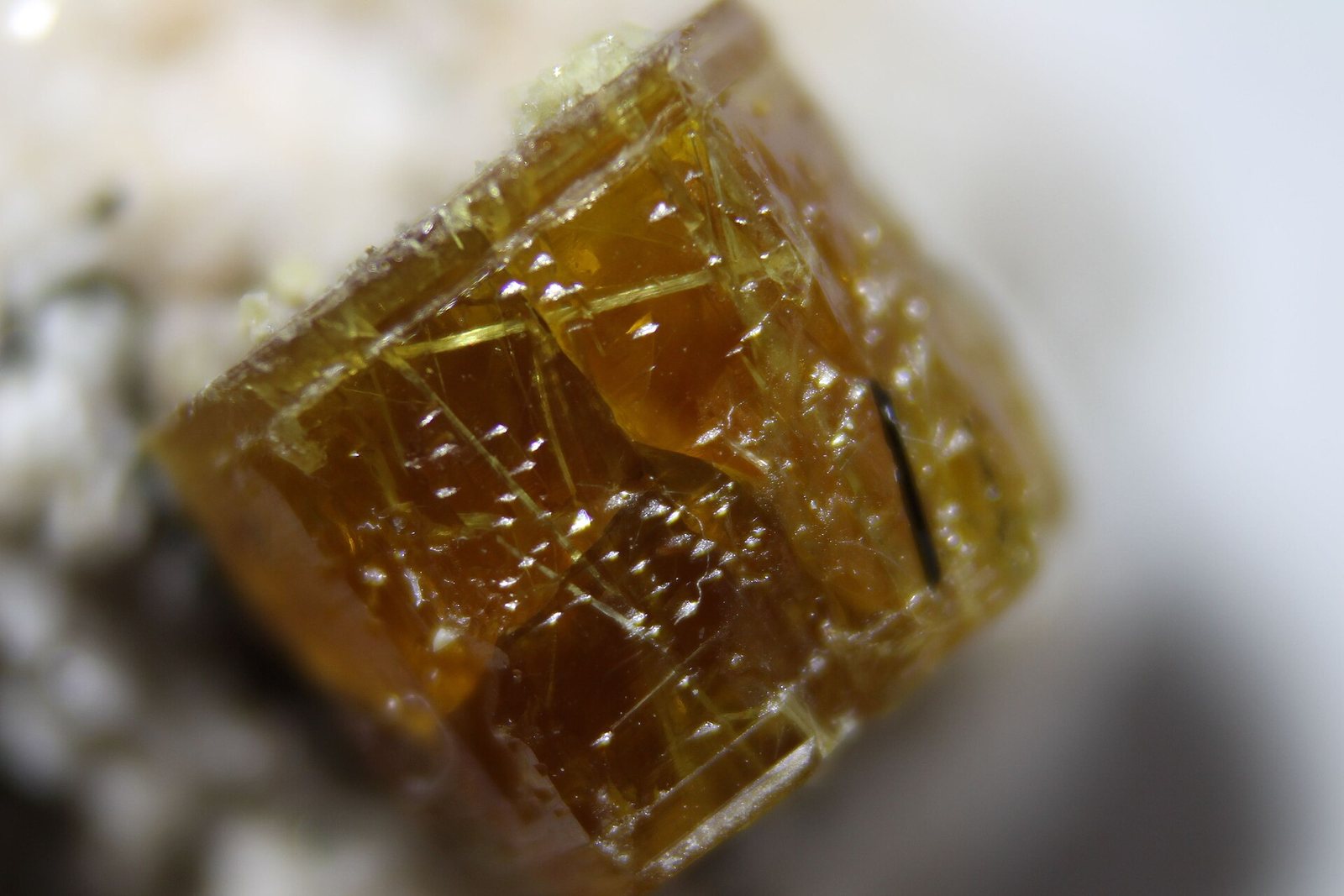
Bastnäsite
The world's principal light rare-earth mineral, mined from carbonatites. Low in thorium, which makes it easier to…
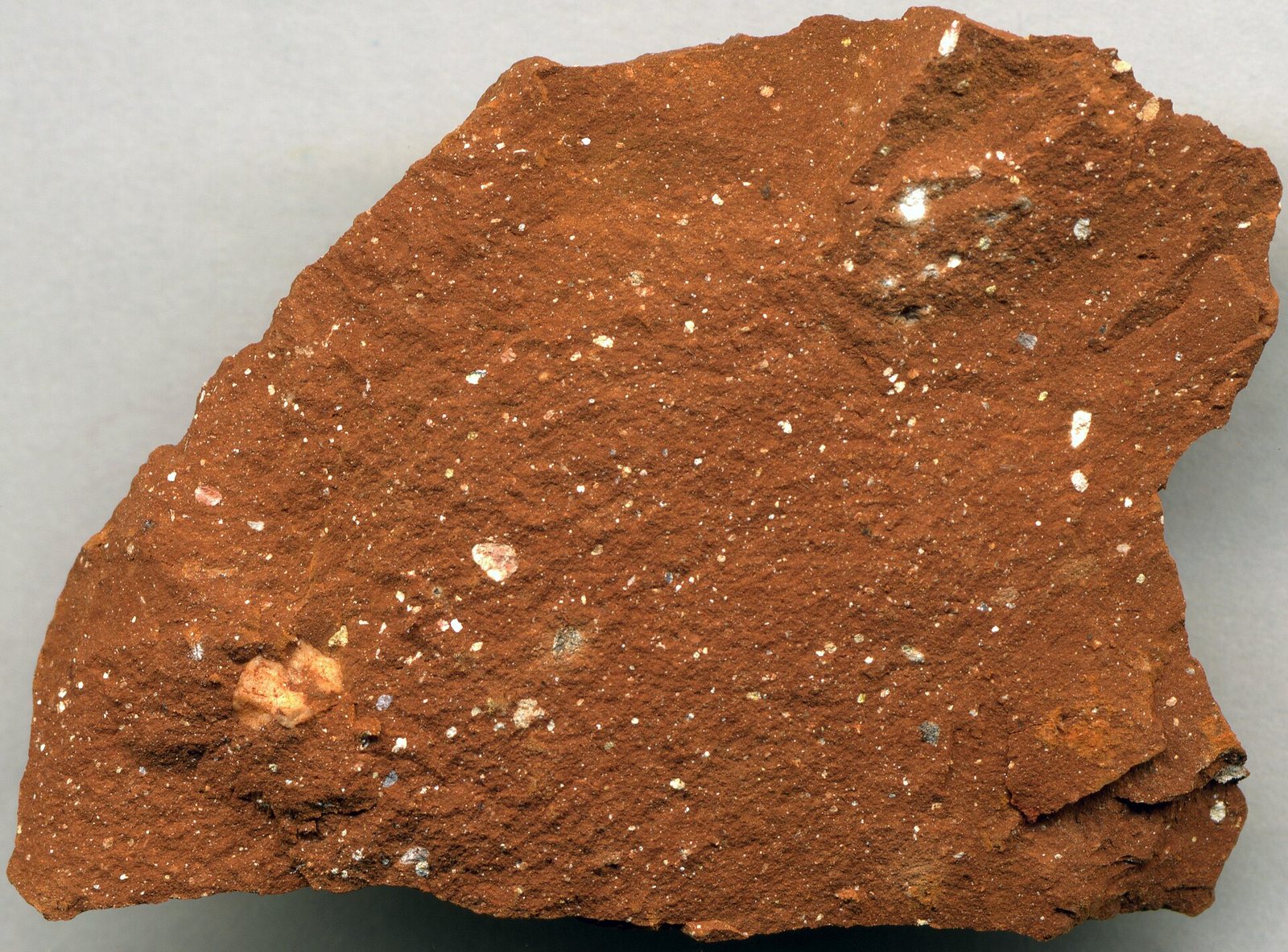
Ion-Adsorption Clay
Weathered granite where rare-earth ions cling loosely to clay surfaces. Grades are very low but the metal washes out…
Prezzo
average, dollars per kilogram: Europium oxide, 99.99% minimum
Media annualedollars per kilogram
Base: average, dollars per kilogram: Europium oxide, 99.99% minimum. Medie annuali pubblicate in USGS Mineral Commodity Summaries 2026 · fonte ↗. Queste sono medie annuali di riferimento, non quotazioni di mercato in tempo reale.
A cosa serve
Tutti i mercati finali →| Mercato finale | Cosa fa lì | Importanza |
|---|---|---|
| Consumer Electronics | Display phosphors | Presente |