Từ quặng đến sản phẩm, có truy xuất nguồn gốc
The Materials Atlas
Vật liệu Mỏ & mỏ quặng Chế biến & tinh luyện Các hành trình quyền sở hữu Các chuỗi cung ứng Công ty Quốc gia Tin tức
Vật liệu theo kệ Vật liệu pin Nguyên tố đất hiếm Đồng & Điện Vật liệu bán dẫn Vật liệu hạt nhân Hàng không vũ trụ & Quốc phòng Kim loại quý Thép & Kim loại hợp kim Khoáng vật công nghiệp Khoáng sản nông nghiệp Nguyên liệu thô năng lượng Các khoáng vật quặng Bảng tuần hoàn
Nhu cầu Các thị trường đầu ra Công nghệ Máy tính vật liệu Bản đồ Bộ lọc
Tìm hiểu & công cụ Tìm hiểuBảng thuật ngữ Hỏi dữ liệuTác nhân AI Nghiên cứu & dữ liệuAPI ★ Đã lưu
Giới thiệu Về chúng tôiPhương pháp luận Nguồn dữ liệuLiên hệ Tuyên bố miễn trách nhiệm
Tùy chọn đọc
🧭 Chế độ xem có hướng dẫn Mới với lĩnh vực này — hàm lượng quặng, quặng tinh, tinh luyện, sản phẩm phụ? Chúng tôi giải thích mọi thuật ngữ khi bạn duyệt, bằng ngôn ngữ dễ hiểu. Cùng dữ liệu đó, với phần hỗ trợ được tích hợp sẵn.
⚡ Chế độ xem chuyên gia Bạn đã hiểu ngành. Chỉ cần dữ liệu — rõ ràng, nhanh và gọn, không có giải thích thêm. Đây là chế độ xem mặc định.
Chủ đề
Ngôn ngữ giao diện
Độ sâu Các trang vật liệu được biên soạn ở bốn cấp độ. Chọn một cấp độ trên bất kỳ trang vật liệu nào và lựa chọn đó sẽ được ghi nhớ.
★ Đã lưu Nghiên cứu & dữ liệu
Fluorspar

Khoáng vật công nghiệp

Fluorspar

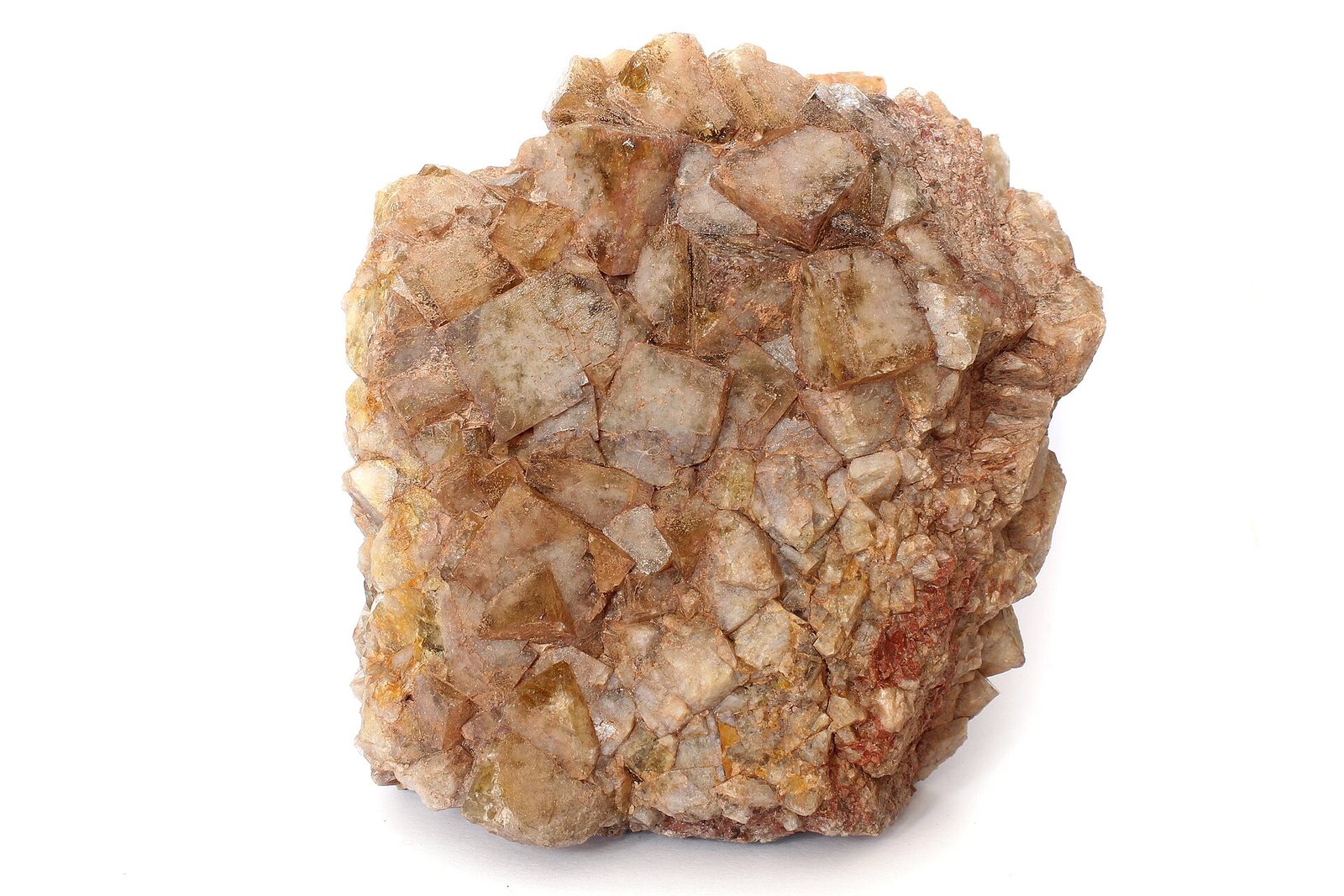
Calcium fluoride, the mineral that every fluorine atom in industry ultimately comes from — including the fluorine in battery electrolyte.

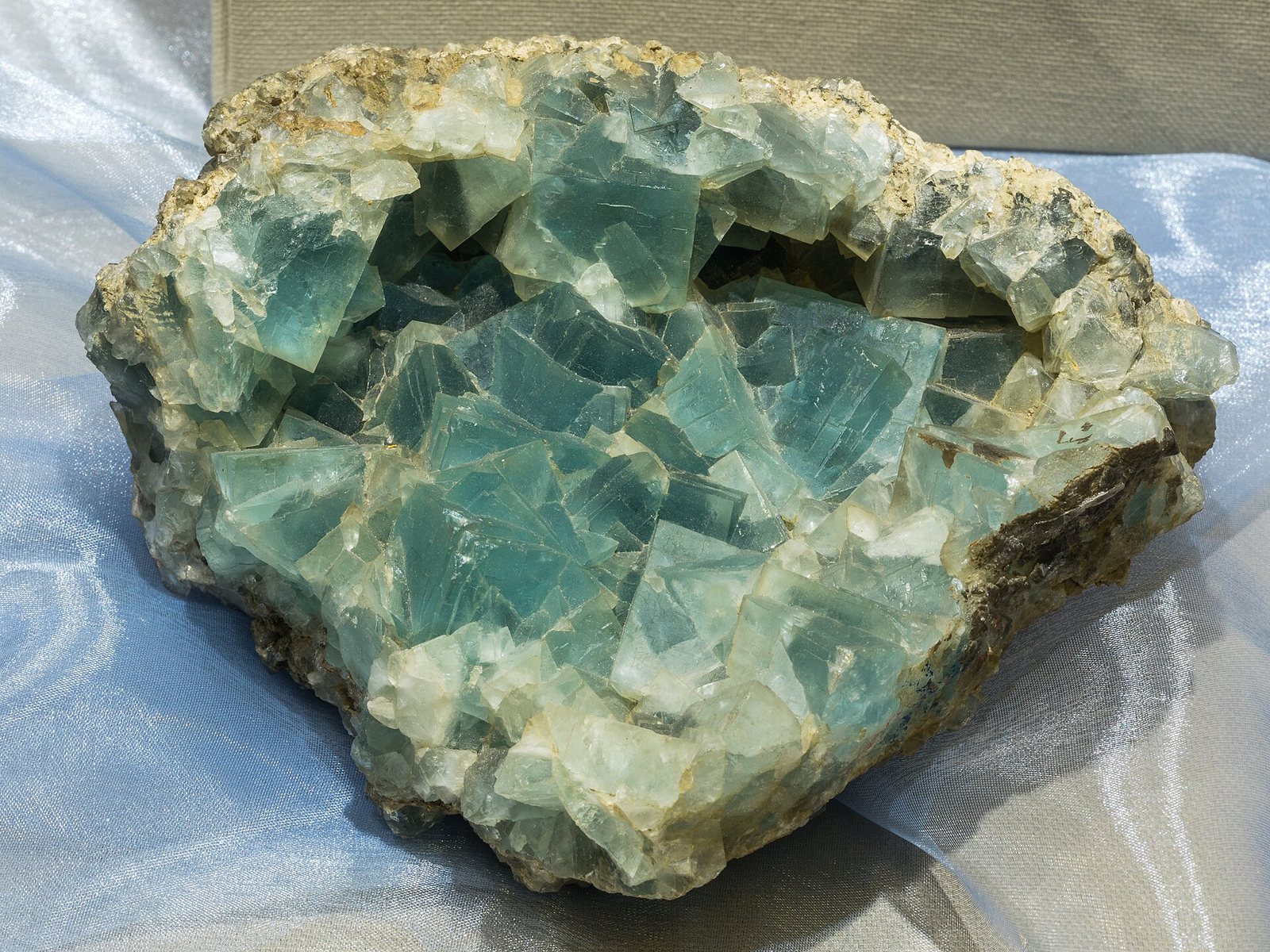
Fluorite crystals · Marek Novotňák · CC BY-SA 4.0 · Wikimedia Commons

Đây là gì?

Calcium fluoride, the mineral that every fluorine atom in industry ultimately comes from — including the fluorine in battery electrolyte.

Tại sao điều này quan trọng?

Hydrofluoric acid from fluorspar makes refrigerants, aluminium smelting flux, uranium hexafluoride and the LiPF6 salt in lithium-ion cells.

Where it is in the Earth

Fluorite — the mineral form of calcium fluoride — forms almost exclusively through hydrothermal processes. Hot, fluorine-bearing fluids, usually derived from the later stages of granite magmatism or from deeply circulating groundwater that has leached fluorine from surrounding rocks, migrate upward along faults and into porous limestone or dolomite beds. As the fluids cool and encounter carbonate rock, calcium and fluoride ions combine and precipitate out of solution, sometimes filling entire fault planes or replacing the host limestone wholesale. The first process produces what geologists call a vein deposit, typically a narrow but steeply dipping body of fluorite mixed with quartz and calcite gangue (the waste minerals that accompany the ore). The second produces a stratabound or manto deposit — a broadly flat, replacement body that can be far larger and easier to mine in bulk.

This distinction in deposit style matters because it controls both the grade of the ore and the type of mining that follows. Vein deposits tend to be high-grade and irregular, demanding selective mining. Manto deposits, such as those in Mexico's San Luis Potosí region, are lower-grade but geometrically predictable and amenable to large-scale extraction. South Africa's deposits, associated with the Bushveld Complex, are a different expression again, occurring in broadly flat, sedimentary layers interbedded with igneous rocks. Mongolia's Bor Undur district exploits large veins cutting Palaeozoic basement. The common thread in every case is an adequate source of fluorine, a plumbing system of fractures to carry it, and a chemically reactive carbonate host to fix it in place.

Fluorine is not rare in the Earth's crust — it is present in granites, in micas, in apatite, and in seawater — but it is rarely concentrated to ore grade. The association with carbonate terranes explains why the great fluorspar districts cluster along ancient continental margins and rift zones where limestone is abundant and where magmatic or tectonic heat drove fluid circulation over geologically long periods.

Getting it out

Most fluorspar is mined by open-pit methods where deposits are shallow, flat-lying, or weathered enough that the rock can be drilled and blasted economically from the surface. Underground mining is used where ore bodies are deep, narrow, or steeply dipping — as is common in classic vein districts. The choice between the two determines how much surrounding rock, called waste or overburden, must be moved for every tonne of ore recovered. Open-pit operations typically move considerably more total rock per tonne of product than underground mines do, but they allow larger machinery and lower labour costs per tonne, which often makes them cheaper overall where the geometry permits.

The grade of a fluorspar deposit is expressed as the percentage of calcium fluoride (CaF₂) in the run-of-mine ore — the material as it comes straight from the blast. Run-of-mine grades vary enormously between deposit types. A high-grade vein might deliver ore that is already close to marketable specification, while a manto or bedded deposit might yield ore that requires extensive processing before it approaches the purity that buyers expect. The two principal commercial grades — acid grade (at least 97% CaF₂) and metallurgical grade (broadly 60–85% CaF₂) — are not simply different names for different ores; they are different products destined for different industries and trading at materially different prices, as the import value data on this page shows.

Because fluorspar is almost always the principal product rather than a by-product of mining something else, the economics of a mine depend directly on the fluorite content of the ore and on how much of that fluorite can be recovered during processing. Dilution — the unavoidable mixing of ore with adjacent waste rock during blasting — reduces effective head grade and therefore increases the processing cost per tonne of saleable product. Managing dilution is a central operational concern, particularly in narrow underground veins.

What pulls on it

The starting point for understanding fluorspar demand is that the mineral is not itself an end product. It is a feedstock, and virtually all of the acid-grade material consumed worldwide is converted into hydrofluoric acid as a first step. From hydrofluoric acid, the fluorine atom is routed into an array of downstream products whose end markets are quite different from one another. Refrigerants — the hydrofluorocarbon and hydrofluoroolefin compounds used in air conditioning and refrigeration — account for a large share of hydrofluoric acid consumption. Aluminium smelting, which uses fluorspar directly as a flux in the cryolite bath of electrolytic reduction cells, represents the largest single use of metallurgical-grade material. Steelmakers also consume metallurgical-grade fluorspar as a slag conditioner. Uranium enrichment requires uranium hexafluoride, and the sole fluorinating agent that can produce it at scale is hydrofluoric acid derived from fluorspar.

The energy transition has added a new dimension to demand. Lithium-ion battery electrolytes use lithium hexafluorophosphate (LiPF₆) as the conducting salt, and its production requires hydrofluoric acid; the same is true of the polyvinylidene fluoride (PVDF) binders used in battery electrodes. As battery manufacturing capacity grows, the fluorine required for these applications grows with it. The significance of this is not merely that demand increases in aggregate, but that the downstream chemistry for battery materials requires acid-grade fluorspar of consistent purity — a different supply proposition from metallurgical-grade flux.

Demand could change sharply in either direction under a limited set of conditions. A large shift toward natural refrigerants — ammonia, carbon dioxide, hydrocarbons — in air conditioning and refrigeration would reduce one of the largest consumption streams. Conversely, a sustained acceleration in battery gigafactory construction would increase demand for the fluorine-intensive materials in electrolyte and electrode manufacturing. The relationship between these two vectors, and which moves faster, will determine the net direction of fluorspar demand over the coming decade, though this page does not forecast the outcome.

Turning ore into product Cấp độ 3

Run-of-mine fluorspar ore almost never meets market specification directly and must be processed through a sequence of size reduction and concentration steps. Comminution — the staged crushing and grinding of ore to liberate fluorite grains from the surrounding gangue minerals — is the first and most energy-intensive phase. The target particle size is determined by the grain size of the fluorite itself: coarser-grained deposits can be liberated with less grinding, which reduces both energy consumption and the generation of ultrafine particles that are difficult to recover.

Concentration is achieved almost universally by froth flotation, a process in which finely ground ore is agitated in water with chemical reagents called collectors and frothers. Collectors adsorb selectively onto fluorite surfaces, making them hydrophobic; when air is introduced, fluorite particles attach to bubbles and float to the surface as a froth, while gangue minerals — principally calcite, quartz, and barite — remain in suspension and are discarded as tailings. The selectivity of flotation against calcite is particularly difficult, because both minerals have similar surface chemistry. Depressants, chemicals that suppress calcite flotation without affecting fluorite, are added to manage this, and their formulation is often the defining process knowledge of a particular operation. Recovery rates and the grade of the resulting concentrate depend on ore mineralogy, grind size, reagent selection, and circuit design; where these are optimised, a high proportion of the fluorite in the feed can be captured in a product approaching acid-grade specification.

Acid-grade concentrate (97%+ CaF₂) can be sold directly to hydrofluoric acid producers, who react it with sulfuric acid to yield hydrogen fluoride gas — the primary intermediate from which all fluorine chemistry flows. Metallurgical-grade concentrate is a less pure product used primarily as a flux in steelmaking and aluminium smelting, where it lowers the melting point of the slag or electrolyte bath rather than serving as a fluorine source. The price differential between the two grades, visible in the import data on this page, reflects both the cost of achieving higher purity and the greater versatility of acid-grade material. Losses occur at every stage: in the tailings stream from flotation, in dust and moisture allowances, and in the difference between the theoretical CaF₂ content of the ore and what flotation can practicably recover. These losses define the yield of the plant and are the primary determinant of processing cost per tonne of saleable product.

Substitution and recycling Cấp độ 3

For acid-grade fluorspar used as the source of industrial fluorine, there is no practical substitute at commercial scale. Hydrofluoric acid can in principle be sourced from fluorosilicic acid, a by-product of the phosphate fertiliser industry in which fluorine is driven off during the acidulation of phosphate rock and recovered from scrubber liquors. This route does supply a fraction of global fluorine demand, particularly in regions with large phosphate processing capacity, but its fluorine content and output are tied to phosphate production volumes and cannot be independently scaled. It does not produce the concentrated, pure hydrofluoric acid that acid-grade fluorspar reactions yield, and further processing to achieve equivalent purity adds cost. The result is that fluorosilicic acid supplements rather than displaces fluorspar-derived acid.

In steelmaking, the flux function of metallurgical-grade fluorspar can be partially replicated by synthetic fluorspar — calcium fluoride produced as a by-product of hydrofluoric acid manufacture — or by other fluxing agents such as lime. Synthetic fluorspar is already consumed in this way and represents genuine substitution, though its availability depends on the output of acid plants. The ability of steelmakers to reduce fluorspar consumption by reformulating slag chemistry has historically been real but limited; there are operating constraints on how far the substitution can be pushed without affecting furnace performance or steel quality.

Recycling of fluorine from industrial waste streams is practised but remains a small fraction of total supply. Spent pot liner from aluminium smelters contains fluoride compounds and is processed to recover both aluminium and fluorine values in some operations. Refrigerant recovery and reclaim programmes recirculate a portion of existing refrigerant charge rather than manufacturing new material, effectively extending the fluorine already in circulation. The barriers to greater recycling are primarily economic and logistical: fluorine is dispersed across many small-volume, geographically scattered waste streams, and the collection and reprocessing cost often exceeds the value of the recovered material relative to virgin concentrate prices.

Đọc các con số cho đúng. Gross weight of all grades; acid grade and metallurgical grade are different markets. Acid-grade (97%+ CaF2) and met-grade concentrate.

Nguồn gốc của nó trong đá

Tất cả khoáng vật quặng →

Đây là các khoáng sản thực sự mang lại fluorspar. Một mỏ khoáng chỉ là thân quặng khi một trong số chúng có hàm lượng đủ cao để bù đắp chi phí khai thác.
Ai sản xuất nó

Xem trên bản đồ →

Mine production

Mine productionthousand metric tons 2025 (ước tính) Tổng toàn cầu 10,000 thousand metric tons

USGS Mineral Commodity Summaries 2026 · Gross weight of all grades; acid grade and metallurgical grade are different markets. · nguồn ↗

Cuộn bảng sang ngang để xem các cột còn lại.

Quốc giaSản lượng Tỷ phần thế giới
China 6,000 60.0%
Mongolia 1,500 15.0%
Mexico 1,500 15.0%
South Africa 410.0 4.1%
Other countries 200.0 2.0%
Vietnam 160.0 1.6%
Spain 140.0 1.4%
Brazil 100.0 1.0%
Iran 70.00 0.7%
Thailand 55.00 0.6%
Pakistan 50.00 0.5%
Germany 35.00 0.3%
Tajikistan 15.00 0.1%
United States Not applicable
Tổng toàn cầu 10,000100%

"Withheld" có nghĩa là USGS đã ẩn số liệu để tránh tiết lộ dữ liệu của một công ty riêng lẻ — không có nghĩa là bằng không. Tổng các hàng theo quốc gia không phải lúc nào cũng bằng tổng toàn cầu vì nguồn làm tròn từng số liệu một cách độc lập và không phải lúc nào cũng tách riêng dòng "các quốc gia khác".

Ai nắm giữ trữ lượng

"Trữ lượng" là một thuật ngữ chính xác. Nó chỉ phần của một khoáng sàng đã biết có thể được khai thác có hiệu quả kinh tế ngay lúc này, với giá hiện tại và công nghệ hiện tại — không phải tất cả những gì tồn tại trong lòng đất. Trữ lượng tăng khi giá tăng hoặc khi một quy trình mới được phát minh, và giảm khi chúng giảm.

Reserves

Reservesthousand metric tons 2025

USGS Mineral Commodity Summaries 2026 · nguồn ↗

Quốc giaTrữ lượngTỷ phần thế giới
China 110,000 33.3%
Mexico 68,000 20.6%
South Africa 41,000 12.4%
Mongolia 34,000 10.3%
Other countries 32,000 9.7%
Vietnam 16,000 4.8%
Spain 15,000 4.5%
Iran 7,600 2.3%
Thailand 3,600 1.1%
Brazil 2,500 0.8%
United States Not applicable
Germany Not applicable
Pakistan Not applicable
Tajikistan Not applicable
Tổng toàn cầu 330,000100%

Giá

average unit value of imports, cost, insurance, and freight, dollars per metric ton: Metallurgical grade

Trung bình nămdollars per metric ton

2021 · 151.0 cao 400.0 dollars per metric ton 2025 · 400.0

Cơ sở: average unit value of imports, cost, insurance, and freight, dollars per metric ton: Metallurgical grade. Trung bình năm theo công bố trong USGS Mineral Commodity Summaries 2026 · nguồn ↗. Đây là mức trung bình hàng năm tham khảo, không phải báo giá thị trường trực tiếp.

average unit value of imports, cost, insurance, and freight, dollars per metric ton: Acid grade

Trung bình nămdollars per metric ton

2021 · 322.0 cao 470.0 dollars per metric ton 2025 · 470.0

Cơ sở: average unit value of imports, cost, insurance, and freight, dollars per metric ton: Acid grade. Trung bình năm theo công bố trong USGS Mineral Commodity Summaries 2026 · nguồn ↗. Đây là mức trung bình hàng năm tham khảo, không phải báo giá thị trường trực tiếp.

Nơi nó được chế biến và tinh luyện

Nhà máyLoại Giai đoạnQuốc giaVai trò
Port Hope Conversion Facility Nhà máy hóa chấtTinh luyện CanadaĐầu vào
Thị trường đầu raChức năng của nó ở đóTầm quan trọng
Nuclear Power Fluorine for uranium hexafluoride Quan trọng

Vật liệu

Tất cả vật liệu Khoáng sản thiết yếu Đất hiếm Vật liệu pin Các khoáng vật quặng Bảng tuần hoàn Bộ lọc

Lòng đất

Mỏ & mỏ quặng Chế biến & tinh luyện Quốc gia Bản đồ

Nền kinh tế

Các hành trình quyền sở hữu Các chuỗi cung ứng Các thị trường đầu ra Công nghệ Công ty Máy tính vật liệu

Tìm hiểu

Tìm hiểuBảng thuật ngữ Hỏi dữ liệuTác nhân AI Nghiên cứu & dữ liệuAPI mở Tin tức★ Đã lưu

Về chúng tôi

Về chúng tôiLiên hệ Phương pháp luậnNguồn dữ liệu Chính sách biên tập Chính sách bảo mậtĐiều khoản sử dụng Tuyên bố miễn trách nhiệm