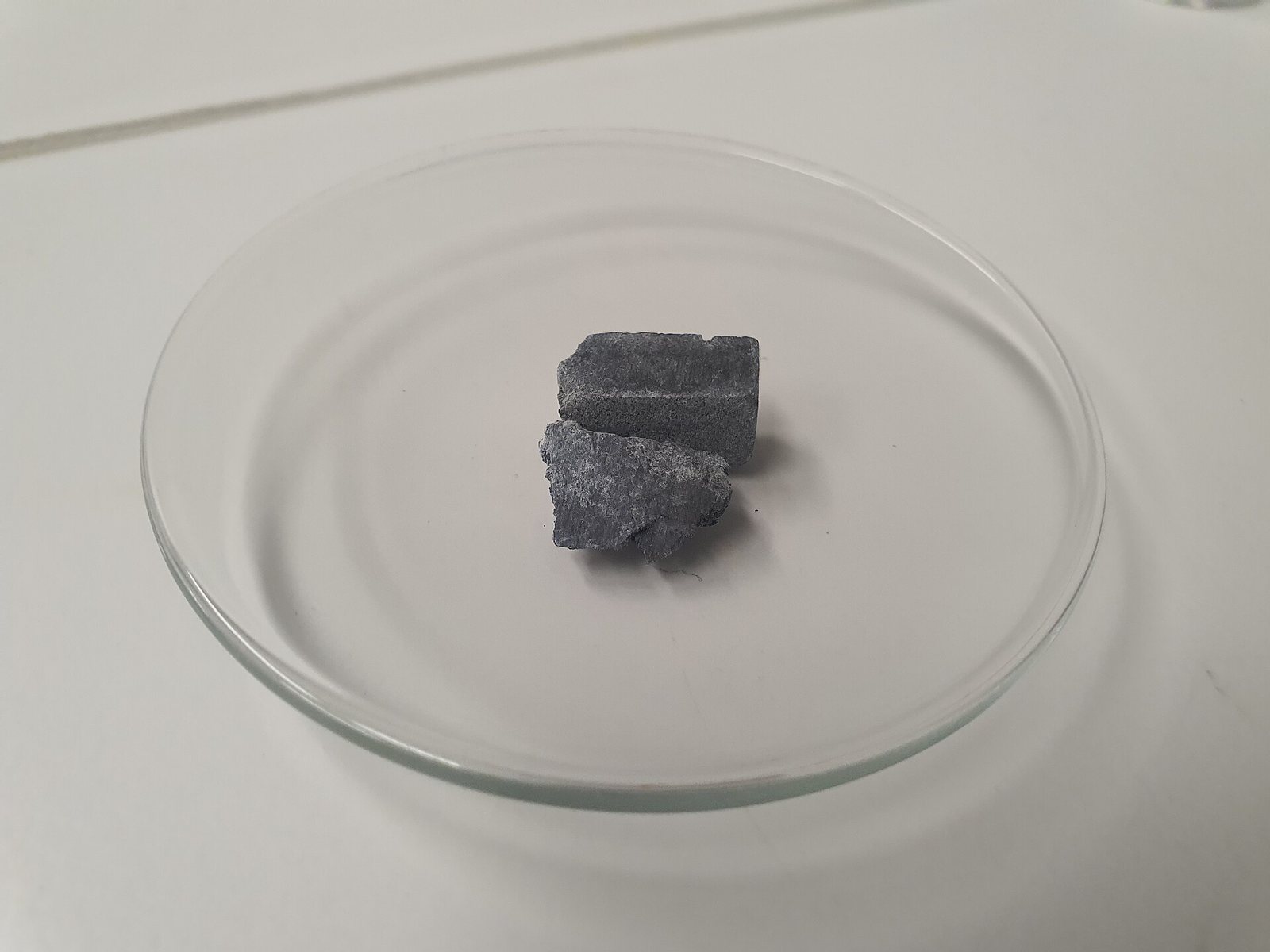
Wat is het?
A rare earth that absorbs neutrons better than almost anything, and that makes MRI scans easier to read.
Waarom is het van belang?
It does two unrelated critical jobs: control rods and burnable poison in nuclear reactors, and contrast agent in medical imaging.
Where it is in the Earth
Gadolinium is one of the heavy rare earth elements (HREEs), a group that sits toward the higher end of the lanthanide series. Unlike the light rare earths — lanthanum, cerium, neodymium — which tend to concentrate in hard-rock carbonate minerals such as bastnäsite, the heavy rare earths including gadolinium behave differently in geological processes. Because their ionic radius is smaller and their charge density higher, they are less readily incorporated into the common phosphate and carbonate minerals that crystallise early from a cooling magma. Instead, they tend either to accumulate late in the life of a granite intrusion, appearing in accessory minerals such as xenotime (yttrium phosphate, which accepts gadolinium as a chemical stand-in for yttrium), or to remain mobile in groundwater long after the original rock has formed.
The second and now dominant geological setting is what gives the southern Chinese deposits their character. When a granite rich in rare earth elements weathers slowly over millions of years in a warm, humid climate, the rock breaks down to clay minerals — chiefly kaolinite. Rare earth ions released during that weathering do not wash away entirely; instead they adsorb, meaning they attach loosely to the surfaces of the clay particles, held by electrostatic attraction. These are called ion-adsorption clay deposits, and they are unusual because the rare earth content is not locked inside a hard mineral crystal but simply sitting on the clay surface. Heavy rare earths, including gadolinium, are proportionally more abundant in these clays than in hard-rock deposits, which is why the ion-adsorption clays of Jiangxi and neighbouring provinces became the world's principal source. The deposits themselves are not deep — they follow the weathering profile of the granite beneath, typically in hillsides and low mountains — and they carry no dramatic visual signature; the ore looks like ordinary pale clay.
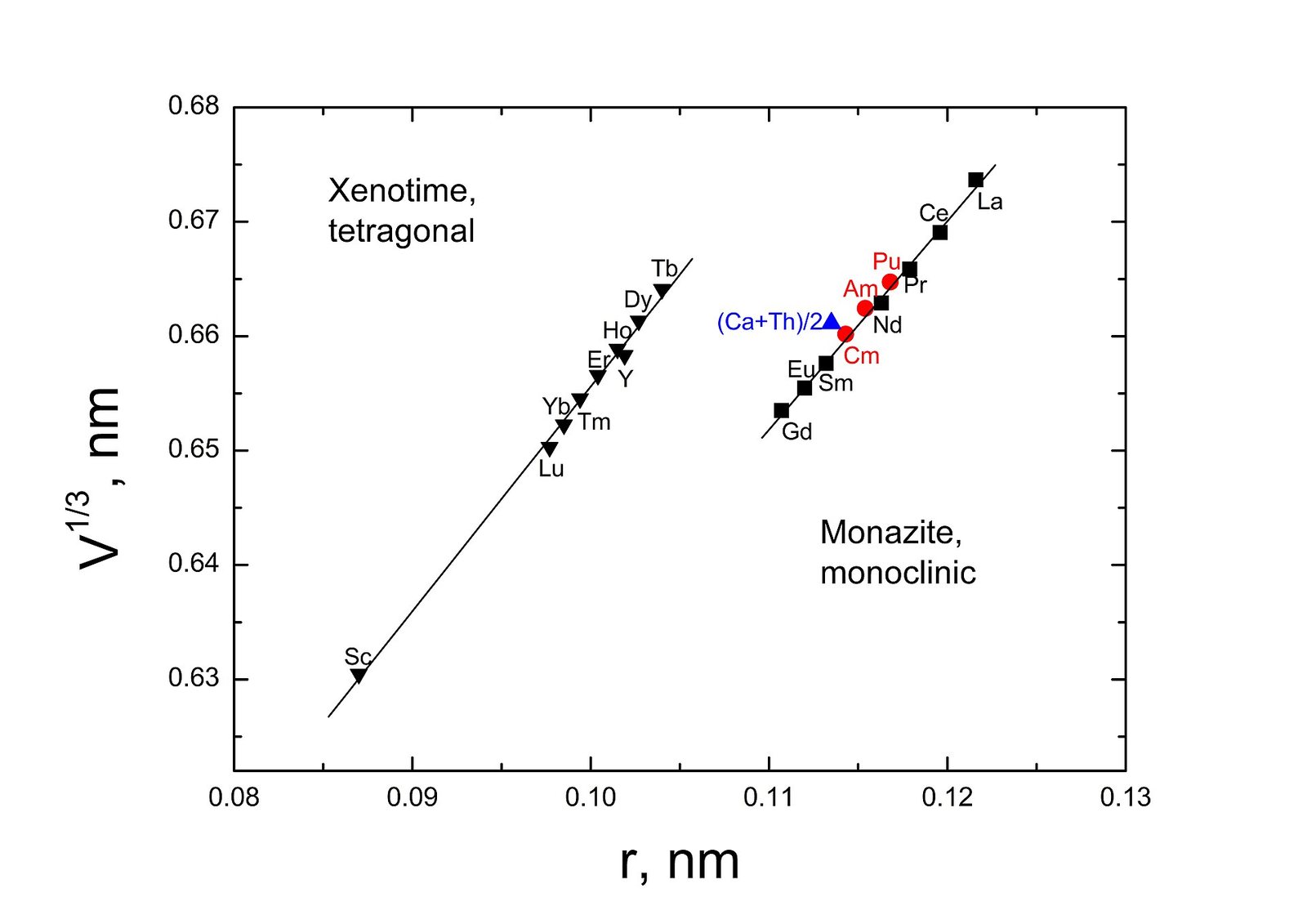
Xenotime, the phosphate mineral listed in the ore table, matters as a secondary source. It crystallises in granites and pegmatites (coarse-grained, late-stage igneous rocks) and also concentrates in placer deposits — accumulations of dense, resistant minerals in river sands and beach sands — because it is physically tough and does not dissolve easily. Monazite, a related rare earth phosphate, appears in many of the same placers and carries some gadolinium as well, though it is a richer source of lighter rare earths such as lanthanum and cerium. The relative scarcity of dedicated gadolinium-bearing hard-rock orebodies, compared with the ubiquity of light rare earth deposits, is a direct consequence of this geochemistry: gadolinium simply does not accumulate to high concentrations in the minerals that form the most common and largest rare earth deposits outside China.
Getting it out
The ore table shows two main sources: ion-adsorption clays mined by in-situ leaching in southern China, and xenotime recovered from hard-rock or placer mining elsewhere. In-situ leaching is a method quite different from conventional mining. Rather than digging the ore out of the ground, operators drill an array of injection wells into the clay-bearing hillside and pump a dilute salt solution — historically ammonium sulfate, though regulations have pushed toward lower-impact reagents — down into the deposit. Because the rare earth ions are only loosely adsorbed onto the clay surface rather than locked inside a mineral crystal, the salt ions in the solution displace them by ion exchange, and the rare earth-bearing solution drains to collection points at the base of the slope. The disturbed ground is the hillside itself rather than a large open pit, but the environmental footprint is not trivial: the leaching solution alters soil chemistry, and if collection is imperfect, rare earths and reagents can migrate into local waterways.
What the grade figures mean in practice is worth understanding. Ion-adsorption clay deposits carry rare earth concentrations that are low by the standards of hard-rock mining, often measured in hundreds of grams per tonne of total rare earth oxide. In a conventional mine, moving that grade of material would rarely be economic. In-situ leaching changes the economics because there is no blasting, no haulage of waste rock, and no milling of ore — the solution does the extraction work underground, and the volumes of liquid handled, though large, cost less to process than crushed rock. The trade-off is that recovery of the rare earth from the clay is incomplete, and the clay structure of the hillside is permanently changed.
Xenotime recovered from placer operations — river or beach sand deposits in countries such as Malaysia and Australia — reaches the supply chain mostly as a by-product of mining for other heavy minerals such as ilmenite, rutile, or zircon. In that context, the amount of gadolinium-bearing xenotime produced depends more on the market for those primary commodities than on demand for rare earths. This by-product nature limits how quickly supply from these sources can respond to changing conditions.
What pulls on it
The end-market table records two principal uses: MRI contrast agents in medicine, and burnable neutron poison in nuclear reactor fuel. These two applications are largely independent of each other in their growth drivers, which gives gadolinium a demand profile that is not hostage to any single industry. In medical imaging, gadolinium-based contrast agents are injected into patients before certain magnetic resonance imaging scans. The gadolinium ion is strongly paramagnetic — meaning it is drawn into a magnetic field and distorts the local magnetic environment — and this property alters the signal returned by hydrogen atoms in surrounding tissue, making features such as tumours, inflammation, or blood vessels easier to distinguish. The agents cannot simply be gadolinium salts; free gadolinium ions are toxic, so the metal must be enclosed in a chelate molecule that the body can excrete. Demand from this sector is tied to the global installed base of MRI machines and the volume of contrast-enhanced scans performed, both of which have grown as healthcare systems in middle-income countries expand their diagnostic capacity.
In nuclear reactors, gadolinium serves a different purpose entirely. Certain gadolinium isotopes absorb neutrons with exceptional efficiency — the relevant term is a very high neutron-absorption cross-section. When gadolinium oxide is blended into uranium fuel pellets, it acts as a burnable poison: it suppresses the fission reaction at the start of the fuel cycle when the uranium is freshest and the reactor would otherwise be difficult to control, then it is gradually consumed by neutron absorption so that by mid-cycle most of it is gone and the full fuel load is available. This is a more sophisticated control approach than relying solely on moveable control rods. Demand from this sector is tied to the number of reactors loading gadolinium-doped fuel assemblies and the frequency of fuel cycles, both of which vary with nuclear power policy globally.
A smaller but non-trivial use mentioned in the USGS data is metallurgy, where gadolinium is added in small quantities to iron and chromium alloys to improve their workability and resistance to high-temperature oxidation. Permanent magnet applications also appear, though gadolinium does not carry the same importance in that sector that neodymium or dysprosium does. For demand to shift sharply upward, a significant expansion of nuclear power programmes using gadolinium-doped fuel, or a substantial increase in MRI scan volumes in currently underserved populations, would both move the needle. A shift downward could result from regulatory changes affecting gadolinium-based contrast agents — and there have been periodic reviews of their safety profile, particularly regarding gadolinium retention in tissues — or from reactor designs that rely less on burnable poisons.
Turning ore into product Niveau 3
Rare earth processing begins with separating the mineral from the host material and then separating individual rare earth elements from one another, two problems that are chemically quite different. For ion-adsorption clay, the leachate collected from the hillside already contains the rare earths in solution, so the first stage of concentration — getting them out of the rock — is done in the ground. The pregnant leachate is then treated to precipitate a mixed rare earth carbonate or hydroxide, which is the form in which material typically leaves the mine site. This mixed concentrate still contains all the rare earth elements present in the original clay in roughly their natural proportions; gadolinium is only one component of it.
Separating individual rare earths from a mixed concentrate requires solvent extraction, a technique in which the dissolved rare earth mixture is contacted repeatedly with organic solvents that have slightly different affinities for each element. Because the chemical properties of adjacent lanthanides differ only subtly — they have the same outer electron configuration and differ only in the number of electrons in an inner shell — many sequential extraction stages are needed. Industrial rare earth separation plants use banks of mixer-settler units or pulsed columns to run these stages continuously. The number of stages required to reach the purity specifications demanded by end users — the price data shows the benchmark as 99.99% minimum gadolinium oxide — is large, and the capital cost and chemical consumption of such a plant are substantial. Almost all capacity of this kind sits in China, which processes not only its own ion-adsorption clay output but also concentrates imported from other countries.
After separation, gadolinium oxide can be converted to gadolinium metal by reduction with calcium metal (metallothermic reduction) in an inert atmosphere, or converted to chelated compounds — molecules in which gadolinium ions are bound inside an organic cage — for medical use. The chelation step is performed by pharmaceutical manufacturers and is distinct from the rare earth processing chain; it requires gadolinium of very high purity because trace contaminants in an injectable agent carry health implications. Losses occur at every stage: during leaching, during precipitation, during solvent extraction, and during any conversion step. The cumulative effect means that only a fraction of the gadolinium present in the original ore reaches the final traded product, though published recovery figures for specific operations are not provided in the data available to this article.
Substitution and recycling Niveau 3
In MRI contrast, gadolinium has no straightforward drop-in replacement that performs identically. Its paramagnetic strength is unusually high among elements that can safely be administered to patients in chelated form, and decades of clinical practice have been built around gadolinium-based agents. There has been research interest in manganese-based and iron-based contrast agents, which carry a different safety profile, and some of these are in clinical use for specific applications such as liver imaging. However, they generally offer lower contrast enhancement per unit dose or require different imaging protocols, which means substitution is partial rather than complete and is constrained by the installed base of imaging equipment and the training of radiologists. The regulatory requirement that any new agent must pass clinical trials creates a long lead time before any substitute could take meaningful market share.
In nuclear applications, other elements with high neutron-absorption cross-sections — boron, hafnium, and certain isotopes of europium and erbium — can serve as burnable poisons or control materials. Boron-10 in particular is widely used. The choice among these depends on the reactor design, the fuel enrichment, and the specific neutron-absorption behaviour over the fuel cycle; gadolinium is favoured where its particular depletion profile over the cycle suits the reactor's operational needs. Substitution is therefore technically feasible in principle but requires redesign of the fuel assembly, which is a regulated and time-consuming process.
Recycling of gadolinium is minimal at present. The medical contrast agents are excreted by patients and enter wastewater systems; gadolinium has in fact been detected in river water downstream of hospitals in measurable concentrations, a phenomenon that has attracted attention from environmental chemists, but this dispersed, dilute form is not recoverable with current technology. Spent nuclear fuel contains gadolinium that has been transmuted by neutron capture into other isotopes; recovery from spent fuel is technically possible but is not practised as a commercial source of gadolinium supply. The combination of dispersed end uses, small quantities per application, and the difficulty of collection means that secondary supply contributes very little to the market, and the material effectively runs on primary production.
Waar het in het gesteente vandaan komt
Alle ertsmineralen →Dit zijn de mineralen die daadwerkelijk gadolinium. Een afzetting is alleen een ertslichaam als een van beide voldoende geconcentreerd is om de winning ervan te bekostigen.
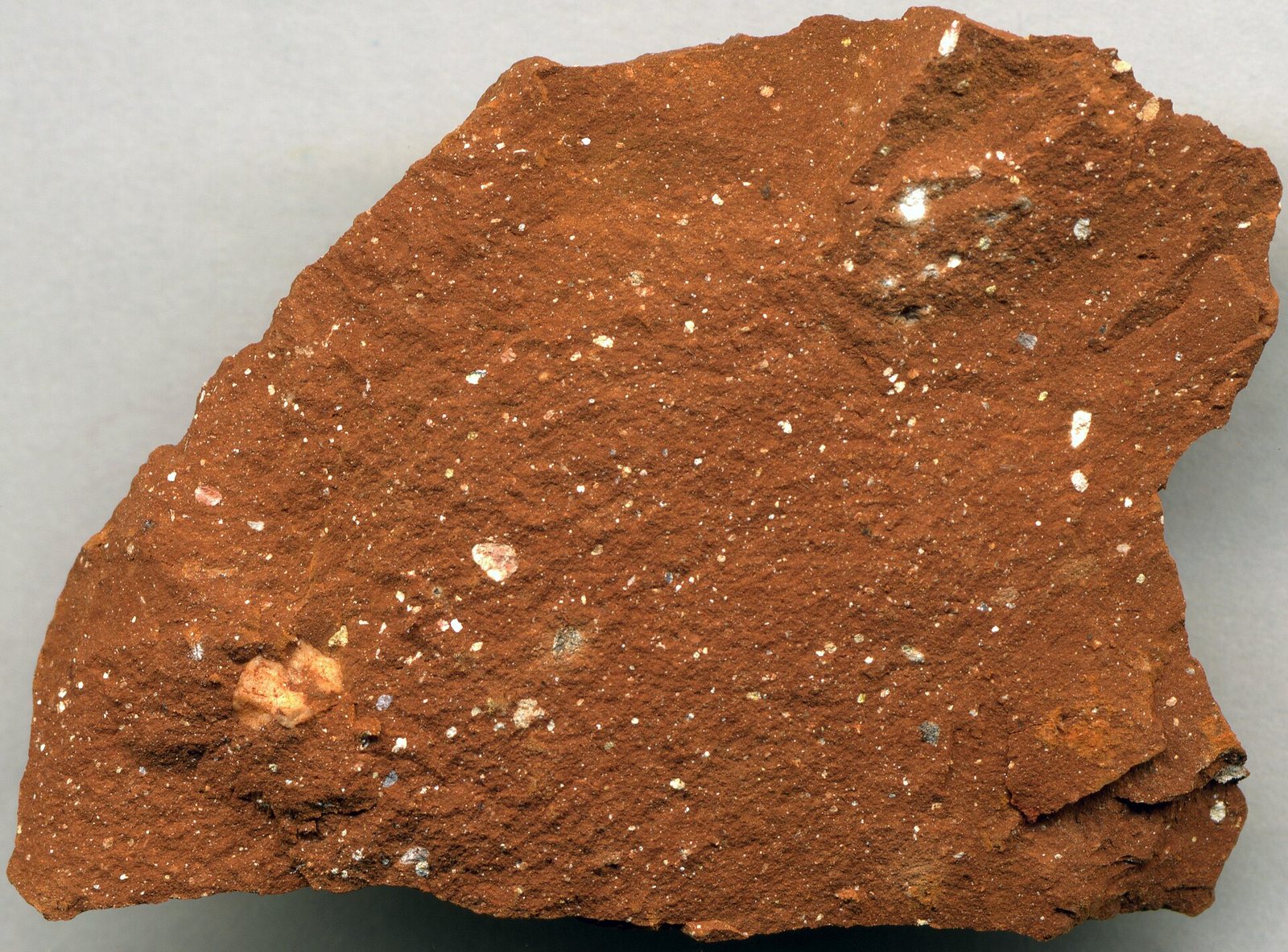
Ion-Adsorption Clay
Weathered granite where rare-earth ions cling loosely to clay surfaces. Grades are very low but the metal washes out…
Xenotime
A yttrium phosphate that also carries the heavy rare earths — dysprosium, terbium, erbium — that magnets need.
Prijs
average, dollars per kilogram: Gadolinium oxide, 99.99% minimum
Jaargemiddeldedollars per kilogram
Grondslag: average, dollars per kilogram: Gadolinium oxide, 99.99% minimum. Jaargemiddelden zoals gepubliceerd in USGS Mineral Commodity Summaries 2026 · bron ↗. Dit zijn referentiejaargemiddelden, geen live marktkoers.
Mijnen die het produceren
Alle mijnen →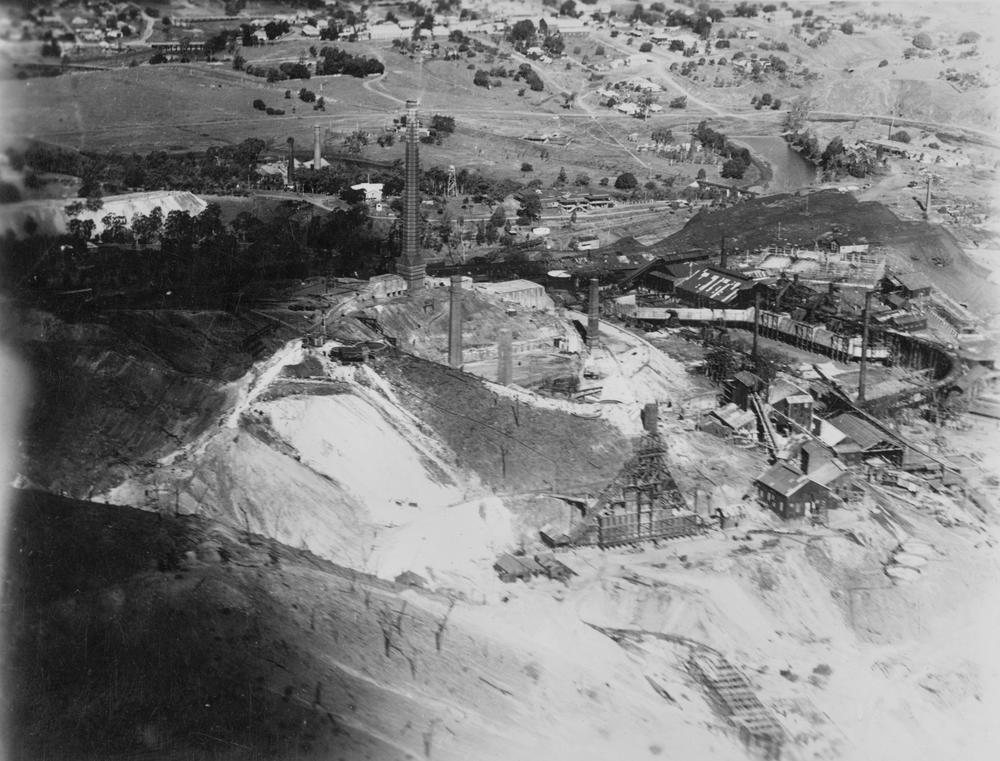
Southern China Ion-Adsorption Clays →
Waarvoor het wordt gebruikt
Alle eindmarkten →| Eindmarkt | Wat het daar doet | Belang |
|---|---|---|
| Medicine & Health | MRI contrast agent | Definiëren |
| Nuclear Power | Burnable neutron poison in fuel | Belangrijk |