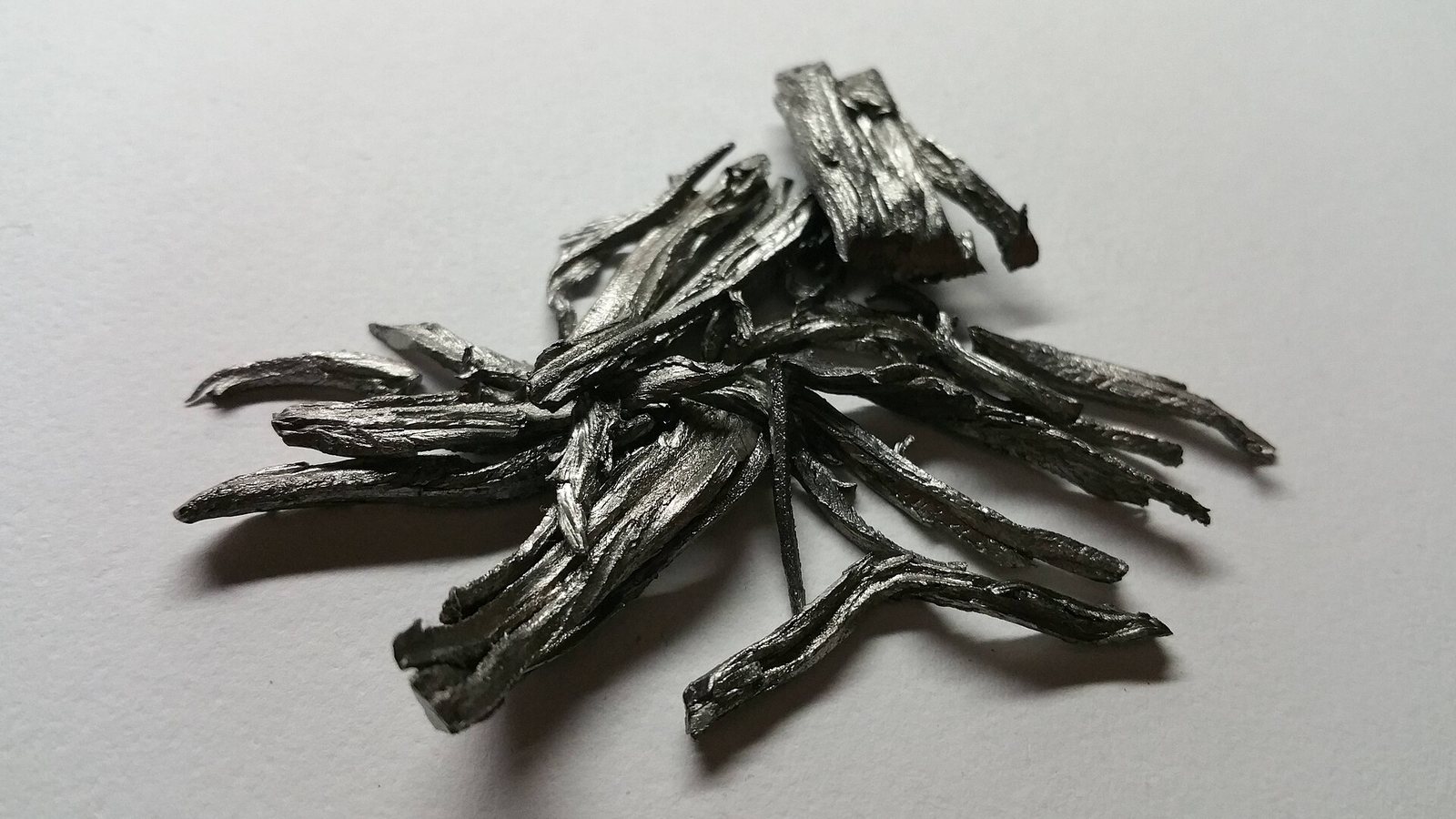
What is it?
The rare earth with the strongest magnetic moment of any element, used in the pole pieces of the most powerful laboratory magnets.
Why does it matter?
Holmium lasers are the standard tool for breaking up kidney stones and for surgery on the prostate.
Where it is in the Earth
Holmium belongs to the heavy rare earth elements (HREEs), a group that sits toward the higher end of the lanthanide series on the periodic table. The distinction between heavy and light rare earths matters geologically because the two groups tend to concentrate in different kinds of rock. Light rare earths accumulate most visibly in carbonatites — igneous rocks formed from carbonate-rich magmas — and in the mineral bastnäsite. Holmium and its heavy cousins prefer different hosts, principally xenotime and ion-adsorption clays.
Xenotime is a yttrium phosphate mineral. Because holmium and yttrium have very similar ionic radii, holmium substitutes readily into xenotime's crystal structure, riding along as a trace constituent. Xenotime itself forms in granites and pegmatites — coarse-grained igneous rocks that crystallise slowly from the last, volatile-rich dregs of a cooling magma body. That slow crystallisation allows rare elements to concentrate rather than being diluted through a large volume of ordinary rock. Xenotime is also relatively resistant to weathering, so it survives and accumulates in placer deposits, the sedimentary gravels that form when rivers erode granite terrains and sort minerals by density.
Ion-adsorption clay deposits are a quite different geological setting found mainly in southern China. Over millions of years, tropical weathering breaks down granite, and rare earth ions released from feldspar and accessory minerals are adsorbed — loosely bound by electrical attraction — onto clay mineral surfaces rather than being washed away. The result is a deposit in which the rare earths are not locked into a hard mineral grain but sit on the surface of soft clay particles. Heavy rare earths, including holmium, are proportionally better represented in these clays than they are in most hard-rock deposits, which is why these weathered profiles have become the world's dominant source of heavy rare earths.
Getting it out
Because holmium occurs as a minor constituent of ores mined primarily for other elements — yttrium, dysprosium, erbium and the rest of the heavy rare earth suite — there is no mine anywhere that sets out to produce holmium specifically. It is recovered as a co-product or by-product of broader rare earth operations. Understanding the mining method therefore means understanding how those host deposits are worked.
Ion-adsorption clay deposits in southern China are mined by one of two approaches. In the older method, miners strip the overlying soil, heap the clay, and percolate an ammonium salt solution through it; the solution displaces the adsorbed rare earth ions and carries them away in solution for further treatment. A newer in-situ approach injects the leaching solution directly into the ground through boreholes, attempting to recover the ions without moving the clay at all. Both methods operate on ore that is, by hard-rock standards, very low grade, but the absence of hard minerals means there is relatively little crushing and grinding required, which keeps energy costs down. The environmental consequences of disturbing large areas of hillside and introducing ammonium compounds into groundwater have drawn increasing regulatory scrutiny.
Hard-rock xenotime deposits, where they are worked, typically enter an open-pit or underground mine alongside other heavy mineral sands or granite mining operations. The ore is crushed and the xenotime separated from gangue — the worthless surrounding rock — by physical methods that exploit its high density. In either setting, the amount of material moved to obtain a tonne of separated rare earth oxide is large, because the concentrations of individual heavy rare earths in the feed are small fractions of an already modest total rare earth content.
What pulls on it
The primary pull on holmium comes from medical lasers. The holmium:YAG laser — in which holmium ions are introduced into a yttrium aluminium garnet crystal to produce infrared light — has become the standard instrument for a set of urological procedures, including the fragmentation of kidney and bladder stones and the ablation of excess prostate tissue. These are high-volume, routine surgical procedures in hospitals across the world, and the lasers that perform them require holmium in the crystal. The medical application depends on a specific optical property of the holmium ion that no common alternative reproduces at the same wavelength with the same efficiency.
Beyond medicine, holmium's exceptional magnetic moment — the strength of the magnetic field produced by a single atom — makes it useful in the pole pieces of specialised laboratory electromagnets, where it concentrates the magnetic flux in a small region to reach the highest possible local field strength. The USGS also notes its use in nuclear control rods, where its ability to absorb neutrons is the relevant property. These applications consume smaller quantities than the laser market and are less visible in trade statistics, but they draw on a different set of holmium's physical properties.
Demand would change sharply if surgical practice shifted away from holmium laser technology. Thulium fibre lasers have attracted attention in urology as an alternative platform, and if that technology were to displace holmium lasers in new hospital installations at scale, the medical demand signal would weaken. Conversely, if holmium-based lasers were adopted more widely in lower- and middle-income health systems where they are currently uncommon, demand would increase. The laser crystal market is ultimately driven by capital purchasing decisions made by hospital systems, which respond slowly to price signals and are more sensitive to clinical evidence and equipment lifetime than to the cost of the rare earth oxide itself.
Turning ore into product Level 3
Holmium oxide reaches the market through a processing chain that begins with a mixed rare earth concentrate and ends, after several separations, with a purified single-element product. The intermediate steps differ depending on the ore source. For ion-adsorption clay leachates, the pregnant solution — the term for a liquid carrying dissolved target elements — is precipitated to produce a mixed rare earth carbonate or hydroxide. For xenotime concentrates, the mineral is dissolved by roasting with alkali or by acid digestion. Either route produces a mixed rare earth solution that must then be separated into individual elements.
Separation is accomplished by solvent extraction, a process in which the mixed solution is contacted with an organic solvent containing a selective extractant. Because adjacent lanthanides have very similar chemistry, the difference in how strongly each element partitions into the organic phase is small, and many repeated extraction and back-extraction stages are needed to achieve high purity. Holmium sits in the middle of the heavy rare earth group, flanked by dysprosium on one side and erbium on the other; separating it cleanly from those neighbours requires a well-designed cascade of mixer-settler units and tight process control. The final product is reported as holmium oxide, Ho₂O₃, at a minimum purity of 99.5% for traded material, and this oxide basis is the standard unit in which production and pricing figures are expressed.
Losses occur at multiple points: incomplete leaching of the ore, raffinate losses during solvent extraction, and yield losses during precipitation and calcination to the final oxide. Because holmium is only one element in a mixed rare earth stream, its recovery cannot be optimised in isolation; a plant must balance the recovery of holmium against the handling requirements of all the other elements passing through the same circuit simultaneously. Downstream, the oxide is converted to laser-grade crystals, typically yttrium aluminium garnet doped with holmium, by crystal growth processes that introduce their own yield constraints and require very high chemical purity in the starting oxide.
Substitution and recycling Level 3
In the laser application, substitution is technically possible but not straightforward. Thulium:YAG and thulium fibre lasers operate at a nearby infrared wavelength and can perform some of the same procedures. The clinical evidence base for holmium lasers accumulated over decades, and the installed base of equipment in hospitals represents a large capital commitment. A shift to thulium-based systems requires new capital expenditure, retraining of clinical staff, and accumulation of a new body of clinical outcome data. These are real barriers that slow substitution even when the alternative technology functions adequately. For specialised procedures where the holmium wavelength interacts with tissue or stone material in a way that is difficult to replicate, the case for substitution is weaker still.
In the magnetic pole-piece application, other materials with high magnetic permeability can be used in some configurations, but holmium's magnetic moment at low temperature is difficult to match with alternative elements at acceptable cost. The application is sufficiently specialised and the quantities involved sufficiently small that substitution is driven by technical requirements rather than price.
Recycling of holmium is negligible as an organised supply stream. The element ends up dispersed in laser crystals that are embedded in complex medical instruments. When those instruments reach end of life, the rare earth content is not typically recovered, partly because the quantities per unit are small, partly because the collection and processing infrastructure to capture such streams does not exist at scale for holmium specifically. The value of the holmium in a single laser crystal does not justify the cost of recovery given current oxide prices, and the absence of a formal collection mechanism for medical laser equipment means that most of the material is lost at end of life.
Where it comes from in the rock
All ore minerals →These are the minerals that actually carry holmium. A deposit is only an orebody if one of them is concentrated enough to pay for digging it up.
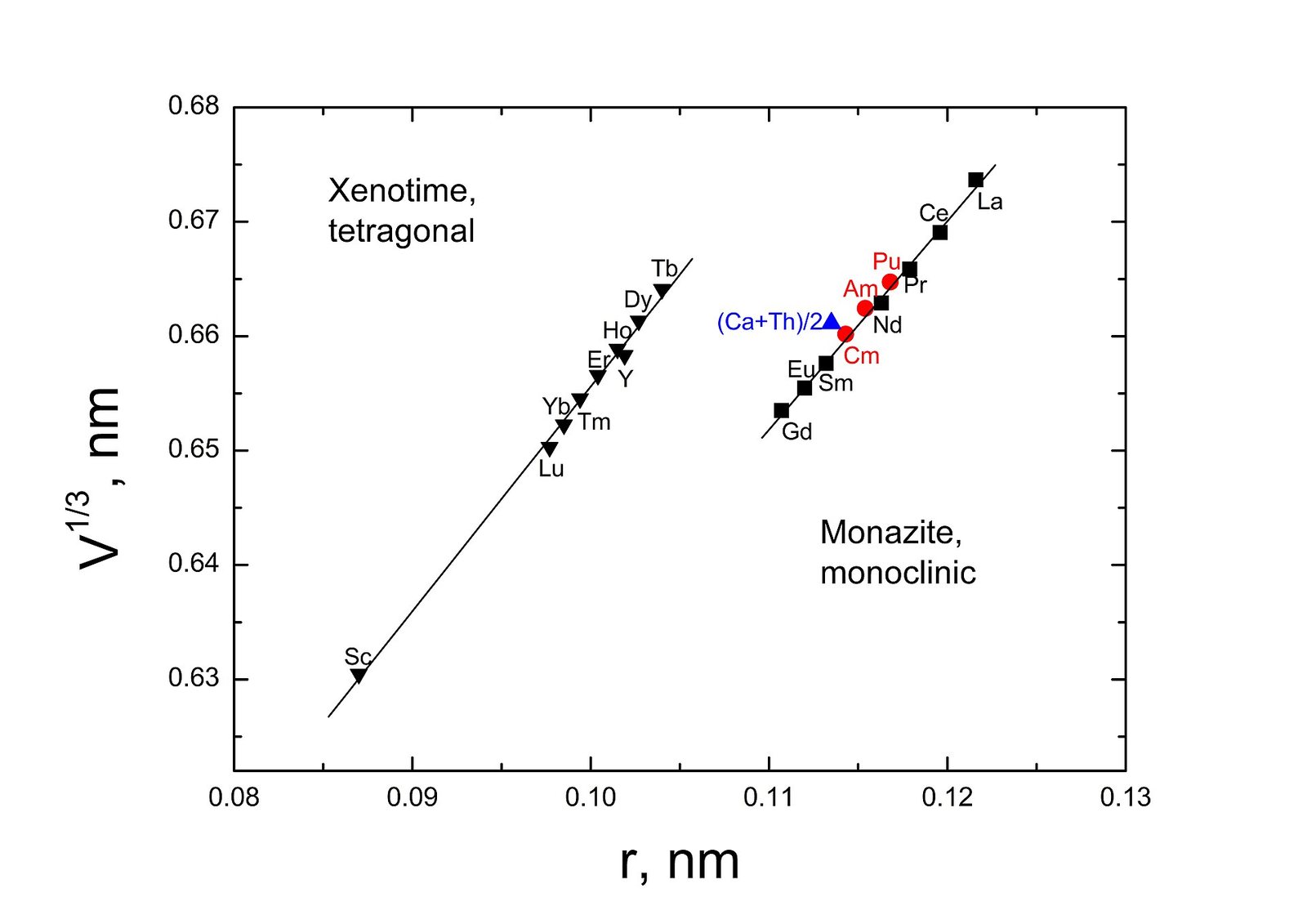
Xenotime
A yttrium phosphate that also carries the heavy rare earths — dysprosium, terbium, erbium — that magnets need.
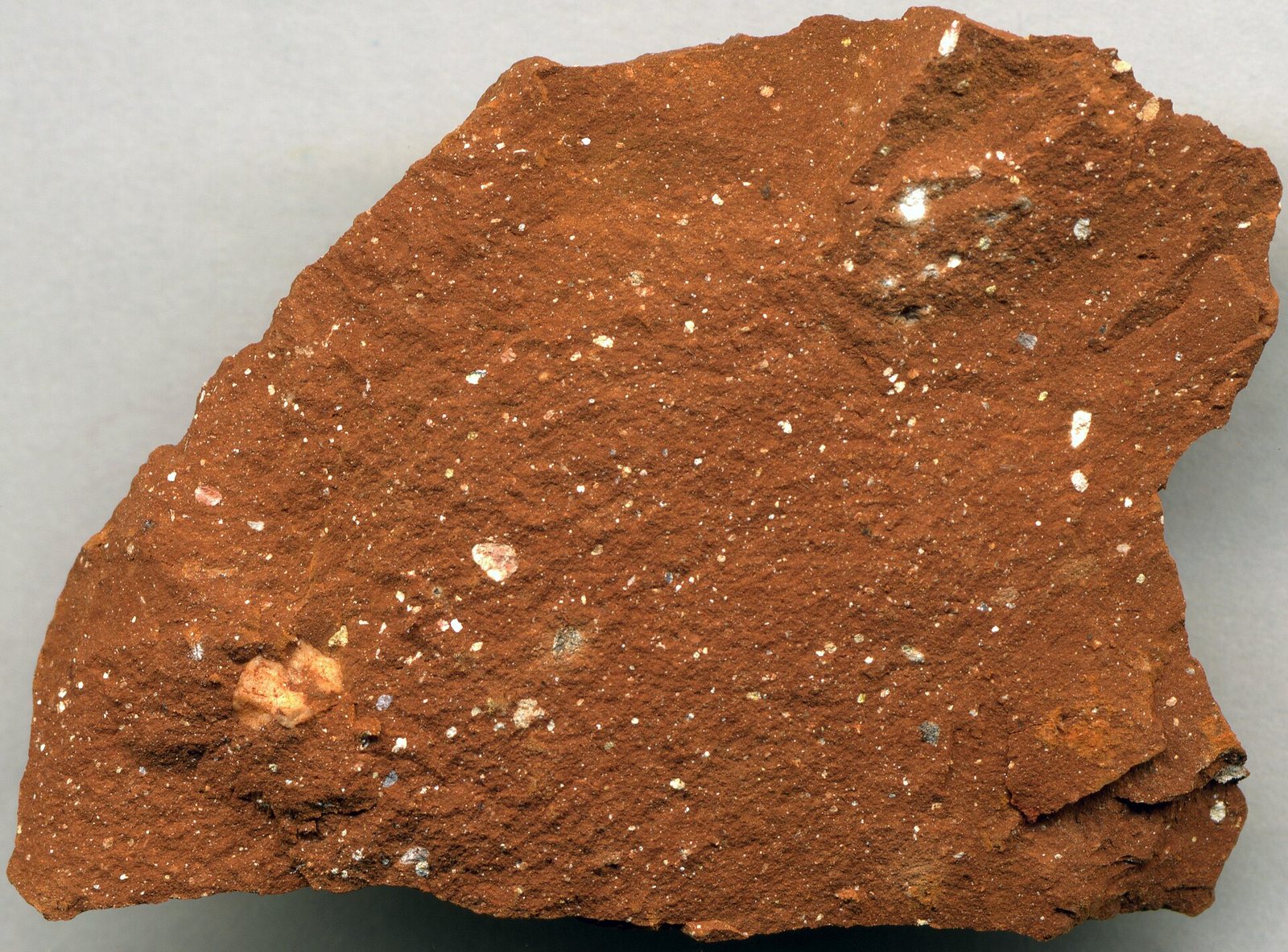
Ion-Adsorption Clay
Weathered granite where rare-earth ions cling loosely to clay surfaces. Grades are very low but the metal washes out…
Price
average, dollars per kilogram: Holmium oxide, 99.5% minimum
Annual averagedollars per kilogram
Basis: average, dollars per kilogram: Holmium oxide, 99.5% minimum. Annual averages as published in USGS Mineral Commodity Summaries 2026 · source ↗. These are reference annual averages, not a live market quote.
What it is used for
All end markets →| End market | What it does there | Importance |
|---|---|---|
| Medicine & Health | Surgical lasers | Present |