鉱石から製品まで、経路を追跡
The Materials Atlas
素材 鉱山・鉱床 処理・精製 管理移転経路 サプライチェーン 企業 ニュース
棚別素材 バッテリー材料 希土類元素 銅・電気 半導体材料 核物質 航空宇宙・防衛 貴金属 鉄鋼・合金金属 工業用鉱物 農業用鉱物 エネルギー原材料 鉱石鉱物 周期表
需要 最終市場 技術 素材計算機 地図 スクリーナー
学習・ツール 学ぶ用語集 データに質問するAIエージェント 調査・データAPI ★ 保存済み
概要 運営について方法論 データソースお問い合わせ 免責事項
表示オプション
🧭 ガイドビュー 鉱石品位、精鉱、精錬、副産物といった用語が初めての方へ。閲覧しながらすべての用語をわかりやすく解説します。同じデータを、解説付きでご覧いただけます。
⚡ 専門家向け解説 業界の知識はお持ちのはず。データのみを——簡潔、迅速、コンパクトに、余分な説明なしで。これがデフォルト表示です。
テーマ
インターフェース言語
深度 素材ページは4段階のレベルで構成されている。任意の素材ページでレベルを選択すると、その設定が記憶される。
★ 保存済み 調査・データ
Diamond (Industrial)

工業用鉱物

Diamond (Industrial)

Diamond used not as a gem but as a cutting edge — most of it grown in a press rather than dug out of the ground.

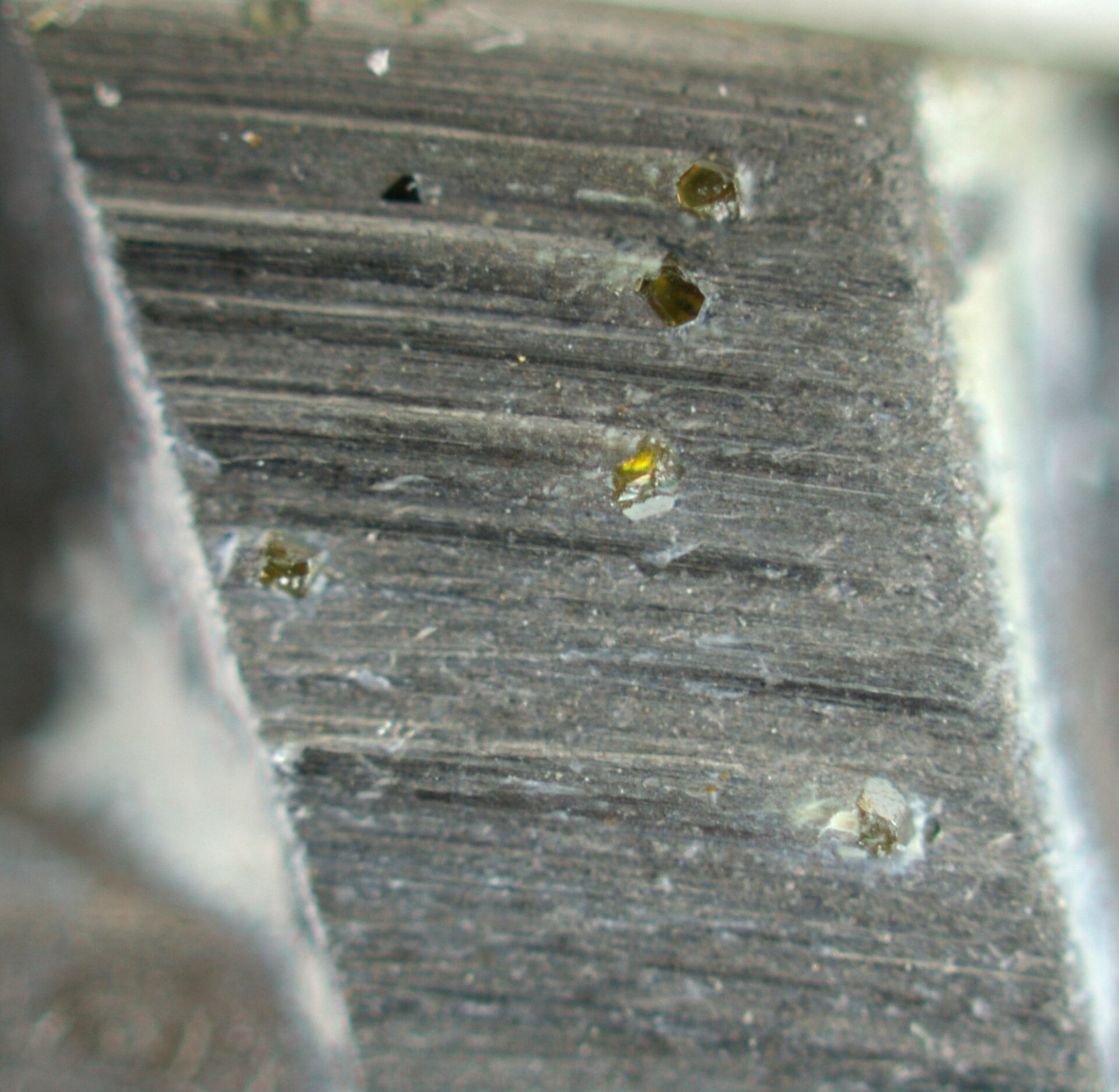
Diamond blade very macro · Hustvedt · CC BY-SA 3.0 · Wikimedia Commons

これは何か

Diamond used not as a gem but as a cutting edge — most of it grown in a press rather than dug out of the ground.

なぜ重要なのか

Synthetic industrial diamond long ago overtook natural stones. It is also becoming a semiconductor for extreme power electronics.

Where it is in the Earth

Diamond is a form of carbon that crystallises under extreme pressure and temperature — conditions found naturally only deep in the Earth's mantle, at depths broadly exceeding one hundred and fifty kilometres. The carbon atoms arrange themselves into a three-dimensional lattice that is the hardest known natural substance, which is exactly why industry wants it. The pressure required to form diamond cannot be replicated near the surface; the crystals that exist in mineable deposits were created billions of years ago in ancient, stable portions of the continental crust known as cratons, where the mantle beneath is both thick and cold enough to sustain the right conditions.

The mechanism that brings diamond to the surface is a rare and violent one. A type of magma called kimberlite forms deep in the mantle and rises extremely rapidly through cylindrical conduits. Because the ascent is fast — geologically speaking — the diamonds it carries do not have time to revert to graphite, the stable form of carbon at surface pressures. When the eruption reaches the surface and the pressure drops, the magma solidifies into a carrot-shaped body of rock called a kimberlite pipe. A related rock type, lamproite, hosts some deposits by the same general process. These pipes are the primary source of natural mined diamond. Over geological time, erosion can liberate diamonds from a pipe and deposit them in river gravels or coastal sediments, forming what are called alluvial or marine placer deposits, which are also mined.

The geography of diamond deposits follows the geography of ancient cratons. Russia's Siberian craton, the Kaapvaal craton of southern Africa, and the Congo craton together account for the overwhelming majority of known reserves, which is why Russia, Botswana, Congo, Angola, and South Africa dominate the production and reserve tables shown above. The United States has no reported reserves in the dataset. Kimberlite pipes are numerous but most are too small, too deep, or too low in diamond content to be worth mining; only a small fraction of known pipes ever become operating mines.

Getting it out

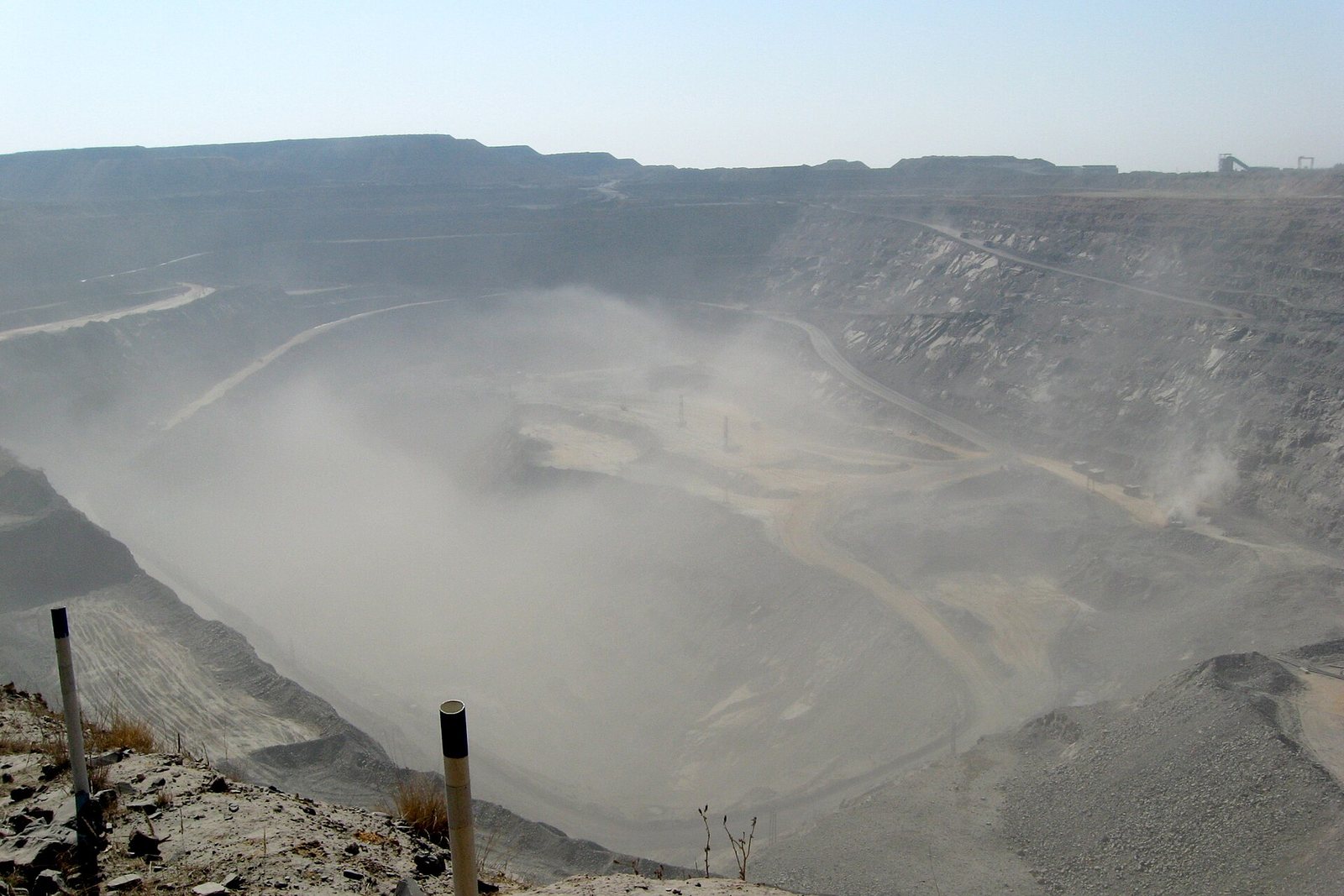
The method used to extract diamonds from a kimberlite pipe depends largely on how deeply the ore body extends below the surface and how much of the upper portion has already been removed. Early in a mine's life, the top of the pipe is accessible from the open air and the ore is taken by open-pit methods: large benches are cut into the rock in a descending spiral, and the broken rock is hauled out by trucks. Jwaneng in Botswana, one of the largest diamond mines in the world by value, operates as an open pit. As the pit deepens, the economics of hauling waste rock out of an ever-larger hole eventually tip in favour of underground methods, and many older pipes — including Udachny in Russia — have transitioned or are transitioning to underground extraction, typically using block caving or similar mass-mining techniques where the ore is induced to collapse into draw points below.

Alluvial and marine deposits are mined very differently. River gravels may be worked by mechanical excavators and simple washing plants. Marine deposits off the Namibian coast are recovered by purpose-built vessels that use suction or crawler systems on the seabed. These placer operations typically involve enormous volumes of sediment for relatively modest diamond recovery, because the stones, while dense, are scattered through a large body of material.

Grade in diamond mining is expressed in carats per hundred tonnes — a carat being one-fifth of a gram. A rich kimberlite pipe might carry several carats per hundred tonnes, while a poorer one may hold less than one. Even at the richer end, this means that several tens of tonnes of rock must be moved and processed to recover a single carat of diamond. The ratio of waste rock to ore, called the strip ratio in open-pit mines, can be very high by the later stages of a pit's life, which is a significant driver of operating cost and the reason transitions to underground mining become necessary.

What pulls on it

Industrial diamond's defining property is hardness. It is used wherever a material needs to be cut, ground, drilled, or polished and where conventional abrasives — silicon carbide, aluminium oxide — wear too quickly or leave too coarse a finish. The dominant use by volume is as abrasive grit and powder bonded into grinding wheels, cutting discs, drill bits, and wire saws. Stone processing — cutting granite, marble, and concrete — consumes large quantities. So does the machining of hard metals and ceramics, and the sharpening of other cutting tools. Polycrystalline diamond compacts, known as PCD, are made by sintering diamond powder under pressure and are used as cutting inserts for oil and gas drill bits and for machining non-ferrous metals. These applications together account for the great majority of industrial diamond consumption.

A smaller but technically significant demand stream comes from electronics. Diamond has thermal conductivity higher than any other material, a wide electronic band gap (meaning it resists breakdown at high voltages), and the ability to carry current when suitably doped. CVD diamond wafers are used as heat spreaders in high-power electronics and are under active development as a semiconductor substrate for power devices that operate at voltages and temperatures that would destroy silicon or even silicon carbide. This use is currently modest in volume but has attracted substantial research attention because the performance ceiling it could offer is substantially above what silicon-based devices can reach.

Demand for industrial diamond would change most sharply if the industries it serves changed their primary processes. A sustained reduction in construction and infrastructure activity would reduce demand for stone-cutting tools. A shift away from mechanical drilling in oil and gas towards other extraction methods would reduce demand for PCD drill bits. Conversely, broader adoption of diamond semiconductors in power electronics — for electric vehicles, grid inverters, or high-frequency communications — would pull demand toward the higher-purity CVD material rather than abrasive-grade grit. These two segments of the market are largely separate in terms of product specification and supply chain.

数値の読み方に注意してください。 Reported in carats; natural and synthetic are separate lines. Grit, powder, PCD cutters, CVD wafers.

Mine production

Mine productionmillion carats 2025 (推定値) 世界合計 38.00 million carats

USGS Mineral Commodity Summaries 2026 · Reported in carats; natural and synthetic are separate lines. · 出典 ↗

テーブルを横にスクロールすると残りの列が表示されます。

生産 世界に占める割合
Russia 16.00 42.1%
Congo (Kinshasa) 7.00 18.4%
Botswana 5.00 13.2%
Zimbabwe 5.00 13.2%
South Africa 3.00 7.9%
Other countries 1.00 2.6%
Angola 1.00 2.6%
United States Zero
世界合計 38.00100%

「非開示」とは、個別企業のデータが特定されないようUSGSが数値を公表しなかったことを意味し、ゼロを意味するものではありません。出典が各数値を独立して丸め処理しており、「その他の国」の内訳を常に示しているわけではないため、各国の数値の合計が世界合計と一致しないことがあります。

埋蔵量の保有者

「埋蔵量」は厳密な用語です。既知の鉱床のうち、現在の価格と現在の技術で経済的に採掘できる部分を指し、地中に存在するすべてのものを意味するわけではありません。埋蔵量は、価格が上昇するか新たなプロセスが開発されると増加し、逆の場合は減少します。

Reserves

Reservesmillion carats 2025

USGS Mineral Commodity Summaries 2026 · 出典 ↗

埋蔵量世界に占める割合
Russia 750.0 44.1%
Other countries 250.0 14.7%
Botswana 250.0 14.7%
Congo (Kinshasa) 150.0 8.8%
Angola 150.0 8.8%
South Africa 87.00 5.1%
Zimbabwe 56.00 3.3%
United States Not applicable
世界合計 1,700100%

価格

unit value of imports, dollars per carat

年間平均dollars per carat

2021 · 13.00 高 14.20 dollars per carat 2025 · 6.70

基準: unit value of imports, dollars per carat. 以下に公表された年間平均値: USGS Mineral Commodity Summaries 2026 · 出典 ↗. これらは参照用の年間平均値であり、リアルタイムの市況相場ではない。

産出鉱山

全鉱山 →
Jwaneng
Jwaneng, Botswana — The richest diamond mine in the world by value. Jwaneng Open Mine, Public domain via Wikimedia Commons

Jwaneng →

輸出規制

支配適用対象
BotswanaExport ban Raw diamonds (2025).
ChinaExport licensing requirement for materials and technologies Antimony (2024), bismuth (2025), synthesized diamond (2025), gallium (2023), germanium (2023), graphite (2023), indium (2025), magnesium materials (2024), molybdenum (2025), rare earths (2025), silver (2026), tellurium (2025), tungsten (2025), and items related to lithium batteries and artificial graphite anode materials (2025).

USGS Mineral Commodity Summaries 2026, table 4 — controls in effect as of January 2026, excluding controls since lifted.

素材

全素材 重要鉱物 レアアース バッテリー材料 鉱石鉱物 周期表 スクリーナー

地下

鉱山・鉱床 処理・精製 地図

経済

管理移転経路 サプライチェーン 最終市場 技術 企業 素材計算機

学ぶ

学ぶ用語集 データに質問するAIエージェント 調査・データオープンAPI ニュース★ 保存済み

運営について

運営についてお問い合わせ 方法論データソース 編集方針 プライバシーポリシー利用規約 免責事項