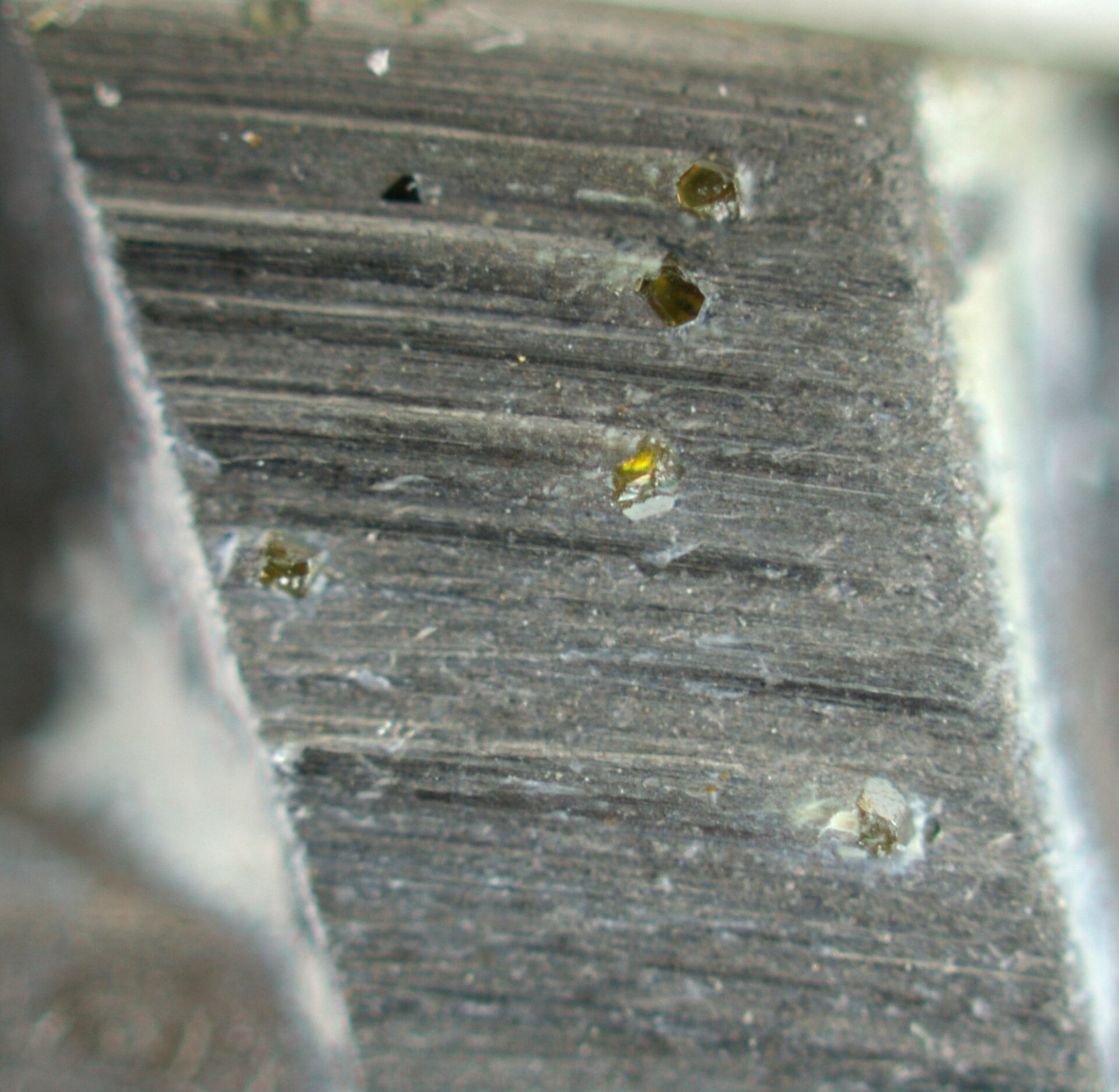
这是什么?
Diamond used not as a gem but as a cutting edge — most of it grown in a press rather than dug out of the ground.
为何重要?
Synthetic industrial diamond long ago overtook natural stones. It is also becoming a semiconductor for extreme power electronics.
Where it is in the Earth
Diamond is a form of carbon that crystallises under extreme pressure and temperature — conditions found naturally only deep in the Earth's mantle, at depths broadly exceeding one hundred and fifty kilometres. The carbon atoms arrange themselves into a three-dimensional lattice that is the hardest known natural substance, which is exactly why industry wants it. The pressure required to form diamond cannot be replicated near the surface; the crystals that exist in mineable deposits were created billions of years ago in ancient, stable portions of the continental crust known as cratons, where the mantle beneath is both thick and cold enough to sustain the right conditions.
The mechanism that brings diamond to the surface is a rare and violent one. A type of magma called kimberlite forms deep in the mantle and rises extremely rapidly through cylindrical conduits. Because the ascent is fast — geologically speaking — the diamonds it carries do not have time to revert to graphite, the stable form of carbon at surface pressures. When the eruption reaches the surface and the pressure drops, the magma solidifies into a carrot-shaped body of rock called a kimberlite pipe. A related rock type, lamproite, hosts some deposits by the same general process. These pipes are the primary source of natural mined diamond. Over geological time, erosion can liberate diamonds from a pipe and deposit them in river gravels or coastal sediments, forming what are called alluvial or marine placer deposits, which are also mined.
The geography of diamond deposits follows the geography of ancient cratons. Russia's Siberian craton, the Kaapvaal craton of southern Africa, and the Congo craton together account for the overwhelming majority of known reserves, which is why Russia, Botswana, Congo, Angola, and South Africa dominate the production and reserve tables shown above. The United States has no reported reserves in the dataset. Kimberlite pipes are numerous but most are too small, too deep, or too low in diamond content to be worth mining; only a small fraction of known pipes ever become operating mines.
Getting it out
The method used to extract diamonds from a kimberlite pipe depends largely on how deeply the ore body extends below the surface and how much of the upper portion has already been removed. Early in a mine's life, the top of the pipe is accessible from the open air and the ore is taken by open-pit methods: large benches are cut into the rock in a descending spiral, and the broken rock is hauled out by trucks. Jwaneng in Botswana, one of the largest diamond mines in the world by value, operates as an open pit. As the pit deepens, the economics of hauling waste rock out of an ever-larger hole eventually tip in favour of underground methods, and many older pipes — including Udachny in Russia — have transitioned or are transitioning to underground extraction, typically using block caving or similar mass-mining techniques where the ore is induced to collapse into draw points below.
Alluvial and marine deposits are mined very differently. River gravels may be worked by mechanical excavators and simple washing plants. Marine deposits off the Namibian coast are recovered by purpose-built vessels that use suction or crawler systems on the seabed. These placer operations typically involve enormous volumes of sediment for relatively modest diamond recovery, because the stones, while dense, are scattered through a large body of material.
Grade in diamond mining is expressed in carats per hundred tonnes — a carat being one-fifth of a gram. A rich kimberlite pipe might carry several carats per hundred tonnes, while a poorer one may hold less than one. Even at the richer end, this means that several tens of tonnes of rock must be moved and processed to recover a single carat of diamond. The ratio of waste rock to ore, called the strip ratio in open-pit mines, can be very high by the later stages of a pit's life, which is a significant driver of operating cost and the reason transitions to underground mining become necessary.
What pulls on it
Industrial diamond's defining property is hardness. It is used wherever a material needs to be cut, ground, drilled, or polished and where conventional abrasives — silicon carbide, aluminium oxide — wear too quickly or leave too coarse a finish. The dominant use by volume is as abrasive grit and powder bonded into grinding wheels, cutting discs, drill bits, and wire saws. Stone processing — cutting granite, marble, and concrete — consumes large quantities. So does the machining of hard metals and ceramics, and the sharpening of other cutting tools. Polycrystalline diamond compacts, known as PCD, are made by sintering diamond powder under pressure and are used as cutting inserts for oil and gas drill bits and for machining non-ferrous metals. These applications together account for the great majority of industrial diamond consumption.
A smaller but technically significant demand stream comes from electronics. Diamond has thermal conductivity higher than any other material, a wide electronic band gap (meaning it resists breakdown at high voltages), and the ability to carry current when suitably doped. CVD diamond wafers are used as heat spreaders in high-power electronics and are under active development as a semiconductor substrate for power devices that operate at voltages and temperatures that would destroy silicon or even silicon carbide. This use is currently modest in volume but has attracted substantial research attention because the performance ceiling it could offer is substantially above what silicon-based devices can reach.
Demand for industrial diamond would change most sharply if the industries it serves changed their primary processes. A sustained reduction in construction and infrastructure activity would reduce demand for stone-cutting tools. A shift away from mechanical drilling in oil and gas towards other extraction methods would reduce demand for PCD drill bits. Conversely, broader adoption of diamond semiconductors in power electronics — for electric vehicles, grid inverters, or high-frequency communications — would pull demand toward the higher-purity CVD material rather than abrasive-grade grit. These two segments of the market are largely separate in terms of product specification and supply chain.
生产主体
在地图上查看 →Mine production
Mine productionmillion carats 2025 (估计值) 全球合计 38.00 million carats
USGS Mineral Commodity Summaries 2026 · Reported in carats; natural and synthetic are separate lines. · 来源 ↗
横向滚动表格以查看其余列。
| 国家/地区 | 产量 | 占全球份额 |
|---|---|---|
| Russia | 16.00 | 42.1% |
| Congo (Kinshasa) | 7.00 | 18.4% |
| Botswana | 5.00 | 13.2% |
| Zimbabwe | 5.00 | 13.2% |
| South Africa | 3.00 | 7.9% |
| Other countries | 1.00 | 2.6% |
| Angola | 1.00 | 2.6% |
| United States | Zero | — |
| 全球合计 | 38.00 | 100% |
"未披露"表示美国地质调查局(USGS)为避免泄露单个企业数据而对该数字进行了保密处理——并不意味着数值为零。各国行数之和不一定等于世界合计,原因在于来源对每个数字单独进行四舍五入处理,且并不总是单独列出"其他国家/地区"一行。
储量持有方
Reserves
Reservesmillion carats 2025
USGS Mineral Commodity Summaries 2026 · 来源 ↗
| 国家/地区 | 储量 | 占全球份额 |
|---|---|---|
| Russia | 750.0 | 44.1% |
| Other countries | 250.0 | 14.7% |
| Botswana | 250.0 | 14.7% |
| Congo (Kinshasa) | 150.0 | 8.8% |
| Angola | 150.0 | 8.8% |
| South Africa | 87.00 | 5.1% |
| Zimbabwe | 56.00 | 3.3% |
| United States | Not applicable | — |
| 全球合计 | 1,700 | 100% |
价格
unit value of imports, dollars per carat
年度平均值dollars per carat
基准: unit value of imports, dollars per carat. 年度平均值,来源: USGS Mineral Commodity Summaries 2026 · 来源 ↗. 以下为参考年度均价,非实时市场报价。
产出该材料的矿山
所有矿山 →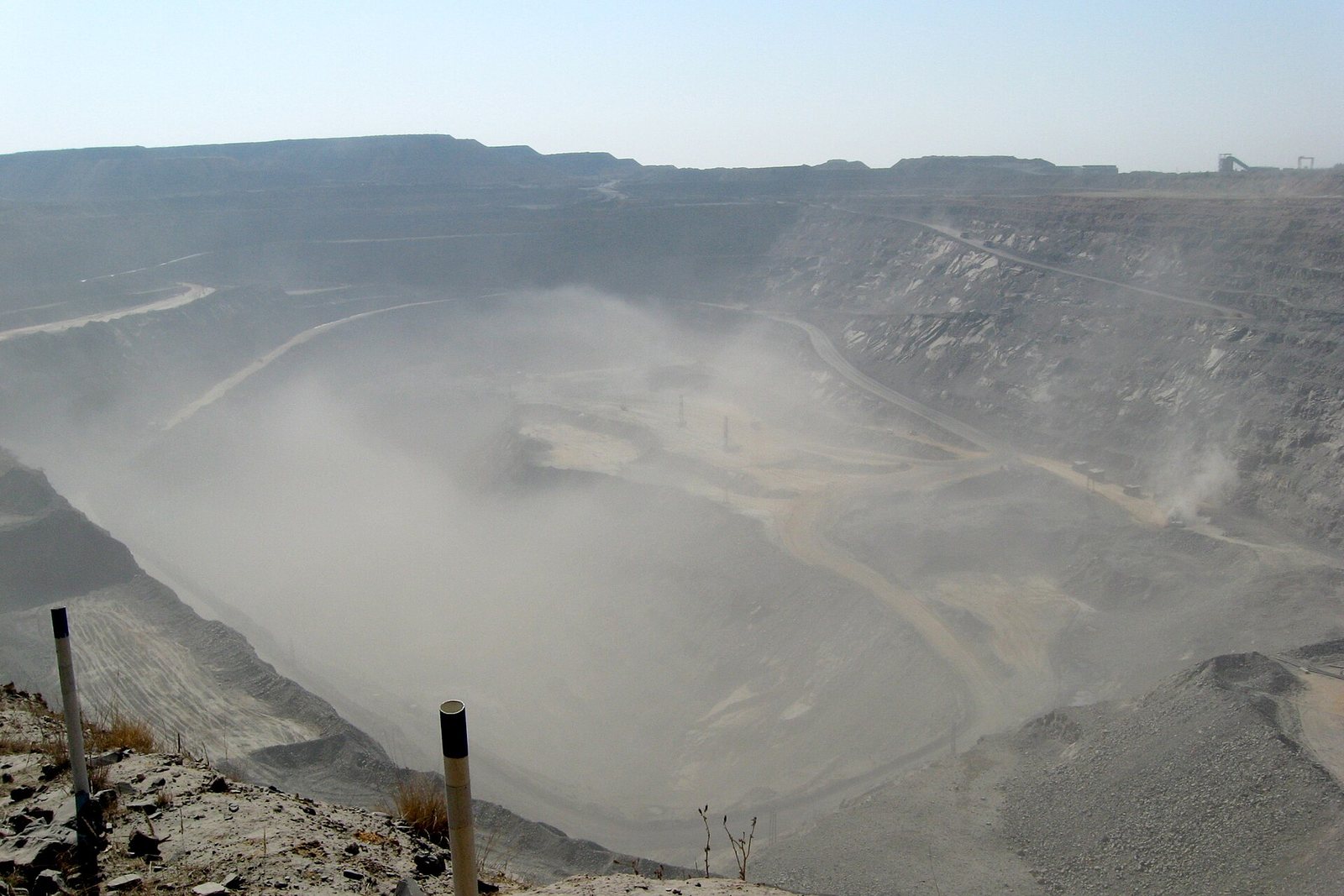
出口管制
| 国家/地区 | 管控 | 适用于 |
|---|---|---|
| Botswana | Export ban | Raw diamonds (2025). ↗ |
| China | Export licensing requirement for materials and technologies | Antimony (2024), bismuth (2025), synthesized diamond (2025), gallium (2023), germanium (2023), graphite (2023), indium (2025), magnesium materials (2024), molybdenum (2025), rare earths (2025), silver (2026), tellurium (2025), tungsten (2025), and items related to lithium batteries and artificial graphite anode materials (2025). ↗ |
USGS Mineral Commodity Summaries 2026, table 4 — controls in effect as of January 2026, excluding controls since lifted.