De la roca al producto, trazado
The Materials Atlas
Materiales Minas y yacimientos Procesamiento y refinación Recorridos de custodia Cadenas de suministro Empresas Países Noticias
Materiales por categoría Materiales para baterías Elementos de tierras raras Cobre y electricidad Materiales para semiconductores Materiales nucleares Aeroespacial y Defensa Metales preciosos Acero y metales de aleación Minerales industriales Minerales Agrícolas Materias primas energéticas Minerales mena Tabla periódica
Demanda Mercados finales Tecnologías Calculadora de materiales Mapas Clasificador
Aprender y herramientas AprenderGlosario Consultar los datosAgentes de IA Investigación y datosAPI ★ Guardado
Acerca de Quiénes somosMetodología Fuentes de datosContacto Aviso legal
Opciones de lectura
🧭 Vista guiada ¿Es nuevo en esto: leyes de mena, concentrado, refinación, subproductos? Explicamos cada término mientras navega, en lenguaje claro. Los mismos datos, con la ayuda integrada.
⚡ Vista de experto Usted ya conoce el sector. Solo los datos: limpios, rápidos y compactos, sin explicaciones adicionales. Esta es la vista predeterminada.
Tema
Idioma de la interfaz
Profundidad Las páginas de materiales están redactadas en cuatro niveles. Seleccione uno en cualquier página de material y se recordará.
★ Guardado Investigación y datos
Iodine

Minerales industriales

Iodine I · 53

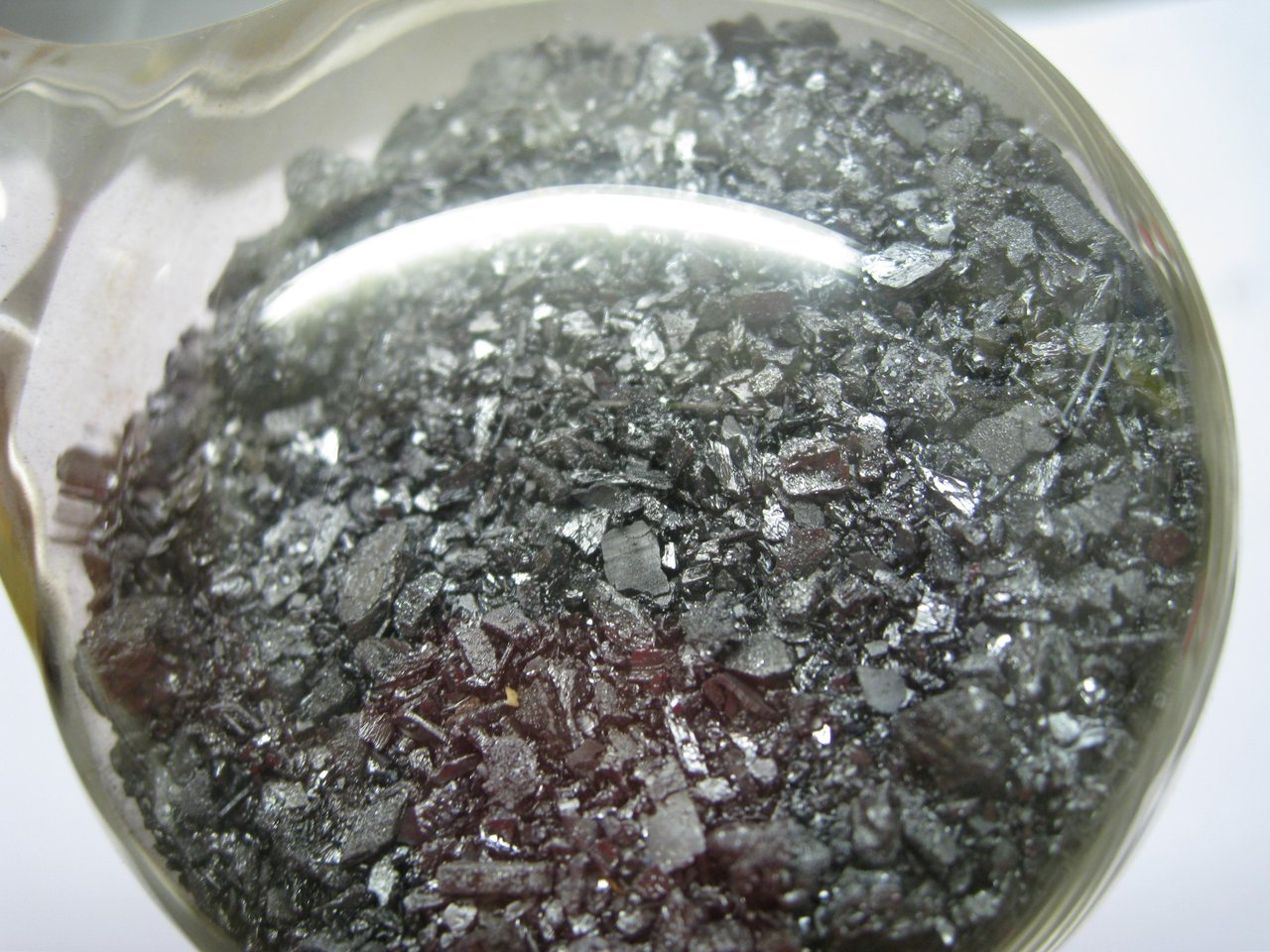
A purple-black element that turns straight from solid to vapour, extracted from ancient nitrate deposits and from oilfield brine.

Iodine crystals, 99.9% purity · Dnn87 · CC BY 3.0 · Wikimedia Commons

¿Qué es?

A purple-black element that turns straight from solid to vapour, extracted from ancient nitrate deposits and from oilfield brine.

¿Por qué importa?

Iodised salt prevented a global cause of preventable brain damage; iodine is also in X-ray contrast media and in polarising film for every LCD screen.

Where it is in the Earth

Iodine does not form ore minerals in the conventional sense — there is no discrete iodine-bearing crystal that a geologist chips from a vein. Instead, the element is dissolved in water, and the question of where it concentrates is really a question of where certain waters have been trapped and enriched over geological time. The two commercial source types are very different in origin but share this common thread: both are ancient brines, waters that have spent millions of years in contact with organic-rich sediments.

In the Atacama Desert of northern Chile, iodine occurs alongside nitrate salts — collectively called caliche — in one of the driest places on Earth. The prevailing explanation is that iodine originally entered the atmosphere from the ocean, was carried inland by wind and fog, and accumulated in surface and near-surface evaporite deposits over tens of millions of years in a climate so arid that rainfall never washed it away. The caliche layers, which can extend across large areas of the Atacama, hold iodine at concentrations that make extraction worthwhile. This is a sedimentary accumulation, not a hydrothermal or igneous one.

Japan's iodine comes from a completely different setting: deep formation waters in Chiba Prefecture, in the Minami Kanto gas field east of Tokyo. Here, ancient marine sediments rich in organic matter were buried and compacted over geological time. The iodine that living organisms — particularly marine algae and plankton — had concentrated in their tissues was released into the pore water as the sediments were buried. That iodine-rich brine, under pressure, is brought to the surface as a by-product of natural gas production. Japan's reserve figures in the table appear very large relative to its current production rate precisely because this brine reservoir is deep and extensive, even if the flow rates recoverable at any given time are constrained.

Getting it out

Because iodine exists dissolved in water or locked in salt-bearing rock rather than in a solid ore mineral, the methods used to extract it look quite different from conventional hard-rock mining. In Chile's Atacama, the caliche — a hard, cemented layer of nitrate and associated salts — is mined from open pits using earthmoving equipment. The iodine content of the caliche is low enough that large volumes of material must be shifted to produce relatively small quantities of iodine; the economics are tied closely to the simultaneous recovery of nitrates, which are the primary product. Iodine is in this sense a co-product rather than the sole target of the operation.

In Japan, and in the oilfield brines of Turkmenistan, Iran, Azerbaijan and elsewhere in the table, there is no digging at all. Wells are drilled into the subsurface formation, and the brine is pumped or allowed to flow to the surface under its own pressure. The 'grade' in this context is the concentration of iodine dissolved in the brine, typically measured in milligrams per litre. A higher concentration means fewer litres of brine need to be processed to yield a kilogram of iodine, which matters greatly for energy and infrastructure costs. Because the brine has to be handled and disposed of in large quantities, and because it often contains other dissolved materials, operating a brine-based iodine plant is as much a water-management exercise as a mining one.

The United States has known brine resources — the reserve figure in the table reflects this — but domestic production is withheld by the reporting agency, meaning the source does not publish a specific number. What is clear is that the country relies on imports, predominantly from Chile and Japan, for the majority of its needs.

What pulls on it

Iodine demand falls into several distinct categories that have little to do with one another technically, which means the market can be pulled in different directions simultaneously. The oldest and most widely known use is in human nutrition: iodine added to table salt corrects a dietary deficiency that, left unaddressed, causes goitre and impairs cognitive development. This use is large in aggregate but grows only as slowly as population does, and in countries where iodisation programmes are already universal it is essentially stable.

X-ray contrast media represent a substantial industrial use. These are iodine-containing compounds injected into patients before certain medical imaging procedures to make blood vessels and organs more visible. Demand here tracks the number of imaging procedures performed globally — a figure that rises as populations age and as diagnostic medicine expands in middle-income countries. A different kind of imaging underpins a third major use: polarising film for liquid crystal displays. Every LCD screen — in televisions, computers and smartphones — contains a layer of polyvinyl alcohol film that has been oriented and dyed with iodine to polarise light. This application grew rapidly alongside the consumer electronics industry and remains significant, though it is sensitive to changes in display technology over the longer term.

Biocidal applications — disinfectants, antiseptics, animal feed supplements and crop protection — collectively account for another share of demand. Industrial catalysts, particularly in the production of certain organic chemicals, consume iodine in a way that is tied closely to the output of specific chemical plants rather than to broad economic trends. For demand to shift sharply downward, a successor display technology that does not use iodine-based polarising film would have to achieve wide deployment; for it to shift sharply upward, a significant new application at scale would have to emerge.

Interprete correctamente las cifras. Reported as elemental iodine content. Crude and resublimed iodine, potassium iodide and organic compounds.

Quién lo produce

Verlo en un mapa →

Mine production

Mine productionmetric tons 2025 (estimado) Total mundial 34,000 metric tons

USGS Mineral Commodity Summaries 2026 · Reported as elemental iodine content. · fuente ↗

Desplace la tabla lateralmente para ver las columnas restantes.

PaísProducción Cuota mundial
Chile 23,000 67.6%
Japan 9,000 26.5%
Turkmenistan 800.0 2.4%
Iran 700.0 2.1%
Azerbaijan 210.0 0.6%
Indonesia 50.00 0.1%
Russia 8.00 0.0%
United States Withheld
Total mundial 34,000100%

«Withheld» significa que el USGS suprimió el dato para evitar revelar información de una empresa concreta — no equivale a cero. Las filas por país no siempre suman el total mundial porque la fuente redondea cada cifra de forma independiente y no siempre desglosa una línea de «otros países».

Quién posee las reservas

«Reservas» es un término preciso. Designa la parte de un yacimiento conocido que podría extraerse económicamente en este momento, con los precios y la tecnología actuales — no todo lo que existe en el subsuelo. Las reservas aumentan cuando suben los precios o se inventa un nuevo proceso, y disminuyen cuando bajan.

Reserves

Reservesmetric tons 2025

USGS Mineral Commodity Summaries 2026 · fuente ↗

PaísReservasCuota mundial
Japan 4,900,000 77.8%
Chile 750,000 11.9%
United States 250,000 4.0%
Azerbaijan 170,000 2.7%
Russia 120,000 1.9%
Turkmenistan 70,000 1.1%
Iran 40,000 0.6%
Indonesia Not applicable
Total mundial >6,300,000100%

La fuente publica este total mundial como un valor acotado y no como una cifra puntual, por lo que las cuotas de la última columna son también valores acotados.

Precio

crude iodine, average unit value of imports (cost, insurance, and freight), dollars per kilogram

Promedio anualdollars per kilogram

2021 · 32.72 alto 68.00 dollars per kilogram 2025 · 68.00

Base: crude iodine, average unit value of imports (cost, insurance, and freight), dollars per kilogram. Promedios anuales publicados en USGS Mineral Commodity Summaries 2026 · fuente ↗. Estos son promedios anuales de referencia, no una cotización de mercado en tiempo real.

Materiales

Todos los materiales Minerales críticos Tierras raras Materiales para baterías Minerales mena Tabla periódica Clasificador

El subsuelo

Minas y yacimientos Procesamiento y refinación Países Mapas

La economía

Recorridos de custodia Cadenas de suministro Mercados finales Tecnologías Empresas Calculadora de materiales

Aprender

AprenderGlosario Consultar los datosAgentes de IA Investigación y datosAPI abierta Noticias★ Guardado

Quiénes somos

Quiénes somosContacto MetodologíaFuentes de datos Política editorial Política de privacidadCondiciones de uso Aviso legal