Từ quặng đến sản phẩm, có truy xuất nguồn gốc
The Materials Atlas
Vật liệu Mỏ & mỏ quặng Chế biến & tinh luyện Các hành trình quyền sở hữu Các chuỗi cung ứng Công ty Quốc gia Tin tức
Vật liệu theo kệ Vật liệu pin Nguyên tố đất hiếm Đồng & Điện Vật liệu bán dẫn Vật liệu hạt nhân Hàng không vũ trụ & Quốc phòng Kim loại quý Thép & Kim loại hợp kim Khoáng vật công nghiệp Khoáng sản nông nghiệp Nguyên liệu thô năng lượng Các khoáng vật quặng Bảng tuần hoàn
Nhu cầu Các thị trường đầu ra Công nghệ Máy tính vật liệu Bản đồ Bộ lọc
Tìm hiểu & công cụ Tìm hiểuBảng thuật ngữ Hỏi dữ liệuTác nhân AI Nghiên cứu & dữ liệuAPI ★ Đã lưu
Giới thiệu Về chúng tôiPhương pháp luận Nguồn dữ liệuLiên hệ Tuyên bố miễn trách nhiệm
Tùy chọn đọc
🧭 Chế độ xem có hướng dẫn Mới với lĩnh vực này — hàm lượng quặng, quặng tinh, tinh luyện, sản phẩm phụ? Chúng tôi giải thích mọi thuật ngữ khi bạn duyệt, bằng ngôn ngữ dễ hiểu. Cùng dữ liệu đó, với phần hỗ trợ được tích hợp sẵn.
⚡ Chế độ xem chuyên gia Bạn đã hiểu ngành. Chỉ cần dữ liệu — rõ ràng, nhanh và gọn, không có giải thích thêm. Đây là chế độ xem mặc định.
Chủ đề
Ngôn ngữ giao diện
Độ sâu Các trang vật liệu được biên soạn ở bốn cấp độ. Chọn một cấp độ trên bất kỳ trang vật liệu nào và lựa chọn đó sẽ được ghi nhớ.
★ Đã lưu Nghiên cứu & dữ liệu
Iodine

Khoáng vật công nghiệp

Iodine I · 53

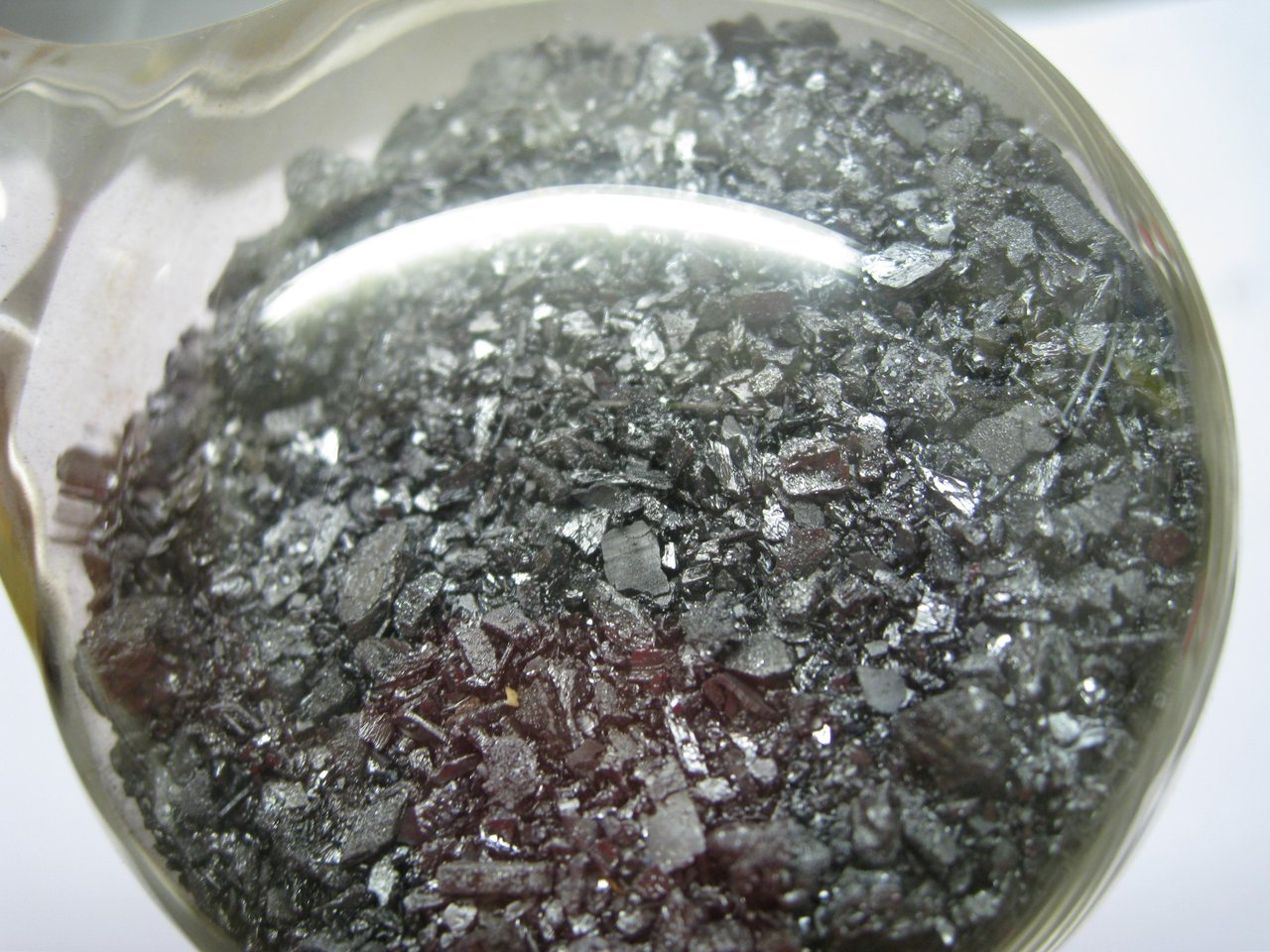
A purple-black element that turns straight from solid to vapour, extracted from ancient nitrate deposits and from oilfield brine.

Iodine crystals, 99.9% purity · Dnn87 · CC BY 3.0 · Wikimedia Commons

Đây là gì?

A purple-black element that turns straight from solid to vapour, extracted from ancient nitrate deposits and from oilfield brine.

Tại sao điều này quan trọng?

Iodised salt prevented a global cause of preventable brain damage; iodine is also in X-ray contrast media and in polarising film for every LCD screen.

Where it is in the Earth

Iodine does not form ore minerals in the conventional sense — there is no discrete iodine-bearing crystal that a geologist chips from a vein. Instead, the element is dissolved in water, and the question of where it concentrates is really a question of where certain waters have been trapped and enriched over geological time. The two commercial source types are very different in origin but share this common thread: both are ancient brines, waters that have spent millions of years in contact with organic-rich sediments.

In the Atacama Desert of northern Chile, iodine occurs alongside nitrate salts — collectively called caliche — in one of the driest places on Earth. The prevailing explanation is that iodine originally entered the atmosphere from the ocean, was carried inland by wind and fog, and accumulated in surface and near-surface evaporite deposits over tens of millions of years in a climate so arid that rainfall never washed it away. The caliche layers, which can extend across large areas of the Atacama, hold iodine at concentrations that make extraction worthwhile. This is a sedimentary accumulation, not a hydrothermal or igneous one.

Japan's iodine comes from a completely different setting: deep formation waters in Chiba Prefecture, in the Minami Kanto gas field east of Tokyo. Here, ancient marine sediments rich in organic matter were buried and compacted over geological time. The iodine that living organisms — particularly marine algae and plankton — had concentrated in their tissues was released into the pore water as the sediments were buried. That iodine-rich brine, under pressure, is brought to the surface as a by-product of natural gas production. Japan's reserve figures in the table appear very large relative to its current production rate precisely because this brine reservoir is deep and extensive, even if the flow rates recoverable at any given time are constrained.

Getting it out

Because iodine exists dissolved in water or locked in salt-bearing rock rather than in a solid ore mineral, the methods used to extract it look quite different from conventional hard-rock mining. In Chile's Atacama, the caliche — a hard, cemented layer of nitrate and associated salts — is mined from open pits using earthmoving equipment. The iodine content of the caliche is low enough that large volumes of material must be shifted to produce relatively small quantities of iodine; the economics are tied closely to the simultaneous recovery of nitrates, which are the primary product. Iodine is in this sense a co-product rather than the sole target of the operation.

In Japan, and in the oilfield brines of Turkmenistan, Iran, Azerbaijan and elsewhere in the table, there is no digging at all. Wells are drilled into the subsurface formation, and the brine is pumped or allowed to flow to the surface under its own pressure. The 'grade' in this context is the concentration of iodine dissolved in the brine, typically measured in milligrams per litre. A higher concentration means fewer litres of brine need to be processed to yield a kilogram of iodine, which matters greatly for energy and infrastructure costs. Because the brine has to be handled and disposed of in large quantities, and because it often contains other dissolved materials, operating a brine-based iodine plant is as much a water-management exercise as a mining one.

The United States has known brine resources — the reserve figure in the table reflects this — but domestic production is withheld by the reporting agency, meaning the source does not publish a specific number. What is clear is that the country relies on imports, predominantly from Chile and Japan, for the majority of its needs.

What pulls on it

Iodine demand falls into several distinct categories that have little to do with one another technically, which means the market can be pulled in different directions simultaneously. The oldest and most widely known use is in human nutrition: iodine added to table salt corrects a dietary deficiency that, left unaddressed, causes goitre and impairs cognitive development. This use is large in aggregate but grows only as slowly as population does, and in countries where iodisation programmes are already universal it is essentially stable.

X-ray contrast media represent a substantial industrial use. These are iodine-containing compounds injected into patients before certain medical imaging procedures to make blood vessels and organs more visible. Demand here tracks the number of imaging procedures performed globally — a figure that rises as populations age and as diagnostic medicine expands in middle-income countries. A different kind of imaging underpins a third major use: polarising film for liquid crystal displays. Every LCD screen — in televisions, computers and smartphones — contains a layer of polyvinyl alcohol film that has been oriented and dyed with iodine to polarise light. This application grew rapidly alongside the consumer electronics industry and remains significant, though it is sensitive to changes in display technology over the longer term.

Biocidal applications — disinfectants, antiseptics, animal feed supplements and crop protection — collectively account for another share of demand. Industrial catalysts, particularly in the production of certain organic chemicals, consume iodine in a way that is tied closely to the output of specific chemical plants rather than to broad economic trends. For demand to shift sharply downward, a successor display technology that does not use iodine-based polarising film would have to achieve wide deployment; for it to shift sharply upward, a significant new application at scale would have to emerge.

Turning ore into product Cấp độ 3

In Chile, crushed caliche is leached with water or a dilute acid solution to dissolve the iodine-bearing salts. The resulting pregnant liquor — industry shorthand for a solution that carries the target element — is then treated by one of two main routes. The older blow-out process passes sulfur dioxide through the solution to reduce iodate (the form in which iodine is usually present in caliche) to iodide, then re-oxidises it with chlorine to release elemental iodine as a vapour, which is swept out by an air stream and absorbed in a scrubbing solution. The ion-exchange resin (IER) process, which has become more common, passes the pregnant liquor through resin beds that selectively adsorb the iodine; the resin is then stripped with a small volume of concentrated eluent, and the iodine is again precipitated out. IER tends to offer better recoveries at lower iodine concentrations in the feed, which is relevant as higher-grade caliche is progressively depleted.

For brine operations in Japan and elsewhere, the brine is pumped to a surface facility and subjected to a similar blow-out or IER sequence. The key difference is that there is no comminution (crushing and grinding) stage — the iodine is already in solution. This simplifies the front end of the flowsheet but introduces the challenge of handling very large volumes of dilute brine. Energy costs for pumping and heating dominate the operating cost structure. After initial recovery, the crude iodine — a dark, impure solid — is either sold in that form or further refined by sublimation (heating to vapour and re-condensing) to produce resublimed iodine of higher purity. Downstream, iodine is converted to potassium iodide, sodium iodide, organoiodine compounds and other derivatives, each of which commands a different price and serves different end markets. The losses in the system accumulate at each conversion step, and the overall yield from brine to finished compound is meaningfully less than the gross iodine extracted.

Substitution and recycling Cấp độ 3

In most of iodine's principal applications, substitution is either technically difficult or carries a meaningful performance penalty. In X-ray contrast media, the physical reason for using iodine is its high atomic number, which makes it effective at absorbing X-rays and creating image contrast. Barium fills a similar role in certain gastrointestinal procedures, but the two are not generally interchangeable across the full range of imaging uses; other candidate elements either pose greater toxicity problems or are not available in suitable chemical forms. In LCD polarising film, the role of iodine is to absorb light of one polarisation direction; other dichroic dyes can perform this function but generally with lower extinction ratios — meaning the polarisation is less complete — or with shorter usable lifetimes. Some manufacturers have explored dye-based polarisers as a supplement or alternative to iodine-based ones, and this substitution is commercially real, though not dominant.

Recycling of iodine back into the supply chain occurs but is limited in scale. In some industrial catalyst applications where iodine is used in a closed loop, recovery rates are relatively high because the iodine is not consumed or dispersed — it remains in the reactor system and can be captured. In contrast, iodine used in disinfectants, nutritional supplements or contrast media is effectively dispersed into the environment or into wastewater after use, and recovery from those streams is not practised at commercial scale. The economics of recycling dilute aqueous iodine are unfavourable compared with primary production from brine or caliche, which is why the recycled fraction remains small relative to total consumption. A significant rise in iodine prices, as the price series in the data illustrates has occurred in recent years, does improve the relative economics of recovery from closed industrial systems, though this effect is most pronounced in large, concentrated industrial users rather than in dispersed applications.

Where the chain is fragile Cấp độ 4

The production concentration visible in the world production table is striking and warrants careful reading. Chile and Japan together account for the great majority of global output, with Chile alone producing more than two-thirds of the world total in the reported year. This is a higher two-country concentration than is typical for major industrial minerals, and it means that a significant disruption in either country — from weather, labour action, policy change or infrastructure failure — would be felt across the global supply almost immediately. Chile's caliche operations are in a remote desert and depend on water supply, energy infrastructure and road and port logistics, all of which have their own vulnerabilities. Japan's brine operations are geologically stable but are tied to the natural gas production profile of the Minami Kanto field; iodine output there follows the brine flow, which is determined partly by gas demand rather than by iodine market conditions.

This last point illustrates a structural feature of by-product and co-product supply: the producer's incentive to increase output is constrained by the economics of the primary product. A Japanese brine operator cannot straightforwardly double iodine output in response to a higher iodine price if the gas field is not being developed for additional gas production. Similarly, Chilean caliche producers face limits set by nitrate market conditions and the declining average grade of accessible caliche. The reserve figures in the table reveal an apparent paradox: Japan holds reserves substantially larger than Chile's, yet produces far less. This reflects the difference between what is geologically present and what is currently accessible at an economic flow rate.

A further layer of risk lies in the reporting conventions themselves. The United States withholds its production figure, so the world total reported cannot be verified by summing the country rows — the sum of the reported rows is less than the stated world total by whatever the U.S. and any other withheld contributors produce. Indonesia's reserves are listed as not available rather than zero, which is a materially different statement. Published figures from different agencies — the U.S. Geological Survey, the International Iodine Association, national statistical bodies — often differ because they use different definitions of 'production' (mine-gate versus refined), different reference years, and different treatments of by-product versus primary output. A researcher reconciling these sources should pay close attention to the unit basis (elemental iodine content throughout, per the data here), the year of estimate, and whether figures represent reported output or agency estimates derived from trade statistics.

Đọc các con số cho đúng. Reported as elemental iodine content. Crude and resublimed iodine, potassium iodide and organic compounds.

Ai sản xuất nó

Xem trên bản đồ →

Mine production

Mine productionmetric tons 2025 (ước tính) Tổng toàn cầu 34,000 metric tons

USGS Mineral Commodity Summaries 2026 · Reported as elemental iodine content. · nguồn ↗

Cuộn bảng sang ngang để xem các cột còn lại.

Quốc giaSản lượng Tỷ phần thế giới
Chile 23,000 67.6%
Japan 9,000 26.5%
Turkmenistan 800.0 2.4%
Iran 700.0 2.1%
Azerbaijan 210.0 0.6%
Indonesia 50.00 0.1%
Russia 8.00 0.0%
United States Withheld
Tổng toàn cầu 34,000100%

"Withheld" có nghĩa là USGS đã ẩn số liệu để tránh tiết lộ dữ liệu của một công ty riêng lẻ — không có nghĩa là bằng không. Tổng các hàng theo quốc gia không phải lúc nào cũng bằng tổng toàn cầu vì nguồn làm tròn từng số liệu một cách độc lập và không phải lúc nào cũng tách riêng dòng "các quốc gia khác".

Ai nắm giữ trữ lượng

"Trữ lượng" là một thuật ngữ chính xác. Nó chỉ phần của một khoáng sàng đã biết có thể được khai thác có hiệu quả kinh tế ngay lúc này, với giá hiện tại và công nghệ hiện tại — không phải tất cả những gì tồn tại trong lòng đất. Trữ lượng tăng khi giá tăng hoặc khi một quy trình mới được phát minh, và giảm khi chúng giảm.

Reserves

Reservesmetric tons 2025

USGS Mineral Commodity Summaries 2026 · nguồn ↗

Quốc giaTrữ lượngTỷ phần thế giới
Japan 4,900,000 77.8%
Chile 750,000 11.9%
United States 250,000 4.0%
Azerbaijan 170,000 2.7%
Russia 120,000 1.9%
Turkmenistan 70,000 1.1%
Iran 40,000 0.6%
Indonesia Not applicable
Tổng toàn cầu >6,300,000100%

Nguồn công bố tổng sản lượng thế giới này dưới dạng khoảng giới hạn chứ không phải một con số điểm, do đó các tỷ phần ở cột cuối cùng cũng là các giới hạn.

Giá

crude iodine, average unit value of imports (cost, insurance, and freight), dollars per kilogram

Trung bình nămdollars per kilogram

2021 · 32.72 cao 68.00 dollars per kilogram 2025 · 68.00

Cơ sở: crude iodine, average unit value of imports (cost, insurance, and freight), dollars per kilogram. Trung bình năm theo công bố trong USGS Mineral Commodity Summaries 2026 · nguồn ↗. Đây là mức trung bình hàng năm tham khảo, không phải báo giá thị trường trực tiếp.

Vật liệu

Tất cả vật liệu Khoáng sản thiết yếu Đất hiếm Vật liệu pin Các khoáng vật quặng Bảng tuần hoàn Bộ lọc

Lòng đất

Mỏ & mỏ quặng Chế biến & tinh luyện Quốc gia Bản đồ

Nền kinh tế

Các hành trình quyền sở hữu Các chuỗi cung ứng Các thị trường đầu ra Công nghệ Công ty Máy tính vật liệu

Tìm hiểu

Tìm hiểuBảng thuật ngữ Hỏi dữ liệuTác nhân AI Nghiên cứu & dữ liệuAPI mở Tin tức★ Đã lưu

Về chúng tôi

Về chúng tôiLiên hệ Phương pháp luậnNguồn dữ liệu Chính sách biên tập Chính sách bảo mậtĐiều khoản sử dụng Tuyên bố miễn trách nhiệm