अयस्क से उत्पाद तक, अनुरेखित
The Materials Atlas
सामग्रियाँ खदानें और निक्षेप प्रसंस्करण एवं शोधन अभिरक्षा यात्राएँ आपूर्ति शृंखलाएँ कंपनियां देश समाचार
शेल्फ़ के अनुसार सामग्रियाँ बैटरी सामग्री दुर्लभ मृदा तत्व तांबा और विद्युत अर्धचालक सामग्री परमाणु सामग्री एयरोस्पेस एवं रक्षा बहुमूल्य धातुएँ इस्पात और मिश्र धातु धातुएँ औद्योगिक खनिज कृषि खनिज ऊर्जा कच्चे माल अयस्क खनिज आवर्त सारणी
मांग अंतिम बाज़ार प्रौद्योगिकियाँ सामग्री कैलकुलेटर मानचित्र स्क्रीनर
जानें और टूल जानेंशब्दावली डेटा से पूछेंAI एजेंट अनुसंधान एवं डेटाAPI ★ सहेजा गया
परिचय हमारे बारे मेंकार्यप्रणाली डेटा स्रोतसंपर्क अस्वीकरण
पठन विकल्प
🧭 निर्देशित दृश्य इसमें नए हैं — अयस्क ग्रेड, सांद्र, परिष्करण, उप-उत्पाद? हम प्रत्येक पद की व्याख्या करते हैं जैसे-जैसे आप ब्राउज़ करते हैं, सरल भाषा में। वही डेटा, सहायता के साथ।
⚡ विशेषज्ञ दृष्टिकोण आप उद्योग को पहले से जानते हैं। केवल डेटा — स्वच्छ, तेज़ और संक्षिप्त, बिना किसी अतिरिक्त स्पष्टीकरण के। यह डिफ़ॉल्ट दृश्य है।
थीम
इंटरफ़ेस भाषा
गहराई सामग्री पृष्ठ चार स्तरों पर लिखे गए हैं। किसी भी सामग्री पृष्ठ पर एक चुनें और वह याद रखा जाएगा।
★ सहेजा गया अनुसंधान एवं डेटा
Mercury

इस्पात और मिश्र धातु धातुएँ

Mercury Hg · 80

The only metal that is liquid at room temperature, and one of the most tightly regulated substances in the world.

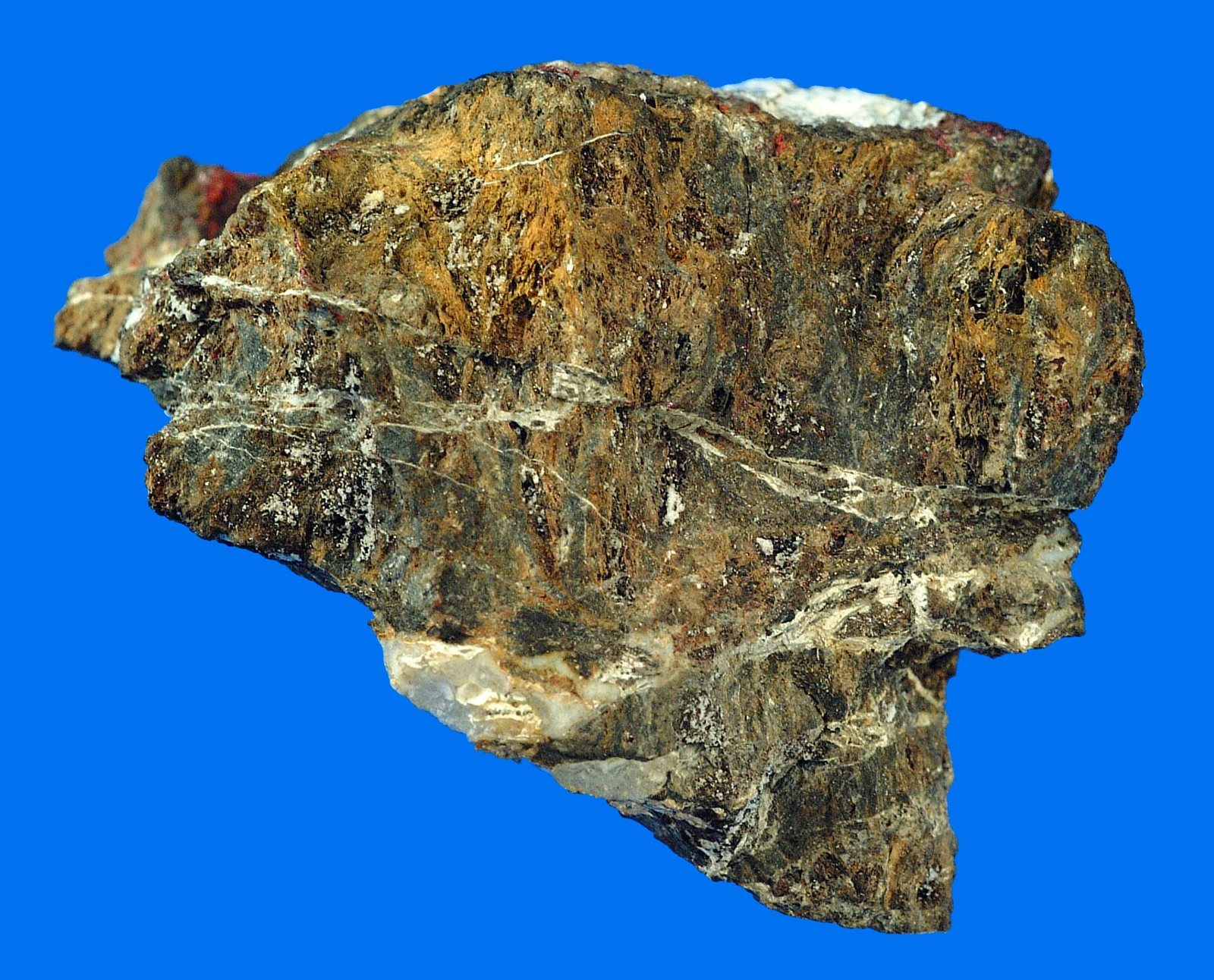
Mercury, cinnabar and calomel (GeoDIL number - 919) · Darla Sondrol · CC0 · Wikimedia Commons

यह क्या है?

The only metal that is liquid at room temperature, and one of the most tightly regulated substances in the world.

यह क्यों महत्वपूर्ण है?

Mercury is the clearest case of a material being deliberately designed out: the Minamata Convention is phasing it out of products and processes worldwide.

Where it is in the Earth

Mercury is a dense, silver-coloured liquid at ordinary temperatures, with a melting point of −38.8 °C, which means it is never solid in any warm environment. In the Earth's crust it is genuinely rare, and it becomes mineable only where specific geological conditions have concentrated it into a mineral called cinnabar — mercury sulfide — over long periods of hydrothermal activity. Hydrothermal simply means hot water moving through rock: water heated by magmatic or geothermal sources dissolves mercury from surrounding rock, carries it upward through fractures, and deposits cinnabar when the water cools or encounters chemically different rock near the surface. Because this process depends on relatively shallow, low-temperature circulation, mercury deposits tend to sit in the upper few kilometres of the crust, often close to ancient volcanic arcs or fault zones.

The classic geological setting is what geologists call an epithermal deposit — formed at low temperatures and shallow depths — typically hosted in sedimentary rocks such as limestone, chert, or shale that have been cut through by faults. The Almadén district in Spain, historically the world's largest source, sits in Palaeozoic sediments deformed by faulting. The Idria deposit in what is now Slovenia, the Huancavelica deposit in Peru, and various deposits across central Asia share the same broad character: fault-controlled conduits, chemically reactive host rock, and a tectonic history involving compression or extension that opened pathways for heated fluids. China's producing areas, concentrated in Guizhou province, follow the same pattern — fault systems cutting through carbonate sequences.

Because the geological conditions are specific and not especially common, the world's significant mercury deposits have always been few in number and geographically clustered. Most of the historically large deposits are now exhausted or deliberately idled under international agreements. What remains in active production is, by comparison with the industry of the mid-twentieth century, very small.

Getting it out

Cinnabar, the principal ore of mercury, typically occurs in veins or as disseminations through the host rock rather than in massive, uniform bodies. Historically this meant underground mining, following the veins by hand and later by machine. Some deposits were amenable to open-pit methods where ore was close to the surface and concentrated enough to justify the earthmoving involved. The choice between open-pit and underground working comes down to the geometry of the ore body and the grade — that is, how much mercury metal can be recovered from each tonne of rock mined. Because mercury deposits are generally small and irregular compared with, say, a large copper porphyry, the volumes of rock moved are modest by modern mining standards.

Grade matters enormously because mercury is expensive to process and the metal itself has a declining market. An ore body that might have been economic at higher mercury prices a generation ago may not justify the cost of development today. In practice, much of the world's current supply does not come from primary mercury mining at all. A significant portion is recovered as a by-product of mining other metals — particularly gold, where mercury occurs alongside gold mineralisation in some deposits — or from the retorting of mercury-bearing waste and tailings left by earlier operations. By-product recovery changes the economics entirely: the cost of producing the mercury is largely absorbed by the primary metal, and the mercury is captured because releasing it to the environment is no longer acceptable under national and international regulations rather than because it commands a price that rewards recovery on its own terms.

The direction of primary mercury mining is unambiguously downward. The Minamata Convention on Mercury, which came into force in 2017, commits its signatories to phasing out primary mercury mining. The figures in the production table reflect this: global mine output is a fraction of what it was in earlier decades, and the countries still reporting primary output are few. Norway's figure relates to legacy material management rather than active ore extraction in the conventional sense.

What pulls on it

Mercury's uses have contracted sharply over the past half century, and that contraction has been deliberate. The clearest driver is regulation: many countries have banned or heavily restricted mercury in products ranging from thermometers and blood-pressure monitors to fluorescent lamps, batteries, and dental amalgam. The Minamata Convention extends this pressure globally, requiring signatories to phase out whole categories of mercury-added products by agreed deadlines. The result is that demand from what were once large markets — medical devices, electrical switches, measuring instruments — has largely disappeared in countries with effective regulation, and is declining in those still implementing it.

The uses that remain significant fall into two broad categories. Artisanal and small-scale gold mining, known as ASGM, is by some measures now the largest single use. Miners add liquid mercury to gold-bearing alluvial sediment; the mercury amalgamates with gold particles, separating them from the surrounding material. The amalgam is then heated to drive off the mercury and recover the gold. This technique is old, simple, and effective for the type of deposit worked, which is why it persists in parts of sub-Saharan Africa, South America, and South-East Asia despite well-documented harm to human health and river systems. Chlor-alkali production — the industrial process that makes chlorine and caustic soda by passing electricity through brine — historically used mercury-cell technology and consumed mercury continuously as cells aged. Most modern chlor-alkali capacity has converted to membrane-cell technology that uses no mercury, but some older plant remains in operation in certain countries.

For demand to change sharply in either direction, the conditions would need to change at the level of enforcement and international compliance. If ASGM-using countries implement the formalisation and alternative-technology programmes that the Minamata Convention envisages, that use would decline. If enforcement weakens or illegal supply chains expand, it could persist or grow. There are no significant new commercial applications on the horizon that would generate large additional demand; mercury's chemical and physical properties that made it attractive — density, electrical conductivity, liquid state — can be replicated or approximated by other means in almost every modern application where the toxicity is unacceptable.

Turning ore into product स्तर 3

The conversion of cinnabar ore into metallic mercury is among the simpler pyrometallurgical processes in the industry. Cinnabar (HgS) is thermally unstable at relatively modest temperatures: roasting the ore in a furnace — heating it in the presence of air — decomposes the mineral, releasing mercury vapour and sulfur dioxide. The mercury vapour passes out of the furnace with the flue gases and is then condensed back to liquid metal by cooling. Because mercury is already a liquid at room temperature, collection is straightforward once the vapour is cooled; the metal simply runs out of the condenser. This sequence of roasting followed by condensation is called retorting, and it has been the standard approach for centuries, with modern equipment adding better temperature control and gas-handling systems to capture the sulfur dioxide and prevent atmospheric mercury emissions.

Recovery efficiency depends on ore grade and mineralogy. Where cinnabar is the dominant mercury phase and the ore is not too fine-grained or locked within dense silicate minerals, recoveries can be high. In lower-grade ores, or where mercury is present partly as native metal inclusions or as organic complexes rather than as pure cinnabar, recovery is lower and the economics deteriorate. The sulfur dioxide produced during roasting requires treatment — it cannot simply be vented — and managing this gas stream adds to operating cost. Refining the condensed mercury to remove impurities such as base metals or sulfur compounds is a further step, typically involving filtration and acid washing or vacuum distillation, depending on the end use and the purity specification required. The traded form, the 34.5 kg flask, is a historic unit that dates from the period when Almadén dominated global trade; the flask remains the standard commercial unit even though primary production is now very small.

For mercury recovered as a by-product — for instance, from gold roasting circuits — the processing sequence is similar in principle but integrated into a larger plant. The mercury condenses in the off-gas train designed primarily to handle other volatiles, and is then collected and packaged. The capital cost of recovery is largely shared with the primary operation, but the operator must still meet strict handling and storage standards. In jurisdictions that have ratified the Minamata Convention, long-term storage of surplus mercury in a form that prevents re-entry into commerce is a regulatory requirement, which means some mercury recovered as a by-product is not sold but stockpiled under defined containment conditions.

Substitution and recycling स्तर 3

In the uses that have already been regulated out of existence in much of the world, substitution has been demonstrated and is essentially complete. Digital thermometers replace mercury-in-glass instruments with no meaningful performance loss for most clinical and laboratory applications. Alcohol-filled thermometers serve in temperature ranges where a liquid-expansion device is still preferred. Electronic pressure sensors replace mercury manometers and sphygmomanometers. Reed switches and solid-state relays replace mercury tilt switches and wetted contacts. In fluorescent lighting, the move toward LED technology eliminates mercury entirely rather than substituting one mercury-containing product for another. In each of these cases the substitute is now cheaper, often more convenient, and the performance difference is irrelevant to the application. The substitution has happened not because the economics were obviously compelling from the start but because regulation forced manufacturers to solve the engineering problem, and once solved, the new approach became standard.

In chlor-alkali production, membrane-cell and diaphragm-cell technologies are mature and well-established substitutes for mercury-cell plant. The capital cost of converting an existing mercury-cell facility is significant, which is why some older plant has remained in operation longer than anticipated, but the technology risk is negligible. In dental amalgam, composite resin materials have improved sufficiently that many dentists now use them for most restorations; the phase-down of amalgam under the Minamata Convention is therefore supported by a credible alternative, though some practitioners maintain that amalgam remains superior for certain posterior restorations in terms of durability and ease of placement under wet conditions.

The case where substitution is genuinely difficult is ASGM. Mercury amalgamation is cheap, requires no infrastructure, is understood by the miner, and works in the field without electricity or chemicals that need to be sourced through formal supply chains. Alternatives exist — gravity concentration, direct smelting, and in some settings cyanide leaching — but each requires capital, skill, or infrastructure that artisanal miners may not have access to. Recycling of mercury from ASGM settings is minimal; the quantities lost to rivers and soils, or volatilised when amalgam is burned in the open, do not re-enter any formal material cycle. In industrial settings, mercury recovered from decommissioned chlor-alkali plant and from lamp processing is collected and, under the Minamata framework, is supposed to move into long-term storage rather than back into commerce. The recycling rate in the sense of mercury returned to use is therefore falling by design, not by technical failure.

संख्याएँ सही ढंग से पढ़ें। Gross weight of mercury metal. Flasks of 34.5 kg, the historic trading unit.

इसका उत्पादन कौन करता है

इसे मानचित्र पर देखें →
इस सामग्री के लिए एक से अधिक श्रृंखलाएँ प्रकाशित की गई हैं। USGS इन्हें अलग-अलग रिपोर्ट करता है क्योंकि ये भिन्न चीज़ें मापते हैं — खान उत्पादन और रिफाइनरी उत्पादन, या भिन्न रासायनिक आधार। इन्हें अलग-अलग तालिकाओं के रूप में दिखाया गया है और इन्हें कभी भी जोड़ा नहीं जाना चाहिए।

Mine production

Mine productionmetric tons 2025 (अनुमानित) विश्व कुल 210.0 metric tons

USGS Mineral Commodity Summaries 2026 · Gross weight of mercury metal. · स्रोत ↗

शेष कॉलम देखने के लिए तालिका को बगल में स्क्रॉल करें।

देशउत्पादन विश्व का हिस्सा
China 200.0 95.2%
Kyrgyzstan 5.00 2.4%
Tajikistan 4.00 1.9%
Morocco 2.00 1.0%
Norway 1.00 0.5%
United States Not applicable
विश्व कुल 210.0100%

Mine production: exports

Mine production: exportsmetric tons 2025 (अनुमानित)

USGS Mineral Commodity Summaries 2026 · Gross weight of mercury metal. · स्रोत ↗

शेष कॉलम देखने के लिए तालिका को बगल में स्क्रॉल करें।

देशउत्पादन विश्व का हिस्सा
Peru Not applicable

"विदहेल्ड" का अर्थ है कि USGS ने किसी एकल कंपनी के डेटा के प्रकटीकरण से बचने के लिए आँकड़े को दबाया — इसका अर्थ शून्य नहीं है। देश की पंक्तियाँ हमेशा विश्व कुल के बराबर नहीं जुड़तीं क्योंकि स्रोत प्रत्येक आँकड़े को स्वतंत्र रूप से पूर्णांकित करता है और हमेशा "अन्य देश" की पंक्ति अलग नहीं निकालता।

मूल्य

average unit value of imports, dollars per kilogram

वार्षिक औसतdollars per kilogram

2021 · 29.00 उच्च 50.00 dollars per kilogram 2024 · 50.00

आधार: average unit value of imports, dollars per kilogram. में प्रकाशित वार्षिक औसत USGS Mineral Commodity Summaries 2026 · स्रोत ↗. ये संदर्भ वार्षिक औसत हैं, लाइव बाज़ार भाव नहीं।

सामग्रियाँ

सभी सामग्रियाँ क्रिटिकल खनिज दुर्लभ मृदाएँ बैटरी सामग्री अयस्क खनिज आवर्त सारणी स्क्रीनर

भूमि

खदानें और निक्षेप प्रसंस्करण एवं शोधन देश मानचित्र

अर्थव्यवस्था

अभिरक्षा यात्राएँ आपूर्ति शृंखलाएँ अंतिम बाज़ार प्रौद्योगिकियाँ कंपनियां सामग्री कैलकुलेटर

जानें

जानेंशब्दावली डेटा से पूछेंAI एजेंट अनुसंधान एवं डेटामुक्त API समाचार★ सहेजा गया

हमारे बारे में

हमारे बारे मेंसंपर्क कार्यप्रणालीडेटा स्रोत संपादकीय नीति गोपनीयता नीतिउपयोग की शर्तें अस्वीकरण