От руды до продукта — с прослеживаемостью
The Materials Atlas
Материалы Рудники и месторождения Переработка и рафинирование Маршруты партий Цепочки поставок Компании Страны Новости
Материалы по разделам Аккумуляторные материалы Редкоземельные элементы Медь и электротехника Полупроводниковые материалы Ядерные материалы Аэрокосмическая промышленность и оборона Драгоценные металлы Сталь и легирующие металлы Промышленные минералы Агрономические минералы Энергетическое сырьё Рудные минералы Периодическая таблица
Спрос Конечные рынки Технологии Калькулятор материалов Карты Скринер
Обучение и инструменты УзнатьГлоссарий Спросить данныеИИ-агенты Исследования и данныеAPI ★ Сохранено
О проекте О насМетодология Источники данныхКонтакты Отказ от ответственности
Параметры отображения
🧭 Направляемый просмотр Впервые слышите о сортности руды, концентрате, аффинаже, побочных продуктах? Мы объясняем каждый термин прямо в процессе просмотра, простым языком. Те же данные — со встроенной справкой.
⚡ Экспертный обзор Вы уже знаете отрасль. Только данные — без лишних пояснений, в компактном и удобном виде. Это режим по умолчанию.
Тема
Язык интерфейса
Глубина Страницы материалов написаны на четырёх уровнях. Выберите уровень на любой странице — он будет запомнен.
★ Сохранено Исследования и данные
Mica

Промышленные минералы

Mica

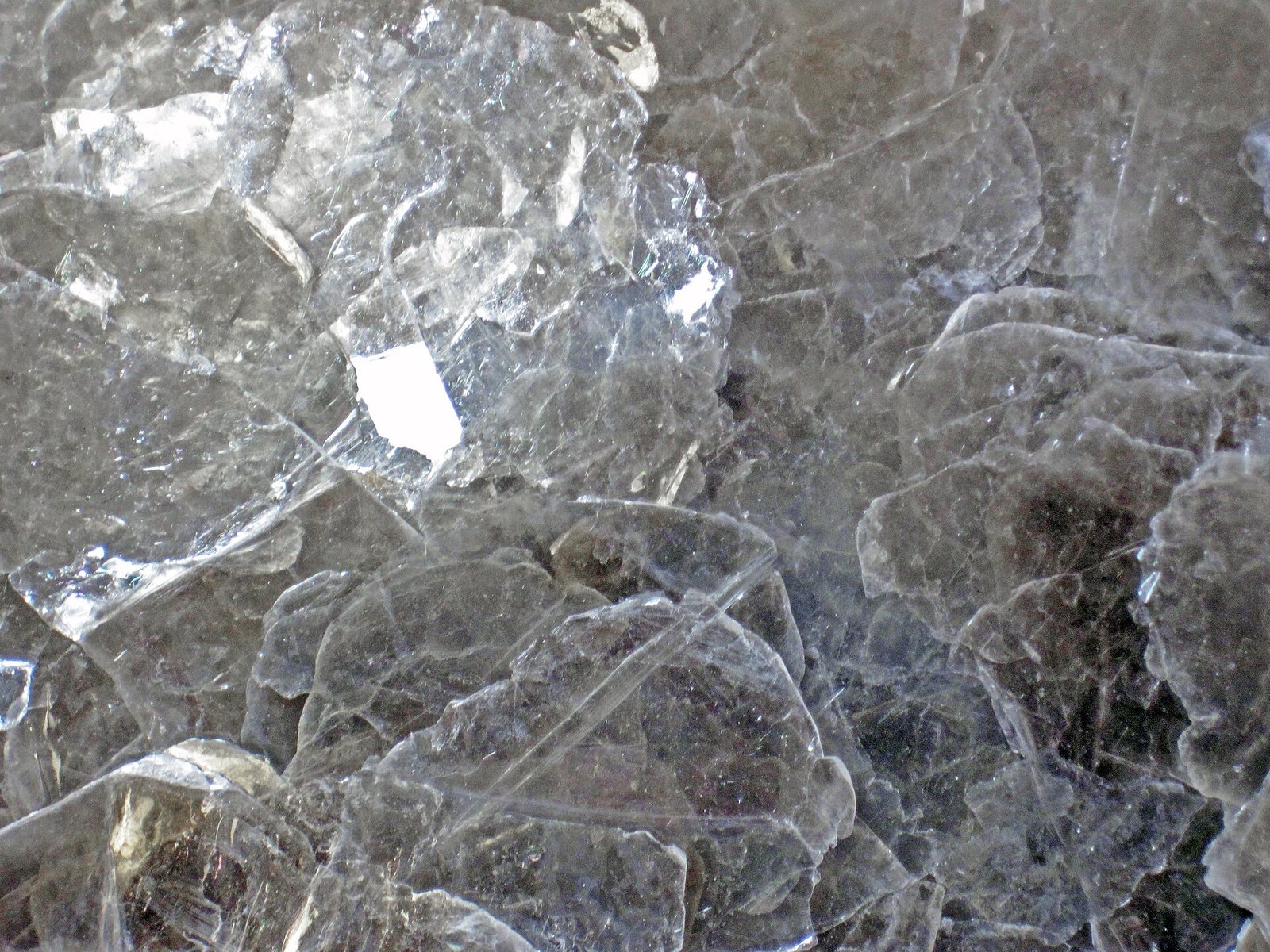
A mineral that splits into sheets so thin you can see through them, and that resists both heat and electricity.

Muscovite mica 2 · James St. John · CC BY 2.0 · Wikimedia Commons

Что это такое?

A mineral that splits into sheets so thin you can see through them, and that resists both heat and electricity.

Почему это важно?

Sheet mica insulates high-voltage equipment; ground mica gives paint its shimmer and drilling mud its body. Some supply is associated with child-labour concerns.

Where it is in the Earth

Mica belongs to a family of sheet silicate minerals, meaning their atoms are arranged in flat, repeating layers that can be peeled apart like the pages of a book. The two commercially important species are muscovite, a potassium aluminium silicate that is pale and translucent, and phlogopite, a magnesium-bearing relative that tolerates even higher temperatures. Both form when rocks rich in aluminium, potassium and silica are subjected to heat and pressure deep in the crust, or when hot fluids percolate through existing rock and recrystallise its minerals into new forms.

The largest and most useful crystals grow in a rock type called pegmatite. Pegmatites form in the final stages of magma cooling, when water and other volatile elements become concentrated in the remaining melt and allow ions to migrate freely over long distances. The result is a coarse-grained rock in which individual crystals can reach exceptional size — mica books tens of centimetres across are known from classic deposits. These pegmatites tend to occur in ancient continental cores, which is why major producing regions — parts of India, Madagascar, and the eastern United States historically — sit within very old geological terranes. A second source of mica is metamorphic rock: schists and gneisses that have been recrystallised under regional pressure contain abundant mica, though usually in smaller flakes than pegmatite. Finland's large output comes largely from this metamorphic context, produced as a co-product of other mineral processing rather than from pegmatite mining.

The concentration of mica into an economically workable deposit depends not just on geology but on the physical behaviour of the mineral itself. Because mica cleaves so readily into flat sheets, it tends to survive weathering and transport, accumulating in soils and stream sediments derived from mica-rich bedrock. This means that some mica is recovered from weathered regolith above hard-rock deposits rather than from the pegmatite itself, which affects both the mining method and the quality of the product recovered.

Getting it out

How mica is extracted depends almost entirely on what form it is needed in. Sheet mica — meaning individual crystals large enough to be trimmed into usable pieces for electrical insulation — is the most demanding to recover. It comes almost exclusively from pegmatite, and because a large crystal must arrive at the surface undamaged, the work is largely done by hand. Pegmatite deposits are typically mined by open pit or shallow underground methods, but the final extraction of book mica from the rock requires hand tools and careful judgement rather than blasting, because explosives shatter the very thing being sought. This labour intensity is the reason sheet mica production has long been concentrated in countries with low labour costs, and it is also part of the context for the child-labour concerns that have been documented in parts of the Indian supply chain.

Scrap and flake mica, by contrast, is produced in much larger quantities and by quite different means. It arises as a by-product when pegmatites are mined for feldspar or quartz, when spodumene pegmatites are worked for lithium, or when metamorphic rocks are processed as aggregate or for other minerals. In Finland, for example, significant mica output comes from the processing of talc and other industrial mineral ores, where mica would otherwise be discarded. In this by-product context, the mica recovery adds value to operations that are already economic for other reasons, and the mica grade in the original rock matters less than the efficiency of the separation stage downstream.

The concept of waste-to-product ratio, sometimes called the strip ratio in open-pit mining, is relevant here but difficult to state simply for mica, because the definition of ore changes depending on which mineral is the primary target. A pegmatite mined specifically for sheet mica may move a large volume of host rock to recover a relatively small mass of usable crystal. In a by-product recovery scenario, the mica fraction was already being moved for other reasons, so its marginal waste burden is low.

What pulls on it

Mica reaches the market in two quite different commercial identities, and it is worth keeping them separate when thinking about demand. Sheet mica is bought primarily for its electrical insulating properties. A thin, flexible sheet of muscovite can withstand high voltages and high temperatures simultaneously, which makes it useful in situations where most other insulators would fail — certain industrial heating elements, speciality capacitors, and the commutator segments in some electric motors. This is a relatively small and slowly changing market; the electronics industry has largely moved away from natural mica sheets towards synthetic alternatives where geometrical consistency and cleanliness are priorities.

Ground mica, including the wet-ground and micronised grades, is consumed in much larger quantities and across a wider range of industries. Paint manufacturers use it to give coatings a degree of sheen and to improve weather resistance and crack bridging. Plastics and rubber compounders incorporate mica to stiffen parts and reduce thermal expansion. The construction industry uses it in joint compounds, sealants and roofing materials. Drilling-fluid formulators add flake mica to well-completion muds, where the particles help seal fractured formations and prevent fluid loss into the rock. The cosmetics and personal-care sector uses fine, coated mica as the basis of pearlescent and metallic pigments in products ranging from eyeshadow to automotive paint.

Demand from the cosmetics and personal-care sector has drawn attention partly because it is growing and partly because of the supply-chain concerns it has raised. Consumer brands have had to examine their sourcing more carefully, and some have shifted toward synthetic fluorphlogopite — a laboratory-grown analogue — where they needed to demonstrate that child-labour-free sourcing could be guaranteed. Whether natural mica retains or loses share in this segment depends less on price and more on brand commitments and the effectiveness of certification schemes. In most industrial applications, demand tracks construction activity and manufacturing output rather than any single technology trend.

Turning ore into product Уровень 3

The processing route for mica diverges sharply according to the end product required. Sheet mica — the form used in electrical insulation — is processed almost entirely by hand. Rough books are trimmed with knives or shears to remove inclusions and irregular edges, then split along cleavage planes to achieve the required thickness. The material sorted at this stage is graded by size, clarity and freedom from staining or structural defects. Losses during trimming and splitting can be high; the off-cuts and broken pieces that result become scrap, which then enters the ground mica stream. This means that a single pegmatite operation can simultaneously supply both the sheet mica market and feed to grinding mills, at very different price realisations — the price data illustrate this clearly, with splittings valued per kilogram while scrap and flake is priced per metric tonne at a fraction of the equivalent unit cost.

Ground mica processing begins with comminution — the mechanical breaking of raw mica into progressively finer particles using hammer mills, roller mills or, for the finest grades, air-classifying mills. The objective is to produce particles that are thin and platy in shape rather than blocky, because the commercial value of ground mica in applications such as paint, plastics and rubber depends on the aspect ratio of the particles (the ratio of their diameter to their thickness). Preserving that platiness while reducing particle size is the central technical challenge. Wet grinding generally produces more uniform, higher-aspect-ratio particles than dry grinding, which explains why wet-ground product commands a premium over dry-ground in the price data. After milling, the material is classified by particle size — typically by air classification for dry product or by hydrocyclone for wet — and dried if necessary before packaging. Flotation, a process in which air bubbles selectively attach to mineral surfaces coated with chemical reagents, is used where mica must be separated from contaminating minerals such as quartz or feldspar in the mill feed.

A notable processing route exists for mica in the context of pearlescent pigments, where muscovite or synthetic fluorphlogopite flakes are coated with thin layers of titanium dioxide or other metal oxides. This is a chemical vapour or wet-chemistry step that adds colour and optical effects to the mica substrate. The economics of pigment-grade mica processing are quite different from those of crude grinding: the coating step is capital-intensive and the product sells at prices that are not captured in the scrap-and-flake or ground-mica series shown in the price tables.

Substitution and recycling Уровень 3

The substitutability of mica varies considerably by application. In high-voltage electrical insulation, sheet mica has been partially displaced by synthetic mica (fluorphlogopite produced by fusion or by flux-growth techniques) and by polymer films such as polyimide, which offer more consistent dimensions and cleaner surfaces. Synthetic mica tolerates somewhat higher temperatures than muscovite and is free from natural inclusions, making it preferred where reliability is paramount. The performance trade-off for polymer films is that they generally cannot match mica's upper temperature limit, so in the most demanding thermal environments natural or synthetic mica retains an advantage.

In ground-mica applications, alternative platy minerals — talc, kaolin, wollastonite and calcium carbonate — can substitute for mica in paints, plastics and rubber, but each brings a different property profile. Talc is softer and has a lower aspect ratio in many grades; kaolin is bright white but contributes less stiffness; wollastonite provides reinforcement but is acicular (needle-shaped) rather than platy. Formulation chemists can often redesign a compound to use a different filler, but this requires testing and reformulation effort, so substitution in ground-mica markets tends to happen gradually in response to sustained price differentials or supply concerns rather than quickly.

Recycling of mica is not a significant factor in the supply balance. The mineral ends up dispersed in paint films, embedded in plastic parts, or incorporated into construction products in ways that make recovery uneconomical with current technology. Synthetic mica production does offer a form of independence from mined supply for specific high-value markets, but it requires energy-intensive melting of raw materials and is substantially more expensive than ground natural mica per unit weight, limiting it to applications where performance justifies the cost.

Where the chain is fragile Уровень 4

The supply picture for mica is complicated by the fact that its two principal product categories — sheet mica and scrap or flake mica — have almost entirely separate supply chains, geographies, and risk profiles, yet published production statistics have not always distinguished them consistently. The world production figures in the table combine both categories, which can make concentration ratios appear more dispersed than they actually are for either market individually. A researcher relying on aggregate tonnage data to assess supply security for sheet mica specifically would be reading a figure that is diluted by large volumes of by-product flake that cannot substitute for it.

For sheet mica, the concentration of production has historically been extreme, with India the dominant source for many decades. The documented presence of child labour in artisanal and informal mica mining in Jharkhand and Rajasthan states prompted significant attention from consumer brands and their auditors through the 2010s. India's reported production in the data block is notably low relative to historical norms, which may reflect a combination of stricter enforcement, reclassification of informal output, and genuine contraction of formal activity. Madagascar has emerged as a major producer, though its reserves are described in the data as large without a specific figure being published, which itself signals uncertainty about the long-term resource base there.

For ground and flake mica, the by-product nature of much of the supply introduces a different kind of fragility: output from Finland, France, and other processing-based producers depends on the economics of the primary mineral being mined, not on mica demand itself. If the host operation — say, a talc or feldspar quarry — curtails production for reasons unrelated to mica, the associated mica supply contracts regardless of mica prices or demand. The reserves data reinforce this complexity: Korea's reported reserves are substantially larger than those of any other single country, yet Korea's production position is mid-tier, suggesting that reserve figures and extractable supply under current economics are not the same thing. Canada and Finland report no reserve figure at all, reflecting that their mica output is a processing co-product rather than a resource that has been formally delineated in the way a primary-commodity reserve would be.

Читайте цифры правильно. Scrap and flake mica reported separately from sheet mica; the two are different markets. Sheet, block, splittings, ground and micronised grades.

Кто производит

Посмотреть на карте →
Для данного материала опубликовано более одной серии. USGS публикует эти данные раздельно, поскольку они отражают разные показатели — объём добычи на руднике и объём выпуска аффинажного завода либо разные химические основания. Они представлены в виде отдельных таблиц и ни в коем случае не должны суммироваться.

Mica (Sheet): Mine production

Mica (Sheet): Mine productionmetric tons 2025 (оценочный)

USGS Mineral Commodity Summaries 2026 · Scrap and flake mica reported separately from sheet mica; the two are different markets. · источник ↗

Прокрутите таблицу вправо, чтобы увидеть остальные столбцы.

СтранаПроизводство Доля мирового
India 1,000
Other countries 200.0
China Not applicable
Canada Not applicable
United States Not applicable
France Not applicable
Finland Not applicable
Madagascar Zero
Spain Zero
Turkey Zero
Korea, Republic of Zero

Mica (Sheet): Mine production, rounded

Mica (Sheet): Mine production, roundedmetric tons 2025 (оценочный)

USGS Mineral Commodity Summaries 2026 · Scrap and flake mica reported separately from sheet mica; the two are different markets. · источник ↗

Прокрутите таблицу вправо, чтобы увидеть остальные столбцы.

СтранаПроизводство Доля мирового
Мировой итог Not applicable100%

Mica (Scrap and flake): production

Mica (Scrap and flake): productionmetric tons 2025 (оценочный)

USGS Mineral Commodity Summaries 2026 · Scrap and flake mica reported separately from sheet mica; the two are different markets. · источник ↗

Прокрутите таблицу вправо, чтобы увидеть остальные столбцы.

СтранаПроизводство Доля мирового
China 85,000
Madagascar 70,000
Finland 57,000
Other countries 39,000
United States 26,000
Korea, Republic of 15,000
Canada 14,000
France 14,000
India 13,000
Turkey 9,500
Spain 8,000

Mica (Scrap and flake): production, rounded

Mica (Scrap and flake): production, roundedmetric tons 2025 (оценочный) Мировой итог 350,000 metric tons

USGS Mineral Commodity Summaries 2026 · Scrap and flake mica reported separately from sheet mica; the two are different markets. · источник ↗

Прокрутите таблицу вправо, чтобы увидеть остальные столбцы.

СтранаПроизводство Доля мирового
Мировой итог 350,000100%

«Withheld» означает, что USGS скрыл данные во избежание раскрытия сведений об отдельной компании, — это не равнозначно нулю. Суммы по строкам стран не всегда совпадают с мировым итогом, поскольку источник округляет каждый показатель независимо и не всегда выделяет строку «прочие страны» отдельно.

Кто располагает запасами

«Запасы» — строгий термин. Он означает ту часть известного месторождения, которая могла бы быть рентабельно извлечена прямо сейчас — при нынешних ценах и нынешних технологиях, — а не всё, что существует в недрах. Запасы растут, когда цены повышаются или изобретается новый технологический процесс, и сокращаются, когда они падают.

Mica (Scrap and flake): Reserves

Mica (Scrap and flake): Reservesmetric tons 2025

USGS Mineral Commodity Summaries 2026 · источник ↗

СтранаЗапасыДоля мирового
Korea, Republic of 12,000,000
China 1,100,000
Turkey 620,000
India Large
Madagascar Large
Spain Large
Canada Large
Finland Large
France Large
Other countries Large
United States Large

Mica (Scrap and flake): Reserves, rounded

Mica (Scrap and flake): Reserves, roundedmetric tons 2025

USGS Mineral Commodity Summaries 2026 · источник ↗

СтранаЗапасыДоля мирового
Мировой итог Large100%

Mica (Sheet): Reserves

Mica (Sheet): Reservesmetric tons 2025

USGS Mineral Commodity Summaries 2026 · источник ↗

СтранаЗапасыДоля мирового
India 110,000
China 75,000
United States Very small
Canada Not applicable
Finland Not applicable
France Not applicable
Korea, Republic of Not applicable
Madagascar Not applicable
Spain Not applicable
Turkey Not applicable
Other countries Moderate

Mica (Sheet): Reserves, rounded

Mica (Sheet): Reserves, roundedmetric tons 2025

USGS Mineral Commodity Summaries 2026 · источник ↗

СтранаЗапасыДоля мирового
Мировой итог Not applicable100%

Цена

average, dollars per metric ton: Ground: Dry

Среднегодовое значениеdollars per metric ton

2021 · 300.0 высокий 330.0 dollars per metric ton 2025 · 320.0

Основание: average, dollars per metric ton: Ground: Dry. Среднегодовые значения в том виде, в каком опубликованы в USGS Mineral Commodity Summaries 2026 · источник ↗. Приведены справочные годовые средние значения, а не котировки текущего рынка.

average, dollars per metric ton: Scrap and flake

Среднегодовое значениеdollars per metric ton

2021 · 100.0 высокий 140.0 dollars per metric ton 2025 · 130.0

Основание: average, dollars per metric ton: Scrap and flake. Среднегодовые значения в том виде, в каком опубликованы в USGS Mineral Commodity Summaries 2026 · источник ↗. Приведены справочные годовые средние значения, а не котировки текущего рынка.

average value, muscovite and phlogopite mica, dollars per kilogram: Splittings

Среднегодовое значениеdollars per kilogram

2021 · 1.90 высокий 1.90 dollars per kilogram 2025 · 1.80

Основание: average value, muscovite and phlogopite mica, dollars per kilogram: Splittings. Среднегодовые значения в том виде, в каком опубликованы в USGS Mineral Commodity Summaries 2026 · источник ↗. Приведены справочные годовые средние значения, а не котировки текущего рынка.

average, dollars per metric ton: Ground: Wet

Среднегодовое значениеdollars per metric ton

2021 · 340.0 высокий 350.0 dollars per metric ton 2025 · 350.0

Основание: average, dollars per metric ton: Ground: Wet. Среднегодовые значения в том виде, в каком опубликованы в USGS Mineral Commodity Summaries 2026 · источник ↗. Приведены справочные годовые средние значения, а не котировки текущего рынка.

Материалы

Все материалы Критические минералы Редкоземельные металлы Аккумуляторные материалы Рудные минералы Периодическая таблица Скринер

Недра

Рудники и месторождения Переработка и рафинирование Страны Карты

Экономика

Маршруты партий Цепочки поставок Конечные рынки Технологии Компании Калькулятор материалов

Узнать

УзнатьГлоссарий Спросить данныеИИ-агенты Исследования и данныеОткрытый API Новости★ Сохранено

О нас

О насКонтакты МетодологияИсточники данных Редакционная политика Политика конфиденциальностиУсловия использования Отказ от ответственности