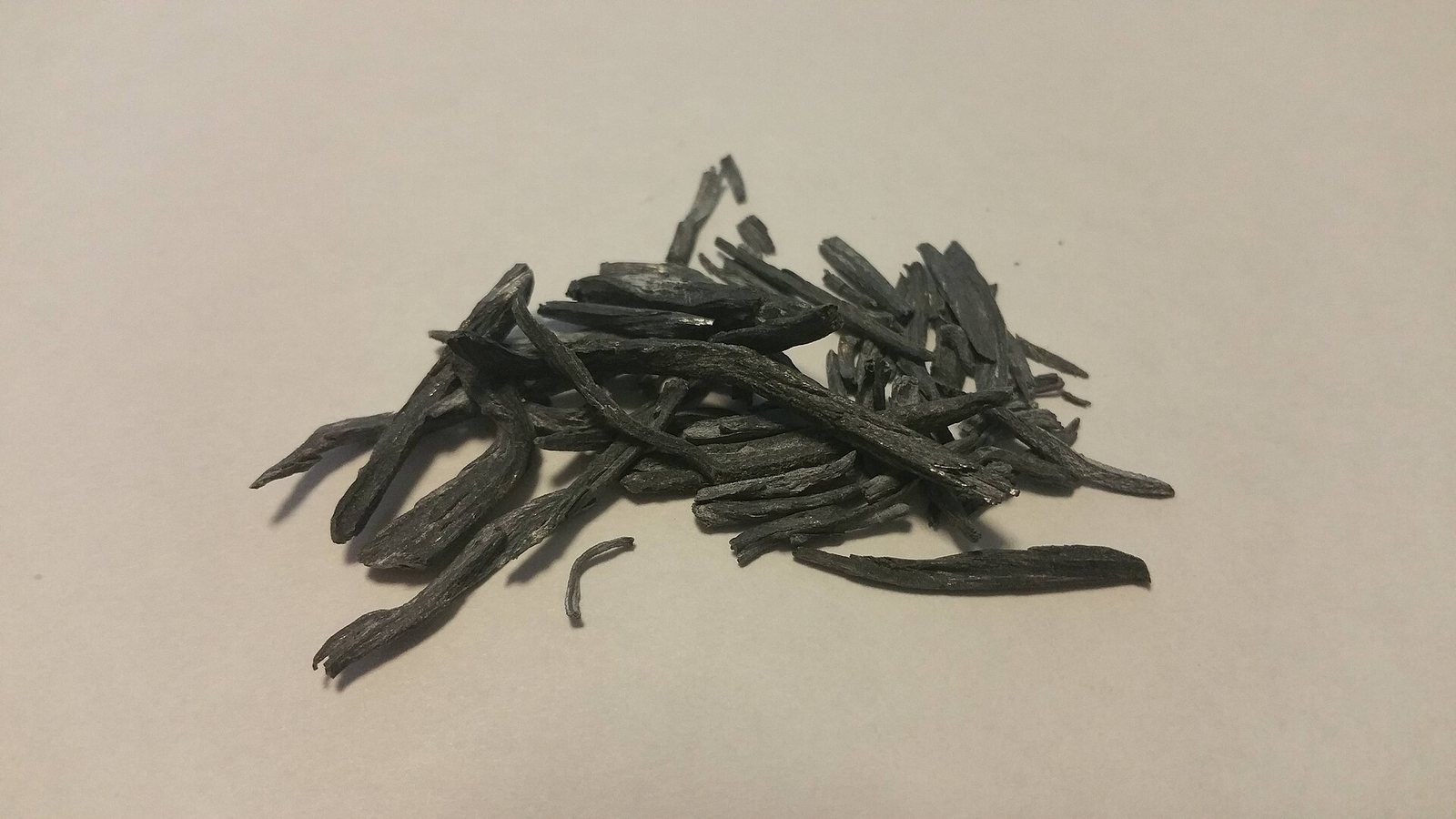
これは何か
The rare earth in the magnet that works where neodymium cannot: very hot, or very cold, or in a place that must not corrode.
なぜ重要なのか
Samarium-cobalt magnets are weaker than neodymium ones but hold their strength past 300 C, which is why they are in missiles, aircraft actuators and downhole tools.
Where it is in the Earth
Samarium belongs to the lanthanide series, the group of fifteen chemically similar metals that sit together in the periodic table and behave in broadly similar ways in nature. Because they are so alike chemically, the lanthanides rarely separate from one another during geological processes; they travel together and concentrate together. The result is that samarium is not found in its own dedicated mineral the way copper or lead might be. Instead it rides along as a minor constituent inside minerals whose dominant metals are cerium, lanthanum, and neodymium.
The two minerals that matter most are bastnasite and monazite. Bastnasite is a fluorocarbonate — a carbonate mineral that also contains fluorine — and it forms primarily in unusual igneous rocks called carbonatites, which originate from carbonate-rich magmas deep in the mantle. These magmas are rare, but when they cool and crystallise they produce exceptionally high concentrations of rare earth elements relative to ordinary granite or basalt. Monazite is a phosphate mineral that forms in granites and in metamorphic rocks, but it also survives erosion well enough to accumulate as a heavy mineral in river and beach sands, called placers, over geological time. In both cases, samarium concentrates because the crystal structures of these minerals accommodate lanthanide ions rather readily, pulling them out of solution or melt as the mineral grows.
The largest known accumulations of these minerals are in China, principally in the Bayan Obo deposit in Inner Mongolia, which is a carbonatite-related iron-niobium-rare earth system of unusual scale. Significant bastnasite and monazite resources also exist in the United States, Australia, India, Brazil, and parts of Africa. The geographical distribution of samarium resources therefore mirrors the distribution of rare earth deposits generally, because samarium cannot be separated from the other lanthanides at the mining stage.
Getting it out
Because samarium occurs inside bastnasite and monazite rather than as its own mineral, mining it means mining whichever rare earth deposit contains those minerals in sufficient quantity. Large carbonatite-hosted bastnasite deposits are typically worked by open-pit methods: the rock is blasted, loaded, and trucked to a processing facility. Monazite in hard rock follows similar open-pit practice where the rock type allows. Monazite recovered from coastal or riverine placer sands uses dredging or wet gravity methods rather than blasting, because the mineral grains are already liberated from the surrounding material by natural weathering.
Grade, in rare earth mining, is usually expressed as a percentage of total rare earth oxide in the ore. Samarium oxide makes up only a small share of the total rare earth oxide content of any given bastnasite or monazite deposit; the dominant rare earths are cerium and lanthanum, with neodymium also present in significant quantities. This means that even at a richly mineralised deposit, the samarium fraction is modest. For every tonne of samarium oxide eventually recovered, very large quantities of ore must move and very large quantities of the other rare earth oxides — particularly cerium and lanthanum, for which demand is comparatively thin — must also be produced. This by-product arithmetic shapes the economics of samarium supply in ways that go well beyond the grade of samarium itself.
What pulls on it
The principal use of samarium is in samarium-cobalt permanent magnets, a material class that trades somewhat lower magnetic strength than the more familiar neodymium-iron-boron magnets in exchange for substantially superior performance at high temperatures and in corrosive environments. Neodymium-iron-boron magnets lose their magnetisation above roughly 80 to 200 degrees Celsius depending on grade, whereas samarium-cobalt retains useful magnetic properties well beyond 300 degrees Celsius. This makes samarium-cobalt the material of choice in environments where a neodymium magnet would simply stop working: jet engine actuators, guidance systems in missiles, sensors embedded in oil and gas drilling equipment, and compact motors operating in chemically aggressive surroundings.
Beyond magnets, samarium has established roles in two quite different areas. Samarium-153, a radioactive isotope produced in nuclear reactors, is used in cancer treatment — specifically in palliative care for bone pain caused by cancer that has spread to the skeleton. Samarium also appears in control rods and shielding applications in nuclear reactors, where its capacity to absorb neutrons is the relevant property. These non-magnet uses are individually small but technically specific, meaning samarium cannot easily be left out of them.
Demand growth in magnets depends heavily on whether defence and aerospace procurement programmes expand, and on whether robotics and high-reliability industrial motors shift toward samarium-cobalt rather than alternatives. Growth in neodymium magnet demand driven by electric vehicles does not directly pull samarium along, because the operating conditions of most automotive motors do not require samarium-cobalt's temperature tolerance. A sharp change in samarium demand would most plausibly come from a sustained increase in defence spending in markets that rely on precision-guided weapons, or from a materials shift in downhole drilling as oil and gas exploration moves into hotter reservoirs.
Turning ore into product レベル 3
Ore leaving the mine is first crushed and ground — a stage called comminution — to liberate individual mineral grains from the surrounding waste rock, or gangue. The resulting slurry then passes through a sequence of physical separation steps. For bastnasite, froth flotation is the standard approach: air bubbles are used to float the target mineral away from gangue after the surfaces are conditioned with chemical reagents. Monazite in placer deposits is separated using gravity tables and magnetic and electrostatic separators, taking advantage of differences in density and surface electrical properties between mineral species. These steps produce a mineral concentrate — a physical mixture of bastnasite or monazite particles still containing all the lanthanides together.
The concentrate then enters hydrometallurgical processing, which means chemical extraction using aqueous solutions. Bastnasite concentrates are typically cracked by roasting followed by acid or caustic leach; monazite is resistant to acid and is usually digested in hot concentrated sulfuric acid or caustic soda at elevated temperature. Either route dissolves the rare earth content into solution, separating it from phosphate, thorium (which is mildly radioactive and requires careful management), and other impurities. The mixed rare earth solution then undergoes solvent extraction — a sequence of many mixer-settler stages in which organic solvents selectively pull individual lanthanides out of the aqueous phase. Because samarium sits in a particular region of the lanthanide series, it must be separated from neighbouring elements such as neodymium, europium, and gadolinium, which have similar chemical behaviour. The number of solvent extraction stages required, and therefore the capital and operating cost, grows with the purity specification. Samarium oxide is traded at purities of 99.5 percent and above, which demands a thorough separation train. Final product is precipitated, filtered, and calcined to produce the oxide powder that the market trades.
Processing losses occur at each stage: mineral grains too fine to float efficiently, solvent extraction stages that do not achieve complete separation, and precipitations that are not quantitative all reduce overall recovery. The concentration of the solvent extraction circuit in China reflects the substantial capital investment, chemical infrastructure, and accumulated process knowledge that the industry there has built over several decades. Facilities outside China capable of separating individual lanthanides to specification remain limited in number.
Substitution and recycling レベル 3
Within the permanent magnet application, the functional substitute for samarium-cobalt is neodymium-iron-boron with high-temperature stabilisation additives such as dysprosium or terbium. This substitution works across a wide temperature range if the designer accepts larger magnets or some loss of efficiency, but it fails in the most demanding environments — above roughly 200 to 250 degrees Celsius, or where corrosion resistance cannot be compromised — where samarium-cobalt has no practical magnet substitute. Alnico magnets (aluminium-nickel-cobalt alloys) and ceramic ferrite magnets can handle higher temperatures than neodymium-iron-boron in some configurations, but their energy density is so much lower that they would require redesign of the surrounding components, not a simple material swap. The physics of the application therefore sets a floor beneath which substitution cannot go without significant engineering change to the system that uses the magnet.
Recycling of samarium from end-of-life products is at an early stage and contributes a negligible share of supply. The barriers are structural rather than technical. Samarium-cobalt magnets are used in devices — missiles, aircraft actuators, downhole tools — that are often not returned to a central point at end of life, that are present in small quantities per unit, and whose disassembly is not organised around materials recovery. The economics of collecting, disassembling, and reprocessing these dispersed, small-volume streams are unfavourable when oxide prices are low. Higher and more stable prices could improve the economics of recycling, but the collection infrastructure would still need to be built. For nuclear and medical isotope uses, recycling is not applicable in the conventional sense.
岩石中の産出箇所
全鉱石鉱物 →実際に以下を担う鉱物 samarium. 鉱床が鉱体となるのは、採掘コストを回収できるほど十分な濃度で鉱石が濃集している場合に限られる。
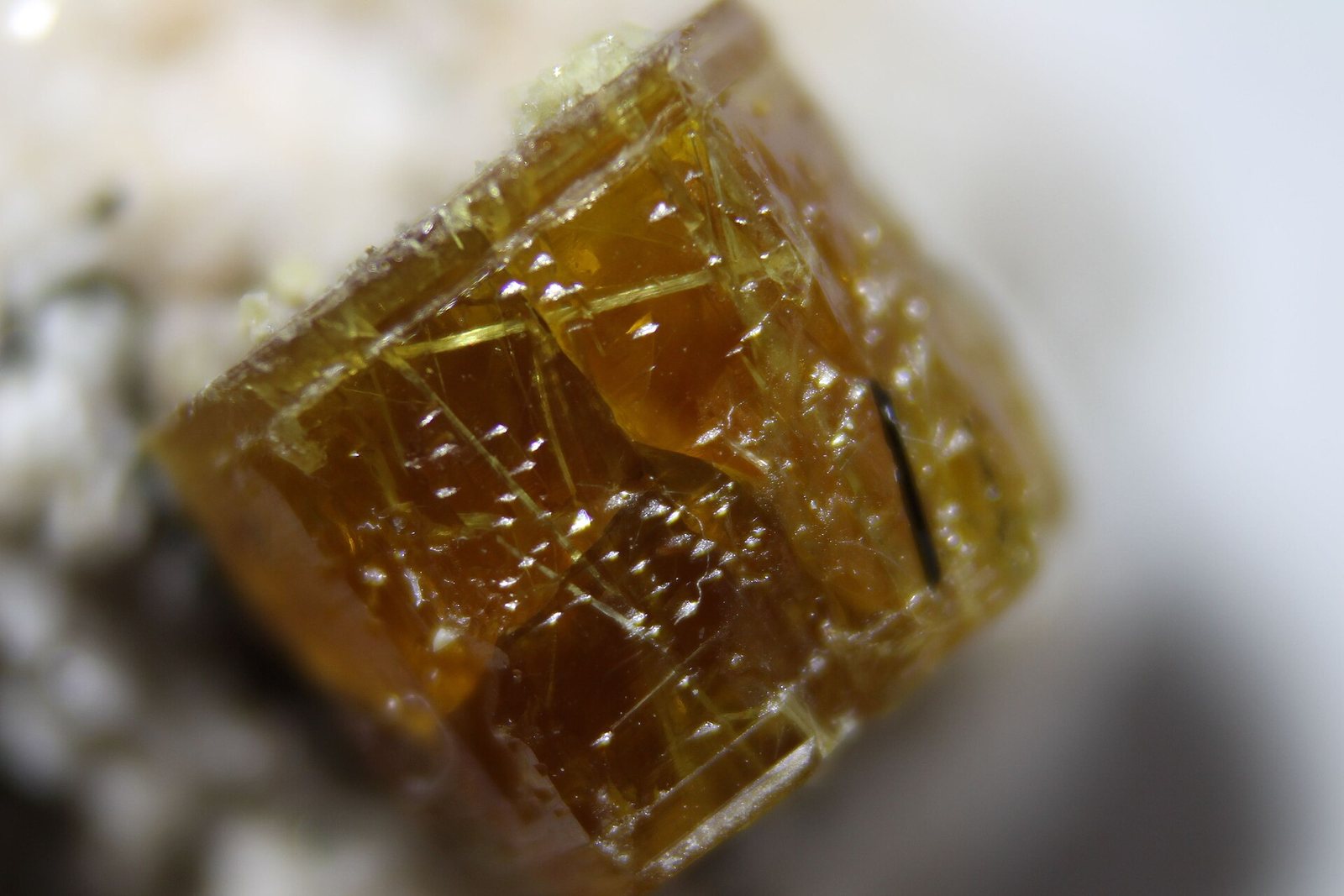
Bastnäsite
The world's principal light rare-earth mineral, mined from carbonatites. Low in thorium, which makes it easier to…
Monazite
A rare-earth phosphate found in heavy mineral sands. Carries thorium, so it is radioactive enough to be regulated.
価格
average, dollars per kilogram: Samarium oxide, 99.5% minimum
年間平均dollars per kilogram
基準: average, dollars per kilogram: Samarium oxide, 99.5% minimum. 以下に公表された年間平均値: USGS Mineral Commodity Summaries 2026 · 出典 ↗. これらは参照用の年間平均値であり、リアルタイムの市況相場ではない。
用途
全エンドマーケット →| 最終市場 | そこでの機能 | 重要度 |
|---|---|---|
| Aerospace & Defence | High-temperature magnets | 重要 |
| Robotics & Automation | High-temperature or compact magnets | 現在 |