Was ist das?
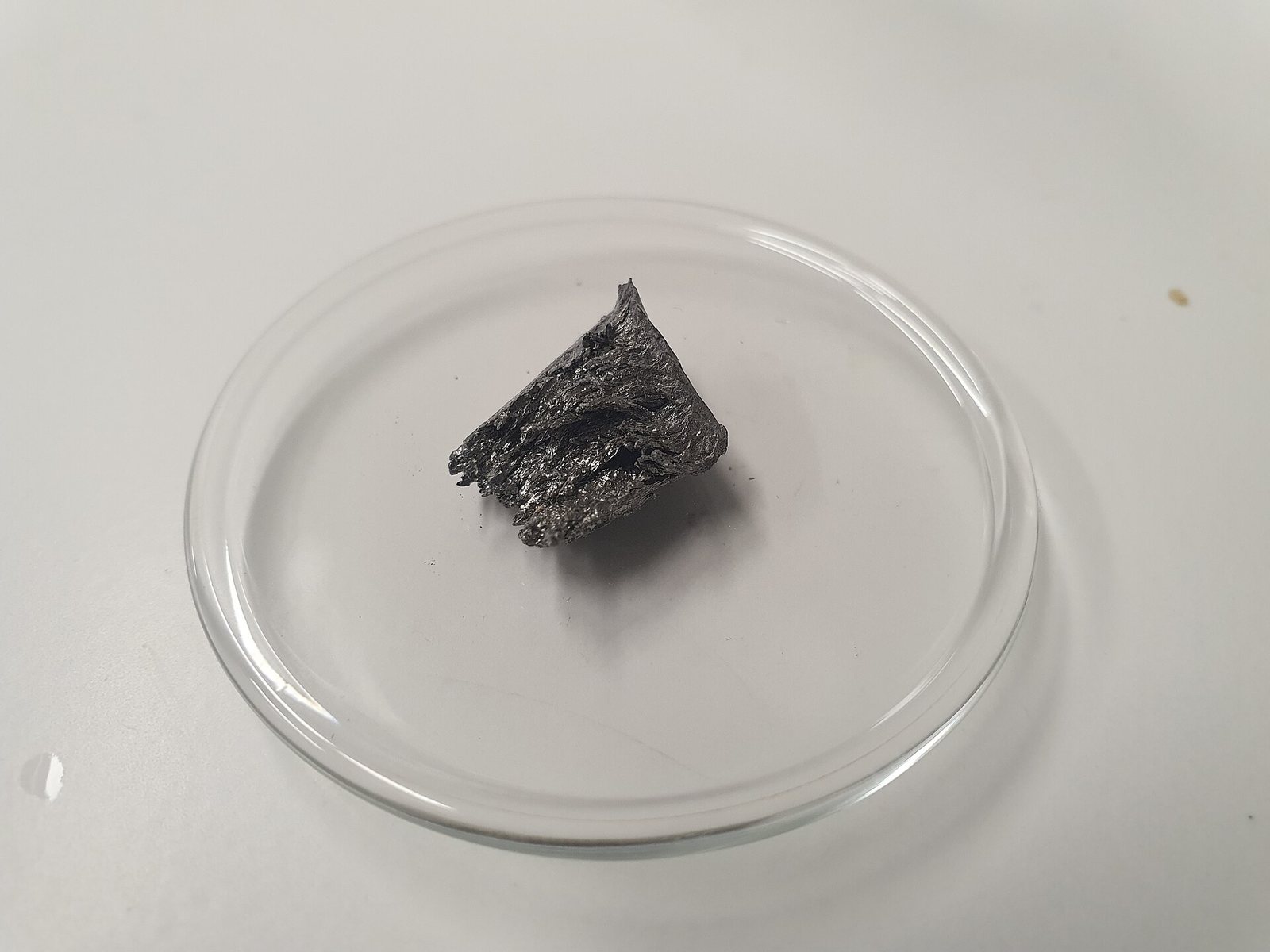
The least abundant stable rare earth, used in portable X-ray sources and in surgical lasers.
Warum ist das wichtig?
Thulium is a reminder that 'rare earth' covers elements whose annual world output would fit in a few shipping containers.
Where it is in the Earth
Thulium belongs to the group of elements known as the rare earth elements (REEs), a set of seventeen metals that share similar chemical behaviour and almost always occur together in the same minerals. Despite the name, most rare earths are not particularly scarce in the Earth's crust overall; what is genuinely rare about thulium is that, even within the rare earth family, it sits at the very low-abundance end. It is the least abundant of the stable rare earths, meaning that in any given ore body, thulium makes up only a small fraction of the total rare earth content — typically a fraction of what you would find of the more familiar elements such as cerium or lanthanum.
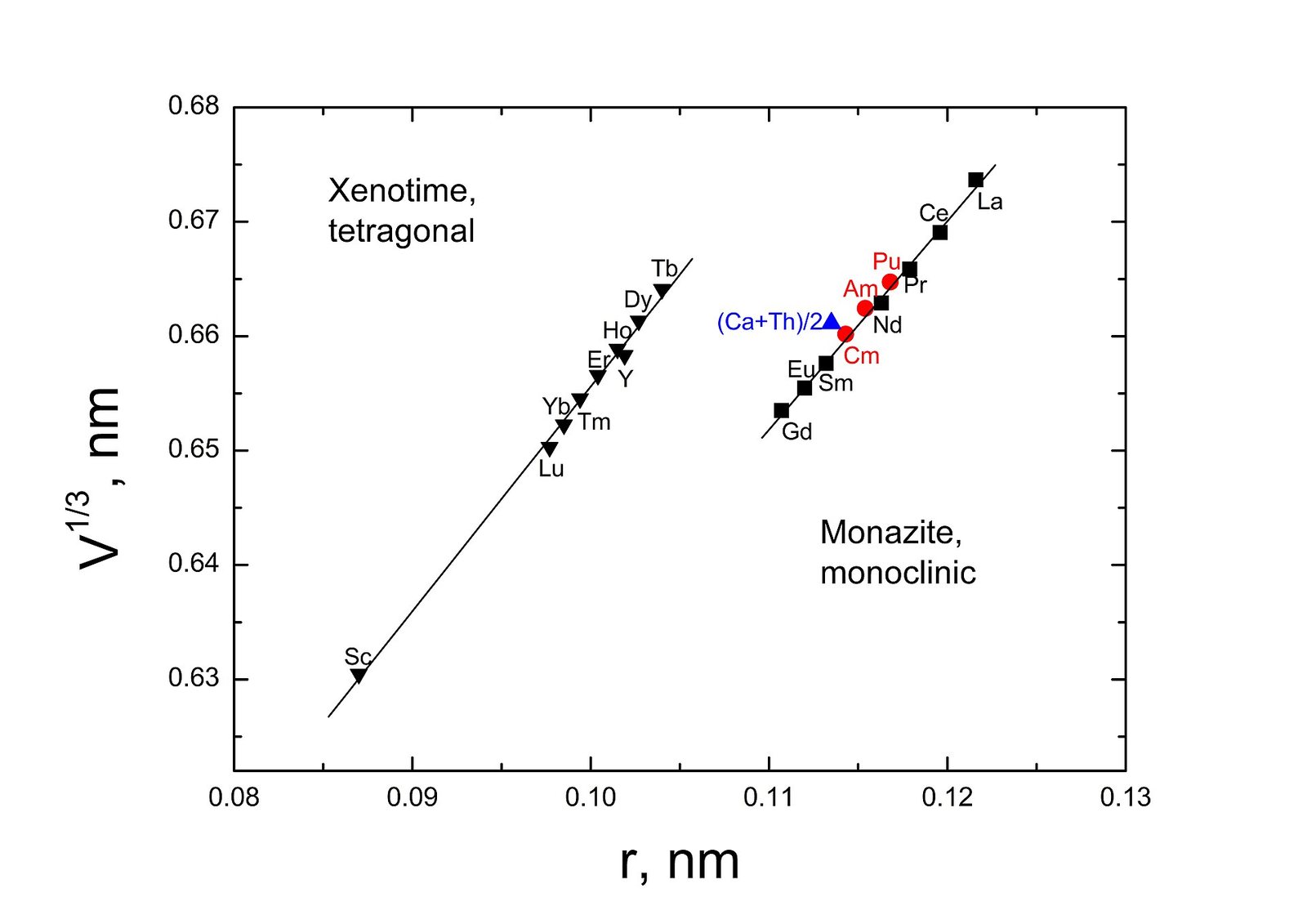
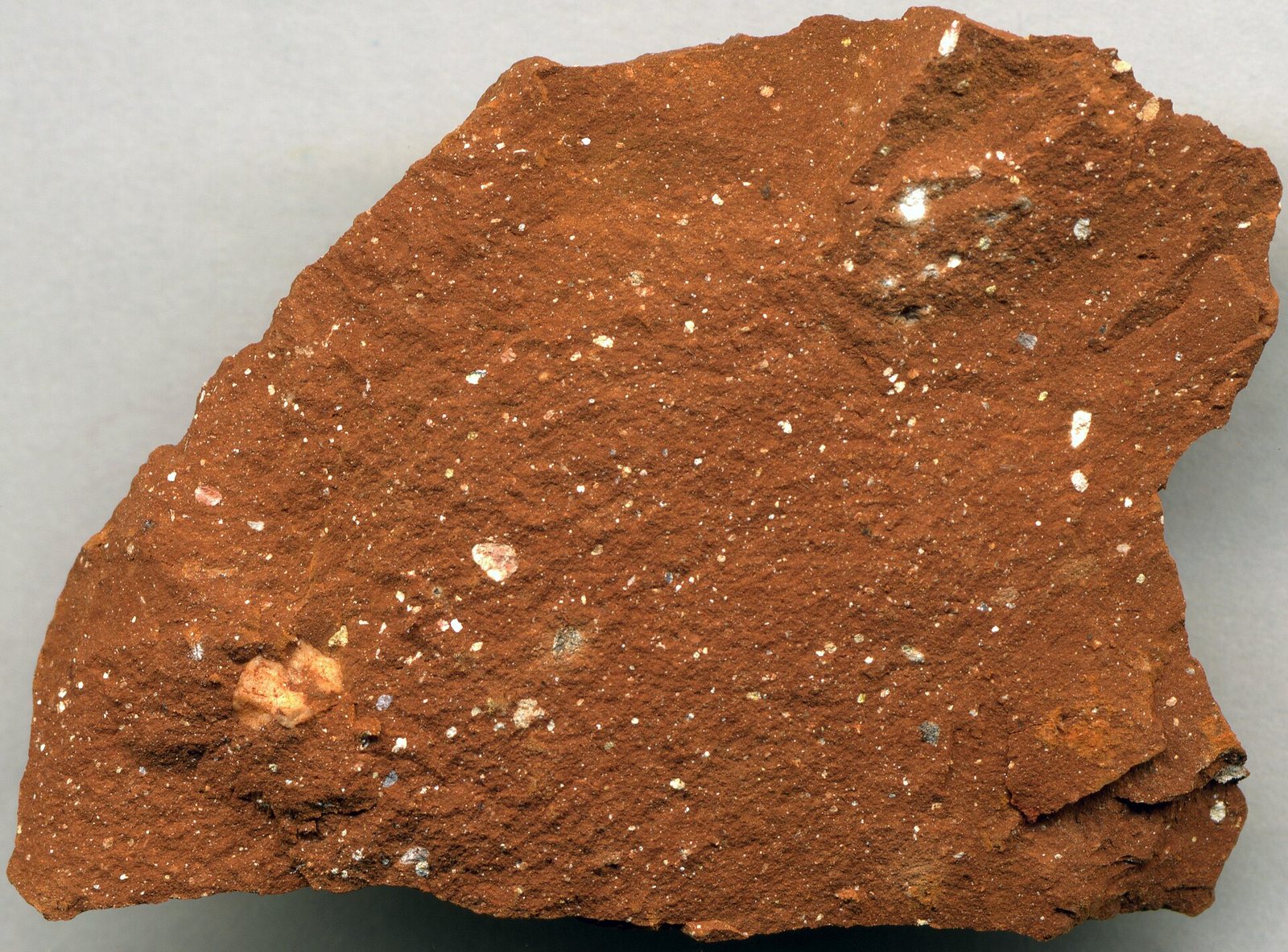
The geological processes that concentrate rare earths into mineable deposits are the same ones that bring thulium along for the ride. Carbonatites — igneous rocks formed from carbonate-rich magmas that well up from deep in the mantle — can carry rare earths in minerals such as bastnäsite. But thulium, being one of the heavier rare earths, is more characteristic of two other deposit types. Xenotime, a yttrium phosphate mineral, preferentially incorporates the heavier rare earths including thulium into its crystal structure; placer deposits and granitic rocks where xenotime accumulates are therefore relatively better sources of thulium than the carbonatite-hosted deposits that dominate world rare earth output. The second important host is the ion-adsorption clay deposit, found mainly in weathered granite terrains in southern China, where rare earth ions have been leached from the parent rock over geological time and adsorbed — that is, loosely attached to the surface of clay minerals such as kaolinite. These clays are chemically unremarkable to look at, which made the deposits difficult to recognise initially, but they carry a rare earth profile enriched in the heavier elements relative to most hard-rock deposits.
The reason thulium ends up where it does follows from the lanthanide contraction, a gradual shrinkage in ionic radius across the rare earth series from lanthanum to lutetium. Heavier rare earths with smaller ionic radii fit more readily into certain crystal structures — particularly phosphates and the interlayer sites of clay minerals — while lighter rare earths are retained in carbonate and fluorocarbonate minerals. This is why the deposit type matters so much for thulium: a mine optimised for light rare earths will yield almost none of it, while a heavy-rare-earth clay deposit, even a modest one, will contain a measurable thulium fraction.
Getting it out
Because thulium does not form deposits of its own — it is always a minor constituent within a broader rare earth ore — the method used to mine it is determined by the host deposit rather than by thulium itself. Ion-adsorption clay deposits, which are the most relevant source for heavier rare earths including thulium, are mined by stripping away the shallow overburden and then applying a chemical solution directly to the exposed clay. This approach is called in-situ leaching when the solution is injected through boreholes into undisturbed ground, or heap leaching when the clay is excavated and piled up before solution is applied. In either case, the leaching solution — historically ammonium sulfate, though alternatives have been explored for environmental reasons — displaces the rare earth ions from the clay surfaces and carries them into a collected solution for further processing.
The grade of an ion-adsorption clay deposit is expressed as the concentration of rare earth oxides within the clay, and this figure tends to be low compared with hard-rock deposits. What makes these deposits commercially workable despite the low grade is that the rare earths are already in a loosely bound, water-accessible form, which means they do not require the energy-intensive crushing, grinding, and high-temperature processing that hard minerals demand. The trade-off is that large volumes of ground are disturbed, and the in-situ method in particular can allow leaching solutions to migrate beyond the intended area if not carefully managed. For xenotime-bearing placer deposits, the mining method is typically dredging or open excavation of sand and gravel, with the heavy mineral fraction — which includes xenotime alongside zircon, ilmenite, and others — separated by physical means such as gravity and magnetic separation before chemical processing begins.
In both cases, thulium is recovered as a by-product of the overall rare earth operation. No mine is opened, to any practical knowledge, with the intention of producing thulium specifically. Its yield depends on the rare earth profile of the deposit, the efficiency of the downstream separation process, and the economics of carrying the separation all the way through to the individual heavy rare earth oxides, which requires more processing steps and more cost than simply producing a mixed rare earth product.
What pulls on it
Thulium is used in two principal application areas that are quite different in character. The first is portable X-ray sources. Thulium-169, when irradiated in a nuclear reactor, becomes thulium-170, a radioactive isotope that emits X-rays suitable for industrial radiography — checking welds, examining castings, and similar inspection tasks — without requiring electrical power or a large fixed installation. This makes thulium-based X-ray sources useful in field settings where conventional X-ray equipment cannot easily operate. The demand here is modest and specialised, connected to industrial inspection and non-destructive testing markets rather than to mass manufacturing.
The second application is surgical and medical lasers. Thulium lasers, operating at wavelengths around two micrometres in the infrared part of the spectrum, are well absorbed by water and soft tissue, which makes them effective for urological and other soft-tissue surgical procedures. Demand in this area is tied to the adoption of laser surgery techniques in medical practice, which has been growing as the equipment becomes more established in clinical settings. The medical laser market is, however, still small in absolute terms, and the quantity of thulium consumed per device is very small indeed — each laser crystal contains only a trace of the element.
Because both main applications are highly specialised, demand for thulium is not sensitive in the way that industrial commodity demand tends to be to broad economic cycles. A sharp change in demand would most likely follow either a technological shift — for example, a new laser wavelength or a competing imaging technology displacing thulium's niches — or a significant expansion in the number of thulium laser surgical procedures performed globally. Neither of those is a change that happens quickly. The small scale of consumption also means that a relatively modest uptake of thulium lasers in a new medical market could represent a meaningful shift in percentage terms, even if the absolute tonnage involved remains very small.
Wo es im Gestein vorkommt
Alle Erzminerale →Dies sind die Mineralien, die tatsächlich thulium. Eine Lagerstätte ist nur dann ein Erzkörper, wenn eines der Minerale ausreichend konzentriert ist, um den Abbau wirtschaftlich zu rechtfertigen.