Dari batuan ke produk, ditelusuri
The Materials Atlas
Material Tambang & deposit Pemrosesan & pemurnian Perjalanan-perjalanan kustodi Rantai-rantai pasokan Perusahaan Negara Berita
Material berdasarkan rak Bahan Baku Baterai Unsur Tanah Jarang Tembaga & Kelistrikan Material Semikonduktor Material Nuklir Dirgantara & Pertahanan Logam Mulia Baja & Logam Paduan Mineral Industri Mineral Pertanian Bahan Baku Energi Mineral-mineral bijih Tabel periodik
Permintaan Pasar akhir Teknologi Kalkulator material Peta Penyaring
Pelajari & alat PelajariGlosarium Tanya DataAgen AI Riset & dataAPI ★ Tersimpan
Tentang Tentang kamiMetodologi Sumber dataKontak Penafian
Opsi pembacaan
🧭 Tampilan Terpandu Baru mengenal ini — kadar bijih, konsentrat, pemurnian, produk sampingan? Kami menjelaskan setiap istilah saat Anda menjelajah, dalam bahasa yang mudah dipahami. Data yang sama, dengan bantuan yang sudah tersedia.
⚡ Tampilan Ahli Anda sudah memahami industri ini. Cukup datanya — bersih, cepat, dan ringkas, tanpa penjelasan tambahan. Ini adalah tampilan default.
Tema
Bahasa antarmuka
Kedalaman Halaman material ditulis dalam empat tingkat. Pilih salah satu di halaman material mana pun dan pilihan tersebut akan diingat.
★ Tersimpan Riset & data
Vermiculite

Mineral Industri

Vermiculite

A mica-like mineral that unfolds into a concertina when heated, becoming light, fireproof and full of air.

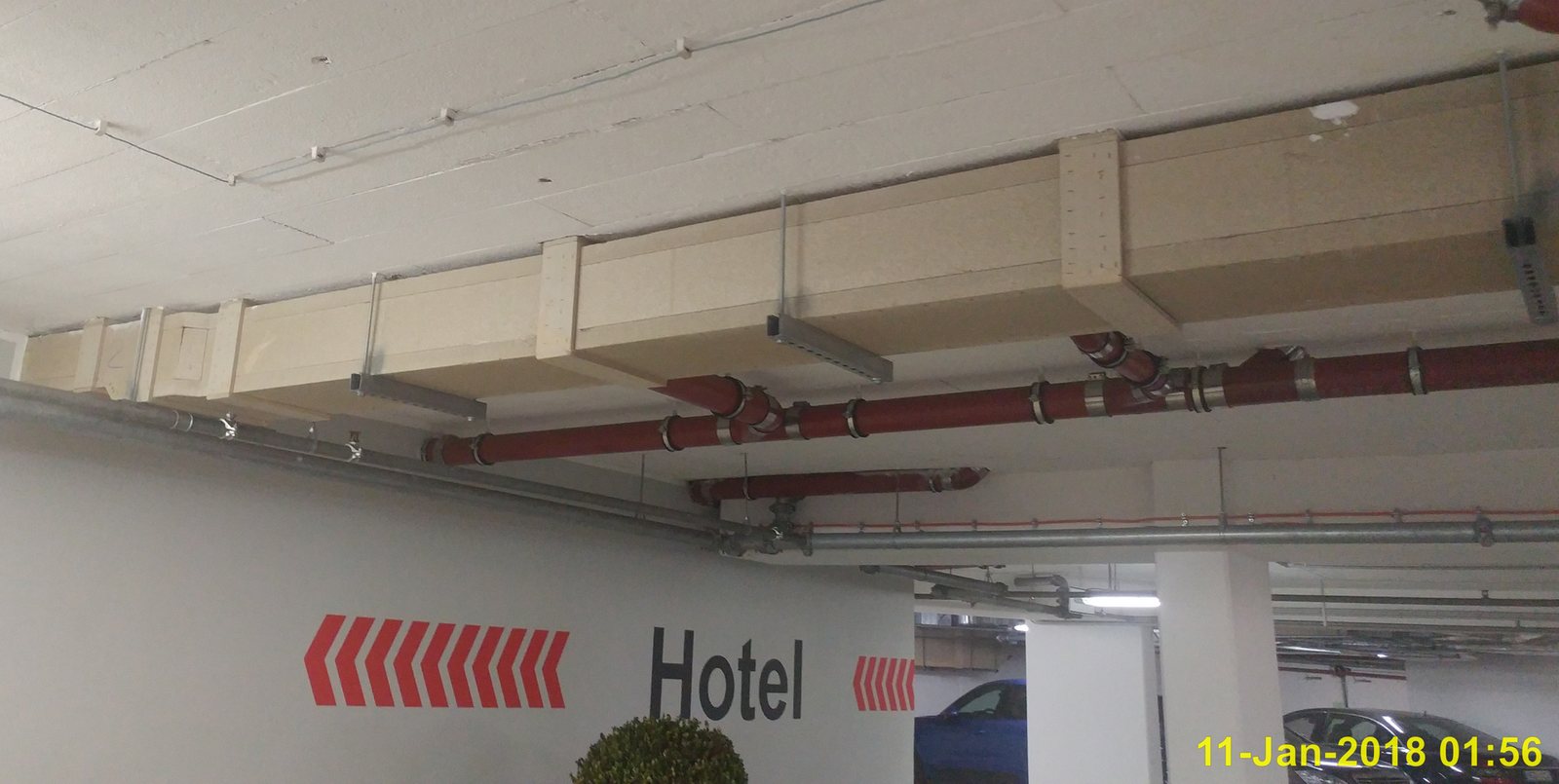
Vermiculite board fireproofing 001.png · Achim Hering · CC BY 3.0 · Wikimedia Commons

Apa ini?

A mica-like mineral that unfolds into a concertina when heated, becoming light, fireproof and full of air.

Mengapa ini penting?

Exfoliated vermiculite insulates, lightens concrete and holds water in potting compost. Historic contamination of one deposit with asbestos shaped the modern testing regime.

Where it is in the Earth

Vermiculite belongs to the phyllosilicate group of minerals — the same broad family as micas and clays, built from flat sheets of silicate tetrahedra bonded together. What distinguishes vermiculite is the way water molecules and exchangeable cations (positively charged atoms such as magnesium) are trapped between those sheets. When the mineral is heated rapidly, that interlayer water turns to steam and forces the sheets apart like the bellows of a concertina, expanding the particle to many times its original volume. This process is called exfoliation, and it is the property that makes vermiculite commercially interesting.

Deposits form where magnesium-rich igneous rocks — most often ultramafic rocks such as dunite, pyroxenite or peridotite, which originate deep in the Earth's mantle — have been chemically altered by hot, water-bearing fluids over long geological time. This alteration, known as hydrothermal or supergene weathering, converts the original minerals (particularly phlogopite mica and biotite) into vermiculite by introducing water and sometimes other elements into the crystal structure. The process requires the right combination of parent rock chemistry, percolating groundwater and, in many cases, prolonged tropical or subtropical weathering near the surface. This explains why the world's largest working deposits are found in southern Africa and Brazil, where ancient ultramafic bodies have been exposed to deep weathering over tens or hundreds of millions of years.

The ore bodies typically occur as irregular lenses, sheets or zones within or alongside the ultramafic parent rock, often associated with carbonatites (carbonate-rich igneous intrusions) or at the contact between mafic and felsic rocks. Grade — the proportion of true vermiculite mineral in the mined material — varies considerably within a single deposit, and the spatial distribution of high-grade zones tends to be complex. This makes resource estimation more demanding than for a simple, laterally continuous sedimentary deposit. The largest known reserves by published estimate sit in the United States, South Africa, Turkey and Brazil, though the reserve figures for several producing countries including Russia, Uganda and Zimbabwe are not available in the standard reporting.

Getting it out

Virtually all vermiculite is won by open-pit mining, sometimes called open-cast mining. The ore lies close enough to the surface that removing it with excavators and front-end loaders is far more practical than driving tunnels underground. Overburden — the soil and barren rock that sits on top of the ore — is stripped away first and stockpiled so that it can be used to rehabilitate the pit once mining is finished. The ore beneath is then drilled, blasted if it is competent rock, or simply dug if the weathering has left it soft and friable, which is common in tropical deposits.

Grade in this context means the proportion of vermiculite mineral in the run-of-mine ore. Because vermiculite deposits formed by weathering tend to be heterogeneous — pockets of rich ore mixed with barren host rock and altered material — the head grade (the average grade of everything that enters the processing plant) can vary considerably from one part of a pit to another. Selective mining, where diggers follow higher-grade zones and leave lower-grade material behind or blend it carefully, is common practice. The ratio of waste moved to usable concentrate produced is not a single fixed number; it depends on the deposit's geometry and the cut-off grade chosen, which in turn depends on the cost of processing and the value of the product.

Because exfoliation — the heating step that transforms the raw mineral into the light, expanded product — is straightforward and uses standard furnace equipment, it is often carried out close to the end customer rather than at the mine. This means the export product is typically a dried and sized raw concentrate, shipped in bulk or in bags by particle-size fraction, and the expansion happens at a plant closer to the construction site, horticulture supplier or factory that will use it. South Africa, the United States and Brazil are the principal producing countries, and the gap between South Africa's reserve position and its current output share suggests that production capacity rather than in-ground resource is the binding constraint at present.

What pulls on it

The single largest use of exfoliated vermiculite is in construction, where it appears as a lightweight aggregate in fireproofing sprays, insulating plasters and void-fill concrete. Its combination of low density, resistance to high temperatures and chemical inertness makes it useful wherever a material must not contribute to a fire. Attic insulation was historically a major market, though that segment contracted significantly after it emerged that ore from one particular deposit — Libby, Montana — was contaminated with asbestiform amphibole minerals. The legacy of that episode is a regulatory and reputational sensitivity to fibrous mineral contamination that now shapes testing requirements across the industry, and which made buyers far more cautious about loose-fill insulation applications in particular.

Horticulture is the other large and relatively stable demand category. Vermiculite holds water and air simultaneously within its expanded structure, making it useful in potting mixes and seed germination media where drainage and aeration need to be balanced. It is inert, sterile and pH-neutral, which suits applications where consistent growing conditions matter. This use is not closely tied to any single country's construction cycle, giving the mineral a degree of demand diversification that a purely construction-linked material would lack.

Smaller volumes go into friction materials (brake linings and clutch facings, where its heat resistance is the relevant property), as a carrier for agricultural chemicals, and into specialist refractory and high-temperature applications. For demand to shift sharply upward, there would need to be either a significant expansion in construction activity in markets that prefer vermiculite-based fireproofing, or adoption in a new application at scale. For demand to fall sharply, a broadly adopted substitute in horticulture or a change in construction fireproofing standards would be the most plausible drivers. Neither trajectory is predetermined by the current structure of the market.

Substitution and recycling Tingkat 3

In horticulture, perlite is the most direct substitute for vermiculite. Perlite is a volcanic glass that is also expanded by heating and produces a similarly low-density, inert amendment, but it drains more freely and retains less water than vermiculite. The choice between them depends on the crop and the irrigation regime, and many commercial growing media use both. Coir (coconut fibre) and various composted materials serve overlapping functions but with different water-retention and aeration profiles. Switching from vermiculite to perlite involves a cost in performance for water-sensitive applications; switching to organic amendments introduces variability and can introduce pathogens, which matters in propagation.

In fireproofing and high-temperature insulation, mineral wool (rock wool and glass wool), calcium silicate board and intumescent coatings (coatings that swell and form an insulating char when exposed to heat) compete with vermiculite-based products. Each has different installation requirements, different fire-resistance ratings achievable and different cost structures. Vermiculite-based mixes retain an advantage in applications where spray application into irregular voids is required, and where the product must also provide acoustic attenuation or serve as a lightweight fill. In friction materials, the substitution of asbestos with a range of alternatives including vermiculite, aramid fibres and various ceramics is largely complete; the position of vermiculite in that market is stable but not growing.

Recycling is not a meaningful source of secondary supply. Expanded vermiculite that has been mixed into concrete, sprayed onto structural steel or blended into a growing medium cannot be economically recovered and reprocessed back into a usable form. The material is not destroyed by use — it remains chemically stable — but it is dispersed and mixed in ways that make collection and separation impractical. The industry therefore depends entirely on primary mining of concentrate, and there is no recycling stream that could buffer supply disruptions.

Turning ore into product Tingkat 3

Run-of-mine vermiculite ore is not directly usable: it contains the host rock, clays, feldspar and other gangue minerals alongside the vermiculite itself. The first stage is comminution — crushing and scrubbing to break down the ore to a size where the vermiculite grains are liberated from the surrounding material. Because vermiculite is a soft mineral with a platy habit, aggressive grinding risks damaging the flake structure and reducing the expansion ratio obtained on exfoliation. Processing flowsheets therefore favour scrubbing and attrition rather than conventional ball milling wherever the ore texture allows.

After liberation, the ore is wet-screened and classified into size fractions, since particle size is one of the primary commercial specifications: coarse grades command different prices and suit different applications than fine material. Separation of vermiculite from gangue relies principally on differences in density and surface properties. Wet tabling, spiral concentrators and flotation have all been applied at various operations depending on the mineralogy of the gangue. The reject stream — fine clays, silica and barren rock — goes to tailings. Recovery (the fraction of the vermiculite mineral in the feed that ends up in the final concentrate) depends heavily on how well the ore is liberated and how closely the gangue minerals match the physical properties of vermiculite; in practice some fine-fraction material is inevitably lost to tailings.

The dried, sized concentrate is then graded by screen size and sold. Exfoliation is technically a separate processing step but is usually carried out off-site: the concentrate is fed through a furnace at temperatures high enough to flash-vaporise the interlayer water, typically in a vertical or rotary furnace, producing the low-density expanded product. The expansion ratio — the factor by which the bulk volume increases — depends on moisture content of the feed, heating rate and particle size. Moisture control during storage and transport of the raw concentrate is therefore commercially important, because absorbed water affects both the exfoliation behaviour and the weight-based pricing of the shipped material.

Baca angka-angka ini dengan benar. Gross weight of concentrate. Concentrate by particle grade, exfoliated near the point of use.

Siapa yang memproduksinya

Lihat di peta →

Mine production

Mine productionthousand metric tons 2025 (estimasi) Total dunia 460.0 thousand metric tons

USGS Mineral Commodity Summaries 2026 · Gross weight of concentrate. · sumber ↗

Gulir tabel ke samping untuk melihat kolom-kolom yang tersisa.

NegaraProduksi Pangsa dunia
South Africa 160.0 34.8%
United States 100.0 21.7%
Brazil 50.00 10.9%
Russia 40.00 8.7%
China 40.00 8.7%
Zimbabwe 30.00 6.5%
Uganda 20.00 4.3%
Bulgaria 10.00 2.2%
Turkey 10.00 2.2%
India 2.00 0.4%
Uzbekistan 1.00 0.2%
Mexico s
Total dunia 460.0100%

"Ditahan" berarti USGS menyembunyikan angka tersebut untuk menghindari pengungkapan data perusahaan tertentu — bukan berarti nol. Baris per negara tidak selalu berjumlah sama dengan total dunia karena sumber membulatkan setiap angka secara independen dan tidak selalu merinci baris "negara lain".

Siapa yang memegang cadangan

"Cadangan" adalah istilah yang ketat. Cadangan berarti bagian dari deposit yang diketahui yang dapat diekstraksi secara ekonomis saat ini, dengan harga dan teknologi yang ada sekarang — bukan semua yang ada di dalam tanah. Cadangan bertambah ketika harga naik atau proses baru ditemukan, dan berkurang ketika harga turun.

Reserves

Reservesthousand metric tons 2025

USGS Mineral Commodity Summaries 2026 · sumber ↗

NegaraCadanganPangsa dunia
United States 25,000
South Africa 14,000
Turkey 11,000
Brazil 6,600
China 2,900
India 1,600
Russia Not applicable
Bulgaria Not applicable
Mexico Not applicable
Uganda Not applicable
Uzbekistan Not applicable
Zimbabwe Not applicable
Total dunia Not applicable100%

Material

Semua material Mineral kritis Tanah jarang Bahan baku baterai Mineral-mineral bijih Tabel periodik Penyaring

Permukaan tanah

Tambang & deposit Pemrosesan & pemurnian Negara Peta

Perekonomian

Perjalanan-perjalanan kustodi Rantai-rantai pasokan Pasar akhir Teknologi Perusahaan Kalkulator material

Pelajari

PelajariGlosarium Tanya DataAgen AI Riset & dataAPI Terbuka Berita★ Tersimpan

Tentang kami

Tentang kamiKontak MetodologiSumber data Kebijakan editorial Kebijakan privasiKetentuan penggunaan Penafian