これは何か
The metal that steel is dipped in so it does not rust — a sacrificial coating that corrodes instead of the iron underneath.
なぜ重要なのか
Galvanising is the quiet reason bridges, guardrails and roofing last decades instead of years. Zinc also carries indium, germanium and gallium as by-products.
Where it is in the Earth
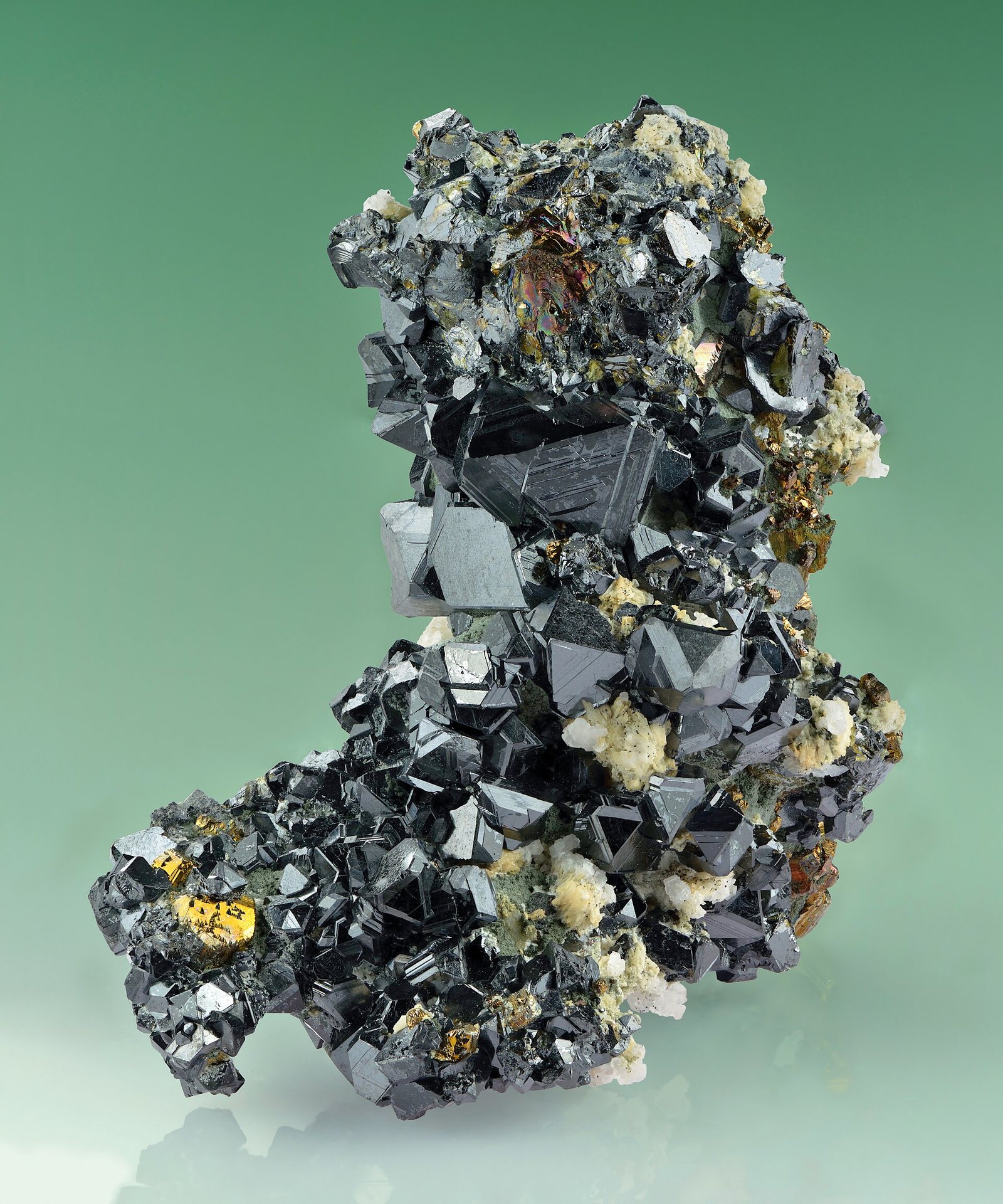
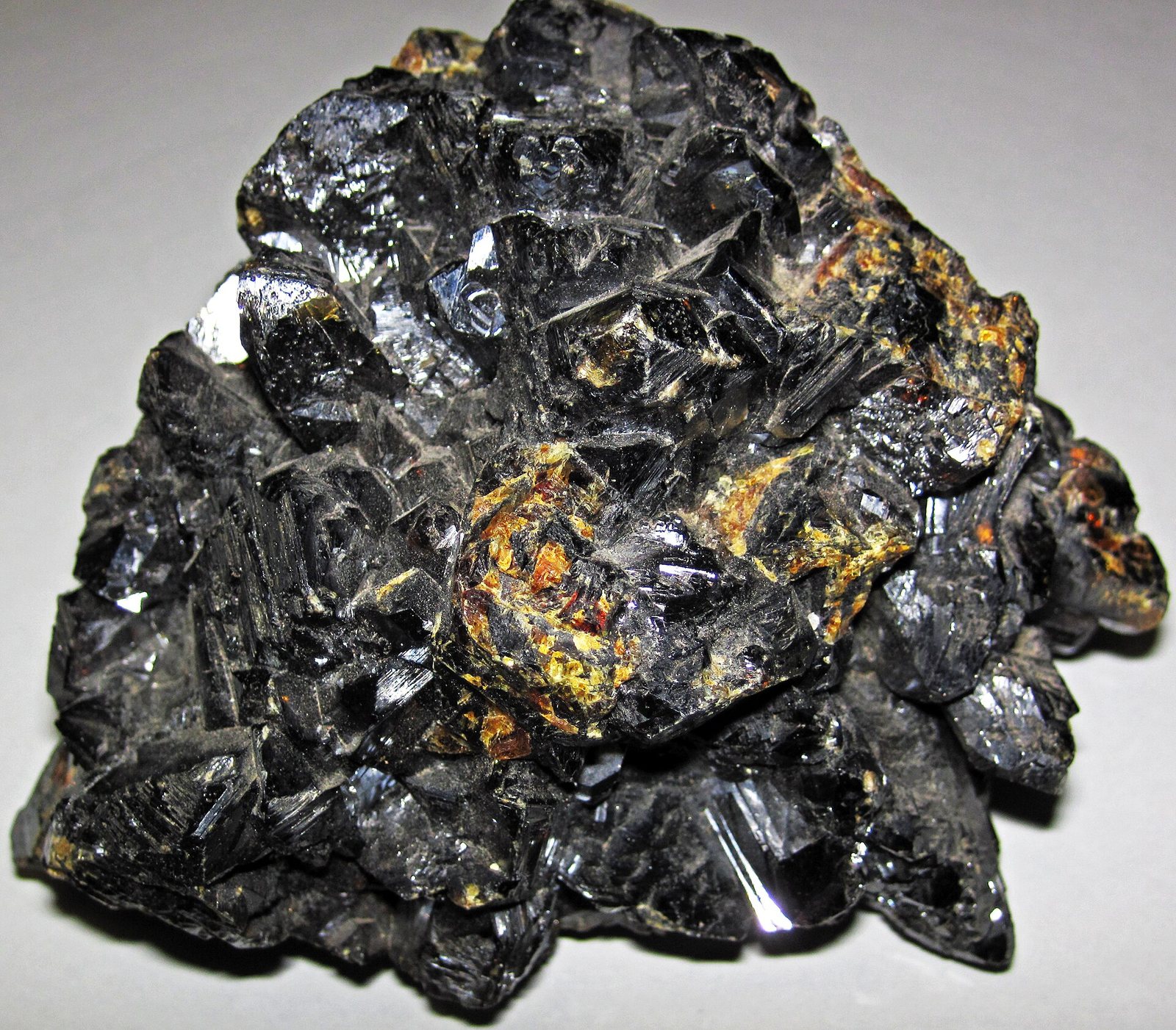
Zinc does not distribute itself evenly through the Earth's crust. It concentrates into minable deposits through a handful of well-understood geological processes, all of which share a common requirement: hot, mineral-laden fluids must move through rock and then precipitate their cargo where conditions change. The principal ore mineral is sphalerite, a zinc-iron sulfide written chemically as (Zn,Fe)S. Sphalerite is the starting point for almost all primary zinc production, and understanding where it forms explains why the world's zinc mines cluster where they do.
The most important deposit type is the sediment-hosted exhalative deposit, known in the industry as a SEDEX deposit. These form on ancient seafloors when hot, metal-rich brines exhale through vents and precipitate sulfide minerals into the surrounding sediment. The result is a flat, layered orebody that can be enormous and consistent in grade — the Red Dog mine in Alaska is a textbook example. A second major family is the Broken Hill-type deposit, named after the famous Australian district, where metamorphic processes have reworked and concentrated original seafloor sulfides into very high-grade lenses, as seen at the Cannington mine. A third, shallower family is the Mississippi Valley-type, or MVT, deposit, where zinc and lead sulfides precipitate in carbonate rocks such as limestone as warm basinal brines migrate through them. These tend to be lower grade but can be geologically straightforward to mine.
Because these deposit types are tied to specific chapters of geological history — ancient rift basins, passive continental margins, carbonate platforms — the world's zinc endowment is not random. Australia holds the largest reported reserves, followed closely by China, with Russia, Peru and Mexico also holding substantial resources. The geography of reserves does not mirror the geography of annual production exactly, partly because ore grade, infrastructure and economics determine which deposits are worked at any given time, and partly because exploration continuously revises the reserve picture.
Getting it out
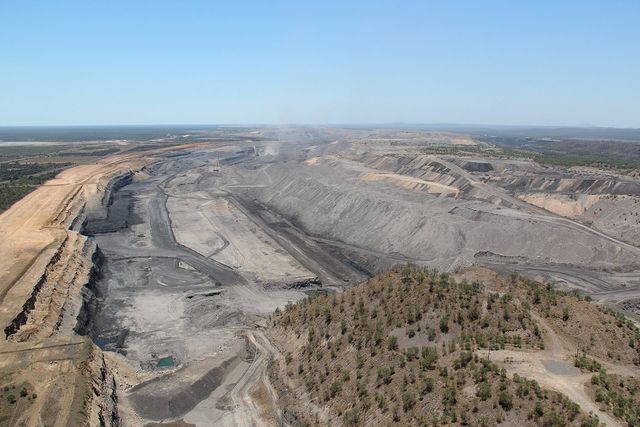
How a zinc deposit is mined depends almost entirely on the geometry and depth of the orebody. Shallow, flat-lying orebodies can sometimes be worked from the surface as open pits, which means stripping away overlying rock — called overburden — to expose the ore beneath. Red Dog in Alaska operates this way. Open-pit mining is generally lower cost per tonne of rock moved, but it produces very large volumes of waste material that must be managed on the surface. The ratio of waste rock to ore, called the strip ratio, matters enormously to the economics: a high strip ratio means a lot of diesel and blasting to reach each tonne of metal.
Deeper or narrower orebodies, including most Broken Hill-type deposits, are worked underground. Miners drive tunnels and shafts into the rock, then extract ore using methods such as cut-and-fill or open stoping, where large cavities are blasted out and the broken rock is hauled to the surface. Underground mining is more selective — it can follow the orebody without removing surrounding rock — but it is generally more expensive and slower to develop than an open pit. Cannington in Queensland is an underground operation of this kind.
The grade of a zinc deposit — the concentration of zinc in the ore, usually expressed as a percentage — determines how much rock must be processed to yield a given amount of metal. A higher grade means less material to mine, crush and treat per tonne of zinc produced, which directly reduces operating cost. Typical mineable grades vary considerably across deposit types, and what is economic at one point in time may not be at another as prices and costs shift. Grade also governs how much tailings — the finely ground rock left after the valuable minerals are extracted — must be stored or disposed of, which is one of the larger environmental management challenges at any zinc mine.
What pulls on it
The single largest use of zinc is galvanising steel — coating it with a thin layer of zinc to protect it from corrosion. Zinc works not merely as a physical barrier but as a sacrificial anode: because zinc is electrochemically more reactive than iron, it corrodes preferentially, protecting the steel underneath even if the coating is scratched. This property makes galvanised steel the material of choice wherever structural steel is exposed to weather: construction framing, roofing, guardrails, bridges, transmission towers and the like. Construction is therefore the dominant end market, and its health tracks closely with the rate at which new infrastructure is built and old infrastructure is replaced or maintained.
A second substantial use is die-casting, where zinc's low melting point of 419.5 °C and good fluidity make it suitable for producing detailed, dimensionally accurate components — door hardware, automotive parts, electrical fittings — by injecting molten zinc into moulds. Brass, an alloy of copper and zinc, accounts for a further share of demand, principally in plumbing fittings, musical instruments and decorative hardware. Zinc also serves as a micronutrient fertiliser in agriculture, correcting zinc-deficient soils in parts of South Asia and elsewhere, though this remains a smaller fraction of total use than galvanising.
Demand could shift in either direction depending on decisions made outside the zinc industry. Growth in renewable energy infrastructure — wind turbines, solar mounting systems, electricity transmission — requires galvanised steel throughout, so an accelerating energy transition would increase zinc consumption. Conversely, any structural change in how steel-framed buildings or vehicles are protected — for example a wide shift toward alternative coatings, polymer wrapping or fundamentally different materials — could erode galvanising demand over time. Neither shift is happening quickly at present, but the construction cycle in large economies, particularly China, has a strong short-term influence on how much zinc is consumed in any given year.
Turning ore into product レベル 3
Run-of-mine ore — the mixed rock as it comes from the mine — contains only a modest percentage of sphalerite surrounded by waste minerals collectively called gangue. The first task is comminution: crushing and then grinding the ore to a fine particle size so that individual sphalerite grains are liberated from the rock around them. Grinding consumes a significant share of a concentrator's energy budget and is sized carefully, because grinding too coarse leaves sphalerite locked in gangue particles and reduces recovery, while grinding too fine can make downstream separation less efficient.
Once liberated, sphalerite is separated from gangue using froth flotation. Reagents are added to a water-and-ore slurry to make sphalerite particles hydrophobic — water-repelling — so they attach to air bubbles and float to the surface as a froth, while gangue sinks. The froth is skimmed off and dewatered to produce a zinc concentrate, typically containing zinc at a much higher grade than the original ore, along with residual iron, sulfur and small amounts of other metals. Most zinc mines also produce a separate lead concentrate, and it is in these concentrates that trace by-product metals such as indium, germanium and gallium travel toward the smelter. The recovery rate — the proportion of zinc in the ore that ends up in the concentrate — is a key performance metric and is never one hundred percent; some zinc is always lost to tailings.
Concentrate is then sold to a smelter. The dominant smelting route is the roast-leach-electrowin process, sometimes called the hydrometallurgical or RLE route. The concentrate is roasted in air to oxidise the sulfide sulfur to sulfur dioxide (which is captured and converted to sulfuric acid, an important by-product credit) and to convert zinc sulfide to zinc oxide. The oxide is then leached in dilute sulfuric acid to dissolve the zinc as zinc sulfate solution, which is purified to remove impurities such as cadmium, cobalt and copper, and finally subjected to electrowinning — passing an electric current through the solution to deposit pure zinc metal on aluminium cathodes. The product is special-high-grade zinc, defined in the data as 98% pure or better on the London Metal Exchange basis, though commercial SHG is in practice considerably purer than that minimum. The purification step before electrowinning is where by-product metals are recovered as separate products. Energy costs, particularly electricity for electrowinning and roasting, are the dominant variable in smelter economics.
Substitution and recycling レベル 3
For galvanising, the alternatives are either different protective coatings or different base materials. Organic coatings such as paints and epoxies can protect steel from corrosion but require more frequent maintenance and reapplication; they do not provide the electrochemical protection that zinc does. Aluminium coatings offer some similar sacrifice-anode behaviour and are used in specific applications, but processing and adhesion characteristics differ enough that they are not a simple drop-in replacement. Stainless steel avoids the need for a coating altogether but carries a substantially higher cost per tonne and requires a very different supply chain. In practice, zinc's combination of cost, performance and processability has proved difficult to displace at scale in construction and infrastructure applications.
Recycling returns a meaningful share of zinc to the market, though the flows are less straightforward than for some other metals. Zinc recovered from galvanised steel scrap is the largest secondary source: when steel is recycled through electric arc furnaces, the zinc coating volatilises and is captured in the furnace dust, known as electric arc furnace dust or EAFD. This dust, which contains zinc oxide alongside other metals, is then processed — typically by the Waelz kiln route, a high-temperature pyrometallurgical process — to recover the zinc as a secondary oxide suitable for resmelting. Die-cast zinc is also recycled, generally through remelting with less processing than the EAFD route requires. The constraint on recycling rates is not primarily technical but logistical and economic: galvanised steel typically has a long service life measured in decades, so the zinc embedded in existing infrastructure returns to the market slowly. Secondary zinc's share of total supply is significant but remains well below the primary mine-and-smelt route, because the installed stock of galvanised steel continues to grow and the average age of that stock means the return flow is delayed.
Where the chain is fragile レベル 4
The supply concentration figures in the production table tell part of the story. China accounts for 4,100 thousand metric tons of the 13,000 thousand metric ton world total in 2025, or roughly a third, and is also the holder of the second-largest reserve base after Australia. Chinese smelting capacity is proportionally even larger than its mine output, meaning that the country processes concentrates from other producing nations as well as its own ore. Any sustained disruption to Chinese smelting — whether from energy policy, environmental enforcement, or economic conditions — has an outsized effect on the refined zinc market relative to what mine-output figures alone would suggest. This is a structural feature of the zinc supply chain, not a temporary condition.
Zinc is unusual in carrying economically significant by-products — indium, germanium and gallium in particular — whose supply is almost entirely dependent on zinc smelting. These metals do not have primary mines of their own; they are recovered during the purification stage of zinc electrowinning. This means that the supply of indium (used in flat-panel displays and thin-film solar cells) is hostage to decisions made about zinc production rather than to demand for indium itself. A cut in zinc smelting reduces indium supply regardless of indium demand, and no alternative primary source exists at comparable scale. Reporting conventions complicate this picture: published zinc statistics are reported on a mine-production-of-contained-zinc basis and a separate smelter-production basis, and the two do not move in lockstep. A concentrate surplus at one point in the chain can coexist with a refined-metal deficit at another, which is one reason published price and supply figures can appear contradictory.
Lead times from discovery to first production at a new zinc mine are long — measured in years to over a decade when permitting, feasibility studies, infrastructure construction and mine development are all included. The SEDEX and Broken Hill-type deposits that host the world's largest zinc orebodies tend to be in remote locations where road, power and port infrastructure must be built or extended before production can begin. Bolivia's reserve figure is withheld by the source, which is itself an indication of the data uncertainties that apply to parts of the global reserve picture. The combination of long development lead times, geographic remoteness, by-product revenue complexity and heavy dependence on a single country's smelting capacity means that the zinc supply chain, while not uniquely fragile, has several points where a relatively small perturbation can propagate into a larger market imbalance.
岩石中の産出箇所
全鉱石鉱物 →実際に以下を担う鉱物 zinc. 鉱床が鉱体となるのは、採掘コストを回収できるほど十分な濃度で鉱石が濃集している場合に限られる。
生産者
地図で見る →Mine production
Mine productionthousand metric tons 2025 (推定値) 世界合計 13,000 thousand metric tons
USGS Mineral Commodity Summaries 2026 · Mine production of contained zinc; smelter production is a separate figure. · 出典 ↗
テーブルを横にスクロールすると残りの列が表示されます。
| 国 | 生産 | 世界に占める割合 |
|---|---|---|
| China | 4,100 | 31.5% |
| Other countries | 2,000 | 15.4% |
| Peru | 1,500 | 11.5% |
| Australia | 1,100 | 8.5% |
| India | 870.0 | 6.7% |
| Mexico | 780.0 | 6.0% |
| United States | 670.0 | 5.2% |
| Bolivia | 500.0 | 3.8% |
| Russia | 430.0 | 3.3% |
| Kazakhstan | 360.0 | 2.8% |
| Sweden | 230.0 | 1.8% |
| 世界合計 | 13,000 | 100% |
「非開示」とは、個別企業のデータが特定されないようUSGSが数値を公表しなかったことを意味し、ゼロを意味するものではありません。出典が各数値を独立して丸め処理しており、「その他の国」の内訳を常に示しているわけではないため、各国の数値の合計が世界合計と一致しないことがあります。
埋蔵量の保有者
Reserves
Reservesthousand metric tons 2025
USGS Mineral Commodity Summaries 2026 · 出典 ↗
| 国 | 埋蔵量 | 世界に占める割合 |
|---|---|---|
| Australia | 64,000 | 26.7% |
| China | 60,000 | 25.0% |
| Russia | 29,000 | 12.1% |
| Other countries | 25,000 | 10.4% |
| Peru | 18,000 | 7.5% |
| Mexico | 14,000 | 5.8% |
| India | 10,000 | 4.2% |
| United States | 9,300 | 3.9% |
| Kazakhstan | 7,400 | 3.1% |
| Sweden | 4,100 | 1.7% |
| Bolivia | Not applicable | — |
| 世界合計 | 240,000 | 100% |
価格
Zinc, global price
年間平均US$ per tonne
基準: IMF global price of zinc — high grade 98% pure, LME. 以下に公表された年間平均値: FRED (IMF primary commodity prices) · 出典 ↗. これらは参照用の年間平均値であり、リアルタイムの市況相場ではない。
average, cents per pound: North American
年間平均cents per pound
基準: average, cents per pound: North American. 以下に公表された年間平均値: USGS Mineral Commodity Summaries 2026 · 出典 ↗. これらは参照用の年間平均値であり、リアルタイムの市況相場ではない。
average, cents per pound: London Metal Exchange (LME), cash
年間平均cents per pound
基準: average, cents per pound: London Metal Exchange (LME), cash. 以下に公表された年間平均値: USGS Mineral Commodity Summaries 2026 · 出典 ↗. これらは参照用の年間平均値であり、リアルタイムの市況相場ではない。
産出鉱山
全鉱山 →
用途
全エンドマーケット →| 最終市場 | そこでの機能 | 重要度 |
|---|---|---|
| Construction & Steel | Galvanising | 定義 |
| Power Grids | Galvanising every steel structure outdoors | 重要 |
| Wind Power | Galvanised protection in a marine environment | 重要 |
| Solar Power | Galvanised mounting structures | 重要 |
| Agriculture & Food | Crop micronutrient | 重要 |
輸出規制
| 国 | 支配 | 適用対象 |
|---|---|---|
| Laos | Export ban | Raw minerals, including copper, gold, iron, nickel, potassium, silver, and zinc (2024). ↗ |
| Vietnam | Export ban | Raw materials of iron, lead-zinc, chromite, manganese, apatite, and rare earths and deeply processed titanium (2012). ↗ |
USGS Mineral Commodity Summaries 2026, table 4 — controls in effect as of January 2026, excluding controls since lifted.