Commercial
Aerospace & Defence
What it is
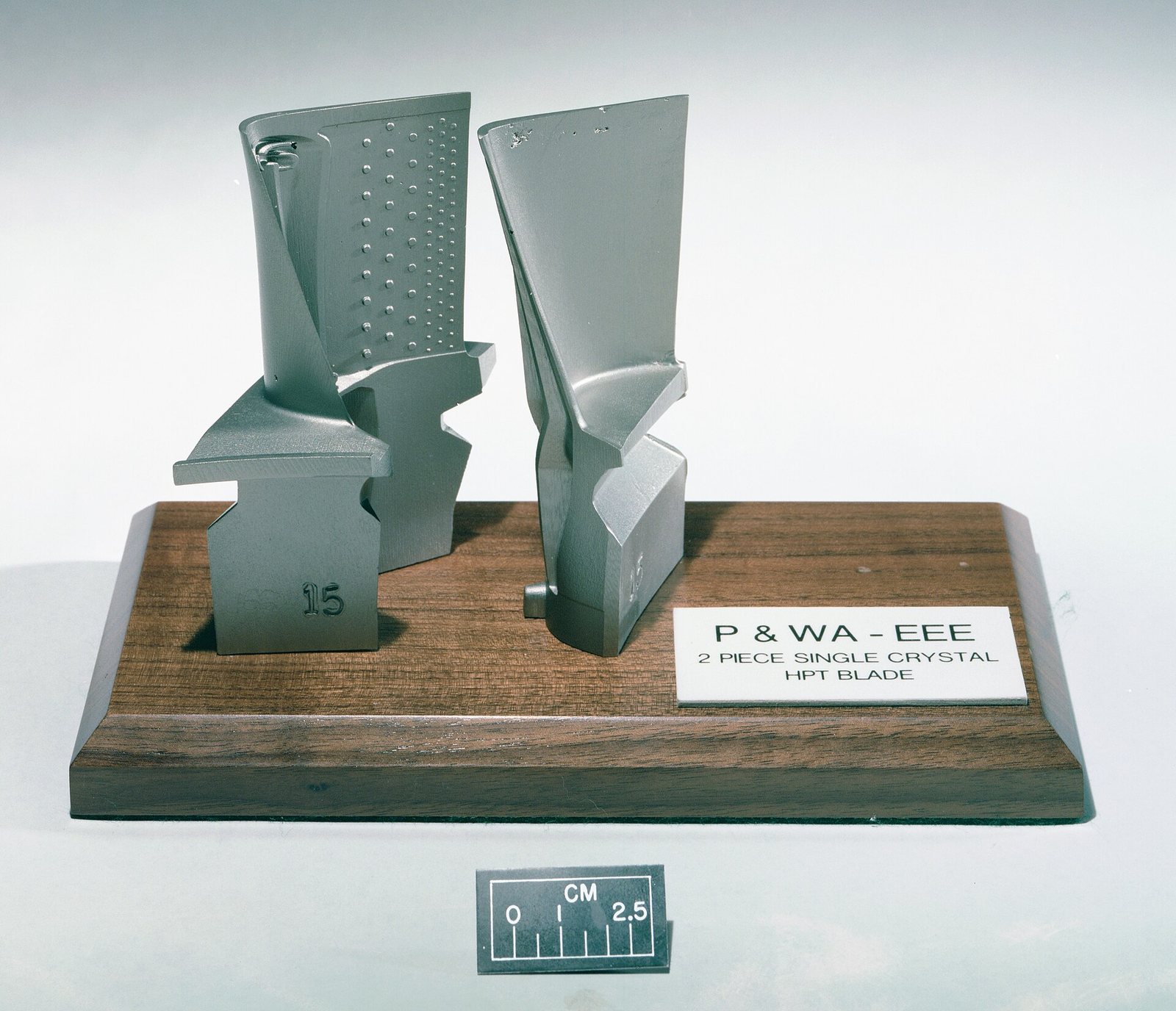
The blade runs in gas above the alloy's own melting point. It survives because of internal cooling channels, a ceramic thermal barrier, and rhenium and hafnium in the alloy.
The material bill
Scale it up →Quantities are per blade setindicative range
Read these as “about this much, give or take”. Every manufacturer’s design differs, and the numbers fall over time as engineers learn to use less of the expensive things.
| Material | Low | High | Unit | Basis |
|---|---|---|---|---|
| Cobalt critical | trace | trace | kg | Alloy matrix |
| Hafnium critical | trace | trace | kg | Grain-boundary strengthening |
| Nickel critical Typically 60% or more of the alloy. | trace | trace | kg | Superalloy base |
| Rhenium critical A few percent of a metal produced in tens of tonnes a year worldwide. | trace | trace | kg | 3-6% of second and third generation superalloys |
| Tantalum critical | trace | trace | kg | Solid-solution strengthening |
| Yttrium critical | trace | trace | kg | Yttria-stabilised zirconia coating |
Indicative range compiled from published technology studies and chemistry; verify against a manufacturer specification before use. Rows marked “trace” contain the material in quantities too small to state usefully as a mass — the constraint there is purity or supplier count, not tonnage.