Module 2 · Mining and concentrating
Crushing, grinding and flotation
Level 2 · Working knowledge 11 min read 4 questions
The step that turns under one per cent copper into about thirty per cent, using more electricity than anything else on the site and a chemistry trick about a hundred years old.
Chalcopyrite is 34% copper. The ore is under 1% copper. The concentrator's job is to separate the mineral grains from everything else, and it does that in two stages: break the rock until the grains are free, then float the grains away from the rest.
Comminution: breaking rock, and paying for it
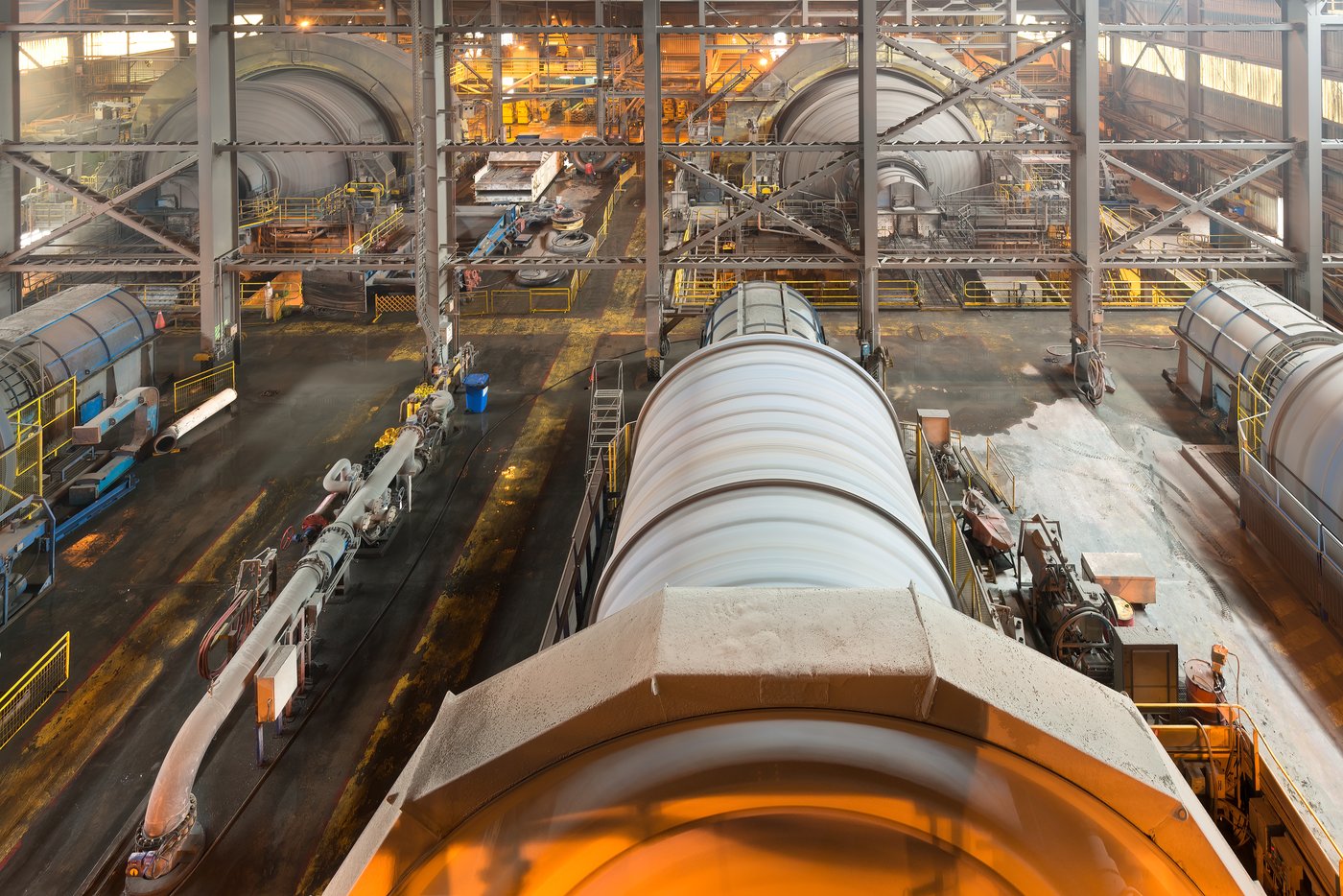
Comminution is crushing and grinding. Rock goes through crushers and then into mills - typically a semi-autogenous grinding mill followed by ball mills - until the particles are fine enough that individual mineral grains are physically separate from the gangue around them. That condition is called liberation, and the required fineness is set by the size of the mineral grains in that particular ore.
Flotation: making one mineral hate water
Ground ore is mixed with water into a slurry and fed into flotation cells, where air is blown through it. Reagents called collectors attach selectively to the surface of the sulfide mineral grains and make them water-repellent, so that when a bubble touches one it sticks. The bubbles rise, carrying the sulfide grains into a froth at the surface, which overflows and is collected. The gangue stays in the water and goes to tailings.
Selectivity is the art. Depressants are added to keep unwanted sulfides - pyrite especially - out of the froth, and where a deposit carries molybdenite, a second flotation circuit separates molybdenum from the copper concentrate and sells it separately. That is one of the by-product credits from lesson 3 appearing physically.
What leaves the plant, and what stays
| Stage | Typical copper content | Physical form |
|---|---|---|
| Ore fed to the plant | Under 1% | Crushed rock |
| Concentrate | About 25-30% | Damp grey powder |
| Blister copper | About 98% | Molten, then cast |
| Refined cathode | 99.99% | Plates |
Indicative; site chain page figures · commodityeducation.com, Copper to the Grid
Concentrate grade is a commercial choice, not a maximum. Pushing it higher generally costs copper recovery, and the smelter's terms decide which trade-off pays.
Tailings
Everything that did not float is tailings: finely ground rock in water, stored behind an engineered dam more or less permanently. Because so little of the rock becomes metal, tailings facilities are among the largest structures the industry builds, and their failure is the industry's most serious accident category. Sulfide-bearing tailings also generate acid when exposed to air and water, which is a management obligation lasting long after the mine closes. See tailings.
- Grinding to liberation is the largest electricity consumer at a copper mine, and the fineness is set by the ore.
- Flotation makes sulfide grains water-repellent so bubbles can carry them out of the slurry.
- Concentrate at 25-30% copper is not copper; counting it as metal overstates by three to four times.
- Comminution
- Crushing and grinding.
- Liberation
- The particle size at which mineral grains are physically separate from the gangue.
- Collector / depressant
- Reagents that make a mineral float / stop it floating.
- Concentrate
- The flotation product, roughly 25-30% copper.
- Comminution and flotationon this site
- Tailingson this site
- Molybdeniteon this site
- Cerro Verdeon this site
- Chilean copper concentrate, tracedon this site
Check yourself
1. Why is a copper ore ground to a specific fineness rather than as fine as possible?
Liberation is the point at which grains are free. Beyond it the extra energy buys nothing, and comminution is already the plant's biggest power draw.
2. Flotation separates copper sulfides from gangue because collectors:
It is a surface chemistry effect: the treated grains stick to air bubbles and ride the froth out.
3. A trade report lists 'copper concentrate exports, 1 million tonnes'. The contained copper is roughly:
Concentrate runs about 25-30% copper, so a million tonnes of concentrate carries roughly a quarter to a third of that in metal.
4. Molybdenum from a copper mine is produced by:
Where molybdenite is present, a dedicated flotation circuit splits it out and it is sold separately as a by-product credit.