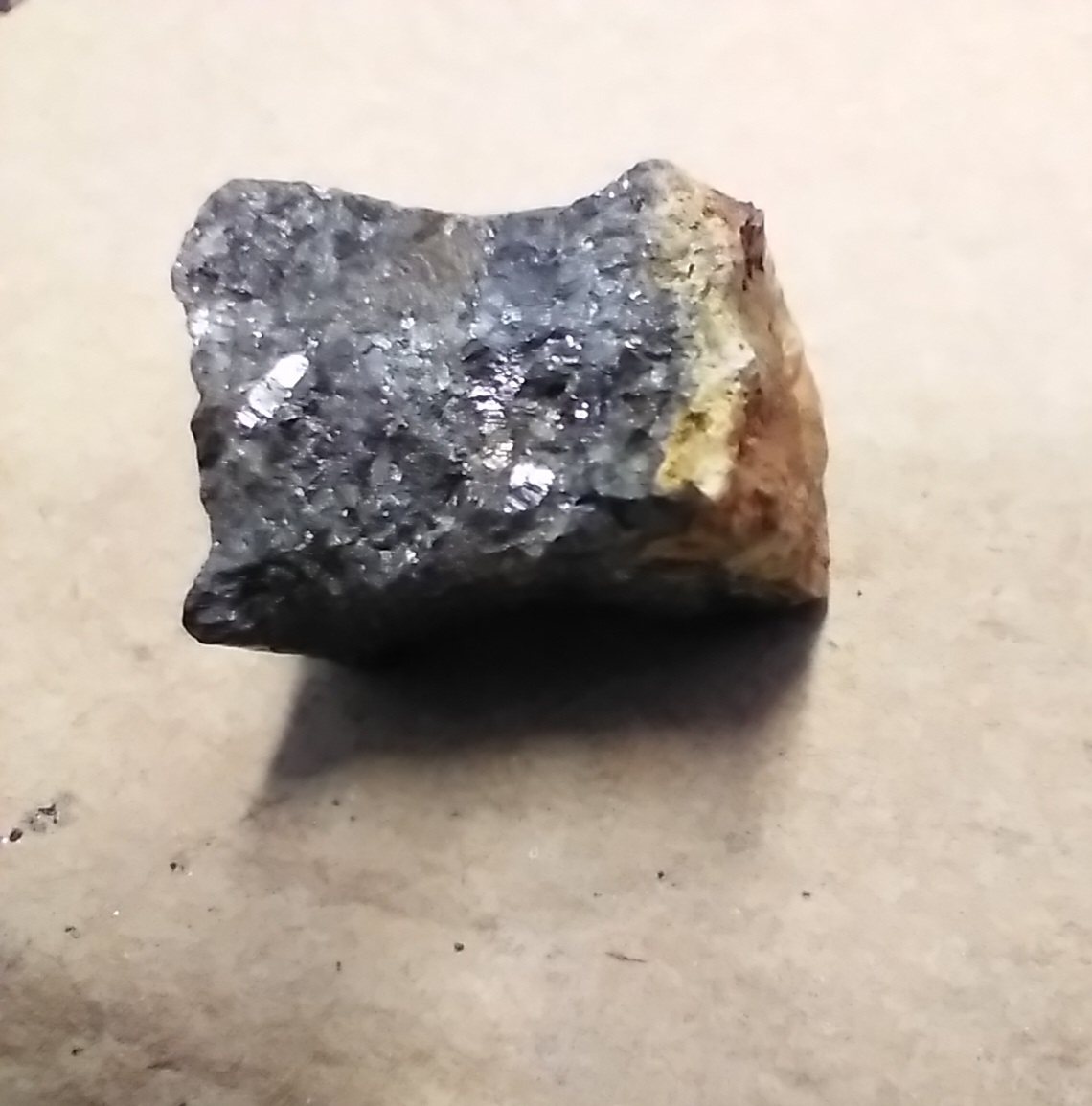
यह क्या है?
A brittle, silvery metalloid used mostly to stop things burning, and in the primers and tracer rounds of ammunition.
यह क्यों महत्वपूर्ण है?
Antimony trioxide is the workhorse flame retardant in plastics, cables and textiles, and the metal has become a formal export-control subject.
Where it is in the Earth
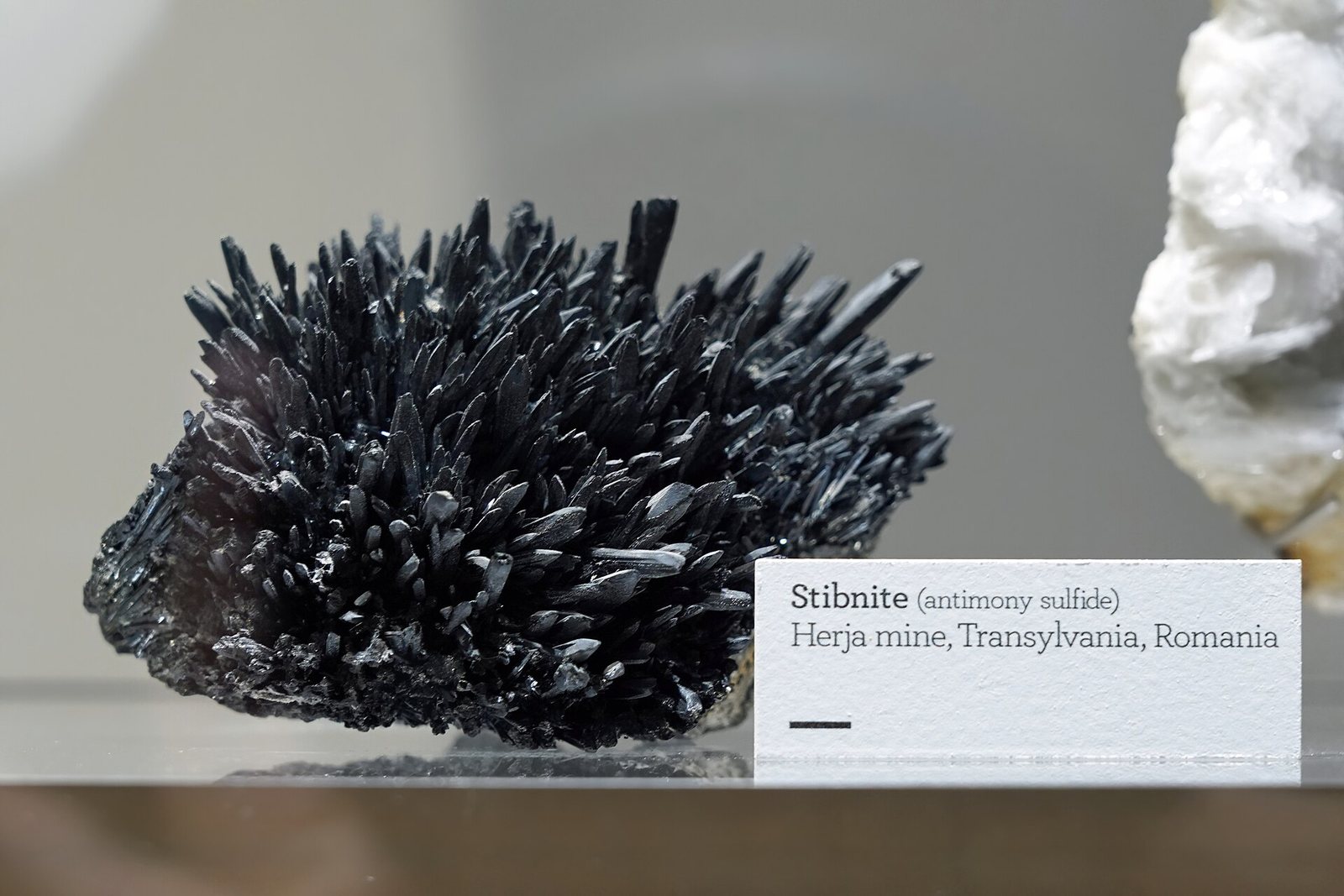
Antimony is a metalloid — a substance with properties partway between a metal and a non-metal — and in the Earth's crust it occurs at very low average concentrations. It becomes mineable only where geological processes have gathered it into discrete bodies of much higher grade. The overwhelming majority of economic deposits form through hydrothermal activity: hot, chemically active water circulates through fractures in the crust, dissolves antimony from surrounding rock over long distances, and then deposits it when temperature or chemistry changes abruptly. The result is stibnite (antimony trisulfide, Sb₂S₃), a lead-grey mineral with a distinctive striated habit that serves as the principal ore of antimony in virtually every producing country.
Most of these hydrothermal deposits fall into two broad families. Vein deposits are narrow, steeply dipping bodies where stibnite crystallised directly in fault or fracture systems; they can be remarkably rich but are geometrically irregular and tend to be small. Stratabound or bedding-parallel deposits, sometimes called replacement bodies, form where hydrothermal fluids moved along the contact between rock types of contrasting chemistry and replaced existing carbonate or sedimentary rock with sulfide minerals across a broader, flatter zone. Xikuangshan in Hunan province, China — by a wide margin the largest antimony district ever worked — is a stratabound deposit of this type, which helps explain both its scale and its longevity.
The geographic distribution of reserves reflects where ancient geological events created the right conditions. China, Russia, Bolivia, Kyrgyzstan and Burma together hold the overwhelming share of known reserves, as the tables on this page show. This clustering is not coincidental: each of these regions contains old orogenic belts — mountain-building zones where deep fluid circulation was intense — associated with the right combination of source rocks, structural pathways and chemical traps. Countries with large landmasses and long histories of active tectonics tend to host more discoveries simply because there were more opportunities for the right conditions to occur.
Getting it out
Because stibnite veins and stratabound bodies are typically found at depth, and because the ore zones are often narrow relative to surrounding waste rock, underground mining dominates antimony production worldwide. Miners sink shafts or drive adits (horizontal tunnels) into hillsides to reach ore that would be impractical to expose from the surface without moving enormous quantities of barren material. At Xikuangshan, centuries of mining have progressively moved deeper underground as shallower ore was exhausted. Where ore bodies are larger and closer to the surface, open-pit methods — essentially a terraced excavation working downward — can be used, though this is less common for primary antimony deposits than for metals like copper or iron.
Grade matters enormously in mining economics. Grade refers to the concentration of the target element in the rock, usually expressed as a percentage. A higher grade means less rock must be mined, crushed and processed to produce each tonne of contained antimony, so costs per unit of output are lower. Antimony ore grades vary considerably between deposits, and because the ore minerals are often irregularly distributed through the host rock, the effective grade reaching the mill can differ from the average grade of the deposit. The ratio of waste rock moved to ore produced — the strip ratio in open pits, or the dilution factor underground — directly drives the cost of each tonne of concentrate and therefore determines whether a deposit can be worked at a profit at any given price.
Antimony is also recovered as a by-product in some lead and gold mining operations, where it occurs as a minor constituent of sulfide ores processed primarily for another metal. In these cases the antimony revenue is essentially incidental: the decision to mine is driven by the primary commodity, and the volume of antimony recovered depends on how much of the primary ore is processed rather than on antimony demand or price. This by-product route matters to the global supply picture in ways the end-use tables on this page do not fully capture.
What pulls on it
Antimony trioxide is, by volume of use, principally a flame retardant. It does not act alone: it works synergistically with halogenated compounds — chemicals containing bromine or chlorine — that are already present in a plastic, textile or cable sheathing. When the material begins to burn, the antimony and halogen react to interrupt the combustion chemistry, slowing or stopping the fire. This combination is embedded in an enormous range of everyday products: the plastic casings of electronics, insulation on electrical cables, upholstered furniture and aircraft interiors. The proportion of antimony trioxide in a finished product is small, but the breadth of applications across construction, transport and consumer goods means that aggregate demand is substantial.
The second significant use is in lead-acid batteries, where antimony is alloyed with lead to harden the battery plates and improve their mechanical performance. This application connects antimony demand to the large and still-active market for lead-acid batteries in vehicles, backup power systems and industrial equipment. Military uses — ammunition primers, tracer compounds and certain pyrotechnic compositions — represent a smaller but strategically weighted share of consumption, which is part of the reason antimony has attracted formal export-control designations in several jurisdictions.
The demand picture has two countervailing pressures. Substitution of halogenated flame retardants by non-halogenated systems — driven partly by environmental regulation — would reduce antimony trioxide consumption in some product categories, because the trioxide is specifically a synergist for halogen-based chemistry. On the other side, any sustained growth in defence procurement, grid-scale power storage using lead-acid technology, or the cable networks required for electrification infrastructure would tend to support or increase demand. Which of these forces dominates will depend on regulatory trajectories and technology choices that are presently contested, so the direction of net demand is genuinely uncertain rather than obviously trending one way.
यह चट्टान में कहाँ से आता है
सभी अयस्क खनिज →ये वे खनिज हैं जो वास्तव में वहन करते हैं antimony. कोई निक्षेप अयस्क निकाय तभी बनता है जब उसमें से कोई एक तत्व इतनी मात्रा में संकेंद्रित हो कि उसे खोदकर निकालने का व्यय वसूल हो सके।
इसका उत्पादन कौन करता है
इसे मानचित्र पर देखें →Mine production
Mine productionmetric tons 2025 (अनुमानित) विश्व कुल 110,000 metric tons
USGS Mineral Commodity Summaries 2026 · Mine production of contained antimony. · स्रोत ↗
शेष कॉलम देखने के लिए तालिका को बगल में स्क्रॉल करें।
| देश | उत्पादन | विश्व का हिस्सा |
|---|---|---|
| China | 40,000 | 36.4% |
| Russia | 32,000 | 29.1% |
| Tajikistan | 22,000 | 20.0% |
| Bolivia | 5,000 | 4.5% |
| Burma | 4,500 | 4.1% |
| Turkey | 3,000 | 2.7% |
| Australia | 1,300 | 1.2% |
| Kazakhstan | 800.0 | 0.7% |
| Kyrgyzstan | 700.0 | 0.6% |
| Mexico | 600.0 | 0.5% |
| Pakistan | 260.0 | 0.2% |
| Vietnam | 220.0 | 0.2% |
| Laos | 200.0 | 0.2% |
| Iran | 90.00 | 0.1% |
| Guatemala | 50.00 | 0.0% |
| Canada | Zero | — |
| United States | Withheld | — |
| विश्व कुल | 110,000 | 100% |
"विदहेल्ड" का अर्थ है कि USGS ने किसी एकल कंपनी के डेटा के प्रकटीकरण से बचने के लिए आँकड़े को दबाया — इसका अर्थ शून्य नहीं है। देश की पंक्तियाँ हमेशा विश्व कुल के बराबर नहीं जुड़तीं क्योंकि स्रोत प्रत्येक आँकड़े को स्वतंत्र रूप से पूर्णांकित करता है और हमेशा "अन्य देश" की पंक्ति अलग नहीं निकालता।
भंडार किसके पास है
Reserves
Reservesmetric tons 2025
USGS Mineral Commodity Summaries 2026 · स्रोत ↗
| देश | भंडार | विश्व का हिस्सा |
|---|---|---|
| China | 830,000 | 41.5% |
| Russia | 350,000 | 17.5% |
| Bolivia | 310,000 | 15.5% |
| Kyrgyzstan | 260,000 | 13.0% |
| Burma | 140,000 | 7.0% |
| Australia | 110,000 | 5.5% |
| Turkey | 99,000 | 5.0% |
| Canada | 78,000 | 3.9% |
| United States | 60,000 | 3.0% |
| Tajikistan | 60,000 | 3.0% |
| Vietnam | 54,000 | 2.7% |
| Pakistan | 26,000 | 1.3% |
| Mexico | 18,000 | 0.9% |
| Laos | Not applicable | — |
| Iran | Not applicable | — |
| Guatemala | Not applicable | — |
| Kazakhstan | Not applicable | — |
| विश्व कुल | >2,000,000 | 100% |
स्रोत इस विश्व कुल को एक बिंदु-आँकड़े के बजाय एक सीमा के रूप में प्रकाशित करता है, इसलिए अंतिम स्तंभ में हिस्सेदारियाँ स्वयं सीमाएँ हैं।
मूल्य
metal, average, dollars per pound
वार्षिक औसतdollars per pound
आधार: metal, average, dollars per pound. में प्रकाशित वार्षिक औसत USGS Mineral Commodity Summaries 2026 · स्रोत ↗. ये संदर्भ वार्षिक औसत हैं, लाइव बाज़ार भाव नहीं।
इसे उत्पादित करने वाली खदानें
सभी खानें →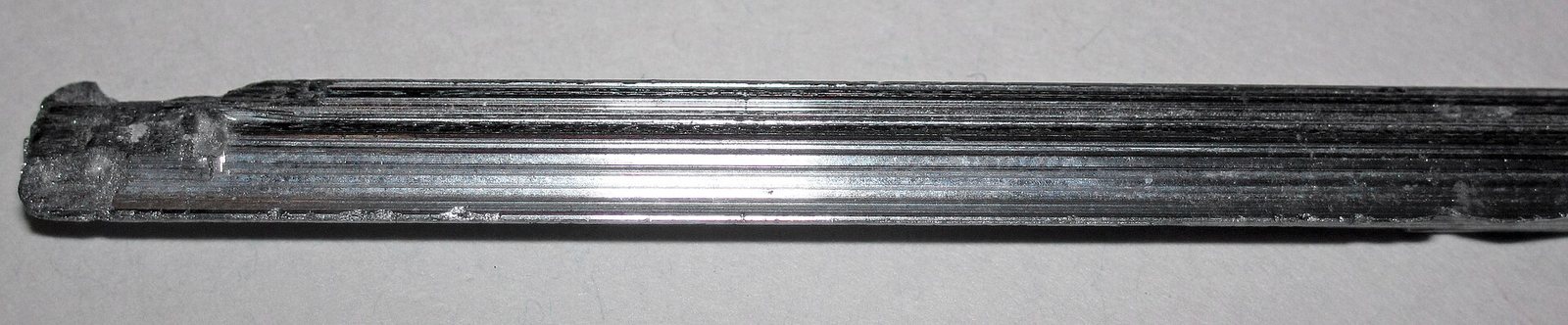
इसका उपयोग किसलिए होता है
सभी अंत-बाज़ार →| अंतिम बाज़ार | यह वहाँ क्या करता है | महत्त्व |
|---|---|---|
| Aerospace & Defence | Ammunition primers and flame retardants | महत्त्वपूर्ण |
निर्यात नियंत्रण
| देश | नियंत्रण | पर लागू होता है |
|---|---|---|
| China | Export licensing requirement for materials and technologies | Antimony (2024), bismuth (2025), synthesized diamond (2025), gallium (2023), germanium (2023), graphite (2023), indium (2025), magnesium materials (2024), molybdenum (2025), rare earths (2025), silver (2026), tellurium (2025), tungsten (2025), and items related to lithium batteries and artificial graphite anode materials (2025). ↗ |
USGS Mineral Commodity Summaries 2026, table 4 — controls in effect as of January 2026, excluding controls since lifted.